
Reviewed · CITY TOURS
Agra, The City through Poetry
Agra’s poetry walk reveals a city that rarely makes the standard sightseeing list. Starting at Jama Masjid, you move through old lanes, a 16th-century shopping street, a calligraphy workshop, and places linked to Urdu and Mughal-era writers. Poetry becomes your guide to Agra’s people, faiths, trade, and daily life.
I like the private format, which lets you set the pace and ask questions without waiting for a group. I also like the handout of selected verses and photographs, a small but useful souvenir when the names and languages begin to blur together. The main drawback is practical: this is a walking tour through an old city, so you need moderate fitness and comfort with uneven, busy streets.
- Jama Masjid is the starting point, placing you in Agra’s old commercial center rather than at a major monument.
- Mirza Ghalib’s birthplace adds a personal link to the story of Urdu poetry in the late Mughal period.
- An Urdu calligraphy workshop shows the written art of the language, not just its literary history.
- Nazir Akbarabadi’s verses connect poetry to ordinary city life, markets, trade, and social change.
- The private guide format gives you room for questions, photographs, and a pace that suits your group.
- The 5 pm start works well for an evening walk, though weather can affect the outing.
In This Review
- Agra Through Its Poets, Not Just Its Monuments
- Starting at Jama Masjid in Old Agra
- Mirza Ghalib’s Birthplace and the Rise of Urdu Poetry
- Seeing Urdu as Calligraphy at a Working Workshop
- Following Nazir Akbarabadi Through the Old Shopping Street
- Khankhana Katra and Abdur Rahim’s Verses
- A Private Walk With Room for Questions
- What the Handout Adds After the Walk
- Is $44.28 a Fair Price?
- Who Should Book This Agra Experience?
- Timing, Weather, and Cancellation
- Final Verdict: A Literary Side of Agra Worth Your Evening
- FAQ
- Where does the Agra poetry walk start?
- What time does the tour begin?
- How long does the experience last?
- Where does the tour end?
- Is this a private tour?
- What poets are discussed?
- Is a calligraphy workshop included?
- Can I cancel for a full refund?
Agra Through Its Poets, Not Just Its Monuments
Most first visits to Agra revolve around the Taj Mahal and Agra Fort. Those sights deserve their place, but they can leave you with a polished version of the city. This walk takes a different route. It uses poets and language to explain how Agra functioned as a lived-in city, not only as a royal capital.
The experience lasts about two to three hours and is private to your group. That matters here. Poetry often raises questions about translation, religion, politics, and local custom. With no strangers waiting for their turn, you can stop to ask what a verse means, why a poet mattered, or how Urdu developed.
The walk starts at 5 pm, when the old city is a natural setting for this kind of outing. You will be on foot for the entire experience, so wear practical shoes and bring water. The route includes historic lanes and a shopping street, and the tour requires a moderate level of fitness.
Starting at Jama Masjid in Old Agra
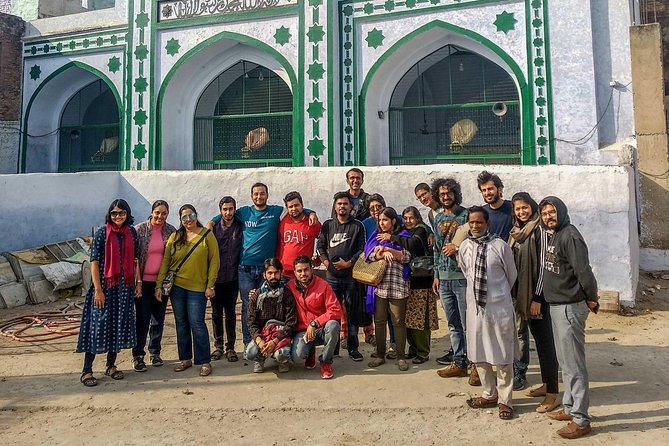
Jama Masjid is more than a meeting point. It places you near Subash Bazar, Kinari Bazar, Hing ki Mandi, and the old commercial core of Agra. This is a useful change from being dropped at a monument entrance and hearing a disconnected story.
Your guide begins by helping you read the area around the mosque. The setting introduces the mix of religion, commerce, architecture, and local life that shapes the rest of the walk. One of the strongest parts of this experience is its attention to several communities and faiths. The guide connects each site to the city’s broader story instead of treating history as a series of isolated facts.
The meeting point is Jama Masjid Agra, near Kinari Bazar in Agra, Uttar Pradesh. Since this is a central old-city location, check the exact meeting instructions on your mobile ticket before setting out. The tour ends back at the same meeting point, which makes planning your next activity simpler.
More Agra trips:
- Agra: Skip-the-Line Taj Mahal & Agra Fort Private Tour
★ 4.9 · 1,546 reviews - Agra: Taj Mahal Express Entry Tickets
★ 4.8 · 684 reviews - Agra: Taj Mahal and Mausoleum Guided Tour with Skip-the-Line
★ 4.8 · 631 reviews
Mirza Ghalib’s Birthplace and the Rise of Urdu Poetry
The stop at Mirza Ghalib’s birthplace gives the walk a human center. Rather than meeting Ghalib only as a famous name in a book, you see the place connected with his early life and learn about his writing style.
The discussion also reaches back to the late Mughal period, when Urdu poetry was taking shape as an important literary form. That period is not presented as a dry list of dates. The guide uses Ghalib’s life and work to explain how language, court culture, and changing political conditions affected writers.
If you know little about Urdu poetry, this stop should still work. The handout of selected verses and photographs helps you keep track of the writers introduced along the way. If you already enjoy Ghalib, you will have a chance to ask more focused questions about his genre and place in literary history.
The birthplace itself may be a modest stop rather than a grand monument. That is part of the appeal, but it also means you should not expect a large museum or a long formal visit. The value lies in the explanation and the connection between a real location and a wider literary story.
Seeing Urdu as Calligraphy at a Working Workshop
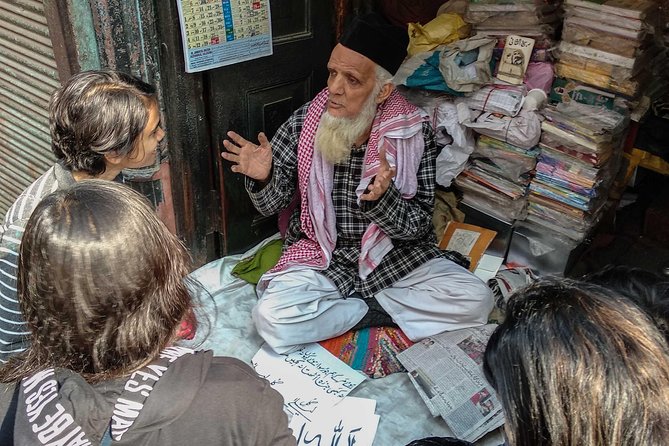
The calligraphy workshop adds a visual element that a standard poetry talk would miss. Urdu is known for its distinctive script, and here you can discuss how the language is written and how its literary culture developed under Mughal rule.
This stop helps answer a basic question: how does poetry live beyond the words themselves? The shape of the script, the care given to each line, and the link between writing and art all add another layer to the city’s cultural story.
You should think of this as a short cultural visit rather than a guaranteed hands-on class. The information provided describes a calligraphy workshop and a discussion of the language and literature, but it does not promise that you will create a finished piece or take one home.
For many people, this will be one of the most memorable sections because it changes the pace. You move from historic places and spoken verses to the physical act of writing. It also gives your guide a good chance to explain terms that can be hard to grasp through translation alone.
Following Nazir Akbarabadi Through the Old Shopping Street
The walk then moves along a 16th-century shopping street that was once tied to the Silk Route. The street gives you a more ordinary view of Agra than the palace and tomb circuit. Shops, movement, trade, and street life become part of the lesson.
Here, the guide introduces verses by Nazir Akbarabadi. His importance comes from the way he documented everyday society and the city’s economic life. His poetry can help you notice what official monuments leave out: working people, common goods, markets, habits, and social differences.
This is where the walk feels most grounded. You are not simply hearing that Agra had an important past. You are walking through a commercial area and considering how trade shaped the people who lived there. The route makes poetry useful as a record of local life.
The shopping street may also be the least calm part of the outing. This is an active urban area, not a quiet garden. Stay close to your guide, watch your footing, and be ready for a walk that includes street noise and movement. If you prefer polished paths and silent monuments, this section may feel demanding. If you want to see how the city works, it is a strong part of the experience.
A few more Agra tours worth weighing up
- Taj Mahal, Agra Fort, Baby Taj & Mehtab Bagh Private City Tour
★ 5.0 · 391 reviews - Agra : Private Sunrise Taj Mahal & Agra City Tour
★ 5.0 · 367 reviews - All-Inclusive Private Sunrise Taj Mahal & Agra City Tour
★ 5.0 · 139 reviews - Private Full-Day Sunrise Taj Mahal and Agra City Tour
★ 5.0 · 48 reviews
Khankhana Katra and Abdur Rahim’s Verses
Khankhana Katra adds another historical and literary stop. Here you read verses associated with Abdur Rahim Khankhana and learn how poetry links the city to figures from the Mughal period.
The stop broadens the tour beyond Ghalib and Nazir Akbarabadi. You encounter different periods, voices, and literary traditions rather than hearing one narrow account of Urdu poetry. That range helps you understand that Agra’s cultural life did not begin or end with the Taj Mahal.
The supplied route information is cut off before giving the complete detail of this stop, so I would not expect a long, highly structured visit. The useful part is the guide’s explanation on site and the chance to read selected lines in the place connected with the story.
The walk also includes newer and emerging talents. That detail keeps the tour from becoming only a lesson about writers from centuries ago. It suggests that the guide will connect older poetry with Agra’s continuing literary life, though the exact writers and amount of time devoted to them can vary.
A Private Walk With Room for Questions
A private tour is especially helpful for a subject like poetry. You can ask for a translation, request a slower explanation, or spend more time at a location that interests you. If someone in your group cares about calligraphy while another person is more interested in Mughal history, the guide can adjust the conversation.
The private setup also helps with photographs. The guide can help your group find suitable places to pause and take pictures without holding up a larger party. That is a small benefit, but it matters on a street walk where good views may appear quickly.
One guide specifically connected with this experience is Kaleem. He is described as caring deeply about Agra, its people, and its culture, and as explaining more than five sites across several religions while tying each place back to the city’s history. Since guide assignments can change, you should not assume Kaleem will lead every departure. Still, that description gives you a useful sense of the kind of guide this walk aims to provide.
The best guide for this outing will not only recite biographies. You want someone who can explain why a verse matters in a particular street, how a language developed, and how different communities shaped Agra. The private format gives you a better chance to draw out that kind of conversation.
What the Handout Adds After the Walk
You receive a handout with selected poetry verses and photographs. This is more useful than a generic souvenir because the writers’ names and lines can be difficult to remember after several stops.
Use it as a reference later in your trip. You might read the verses again before visiting another Agra site, or keep it as a reminder of the parts of the city that are easy to miss. The photographs also help place the text back in its setting.
The handout does not replace a good explanation. Poetry in translation can lose its rhythm, humor, or cultural references. Its value is that it gives you something concrete to review after the guide has provided the background.
Is $44.28 a Fair Price?
At $44.28 per person, this is not the cheapest way to spend two or three hours in Agra. You are paying for a private guide, a focused subject, local walking access, and a cultural experience that is difficult to reproduce on your own.
The value improves if two or more people share the booking, since the guide’s attention remains reserved for your group. It also makes more sense if you have already seen, or plan to see, the Taj Mahal and Agra Fort. This walk fills a gap by showing how literature and ordinary streets shape the city’s identity.
The price is harder to justify if you mainly want monument interiors, architectural detail, or a fast overview of Agra. Poetry is the main subject, and the tour’s success depends heavily on the guide’s ability to explain verses and cultural context.
I see this as a good mid-range choice for someone who wants one afternoon or evening set aside for local culture. It offers more personal attention than a large group tour and more structure than simply wandering the old city alone.
Who Should Book This Agra Experience?
I would recommend this walk to you if you enjoy literature, local history, language, photography, or neighborhood walks. It also suits repeat visitors who have already covered Agra’s major monuments and want a different way to understand the city.
It can work for first-time visitors too, especially if you want to place the Taj Mahal within a wider picture of Agra. The old city, market street, religious sites, and literary stops show a side of town that a monument-only schedule leaves out.
You should think twice if you dislike walking, crowded commercial areas, or discussions that depend on translation. The tour requires moderate fitness, and the route is not built around air-conditioned transport or long seated talks.
The walk is private, so it can suit couples, families with older children, or a small group of friends. Younger children may not connect with the poetry, but the calligraphy and street setting could hold their attention for part of the route. The tour description does not give a minimum age, so ask the provider if age is a concern.
Timing, Weather, and Cancellation
The fixed start time is 5 pm, and the tour ends back at Jama Masjid after roughly two to three hours. That makes it an easy addition to a day of sightseeing, provided you leave enough time to reach the meeting point.
The experience requires good weather. If poor weather cancels the walk, you can choose another date or receive a full refund. The same options apply if the minimum number of required participants is not met.
You can cancel for a full refund up to 24 hours before the start time. Cancellations or changes made within 24 hours are not accepted for a refund, and cut-off times use local time in Agra.
Final Verdict: A Literary Side of Agra Worth Your Evening
Book this tour if you want Agra to feel like a living city rather than a backdrop for famous buildings. The strongest features are the private guide, the links to Ghalib and Nazir Akbarabadi, the calligraphy workshop, and the chance to read poetry in streets tied to trade and local life.
I would not choose it as your only Agra activity. It does not replace the Taj Mahal, Agra Fort, or other major sights. But as a companion experience, it gives those monuments more human context and helps you understand the communities that shaped the city.
For $44.28, the decision comes down to your interests. If you want a personal, thoughtful walk and are happy to trade polished sightseeing for old streets and literary stories, this is a worthwhile choice. If you want speed, architecture, or a vehicle-based tour, spend your money elsewhere.
FAQ
Where does the Agra poetry walk start?
The tour starts at Jama Masjid Agra, near Subash Bazar, Kinari Bazar, Hing ki Mandi, Mantola, Agra, Uttar Pradesh 282003, India.
What time does the tour begin?
The scheduled start time is 5:00 pm.
How long does the experience last?
The walking tour lasts approximately two to three hours.
Where does the tour end?
The activity ends back at the starting meeting point at Jama Masjid.
Is this a private tour?
Yes. Only your group participates in the activity.
What poets are discussed?
The tour discusses poets including Nazir Akbarabadi, Mirza Ghalib, Mir Taqi Mir, and Abdur Rahim Khankhana. It also includes new and emerging talents.
Is a calligraphy workshop included?
Yes. The route includes a visit to an Urdu calligraphy workshop, with discussion of the script, language, and literature during Mughal rule.
Can I cancel for a full refund?
Yes. You can cancel at least 24 hours before the start time for a full refund. Cancellations within 24 hours are not refunded.
Recently added around Agra
- Taj Mahal Entrance Ticket★ 5.0 · 3 reviews
- Spiritual Private Tour of Vrindavan and Mathura★ 3.0 · 3 reviews
- Agra’s Hidden Gems & Flavors on a Thrilling Tuk-Tuk Tour 3-4 Hrs★ 5.0 · 3 reviews
- Agra: Taj Mahal and Agra Fort Private Guided Half-Day Trip★ 5.0 · 3 reviews
- Shop Agra Like a Local: Unique Indian Handicrafts Tour★ 5.0 · 3 reviews
- From Jaipur: Taj Mahal Guided and Agra Tour By Car★ 5.0 · 3 reviews
- Private Transfers Jaipur To Agra Drop with sikri & stepwell★ 5.0 · 3 reviews
- Full day Taj Mahal, Agra Fort, Fatehpur Sikri By Car From Agra★ 5.0 · 3 reviews
City Tours, compared.

Full-Day City Tour with Car, Guide & Skip-the-Line
Read our review →
Taj Mahal, Agra Fort, Baby Taj & Mehtab Bagh Private City Tour
Read our review →
Private Jaipur Full One Day Tour In Pink City With Guide
Read our review →
Jaipur Guided City Tour: City Palace, Jantar, Hawa & Jal Mahal
Read our review →Browse the lists this tour appears in