
Reviewed · FATEHPUR SIKRI TOURS
Book Official Tour Guide for Fatehpur Sikri.
Fatehpur Sikri is one of India’s most striking abandoned cities: a red sandstone royal complex built by Emperor Akbar, then left behind as the imperial court moved away. This private two-hour tour takes you through its grand courtyards, palace buildings, mosque, and famous white marble tomb.
I like the private group format, which keeps the pace suited to your party, and the separate entrance that offers skip-the-line access. The $17 price covers up to five people, so it can be excellent value if you are traveling with family or friends. The catch is simple: entrance tickets are not included, and two hours can feel short if you want to inspect every carved detail.
In This Review
- Key points to know before you go
- Why Fatehpur Sikri is worth two hours
- Meeting your guide at Agra Gate
- Panch Mahal and the royal court
- Rang Mahal and the palace quarters
- The mosque, Buland Darwaza, and Salim Chishti’s tomb
- What the guide adds to the architecture
- Is $17 good value for a private group?
- Timing, pace, and accessibility
- Who should book this Fatehpur Sikri tour?
- Should you book it?
- FAQ
- Where does the Fatehpur Sikri tour start?
- How long does the guided visit last?
- How much does the tour cost?
- Are entrance tickets included?
- Which sights are included?
- Which languages are available?
- Is the tour private?
- What should I bring?
Key points to know before you go
- Meet at Agra Gate: Your guide welcomes you at Fatehpur Sikri and begins the visit from the main access point.
- A private two-hour visit: The price covers a group of up to five people, not each individual.
- Major Mughal sights included: See Panch Mahal, Diwan-i-Am, Diwan-i-Khas, Rang Mahal, the harem area, the mosque, Buland Darwaza, and Salim Chishti’s tomb.
- Languages available: You can request an English, Italian, Spanish, or French-speaking guide.
- Guides named in bookings: Imam Fatehpur Sikri and Tony, also referred to as Toni, have led recent visits.
- Bring identification: You are asked to carry an ID card or passport.
Why Fatehpur Sikri is worth two hours
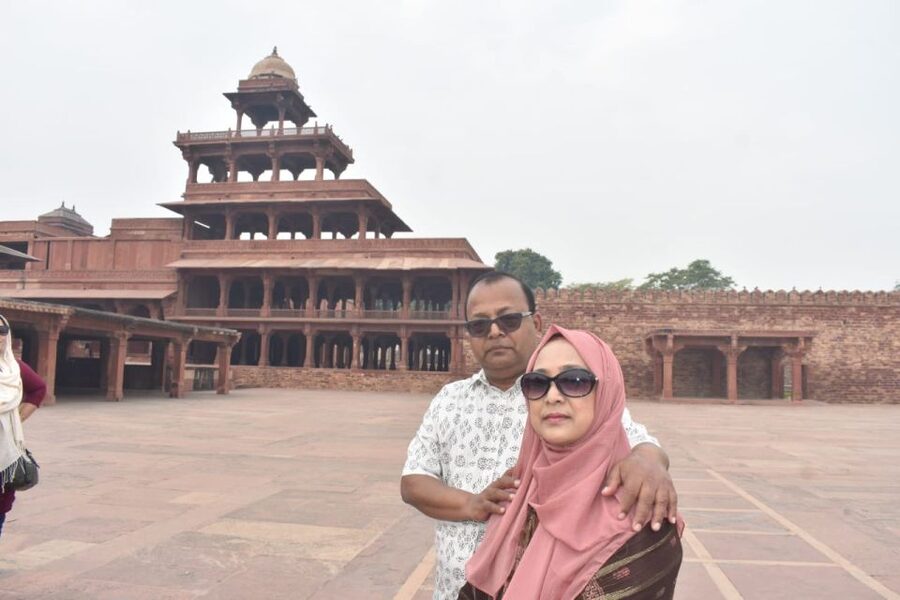
Fatehpur Sikri was Emperor Akbar’s short-lived capital, built in red sandstone and enclosed by a strong outer wall. The city feels different from Agra’s more familiar monuments. Instead of one famous tomb, you move through a complete royal setting with halls, courtyards, residences, religious buildings, and ceremonial gateways.
The deserted quality is part of the appeal. You are not simply looking at a single monument. You are walking through the remains of an imperial center that was planned around power, religion, court life, and ceremony.
Your guide helps connect the buildings. Without that context, the courtyards can blur together, especially during a quick visit. With a guide, Panch Mahal is not just a five-level structure, and Diwan-i-Khas is not just another red sandstone room. Each stop becomes part of Akbar’s court and the way the city functioned.
The tour is also useful if you do not want to spend time arranging a guide at the entrance. You meet the guide at Agra Gate, then stay with the same person for the full visit. That makes the experience straightforward, especially if you are visiting Fatehpur Sikri as part of a larger trip through Uttar Pradesh.
More Fatehpur Sikri trips:
- Private Transfer Agra to Jaipur with Fatehpur Sikri
★ 5.0 · 135 reviews - Private Transfer From Agra To Jaipur with Fatehpur Sikri
★ 5.0 · 117 reviews - Agra: Guided Tour of Taj Mahal, Agra Fort and Fatehpur Sikri
★ 4.7 · 81 reviews
Meeting your guide at Agra Gate
The tour begins at Fatehpur Sikri, with the guide meeting and welcoming you at Agra Gate. This is an important detail because the experience does not include transportation to the site. You need to make your own way there and have your entry ticket ready to purchase separately.
The guide service is described as approved by the Ministry of Tourism, Government of India. That gives you a clear point of reference when choosing between an official local guide and someone offering informal explanations around the monument.
The booking is for a private group of up to five people. If you are alone, the price may feel less striking. For two, three, four, or five people, the $17 group price becomes more attractive because the cost is shared across the party.
Recent bookings identify guides as Imam Fatehpur Sikri and Tony, also called Toni. Tony is noted for waiting when a road trip from Jaipur took much longer than expected. That detail matters if Fatehpur Sikri is part of a long driving day, though you should still confirm your meeting time and location clearly before setting out.
Panch Mahal and the royal court
Panch Mahal is one of the most recognizable buildings in Fatehpur Sikri. Its five levels rise in a tapering arrangement, giving it a light, open appearance despite the heavy red sandstone used across the complex.
A guide can help you understand how this building fits into the royal setting rather than treating it as a quick photo stop. You will likely spend part of the visit moving through open spaces and looking at the relationship between the buildings, courtyards, and elevated structures.
The tour also includes Diwan-i-Am, the Hall of Public Audience. This was a formal space connected with the emperor’s public role. It gives the visit a useful contrast with Diwan-i-Khas, the Hall of Private Audience, where the setting feels more controlled and restricted.
These two halls are among the most useful stops for understanding Mughal court life. Ask your guide to explain how public and private business differed, and why the buildings were arranged as they were. The value of the tour comes from these connections, not only from naming each structure.
Rang Mahal and the palace quarters
Rang Mahal and the harem area offer a different side of Fatehpur Sikri. The great gateways and audience halls show imperial authority. These palace quarters point more toward domestic life and the people who lived within the royal complex.
The supplied description uses the term Harem Sara for the women’s quarters. You can expect the guide to explain the role of these spaces and how they related to the wider court. Since much of the interest here comes from interpretation, this is a good place to ask questions rather than rush through.
The red sandstone construction gives the complex a consistent look, but the buildings are not identical. Pay attention to changes in layout, openings, pillars, and ornament. A guide can point out Indo-Islamic architectural features and explain how local building traditions appear alongside Islamic design.
You should keep your expectations realistic. This is a two-hour guided visit, not a leisurely architectural study. If you like to stop for long photographs or examine every surface, you may need to choose which areas deserve more time.
More Agra trips:
- Private Transfer From Jaipur to Agra including Fatehpur Sikri
★ 5.0 · 58 reviews - From Agra: Private Fatehpur Sikri Tour sightseeing All Inclusive
★ 4.5 · 56 reviews - Private Transfer Agra To Jaipur Via Fatehpur Sikri & Chand Baori, Step Well
★ 5.0 · 39 reviews - Agra To Jaipur Drop Via Fatehpur Sikri & Chand Baori, Step Well
★ 5.0 · 37 reviews
The mosque, Buland Darwaza, and Salim Chishti’s tomb
The religious part of the tour is centered on the mosque, Buland Darwaza, and the tomb of Sufi Sheikh Salim Chishti. Together, these sites give Fatehpur Sikri much of its emotional and ceremonial character.
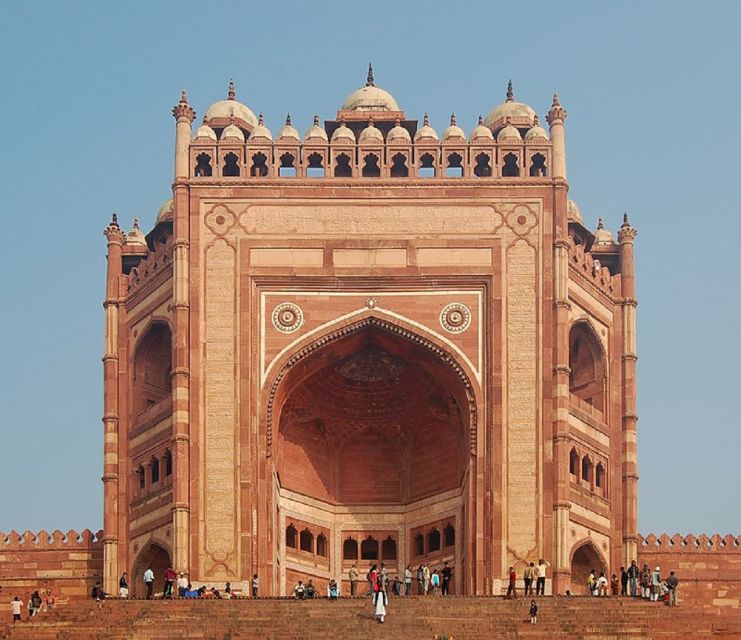
Buland Darwaza is the grand gateway and one of the most memorable structures in the complex. Its scale makes the approach feel formal and imposing. Your guide explains its place within Akbar’s city and the Indo-Islamic design features visible in the stonework.
The white marble tomb of Salim Chishti provides a sharp visual contrast to the surrounding red sandstone. Its pale surface and more delicate appearance make it easy to remember, even after the larger palace buildings begin to blend together.
The visit also introduces you to qawwali, the classical Sufi musical tradition associated with the site. The description of the experience includes Indian Sufi song, giving this part of the visit a cultural element beyond architecture. The guide can explain the connection between the tomb, Sufi devotion, and the spiritual importance of the place.
Because this is an active religious setting, follow your guide’s instructions on respectful behavior. The supplied details do not specify a dress code, so the safest approach is to dress in a generally respectful manner and avoid treating the tomb only as a photo backdrop.
What the guide adds to the architecture
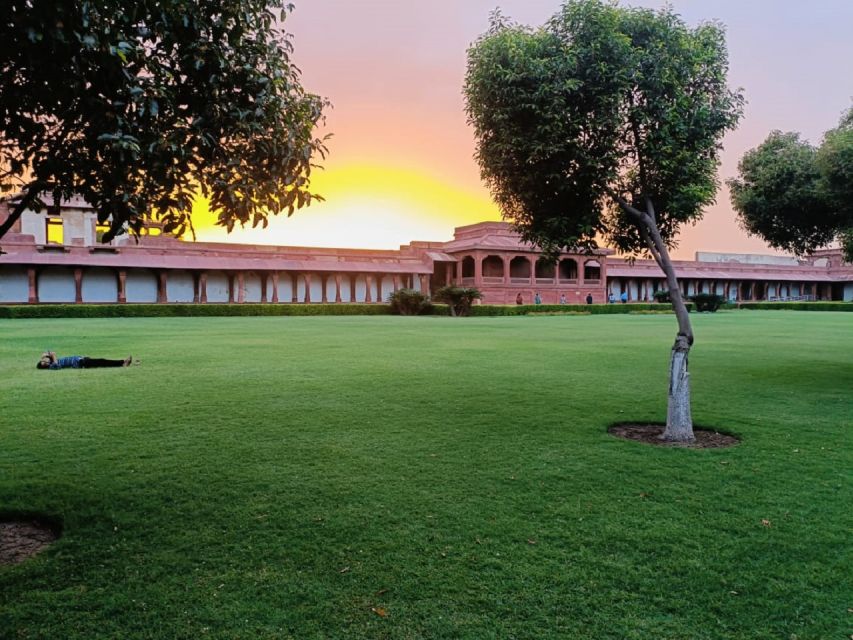
Fatehpur Sikri can be impressive without a guide, but it is easier to understand with one. The city contains several major buildings close together, and the meaning of each depends on its role in the larger court.
The guide explains the history and Indo-Islamic architectural features as you move through the site. That can help you notice details you might otherwise pass without seeing, including the way red sandstone is shaped into halls, gateways, pillars, and open courts.
I would use the guide actively. Ask who used each building, how public and private spaces differed, and why Akbar chose this location for his capital. The supplied information does not promise a specialist lecture, but it does promise live guiding in four languages and a focused explanation of the site.
The names Imam Fatehpur Sikri and Tony, or Toni, are useful when you are confirming your booking. They also give you practical reference points if your assigned guide changes. The service is offered in English, Italian, Spanish, and French, but you should select the language you need when booking and check availability for your date.
Is $17 good value for a private group?
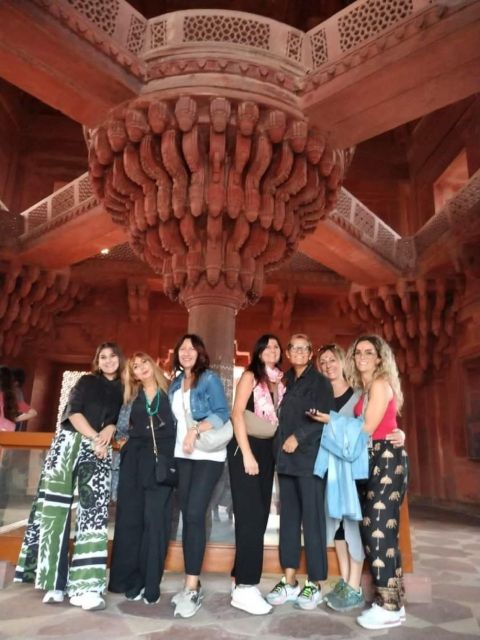
At $17 for up to five people, this is a low-cost way to add a dedicated guide to a major historical site. If five people share the price, it works out to about $3.40 per person before entrance fees. Even for two people, the group rate can make sense if you value having someone explain the buildings in your preferred language.
The price does not include entrance tickets. That is the main cost detail to remember. You should budget separately for admission and avoid assuming that skip-the-line guiding means free entry.
The separate entrance may save time, but the available information does not give a guaranteed waiting period. The practical benefit is that you have a planned guide meeting and a separate access arrangement rather than simply arriving without assistance.
Free cancellation is available up to 24 hours before the activity for a full refund. You can also reserve now and pay later, which helps if your route through Agra, Jaipur, and Fatehpur Sikri is still shifting.
Timing, pace, and accessibility
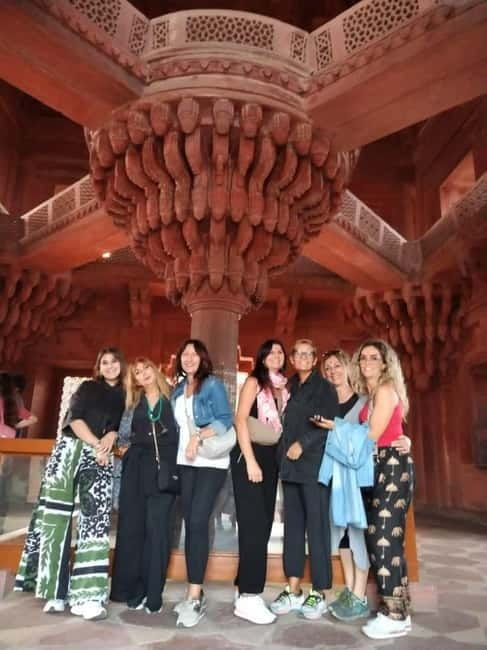
The guided portion lasts two hours and begins and ends at Fatehpur Sikri. That is enough time for a clear tour of the main sights, but not enough for a slow, highly detailed study of every building.
I would choose this tour if you want a strong overview, useful historical context, and help finding the principal monuments. If you already know Mughal architecture well, you may prefer to explore independently for longer after the guided portion.
The experience is listed as wheelchair accessible. That is useful, though the provided details do not explain the exact surface conditions or which sections may be easiest to reach. If you use a wheelchair, confirm the practical route with the provider before arrival.
Carry your ID card or passport. This is specifically requested in the important information and is easy to forget during a day of sightseeing.
Who should book this Fatehpur Sikri tour?
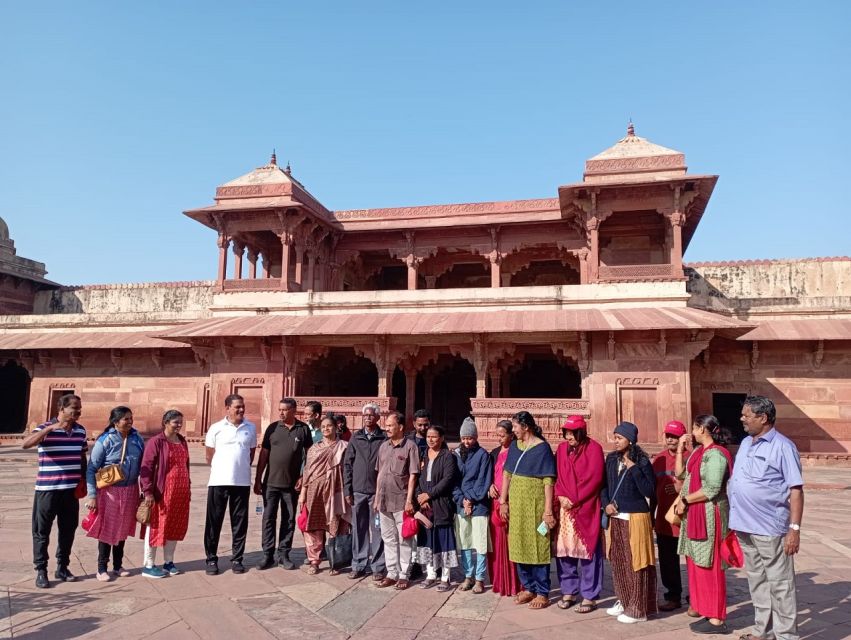
This experience suits first-time visitors who want the main story without spending hours planning the route. It is also a good match for families or small groups, since the private price covers up to five people and the guide can keep the visit together.
You will get the most from it if you are interested in architecture, Mughal history, religious sites, or the way royal cities were organized. The multilingual guide option makes it practical for international visitors who do not want an English-only explanation.
It may be less suitable if you want transportation from Agra or Jaipur. The tour begins at Fatehpur Sikri, and no transfer is included. It may also feel too short if your main goal is detailed photography or a slow study of every carved feature.
The guide service has received strong marks for enthusiasm, patience, and informative explanations. One recent booking specifically praised Imam Fatehpur Sikri, while another thanked Tony for waiting after a delayed drive from Jaipur. Those details suggest that communication and patience are important strengths to look for when you meet your guide.
Should you book it?
Book this tour if you want a private, affordable introduction to Fatehpur Sikri and you already have your transportation and admission arrangements handled. The best value comes when two to five people share the $17 price.
I would especially choose it for a first visit. The guide brings order to a large complex, explains the connection between palace, court, mosque, gateway, and tomb, and helps you use two hours well.
Skip it if you want an all-day visit, included entrance tickets, or transport from another city. For everyone else, this is a practical way to see Fatehpur Sikri with more meaning and less guesswork.
FAQ
Where does the Fatehpur Sikri tour start?
The tour starts at Fatehpur Sikri. You meet and are welcomed by your guide at Agra Gate.
How long does the guided visit last?
The guided visit lasts two hours. It begins and ends at Fatehpur Sikri.
How much does the tour cost?
The price is $17 for a private group of up to five people.
Are entrance tickets included?
No. Entrance tickets are not included in the tour price.
Which sights are included?
The visit includes Panch Mahal, Diwan-i-Am, Diwan-i-Khas, Rang Mahal, the harem area, the mosque, Buland Darwaza, and the tomb of Sufi Sheikh Salim Chishti.
Which languages are available?
Live guiding is available in English, Italian, Spanish, and French.
Is the tour private?
Yes. The tour is for a private group.
What should I bring?
Carry your identification card or passport. You also need to arrange your own entrance ticket because admission is not included.
Recently added around Fatehpur Sikri
- Full day Taj Mahal, Agra Fort, Fatehpur Sikri By Car From Agra★ 5.0 · 3 reviews
- Day Trip to The Taj Mahal and Agra with Fatehpur Sikri from Jaipur★ 5.0 · 3 reviews
- Agra To Bharatpur Same Day Tour with Fatehpur Sikri★ 3.5 · 3 reviews
- Jaipur: Tajmahal Sunrise Tour with Fatehpur Sikri & Abhaneri★ 5.0 · 3 reviews
- Tajmahal Sunrise And Sunset Tour in Agra with Fatehpur Sikri★ 5.0 · 3 reviews
- Stepwell & Fatehpur Sikri stops Agra to/from Sawai madhopur city★ 5.0 · 3 reviews
- From Agra : Jaipur Transfer via Fatehpur Sikri & Abhaneri★ 5.0 · 3 reviews
- Abhaneri & Fatehpur Sikri Tour From Jaipur with Agra Drop★ 4.5 · 3 reviews
Fatehpur Sikri Tours, compared.


Private Transfer From Agra To Jaipur with Fatehpur Sikri
Read our review →
Guided Tour of Taj Mahal, Agra Fort and Fatehpur Sikri
Read our review →
Private Transfer From Jaipur to Agra including Fatehpur Sikri
Read our review →
Private Fatehpur Sikri Tour sightseeing All Inclusive
Read our review →
Private Transfer Agra To Jaipur Via Fatehpur Sikri & Chand Baori, Step Well
Read our review →
Agra To Jaipur Drop Via Fatehpur Sikri & Chand Baori, Step Well
Read our review →
Browse the lists this tour appears in