Reviewed · JAIPUR TOURS
Explore Jaipur Like Never Before
Jaipur is easy to reduce to forts, palaces, and royal photo stops. This three-hour walk takes a more thoughtful route, using Hawa Mahal, the terracotta streets, Tripolia Bazar, and Jalebi Chowk to explain how the city works and why its colors, markets, buildings, and customs matter.
I like the small group size of seven or fewer, which gives Shristi room to tell stories rather than deliver a rushed speech. I also like the focus on logic, design, women’s lives, craft streets, and ordinary city life, not just royal names and dates.
The main consideration is pace. You will spend the full tour on foot, with up to an hour in the Pink City and 45 minutes each at Tripolia Bazar and Jalebi Chowk. If Jaipur’s heat, traffic, or uneven city streets are hard for you, this may feel tiring.
In This Review
- Key Points at a Glance
- Why This Jaipur Walk Feels Different
- Hawa Mahal Through a Woman’s Perspective
- Walking the Terracotta Pink City
- Tripolia Bazar and Jaipur’s Working Crafts
- Jalebi Chowk and the Stories of Royal Jaipur
- A Three-Hour Route With Simple Logistics
- What Shristi Adds as a Guide
- Who Will Get the Most From This Experience
- Is the $39.69 Price Fair?
- Should You Book This Jaipur Walk?
- FAQ
- Where does the tour begin?
- Where does the tour end?
- How long does the experience last?
- What places are included?
- How large can the group be?
- Is transportation included?
- Is the tour accessible to most people?
- Can I cancel for a full refund?
Key Points at a Glance

- A walking view of Hawa Mahal: Learn to see the famous windows through social history and the perspective of an Indian woman.
- Terracotta, not simply pink: Shristi explains why Jaipur’s famous color is better described as terracotta pink.
- Small groups of seven or fewer: The format suits questions and personal storytelling.
- Local market lanes: Tripolia Bazar may include silver work, stone cutting, and block-printing areas.
- Royal life at Jalebi Chowk: Stories connect soldiers, royal families, and spirituality.
- Three hours with no entry fees listed: Your cost is mainly for the guide’s time, interpretation, and route.
Why This Jaipur Walk Feels Different
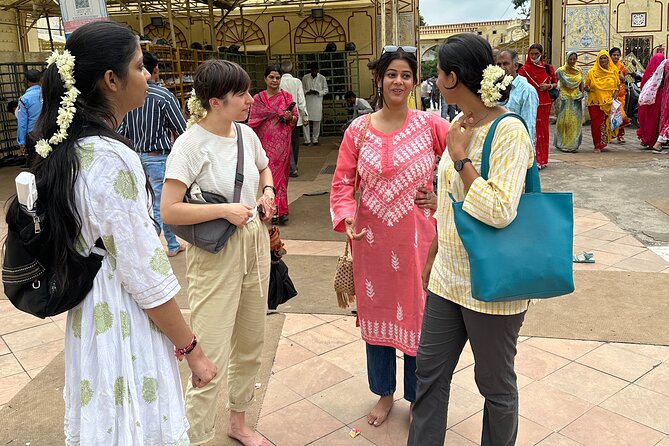
The strength of this experience is its point of view. Jaipur has plenty of grand monuments, but a monument alone does not explain a city. Shristi uses familiar places to discuss the choices behind them: how people moved through the city, how markets developed, how buildings served social needs, and how old customs still sit beside modern life.
That approach suits you if you want more than a list of dates. You will still see major Jaipur sights, but the emphasis is on stories and ideas. The tour aims to show why the Pink City is not only a royal display, but also a working city shaped by craft, trade, belief, and daily routines.
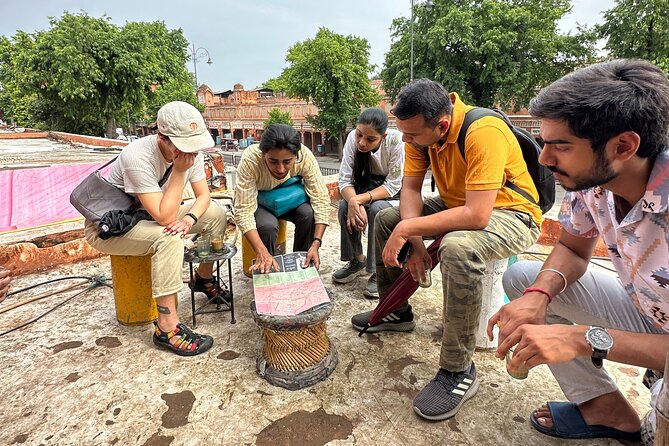
The activity has a maximum of seven people. That matters in Jaipur, where a large group can easily lose contact with its guide in a crowded bazaar. A small party also makes it easier to pause at a shop lane, ask about a detail, or hear a longer explanation without holding up a busload of people.
The advertised price is $39.69 per person. No admission charge is listed for the four stops, so you are paying chiefly for the guided walk and Shristi’s interpretation. For a three-hour private-feeling experience in a small group, the price is reasonable if you value context and local storytelling more than a long list of paid attractions.
A few more Jaipur tours worth weighing up
- Jaipur: Private Full Day Sightseeing Tour By Car with Guide
★ 4.9 · 1,839 reviews - 3-Hour Morning Bike Tour of Jaipur
★ 5.0 · 1,253 reviews - Jaipur: Private Sightseeing Day Tour with Guide by Car
★ 4.8 · 773 reviews
Hawa Mahal Through a Woman’s Perspective
The walk begins at Tripolia Gate, then reaches Hawa Mahal, Jaipur’s Palace of Wind. You receive about 30 minutes here, enough time to consider the building beyond its familiar facade.
Hawa Mahal is often treated as a quick photograph. Shristi takes a different approach, focusing on the royal windows and what they meant for women in India. The point is not only how the facade looks, but why such openings existed and how women’s place in society shaped the way royal spaces were designed.
This is one of the more distinctive parts of the tour because the guide’s perspective is personal as well as historical. Shristi is an Indian woman, and the description promises an explanation of the landmark from that angle. That can add a layer often missed by standard monument commentary, especially if you have already seen photos of Hawa Mahal and want a reason to look again.
The ticket is listed as free for this stop, but the real value lies in interpretation. You may not spend long inside a monument here. Instead, you use the building as a starting point for a conversation about society, visibility, and royal life.
Walking the Terracotta Pink City
The next section lasts about one hour and takes you through the Pink City on foot. This is the longest part of the experience, and it gives you time to notice the city at street level instead of from a passing vehicle.
One useful correction is the color itself. Jaipur is widely called the Pink City, but the buildings are described here as terracotta pink. That small distinction is typical of the tour’s method: take a familiar idea, then examine it more closely.
You can expect stories designed to explain the feeling of the old city, along with practical observations about how Jaipur operates. The material includes history, science, logic, art, and the thought process behind the city. That broad mix should appeal to you if you enjoy learning why a place looks and behaves as it does.
A walking route also gives you a better chance to notice small features. You might find changes in building color, street arrangements, shop activity, or decorative details that disappear when you move through Jaipur by car. The tradeoff is that you will need to stay with the group and keep moving for much of the hour.
There is no promise of entry into a specific building during this section, so think of it as an interpretive city walk, not an interior sightseeing tour. You are paying attention to the streets, the design, and the stories attached to them.
Tripolia Bazar and Jaipur’s Working Crafts
Tripolia Bazar receives about 45 minutes. This is where the tour shifts from royal landmarks to the commercial life that gives Jaipur much of its character.
The city’s markets include many smaller lanes and craft areas. The route may take you toward places associated with silver making, stone cutting, and block-printing. These are not just shopping subjects. They help explain how skill, trade, and local work fit into the city’s daily life.
I like this stop because it adds useful balance. Palace stories can make Jaipur seem like a city built only for rulers. A market route shows another side: craftspeople, sellers, materials, and the practical work behind the objects associated with Rajasthan.
You should keep your expectations measured. The description does not promise a workshop visit, a demonstration, or included shopping. It says you will spend time in such bazaars and learn about them. If you want to buy something, any purchase would be separate from the tour price.
The narrow lanes may also be the most demanding part of the walk. Jaipur’s markets can be busy, and a small group is helpful, but you should still expect a city setting rather than a quiet museum. This stop is best for you if you enjoy seeing where local goods are made or sold, even when the experience is observational rather than hands-on.
A completely different kind of day out from Jaipur:
- Agra: Skip-the-Line Taj Mahal & Agra Fort Private Tour
★ 4.9 · 1,546 reviews - Spiritual City Walking Tour-THE Pushkar Route
★ 5.0 · 907 reviews - Agra: Taj Mahal Express Entry Tickets
★ 4.8 · 684 reviews - Agra: Taj Mahal and Mausoleum Guided Tour with Skip-the-Line
★ 4.8 · 631 reviews
Jalebi Chowk and the Stories of Royal Jaipur
The final stop is Jalebi Chowk, with about 45 minutes devoted to the area. Here, Shristi connects the place with soldiers, royal families, and spirituality.
The value of this stop is the link between public and private life. Soldiers and royal households suggest the formal side of Jaipur, while spirituality points to the beliefs that helped shape how people understood these spaces. Rather than presenting royalty as a distant spectacle, the tour aims to explain relationships and routines.
Jalebi Chowk gives the walk a fitting final chapter. Hawa Mahal introduces social design, the Pink City reveals the logic of the urban setting, and Tripolia Bazar shows working commerce. Jalebi Chowk then brings together power, protection, family, and faith.
The supplied details do not promise a specific palace admission or ceremony here. You should expect stories and an explanation of the setting, not a guaranteed indoor royal tour. That makes the stop especially useful if you prefer context over checking off another ticketed attraction.
A Three-Hour Route With Simple Logistics
The tour starts at Tripolia Gate in Tripolia Bazar, near Badi Choupad and J.D.A. Market in Jaipur’s Pink City. It returns to the same meeting point, so you do not need to arrange a separate pickup at the end.
The full duration is approximately three hours. The planned timing adds up to 30 minutes at Hawa Mahal, one hour in the Pink City, 45 minutes at Tripolia Bazar, and 45 minutes at Jalebi Chowk. Short transitions may be included within that overall schedule.
A mobile ticket keeps the booking simple. Confirmation arrives when you book, and the meeting point is near public transportation. The tour does not list hotel pickup, private vehicle transport, or a meal, so plan to reach Tripolia Gate on your own and eat separately.
Most people can take part, and service animals are allowed. Still, this is a walking experience, so your comfort will depend on how well you manage three hours in an active city setting. The small maximum group of seven is a practical advantage, especially in market lanes.
Free cancellation is available if you cancel at least 24 hours before the local start time. Cancellations or changes made inside that period are not accepted for a refund.
What Shristi Adds as a Guide

A good city walk depends on more than location. It depends on the guide’s ability to connect details without making the experience feel like a classroom.
Shristi’s style is described as passionate and enthusiastic, with strong storytelling. Her explanations are meant to bring places to life through logical stories, not simply memorized facts. That matters here because the route contains familiar sights that can otherwise become quick photo stops.
The guide’s personal perspective also shapes the experience. At Hawa Mahal, the focus on being an Indian woman offers a particular way to discuss social customs and royal windows. Elsewhere, the combination of art, science, history, and city planning suggests a guide who wants you to ask how and why, not only who and when.
The rating is 5 out of 5, with a 100 percent recommendation rate from 15 ratings. The strongest praise centers on Shristi’s storytelling, enthusiasm, and ability to make the sights easier to understand. Those qualities are important here because the tour’s main product is explanation rather than admission to a major attraction.
Who Will Get the Most From This Experience

I would choose this tour if you are visiting Jaipur for the first time and want a clear introduction to the old city. The route covers several important areas without trying to include every fort, palace, and museum.
It also suits returning visitors who have already photographed the major monuments but want more insight into city life. The market stop, craft references, and attention to the meaning of color can help you see familiar Jaipur with more care.
This is a good choice for:
- You who prefer walking and conversation to coach sightseeing
- You who enjoy history mixed with social customs, art, and city design
- Small groups who want a guide they can hear and question
- People interested in markets and crafts, even without a formal workshop
- Visitors who want a three-hour introduction rather than a full-day tour
It may be less suitable if you want interior access to several monuments, included food, shopping discounts, or transportation between sights. The route is also not ideal if you are looking for a slow, private tour with no other participants, since the group can include up to seven people.
Is the $39.69 Price Fair?
At $39.69 per person, the value depends on what you want from a Jaipur tour. The price does not appear to cover entry tickets, food, or transport, and no paid admission is listed for the stops. If you judge tours by the number of attractions entered, you may find it expensive.
If you judge it by guide time and the small group, the calculation looks better. You receive about three hours with Shristi, covering four connected parts of Jaipur and several themes that would be hard to assemble from a guidebook alone.
I especially like that the route includes the working market areas. A standard palace visit can show you how rulers lived. Tripolia Bazar helps explain how the city’s makers and traders live and work. That wider view gives the price more weight.
The strongest value comes for people who enjoy interpretation. If you want to understand why Jaipur is called the Pink City, how Hawa Mahal can be read through women’s experiences, and how royal and spiritual stories connect at Jalebi Chowk, this is a sensible use of three hours.
Should You Book This Jaipur Walk?
Book it if you want a small-group walking tour built around stories, ideas, and local context. Shristi’s perspective, especially at Hawa Mahal, is a clear reason to choose this over a basic sightseeing circuit.
You should also book if Tripolia Bazar appeals to you more than another palace interior. The route gives Jaipur room to be a living city, with craft lanes, markets, color, belief, and royal memory all in the same walk.
Skip it if your priority is a fort admission, hotel transport, a meal, or a long list of included attractions. For everyone else, the three-hour length, manageable route, free cancellation deadline, and group limit of seven make this a practical first look at Jaipur with more thought behind it than a quick monument tour.
FAQ
Where does the tour begin?
The tour begins at Tripolia Gate in Tripolia Bazar, Badi Choupad, J.D.A. Market, Pink City, Jaipur, Rajasthan 302002, India.
Where does the tour end?
The activity ends back at the meeting point at Tripolia Gate.
How long does the experience last?
The tour lasts approximately three hours.
What places are included?
The route includes Hawa Mahal, the Pink City, Tripolia Bazar, and Jalebi Chowk.
How large can the group be?
The tour has a maximum of seven participants.
Is transportation included?
The provided details do not list transportation between stops or hotel pickup. The experience is described as a walking tour, and the meeting point is near public transportation.
Is the tour accessible to most people?
Most people can participate, and service animals are allowed. The experience involves walking through Jaipur for about three hours.
Can I cancel for a full refund?
Yes. You can cancel at least 24 hours before the local start time for a full refund. Cancellations or changes made less than 24 hours before the start are not accepted for a refund.
Recently added around Jaipur
- Taj Mahal Entrance Ticket★ 5.0 · 3 reviews
- Jaipur: Ajmer & Pushkar Day Trip with Lunch & Camel ride★ 4.3 · 3 reviews
- Spiritual Private Tour of Vrindavan and Mathura★ 3.0 · 3 reviews
- Agra’s Hidden Gems & Flavors on a Thrilling Tuk-Tuk Tour 3-4 Hrs★ 5.0 · 3 reviews
- Jaipur: City Tour Full-Day Sightseeing with Guide★ 5.0 · 3 reviews
- Shop Agra Like a Local: Unique Indian Handicrafts Tour★ 5.0 · 3 reviews
- Agra: Taj Mahal and Agra Fort Private Guided Half-Day Trip★ 5.0 · 3 reviews
- From Jaipur: Taj Mahal Guided and Agra Tour By Car★ 5.0 · 3 reviews
Jaipur Tours, compared.
Private Full Day Sightseeing Tour By Car with Guide
Read our review →



Full-Day City Tour with Car, Guide & Skip-the-Line
Read our review →
Full-Day Jaipur Private Sightseeing Tour by Car with Guide
Read our review →