Reviewed · AGRA TOURS
Gwalior Tour – Same Day Tour to Gwalior From Agra
Gwalior’s great attraction is its hilltop fort, a huge sandstone stronghold that feels very different from Agra’s Mughal monuments. This private day trip also brings you to a royal palace, a museum of early sculptures, and a temple with an unusual name and story.
I like the private car and personal guide, since you avoid a large group and can move through a long day at your own pace. I also like the mix of Hindu, Sikh, and Maratha sites, plus lunch in a former royal palace rather than an ordinary roadside restaurant.
The main drawback is the schedule. Gwalior lies about 120 kilometers from Agra, so roughly four hours of the 12-hour day may be spent on the road. You will see a lot, but this is an ambitious outing rather than a slow city visit.
In This Review
- Key points to know before booking
- Why Gwalior makes a worthwhile day from Agra
- The 120-kilometer drive from Agra
- Gwalior Fort, the day’s strongest sight
- Sas-Bahu Temple and its unusual name
- Gurudwara Data Bandi Chhod Qilla
- Gujari Mahal and the archaeological museum
- Lunch in a former royal setting
- Jai Vilas Palace and the Scindia story
- What $75 per person really buys
- Who should book this day trip
- Booking, cancellations, and practical details
- Should you book the Gwalior day tour from Agra?
- FAQ
- What time does the Gwalior tour start?
- How long does the tour last?
- How far is Gwalior from Agra?
- Is this a private tour?
- Is a guide included?
- Is lunch included?
- What happens if I cancel?
Key points to know before booking
- Gwalior Fort is the main event: Explore an eighth-century fort complex with Man Mandir, Karan Mandir, stone carvings, and a hilltop setting.
- The trip is private: Only your group takes part, with an air-conditioned vehicle, English-speaking driver, and personal guide.
- You get more than one kind of history: The route includes Hindu temples, a Sikh shrine, archaeological collections, and a Scindia royal palace.
- Lunch is planned in a former palace: The tour description includes a buffet meal at a historic palace hotel in Gwalior.
- The day starts early: Pickup is scheduled for 7:00 am, and the full outing lasts about 12 hours.
- The price covers major basics: At $75 per person, monument fees, guide service, vehicle, taxes, bottled water, and Wi-Fi are included.
Why Gwalior makes a worthwhile day from Agra
Agra is rightly famous for the Taj Mahal and its Mughal buildings, but that can make your trip feel focused on one royal tradition. Gwalior gives you a different view of central Indian history. Its fort is tied to Rajput rulers, its later palace reflects the Maratha Scindia family, and its religious sites bring Hindu and Sikh stories into the same day.
I especially like this contrast. You are not simply visiting another palace with another grand courtyard. You are moving from a fortified hilltop to temple architecture, then to a Sikh place of worship and two very different museums.
That variety is the best reason to make the long drive. If your Agra schedule is already packed with the Taj Mahal, Agra Fort, and Fatehpur Sikri, you should ask yourself if another full day in a car feels worthwhile. If you have an extra day and want to see an important city outside the standard Agra route, Gwalior is a strong choice.
The tour begins at 7:00 am from your Agra hotel. That early start matters. You need enough daylight and visiting time for several sites, and leaving later would make this already full schedule even tighter.
More Agra trips:
- Agra: Skip-the-Line Taj Mahal & Agra Fort Private Tour
★ 4.9 · 1,546 reviews - Agra: Taj Mahal Express Entry Tickets
★ 4.8 · 684 reviews - Agra: Taj Mahal and Mausoleum Guided Tour with Skip-the-Line
★ 4.8 · 631 reviews
The 120-kilometer drive from Agra
You travel in a private, air-conditioned vehicle with a driver. The distance to Gwalior is about 120 kilometers, and the drive is listed as the first major part of the day. Exact road time is not provided, so you should treat the 12-hour duration as approximate.
The private setup is a real advantage here. You are not waiting for other people at every stop, and the vehicle gives you a place to rest between visits. Air conditioning also matters in a day that includes exposed fort walls and outdoor temple areas.
An English-speaking driver is included, along with a personal tour guide for the sightseeing. The guide meets you in Gwalior and conducts the fort visit and other stops. No guide’s personal name is provided, so you should not book this expecting a particular named guide.
Two bottles of water per person are supplied. Wi-Fi is also listed among the tour features, which may be useful during the long road journey, though the information does not state how strong or reliable the connection will be.
Gwalior Fort, the day’s strongest sight
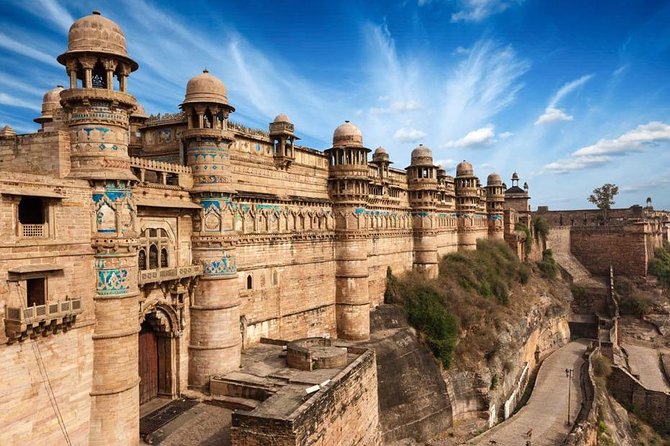
The fort occupies a steep hill called Gopachal. It was built in the eighth century and later developed by rulers including Raja Man Singh Tomar. From below, its position is the key point: this is not a low palace tucked into a city street, but a defensive monument set high above Gwalior.
Your guided fort visit is scheduled for about one hour. That is enough for an introduction and the major buildings, but not enough for an unhurried examination of every corner. Keep that in mind if you are fascinated by military architecture or want extended time with the carvings.
Man Mandir is the fort’s best-known building. Raja Man Singh Tomar built it with decorative work on the walls, giving the severe fort setting a more refined royal character. Karan Mandir is another important structure inside the complex, and an archaeological museum adds objects to the architectural story.
The fort has been described as the pearl amongst fortresses in India. The phrase is grand, but the setting explains why it has lasted. The steep hill provided defense, while the buildings and ornament showed royal ambition.
Your guide is particularly useful here because the fort contains several periods and structures close together. Without context, you might see walls, gates, and palaces as one large stone mass. With an explanation, you can better understand how a working stronghold also served as a royal residence.
Wear practical shoes and bring water even though bottles are supplied. The tour information does not give details about the walking surface or steps, so you should expect uneven ground at a historic hilltop site and plan accordingly.
Sas-Bahu Temple and its unusual name
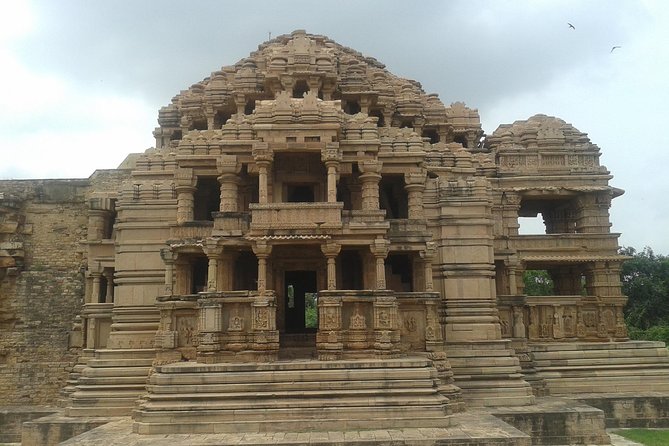
The next stop is the Sas-Bahu Temple, scheduled for about 30 minutes. Its formal connection is to Lord Vishnu, also known as Sahastrabahu, the many-handed one. Over time, the name appears to have changed through mispronunciation or reinterpretation into Sas-Bahu, commonly understood as mother-in-law and daughter-in-law.
There are two connected temples, one larger than the other. That difference helps explain the popular name, though the original dedication is the important point. King Mahipala completed the temple in 1092 AD, seeking success for his kingdom and prosperity for his people.
Half an hour is a short visit, but it gives you time to see the paired design and the carved architectural details. I would listen closely to the guide here. The name alone can distract from the temple’s actual religious and artistic purpose.
This stop also helps balance the fort. You move from a defensive complex to a place built for worship, with a different scale and mood. The tour does not offer a long temple study, so anyone with a strong interest in medieval Indian architecture may wish for more time.
A completely different kind of day out from Agra:
- Private Guided Taj Mahal Tour with Skip The Line Entry Ticket
★ 5.0 · 562 reviews - Agra: Taj Mahal & Mausoleum Skip-the-Line Tour with Options
★ 4.9 · 456 reviews - Private Guided Tour of Agra
★ 5.0 · 420 reviews - Taj Mahal, Agra Fort, Baby Taj & Mehtab Bagh Private City Tour
★ 5.0 · 391 reviews
Gurudwara Data Bandi Chhod Qilla
The tour then visits Gurudwara Data Bandi Chhod Sahib for about 30 minutes. The site is connected with Guru Har Gobind Sahib, who was imprisoned in Gwalior Fort and later secured the release of 52 other imprisoned kings.
The name explains the story. Bandi means imprisoned, while Chhor means release. This is one of the most distinctive stops because it ties the fort to Sikh memory and tradition rather than presenting it only as a Rajput or Maratha monument.
A half-hour visit is enough for a brief look and an explanation from your guide. As with any religious site, follow the local instructions about behavior and dress. The supplied information does not specify a dress code, so your guide can clarify what is expected when you arrive.
I like the inclusion of this stop because it broadens the day. Gwalior is not being reduced to palaces and old walls. You are given a direct connection between the city’s landmark fort and a major Sikh story.
Gujari Mahal and the archaeological museum
Gujari Mahal was built by Raja Man Singh Tomar for his wife, Mrignayani, a Gujar princess. According to the account attached to the site, she requested a separate palace with a regular water supply carried by an aqueduct from the nearby Rai River.
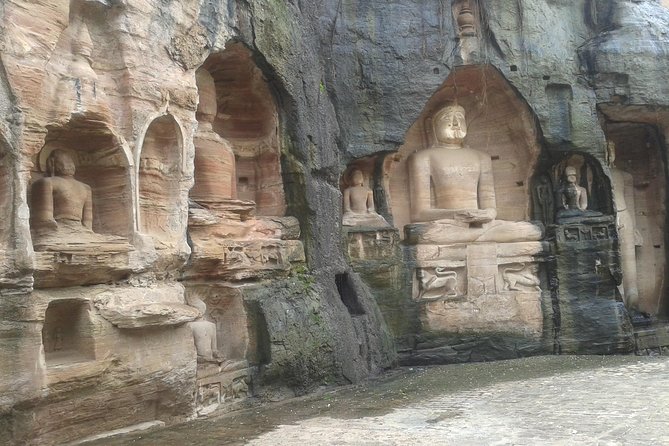
The palace now houses an archaeological museum, and your visit is scheduled for 30 minutes. Its collection includes Hindu and Jain sculptures dating from the first and second centuries BCE, terracotta objects, a miniature statue of Salabhanjika, and replicas of frescoes from the Bagh Caves.
This is a compact but valuable museum stop. The fort shows you buildings in their setting, while Gujari Mahal brings smaller objects close to your eyes. Early sculptures and terracotta pieces can be easy to rush past, so use the short visit wisely and ask your guide which pieces are most important.
The palace’s original purpose also gives the museum a personal angle. It was not simply a government building or ceremonial hall. It was commissioned for a royal wife with specific demands, including water access, which makes the story more human than a list of dates.
Because the tour allows only 30 minutes, you should not expect to examine every display. Still, this stop earns its place for anyone who wants more than grand architecture.
Lunch in a former royal setting

After the sightseeing, lunch is described as a buffet meal in a historical palace built by the royal family and now operating as one of Gwalior’s best hotels. This is a welcome change of pace after the fort and museums.
The meal is specifically presented as part of the tour description, although the general inclusions also say food and drinks are not included unless specified. Since lunch is specified for this tour, confirm the exact arrangement at booking if the meal is important to your budget.
The value here is not only the food. A palace meal gives you a chance to experience how royal buildings are being used today, rather than viewing them only behind museum barriers. It also breaks up the driving and sightseeing before the final palace visit.
No menu is provided, and no special dietary arrangements are stated. If you have dietary needs, ask before booking rather than assuming the buffet will suit you.
Jai Vilas Palace and the Scindia story
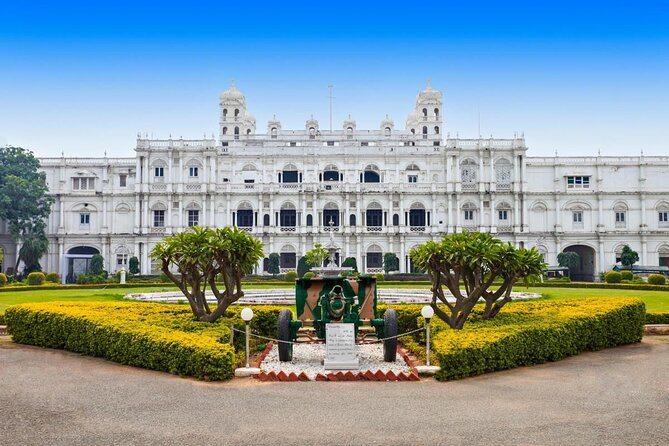
Jai Vilas Palace is a nineteenth-century palace established in 1874 by Maharaja Dhiraj Shrimant Jayajirao Scindia Alijah Bahadur, the Maharaja of Gwalior. Part of the palace remains the home of descendants of the former royal Maratha Scindia dynasty, while much of it is open as the Jiwajirao Scindia Museum.
Your visit lasts about one hour. That is the longest scheduled sightseeing stop after the fort, and it gives you time to see the palace rooms and museum displays at a more comfortable pace.
Jai Vilas adds a later chapter to the day. Gwalior Fort connects you with much older rulers and military power, while this palace shows the wealth and style of a nineteenth-century Maratha court. The two sites are very different in purpose, which makes the pairing worthwhile.
I would save some energy for this stop. After a morning of fort walls, temples, and museum objects, the palace can feel like a change of scale and atmosphere. The information provided does not list specific interiors or famous objects, so I would rely on the guide to point out the rooms and pieces that matter most.
The palace is also useful for understanding that Gwalior’s royal story did not end with the medieval fort. The Scindia family remained central to the city much later, and the museum preserves part of that legacy while another part remains a private residence.
What $75 per person really buys
At $75 per person, this is not the cheapest way to reach Gwalior, but the price includes several costs that can add up. You receive a private air-conditioned vehicle, an English-speaking driver, a personal guide, monument entrance fees, taxes, bottled water, and Wi-Fi.
The private format is the biggest value point. If you are traveling with family or friends, the cost may feel more reasonable because you are paying for a vehicle and guide shared by your own group. Group discounts are available, though the exact discount is not provided.
The palace buffet lunch is also described as included, which improves the value if that arrangement applies to your booking. Tips and gratuities are not included, so keep that separate from your tour budget.
Food and drinks are generally listed as excluded unless specified. Since the description specifically identifies a buffet lunch, ask for confirmation if you want a clear written breakdown of what is covered.
This tour is less attractive if you simply want transportation to Gwalior and prefer to explore alone. It is better suited to you if you want the main monuments organized in one day, with entry fees and a guide handled in advance.
Who should book this day trip
I would recommend this tour to first-time visitors who have an open day after seeing Agra’s main sights. It suits you if you want a broad introduction to Gwalior rather than a narrow focus on one monument.
It is also a good fit for families and small private groups. Children must be accompanied by an adult, and a child rate applies only when the child shares with two paying adults. The private car gives your group more control than a large shared coach, even though the sightseeing plan remains fairly fixed.
History and architecture fans will appreciate the range of sites. You get an eighth-century fort, an eleventh-century temple, early Hindu and Jain objects, a Sikh shrine, and a nineteenth-century royal palace in one day.
I would hesitate if you dislike long road journeys or need a slow, restful schedule. The day lasts about 12 hours, begins at 7:00 am, and includes several short visits. You should also be comfortable with historic sites that may involve walking and uneven surfaces, since the tour details do not promise step-free access.
Most people can participate, and the activity is near public transportation, but this remains a private sightseeing tour rather than a specialized accessibility service.
Booking, cancellations, and practical details
Your pickup is scheduled for 7:00 am from your hotel in Agra. Confirmation is provided at booking, and the tour is operated by My Tour Adviser.
The experience offers free cancellation if you cancel at least 24 hours before the local start time. Cancellations or changes made within 24 hours are not accepted for a refund.
I would book ahead if your Agra dates are fixed. The tour is booked on average 28 days in advance, which suggests that leaving it until the last moment may not be wise during a busy travel period.
Bring a phone, sun protection, comfortable shoes, and a little patience for the road. Two water bottles per person are included, but you may still want extra water for the fort if you tend to drink often in warm weather.
Should you book the Gwalior day tour from Agra?
Book it if you want to see the famous fort along with several smaller sites and a Scindia palace without arranging transport, guides, tickets, and lunch yourself. The fort is the clear highlight, but the mix of religious and royal places gives the trip real range.
Skip it if your Agra visit is already exhausting or if you prefer spending a full day at one site. Gwalior is a long outing, and the schedule leaves limited time at each stop.
For the right person, $75 buys a useful private introduction to one of central India’s most important historic cities. Go for the fort, stay for the contrast between Man Mandir, Gujari Mahal, the Sikh shrine, and Jai Vilas Palace.
FAQ
What time does the Gwalior tour start?
Pickup is scheduled for 7:00 am from your hotel in Agra.
How long does the tour last?
The full experience lasts approximately 12 hours.
How far is Gwalior from Agra?
The drive covers about 120 kilometers in a private car.
Is this a private tour?
Yes. Only your group participates in the activity.
Is a guide included?
Yes. A professional personal guide is included, along with an English-speaking driver.
Is lunch included?
The tour description specifies a buffet lunch in a historical palace in Gwalior. The general information says food and drinks are excluded unless specified, so confirm the lunch arrangement when booking.
What happens if I cancel?
You can receive a full refund if you cancel at least 24 hours before the experience start time. Cancellations or changes made less than 24 hours before the start are not accepted for a refund.
Recently added around Agra
- Taj Mahal Entrance Ticket★ 5.0 · 3 reviews
- Agra’s Hidden Gems & Flavors on a Thrilling Tuk-Tuk Tour 3-4 Hrs★ 5.0 · 3 reviews
- Spiritual Private Tour of Vrindavan and Mathura★ 3.0 · 3 reviews
- Shop Agra Like a Local: Unique Indian Handicrafts Tour★ 5.0 · 3 reviews
- Agra: Taj Mahal and Agra Fort Private Guided Half-Day Trip★ 5.0 · 3 reviews
- Private Transfers Jaipur To Agra Drop with sikri & stepwell★ 5.0 · 3 reviews
- From Jaipur: Taj Mahal Guided and Agra Tour By Car★ 5.0 · 3 reviews
- Full day Taj Mahal, Agra Fort, Fatehpur Sikri By Car From Agra★ 5.0 · 3 reviews
Agra Tours, compared.
Skip-the-Line Taj Mahal & Agra Fort Private Tour
Read our review →

Taj Mahal and Mausoleum Guided Tour with Skip-the-Line
Read our review →
Private Guided Taj Mahal Tour with Skip The Line Entry Ticket
Read our review →
Taj Mahal & Mausoleum Skip-the-Line Tour with Options
Read our review →
Taj Mahal, Agra Fort, Baby Taj & Mehtab Bagh Private City Tour
Read our review →