
Reviewed · HISTORICAL TOURS
Jaipur Heritage Walking Tour – Local life, Havelis and Temples
Jaipur’s old city is best understood at walking speed, where a flower seller, temple ceremony, bangle maker, and food stall tell you more about daily life than a quick drive past the sights. This tour links those small scenes with major landmarks such as Hawa Mahal and Govind Devji Temple.
I like the access to working Jaipur: you see a wholesale flower and vegetable market, traditional havelis, and craftspeople making lac bangles, marble goods, and brass utensils. I also like the practical touches, including street-food snacks from selected vendors, bottled water, tea, and coffee.
The main consideration is pace. Three hours on foot, with up to 90 minutes around Tripolia Bazar, can feel full in Jaipur’s heat and crowded lanes. Hawa Mahal is viewed from outside, and admission to major palace interiors is not part of the experience.
In This Review
- Key points to know before booking
- Jaipur makes more sense on foot
- Hawa Mahal gives you the first Jaipur lesson
- Old havelis reveal the city behind the facade
- The flower and vegetable market shows Jaipur at work
- Govind Devji Temple adds ceremony and belief
- Tripolia Bazar is the longest and most hands-on section
- Street food is included, but keep your own limits
- How the pace and guide affect the experience
- What to bring and how to plan the start
- Who should book this Jaipur walking tour?
- Should you book it?
- FAQ
- How long does the Jaipur Heritage Walking Tour last?
- Where does the tour start and finish?
- Is Hawa Mahal admission included?
- Are food and drinks included?
- Is transportation provided?
- What happens if the weather is poor or the tour is canceled?
Key points to know before booking

- A working Pink City route: Go beyond postcard views to markets, craft lanes, temples, and old residential architecture.
- Hawa Mahal from the outside: You get time for the famous facade, but no included interior visit.
- Aarti at Govind Devji Temple: The schedule may include one of the temple’s ceremonies, with the morning service recommended.
- Street food with guidance: Snacks come from vendors selected by the tour, a useful choice for cautious first-time visitors.
- Three hours on foot: Expect narrow lanes, market activity, and a fair amount of standing and walking.
- Private booking format: The activity information describes this as a private tour, so only your group participates, while the small-group format keeps attention personal.
Jaipur makes more sense on foot
At $16 per person, this is a low-cost way to get an introduction to Jaipur’s old city. The price is especially fair because the tour does more than point out monuments. It gives you a look at the city’s working quarters, includes drinks and snacks, and puts a local guide between you and the confusion of the lanes.
You are not paying for a long list of palace admissions. You are paying for orientation, local context, and a route that would be harder to piece together on your own. That distinction matters. If your priority is entering the City Palace or spending an hour inside Hawa Mahal, this is not that kind of tour. If you want to understand how the old city functions, it offers good value.
The activity lasts about three hours and begins and ends on Hawa Mahal Road near Badi Choupad, in the Pink City. There is no private transportation included, so plan to reach the meeting point yourself and wear shoes suited to uneven streets.
The booking information describes the experience as private, with only your group participating. That should give you more room to ask questions or adjust the pace than a large coach tour. Guide Viru is named in connection with the experience and has been praised for explaining Jaipur clearly, adapting the walk for an eight-year-old, and allowing visitors to set a comfortable pace.
More Walking Tours in Jaipur
- Jaipur Bazaar & Food Walking Tour
★ 5.0 · 281 reviews - Heritage Walk & Street Food Tasting in Jaipur
★ 5.0 · 158 reviews - Magical Walk of Jaipur
★ 5.0 · 121 reviews
Hawa Mahal gives you the first Jaipur lesson
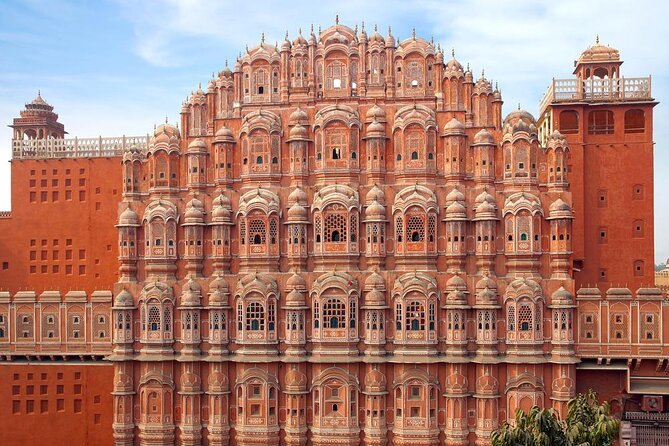
The walk begins at the Hawa Mahal, Jaipur’s famous Palace of Wind. Built in 1799 by Sawai Pratap Singh, the honeycomb-like facade allowed women of the royal court to watch processions and market life without being seen from the street.
You spend about 10 minutes here, and admission is not included. The stop is an exterior visit, so treat it as a chance to learn the building’s purpose, take photographs, and get your bearings in the old city rather than a palace tour.
That short visit makes sense at the start. Hawa Mahal sits beside one of Jaipur’s busiest old-city areas, and the guide can use the building to explain the relationship between royal life, public ceremony, and commerce. You then move into the streets where those connections are easier to see.
The facade is the main event from outside, but a brief stop will not satisfy you if you want detailed architectural study. You may want to return later on your own for more photographs or an interior visit, provided you arrange and pay for that separately.
Old havelis reveal the city behind the facade
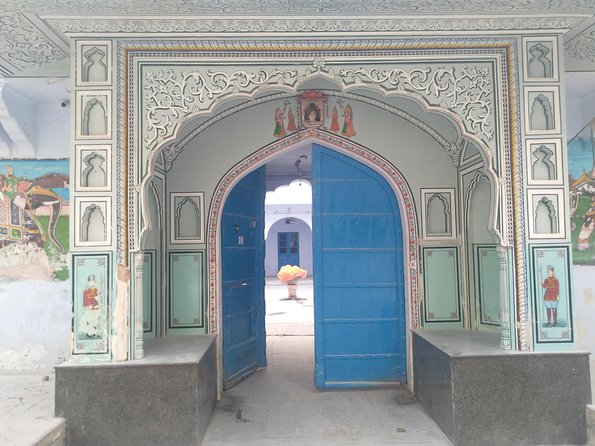
The next part takes you through narrow lanes and past old havelis. These traditional homes are known for decorated facades, frescoes, courtyards, and architectural details that are easy to miss from a car.
The tour allocates roughly 10 minutes to this stop. That is enough for an introduction, but not a long architectural survey. I like this part because it shifts your attention away from Jaipur’s grand royal buildings and toward the homes and lanes that give the old city its character.
A guide is useful here because the streets can look like a maze. You can ask about the purpose of a courtyard, the painted details, or the way older homes fit into the compact Pink City blocks. The experience does not promise entry into private residences, so expect to admire the buildings from public areas.
This is also where the walking format earns its keep. From street level, you notice doorways, balconies, paintwork, and small details that disappear when you are looking through a vehicle window. Keep your expectations realistic: this is a quick introduction to the havelis, not a dedicated architecture tour.
The flower and vegetable market shows Jaipur at work
The colorful wholesale flower and vegetable market receives about 30 minutes, making it one of the most useful stops for anyone interested in everyday Jaipur. This is described as the only wholesale flower and vegetable market in Jaipur, so the emphasis is on commerce rather than a staged cultural display.
You can expect movement, produce, flowers, vendors, and the practical business of supplying the city. The guide helps turn what might look like a noisy collection of stalls into a readable part of Jaipur’s daily routine.
This stop also gives the tour a welcome change of scale. Hawa Mahal represents royal Jaipur. The market represents the city that has to buy, sell, cook, worship, and work every day.
Markets are not always easy places for a large group, which is another reason the private format helps. Stay close to your guide, watch your footing, and ask before photographing people. The tour does not promise a shopping session, and the value here is observation rather than a list of purchases.
More history tours in Jaipur:
- Private Full-Day Sightseeing Tour of Jaipur’s Heritage by Car
★ 5.0 · 110 reviews - Jaipur Heritage Walk with Rickshaw Ride
★ 5.0 · 105 reviews - Jaipur Heritage Evening Walk – The Twilight Magic of Pink City
★ 5.0 · 93 reviews - Nahargarh Water Walk – Guided 2-Hour Heritage Tour in Jaipur
★ 5.0 · 89 reviews
Govind Devji Temple adds ceremony and belief
At Govind Devji Temple, you may see one of the seven daily ceremonies, known as aarti, according to the walking schedule. The tour specifically recommends the morning ceremony, so timing matters if this is one of your main reasons for booking.
The 18th-century Hindu temple is dedicated to Govind Devji. The visit lasts about 15 minutes and admission is free. Even a short stop can give you a better sense of how worship fits into the rhythm of Jaipur, especially after seeing the commercial side of the city.
The ceremony is not simply another monument stop. It is a chance to observe a living religious practice, so respectful behavior matters. Follow your guide’s instructions about where to stand and how to behave. The schedule may affect which aarti you see, and the information provided does not guarantee a particular ceremony time.
I would choose the morning departure if the temple matters to you. You should also be comfortable with the fact that this is an observation of an active place of worship, not a performance arranged for the tour.
Tripolia Bazar is the longest and most hands-on section
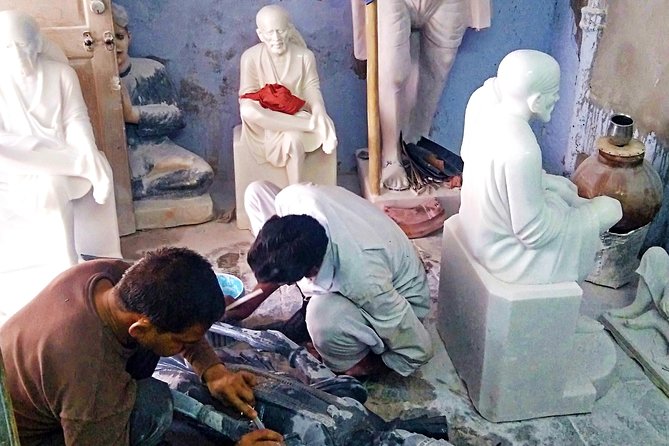
Tripolia Bazar receives about an hour and a half, making it the heart of the walk. Here, the focus moves to Jaipur’s artisan traditions and local trades.
The route includes demonstrations of lac bangle making, marble carving, and brass utensil crafting. These activities help explain why Jaipur is known for decorative arts, but the value is more direct than a souvenir-shop stop. You get to see how objects are made and how skilled work remains part of the old city’s identity.
The long time allocation gives you room to watch rather than rush from one display to another. You can ask how a bangle is shaped, how marble is worked, or how brass utensils are produced. The exact depth of each demonstration can depend on the day, the artisans available, and your guide’s route.
Tripolia Bazar is also likely to be the most demanding part of the walk. A market is a working place, not a quiet museum. Expect narrow lanes and plenty of activity. If you dislike crowded areas or long periods on your feet, this section may feel tiring.
The reward is a closer look at Jaipur’s people and occupations. You may see blacksmiths, marble workers, food sellers, bangle artists, and other trades along the route. That variety is one of the strongest reasons to choose this walk instead of a tour that only covers royal landmarks.
Street food is included, but keep your own limits
Food is part of the experience, with snacks from vendors considered reliable by the tour provider. Tea, coffee, and bottled water are also included.
This is a useful feature for first-time visitors who want to sample Jaipur without choosing a stall at random. Your guide can explain what you are eating and help you decide how much to try. The snacks are an addition to the walking tour, not a full meal, so do not book this as a substitute for lunch or dinner.
Food tolerance varies from person to person. You should tell the guide about allergies, dietary restrictions, or ingredients you avoid before accepting anything. The available details do not specify the exact snacks, so you should expect the selection to depend on the day and the vendors visited.
The free bottled water is a small but important comfort in Jaipur. Three hours of walking, market lanes, and temple stops can leave you thirsty, especially in warm weather. Bring any extra water or food you personally need.
How the pace and guide affect the experience
The tour’s strength depends heavily on the guide. A good guide can connect Hawa Mahal to royal customs, explain the havelis, clarify the temple ceremony, and help you read the market without turning the walk into a lecture.
Viru is the guide name most closely associated with this experience. His style is described as thorough, friendly, flexible, and able to explain Jaipur’s past in a way that brings the streets to life. He has also adapted the walk for a family with an eight-year-old, which suggests that the pace can work for families when the group communicates its needs.
The private format is helpful here. You can ask why a lane is important, pause at a craft demonstration, or slow down if a child needs a break. The tour is still only three hours, so it cannot cover every major Jaipur sight.
You should tell the guide early if you want more time for photographs, food, architecture, or religious sites. A clear preference can make a short walking tour feel much more personal.
What to bring and how to plan the start
Wear comfortable walking shoes. The route includes narrow city lanes, market areas, and standing at several stops. There is no private transport during the activity, so you will be on foot for the main portion.
Dress with the temple visit in mind. The provided information does not list a formal dress code, but respectful clothing is sensible for any religious site. Your guide can advise you on local expectations when you arrive.
Because the tour begins and ends at the same Hawa Mahal Road meeting point, it is easy to combine with independent sightseeing in the Pink City. You can continue exploring after the walk, or use the tour as an orientation before visiting other attractions on your own.
The experience requires good weather and a minimum number of participants. If poor weather or insufficient bookings cancels the activity, you are offered another date or a full refund. You can cancel for a full refund up to 24 hours before the start time. Inside that window, refunds and changes are not accepted.
Who should book this Jaipur walking tour?
I would choose this experience if you want a short, inexpensive introduction to the old city that mixes landmarks with ordinary working life. It suits first-time visitors, families who want a guide-led route, and anyone curious about markets, religious practice, food, and crafts.
It is also a good choice if you have already seen Jaipur’s major monuments and want a closer look at the city beyond palace courtyards. The long Tripolia Bazar section gives the tour more local texture than a standard photo stop itinerary.
You may want something else if your main goal is a detailed tour inside Hawa Mahal, the City Palace, or other paid attractions. Those interiors are not included. You should also think twice if you want an air-conditioned vehicle, dislike markets, or prefer a slow museum-style experience.
Should you book it?
Book this tour if you want Jaipur explained through its streets, trades, markets, and temple life, not only through grand buildings. At $16 per person, the combination of a private guide, snacks, drinks, and a three-hour route offers solid value.
Choose a morning departure if seeing the Govind Devji Temple ceremony is important. Ask for Viru if guide availability allows, and tell the guide whether your group cares most about food, crafts, family pacing, or architecture. Skip it only if you need extensive monument interiors or private transportation.
FAQ
How long does the Jaipur Heritage Walking Tour last?
The walking tour lasts approximately three hours.
Where does the tour start and finish?
It starts on Hawa Mahal Road at Badi Choupad, near J.D.A. Market in the Pink City. It ends back at the same meeting point.
Is Hawa Mahal admission included?
No. The tour visits the exterior of Hawa Mahal, and admission is not included.
Are food and drinks included?
Yes. Snacks, bottled water, and coffee and/or tea are included.
Is transportation provided?
No. Private transportation is not included. The experience takes place on foot.
What happens if the weather is poor or the tour is canceled?
The experience requires good weather and a minimum number of participants. If it is canceled for poor weather or insufficient bookings, you are offered another date or experience, or a full refund. You can cancel up to 24 hours before the start time for a full refund.
Recently added around Jaipur
- Taj Mahal Entrance Ticket★ 5.0 · 3 reviews
- Agra’s Hidden Gems & Flavors on a Thrilling Tuk-Tuk Tour 3-4 Hrs★ 5.0 · 3 reviews
- Jaipur: Ajmer & Pushkar Day Trip with Lunch & Camel ride★ 4.3 · 3 reviews
- Spiritual Private Tour of Vrindavan and Mathura★ 3.0 · 3 reviews
- Jaipur: City Tour Full-Day Sightseeing with Guide★ 5.0 · 3 reviews
- Shop Agra Like a Local: Unique Indian Handicrafts Tour★ 5.0 · 3 reviews
- Agra: Taj Mahal and Agra Fort Private Guided Half-Day Trip★ 5.0 · 3 reviews
- From Jaipur: Taj Mahal Guided and Agra Tour By Car★ 5.0 · 3 reviews
Historical Tours, compared.

Private Full-Day Sightseeing Tour of Jaipur’s Heritage by Car
Read our review →
Jaipur Heritage Evening Walk – The Twilight Magic of Pink City
Read our review →
Nahargarh Water Walk – Guided 2-Hour Heritage Tour in Jaipur
Read our review →
Jaipur@Twilight Guided Heritage City walk tour with Food Tasting
Read our review →

Jaipur cultural tour with artisan craft experience
Read our review →Browse the lists this tour appears in