
Reviewed · PHOTOGRAPHY SESSIONS
Jaipur: Private Instagram Tour of Top Photography Spots
Jaipur’s best photo stops are spread across the city, and this 10-hour private tour gives you a practical way to connect them in one day. You’ll frame Patrika Gate in morning light, photograph the pink facade of Hawa Mahal, walk through Amber Fort, and finish among the city’s markets and grand monuments.
I like the door-to-door pickup and the chance to choose a tuk-tuk or private car. I also like the quieter stop at Royal Gaitor, where the carved marble cenotaphs offer a calmer break from Jaipur’s main sights. The main caution is important: the tour can include shopping stops, and one past experience involved long visits to scarf and jewelry shops, so make your expectations clear before setting out.
In This Review
- Key points to know before you book
- Why this private Jaipur photo tour works
- Patrika Gate and the first portrait session
- Jal Mahal from the lakeside road
- Panna Meena ka Kund and its geometric stairs
- Amber Fort in two hours
- Royal Gaitor, the quiet change of pace
- Hawa Mahal, Jaipur’s famous pink facade
- City Palace and Chandra Mahal’s blue walls
- Jantar Mantar’s giant instruments
- Albert Hall Museum after the central sights
- Jaipur’s bazaars and the shopping question
- Guides, drivers, and the private vehicle
- Timing, cost, and what to bring
- Who should book this Jaipur photography tour?
- Should you book it?
- FAQ
- How long does the Jaipur photography tour last?
- Is hotel pickup included?
- What transport is available?
- Are entrance tickets included?
- Is lunch included?
- Which languages are available?
- What should I bring?
Key points to know before you book
- Patrika Gate is the early photo prize: Its painted corridors offer strong lines, bright color, and good portrait backgrounds.
- Royal Gaitor gives you breathing room: This peaceful stop near Amber has ornate memorials and fewer people than Jaipur’s headline sights.
- You cover a lot in one day: The route includes Amber Fort, City Palace, Hawa Mahal, Jantar Mantar, Jal Mahal, Albert Hall Museum, and Jaipur’s bazaars.
- Your guide can take your pictures: Guides such as Khan and Avi have helped with memorable portraits, including photos suited to social media.
- Transport is private: One or two people may ride in a tuk-tuk or three-seat sedan, with larger vehicles available for bigger groups.
- Shopping needs a boundary: Ask whether bazaar, chai, scarf, or jewelry stops are part of your plan before you leave.
Why this private Jaipur photo tour works
This is less a formal photography lesson than a city sightseeing day arranged around good camera angles. You get a guide, a driver, a private vehicle, and help taking pictures. That combination matters in Jaipur, where major sights sit across a large area and traffic can make independent hopping around slow.
At $9 per person, the advertised price is strikingly low for a private 10-hour outing with pickup and drop-off. The value is strongest if you want a broad first look at Jaipur and need someone to handle the roads, route, and picture taking. It is less compelling if you expect professional photography instruction, advanced camera coaching, or a carefully timed shoot at every stop.
Entrance tickets are not included, and lunch is not included. Those extra costs can change the final price, especially because Amber Fort, City Palace, Jantar Mantar, Albert Hall Museum, and other monuments may each require their own admission.
The private format gives you useful control. You can ask for more time at a favorite location, request extra photos, or ask to add a place if the schedule allows. Kk and Suresh adjusted one visit to suit requested locations, while Khan mixed sightseeing with market walks, chai, block-print fabric, jewelry, and a temple visit. That flexibility can make the day work well for families and mixed-interest groups.
More photo tours in Jaipur:
- Photography Tour of Taj Mahal
★ 5.0 · 54 reviews - Taj Mahal with Professional Photoshoot
★ 4.8 · 24 reviews - Jaipur: Instagram Tour of The Top Photography Spots
★ 4.6 · 19 reviews
Patrika Gate and the first portrait session
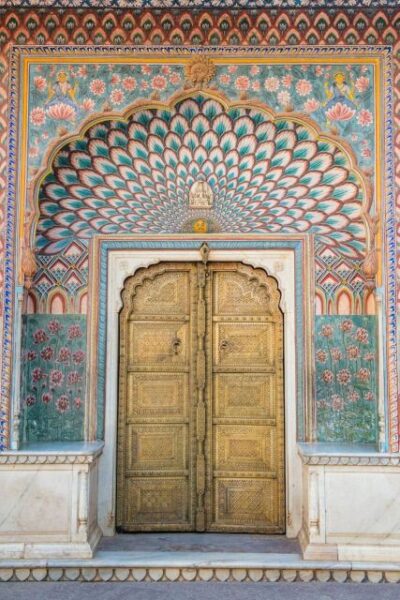
Patrika Gate is an excellent place to begin, especially if the schedule gets you there in the morning. Its long corridors are filled with painted panels and strong repeating arches. The setting does much of the work for you, so even a simple portrait can look carefully planned.
Give yourself time to walk through the passage rather than stopping at the first arch. Look along the corridor for symmetry, then turn the camera toward the painted details. The guide can help position you and take pictures, which is handy if you are traveling without a photographer.
The planned visit is about 30 minutes. That is enough for a quick set of portraits and detail shots, but not enough for a slow photography session with several outfits or camera setups. If Patrika Gate is a major reason for booking, ask for the earliest practical start and confirm how much time you will have there.
Jal Mahal from the lakeside road
Jal Mahal is a photo stop rather than a full palace visit. The Water Palace appears across the lake, giving you a clean subject with open space around it. Seasonal migratory birds may also be visible, adding a little life to the view.
You should think of this as a short roadside viewpoint. The listed time is 30 minutes, and the main reward is the broad view of the palace rather than an interior tour. Light, haze, and water conditions will shape your pictures, so this stop is worth treating as a quick visual pause rather than a guaranteed perfect shot.
Panna Meena ka Kund and its geometric stairs
Panna Meena ka Kund is one of the day’s most distinctive settings. The stepwell is built from repeated stairways that form sharp geometric patterns, giving you a different kind of Jaipur photograph from the usual palace facade.
The steps create natural lines and layers. You can photograph the full structure, then work in tighter frames of the stair corners and repeating shapes. Your guide can help with a portrait, but be mindful of where you stand and how you move around an old site.
The visit lasts about 30 minutes. That is enough to see the design and take a set of photographs, though anyone interested in architecture may wish for more time. The stop pairs naturally with Amber Fort, making the route efficient.
A few more Jaipur tours worth weighing up
- Jaipur: Private Full Day Sightseeing Tour By Car with Guide
★ 4.9 · 1,839 reviews - 3-Hour Morning Bike Tour of Jaipur
★ 5.0 · 1,253 reviews - Jaipur: Private Sightseeing Day Tour with Guide by Car
★ 4.8 · 773 reviews - Jaipur: Private Full-Day Sightseeing Tour by Tuk-Tuk
★ 4.8 · 573 reviews
Amber Fort in two hours
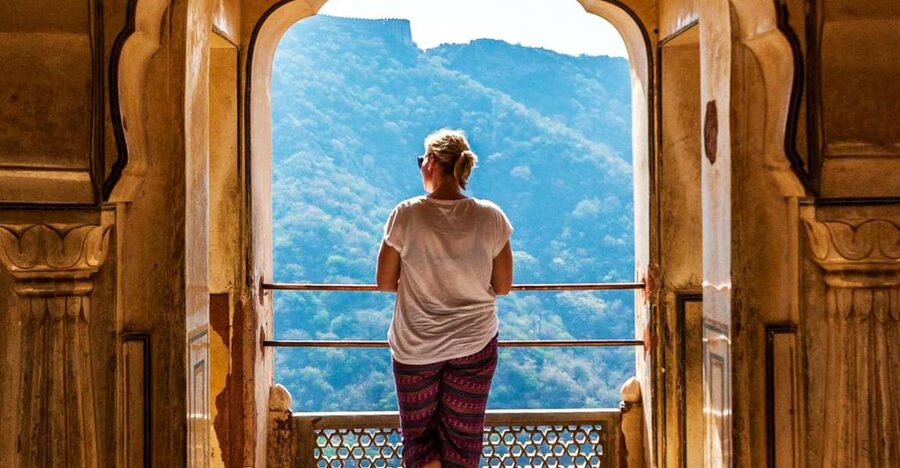
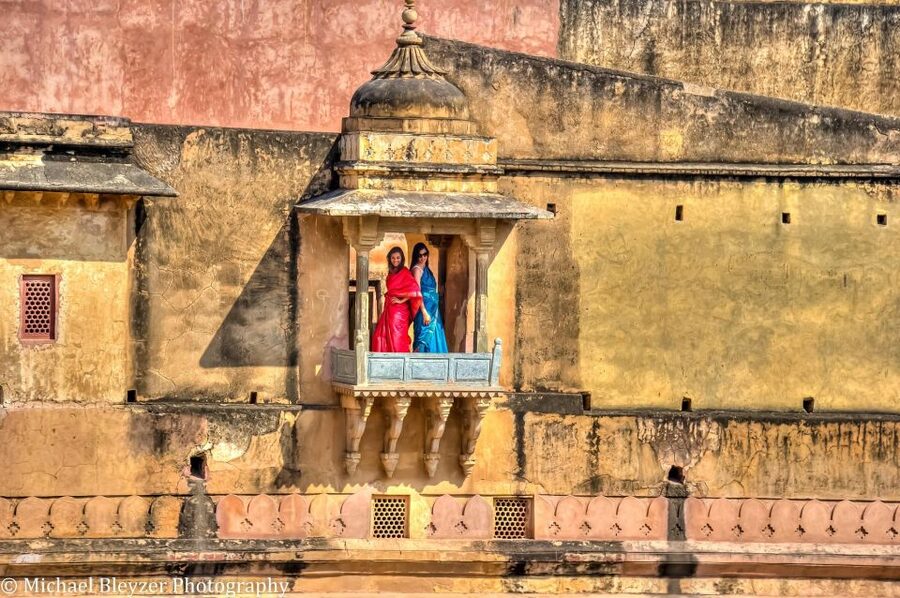
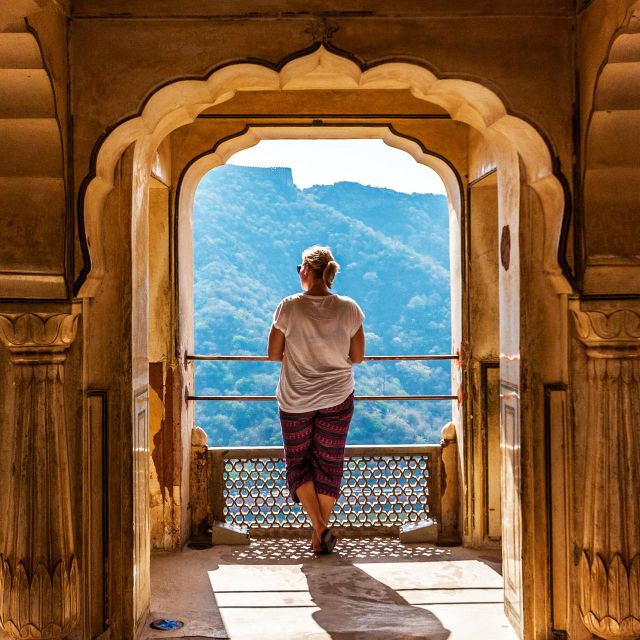
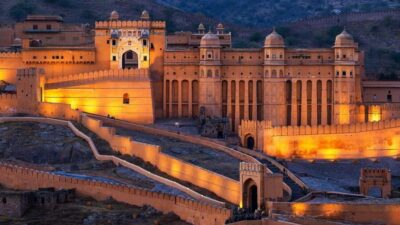
Amber Fort receives the longest visit, at about two hours, and it deserves that extra time. You’ll see imposing gates, courtyards, decorative rooms, and the old pols, or entrance gateways, that give the fort much of its photographic character.
I would use the first part of the visit for wide views and major architecture, then save time for details. Antique doors, carved surfaces, courtyard shadows, and painted interiors can make stronger images than a single full-building shot. Your guide can add the stories behind the spaces, which keeps the stop from becoming a quick hunt for backdrops.
Amber is also where the amount of walking becomes more noticeable. Wear comfortable shoes and keep your camera gear light. The tour is described as wheelchair accessible, but the fort’s historic layout may still make movement more complicated in certain areas, so discuss your needs when booking.
Because the entrance fee is not included, budget for admission before you arrive. Also remember that a two-hour visit can feel short if you want both a proper cultural visit and a full portrait session. Decide which matters most to you.
Royal Gaitor, the quiet change of pace
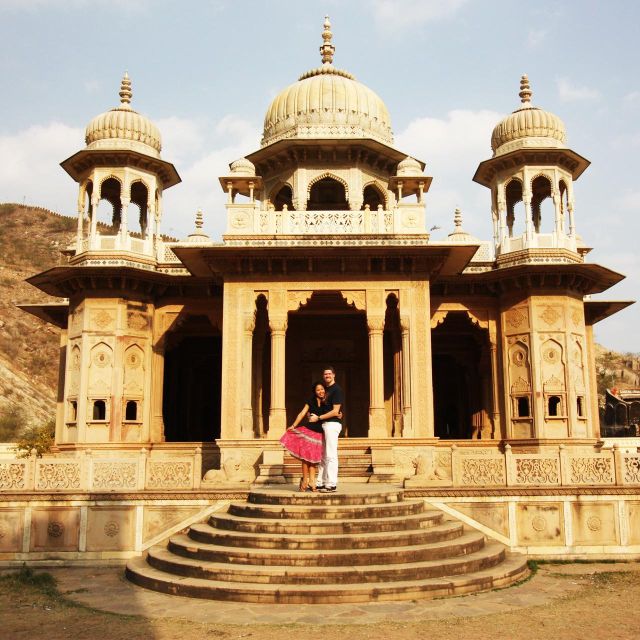
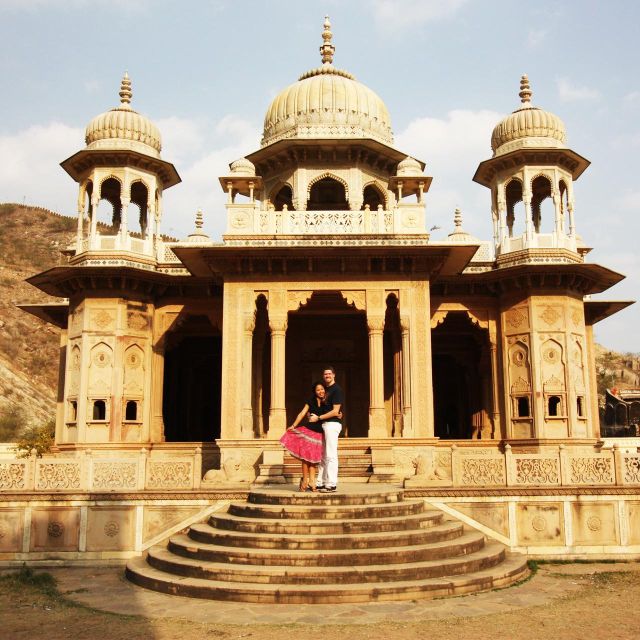
Gaitor Ki Chhatriyan, also called Royal Gaitor, may be the most rewarding stop for people who dislike crowded photo locations. The site contains ornate royal memorials with carved stonework and domed forms. It is close to Amber, so it fits neatly into the western part of the route.
The planned stop is only 30 minutes, but the atmosphere gives it a different feel from Hawa Mahal or City Palace. You can slow down, study the carving, and take photographs without the same pressure to move aside for a constant flow of people.
One visitor particularly liked Royal Gaitor for its peaceful setting, beautiful architecture, and lower number of people. I understand the appeal. It gives the day a moment of quiet and shows you a side of Jaipur that is easy to miss when you focus only on famous monuments.
Hawa Mahal, Jaipur’s famous pink facade
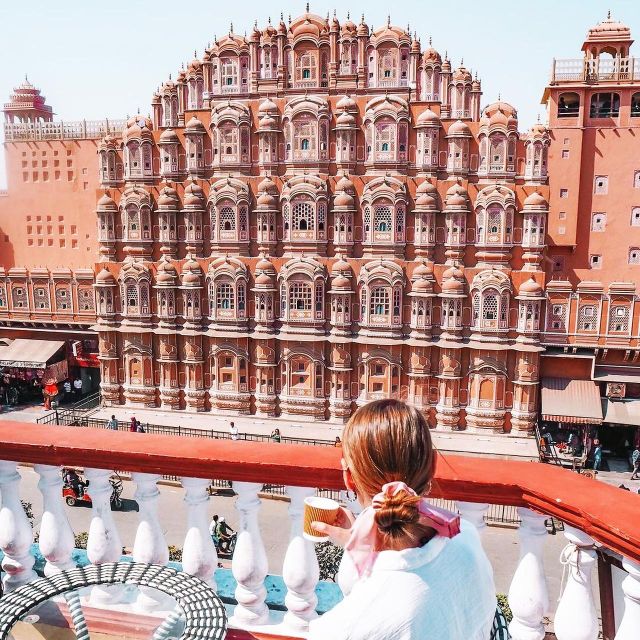
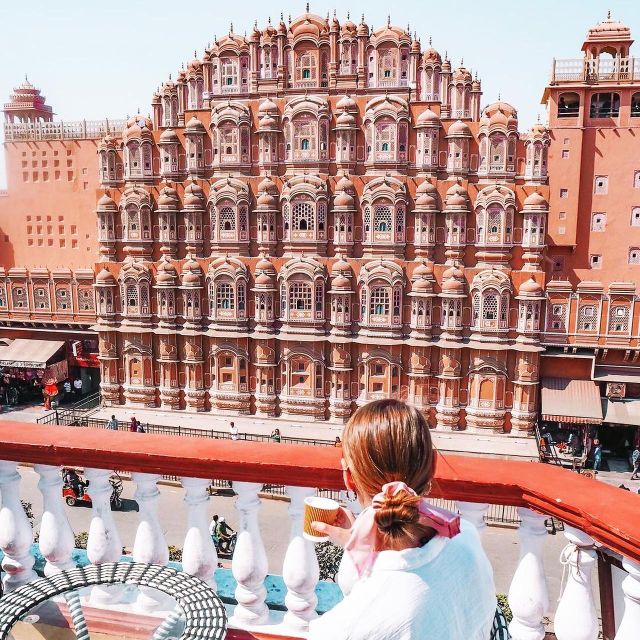
Hawa Mahal is the city’s most recognizable photo subject. Its honeycomb facade, packed with small windows, was designed to allow royal women to watch street life while remaining out of public view. From the street, the building rises in a delicate wall of pink and red detail.
The one-hour stop lets you photograph the front and hear the basic story behind the palace. Ask your guide to help you find a clear angle, since the street outside can be active and the facade is wider than it first appears.
The best picture is not always a straight-on shot. Try close details of the windows, a portrait with the facade behind you, and a wider view that shows the building in its city setting. Since this is one of Jaipur’s most photographed places, a private guide is useful for helping you make the most of a short visit.
City Palace and Chandra Mahal’s blue walls
City Palace receives two hours, making it another major portion of the day. The complex combines courtyards, grand rooms, gateways, and royal interiors. Chandra Mahal adds a memorable blue-walled setting that contrasts with the warmer pink and ochre tones seen elsewhere in Jaipur.
This is a place where you should put the phone down for a moment and look at the rooms as historic spaces, not just picture backgrounds. Your guide can explain what you are seeing and help connect the architecture with Jaipur’s royal past.
The two-hour allowance is useful, but City Palace can still feel packed into a day that includes so many other stops. If you care most about the interiors and decorative details, tell your guide early. If you care more about quick portraits, you may prefer to save time for the markets later.
Admission is extra. It is also worth confirming which parts of the palace are included in your entry ticket, since large palace complexes may have different access areas.
Jantar Mantar’s giant instruments
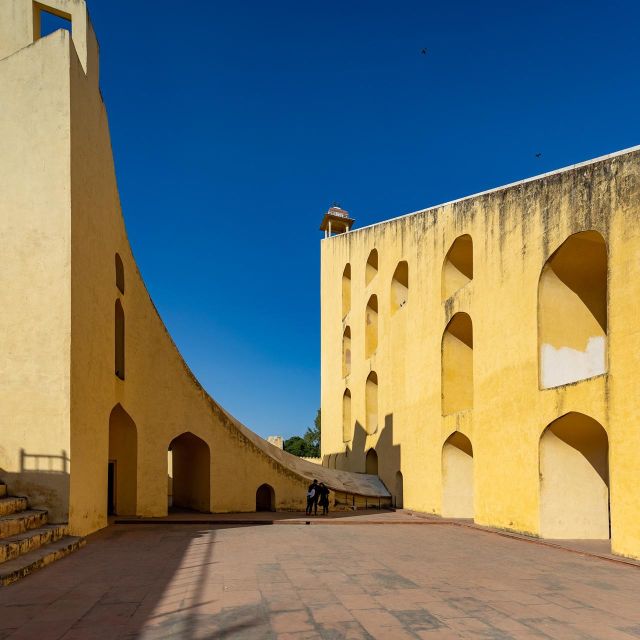
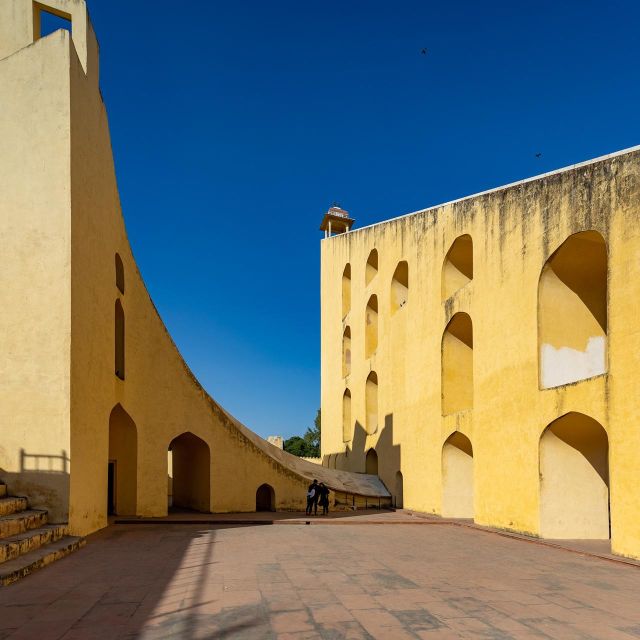
Jantar Mantar offers the day’s most unusual architecture. Its huge astronomical instruments were built for observing the sky and measuring time. The site includes the world’s largest sundial, a structure that turns scientific purpose into bold, sculptural form.
You can photograph the curves, angles, stairways, and large surfaces as abstract shapes. The guide’s explanation makes a real difference here. Without context, the instruments can look like oversized concrete forms. With an explanation, you begin to see how their shape served precise astronomical work.
The visit is scheduled for one hour. That should give you time for photographs and a clear introduction, though the sun can be strong in an open site. Bring water, use sun protection, and wear comfortable shoes.
Albert Hall Museum after the central sights
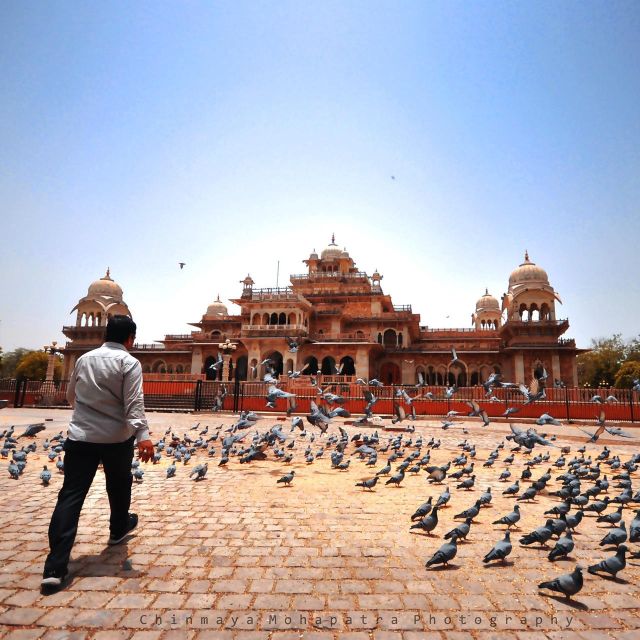
Albert Hall Museum brings a different architectural mood. Its detailed exterior and grand arches make it a natural photo stop, while the collection inside covers Rajasthan’s royal and cultural material.
The itinerary gives you about one hour. That is enough for the building, selected interior views, and a quick look at the museum. If you have a serious interest in the exhibits, you may need to choose between the collection and the building as a photographic subject.
The museum is especially appealing at night, when soft yellow lighting gives the facade a warm, formal appearance. The route does not guarantee a nighttime visit, so ask about timing if the illuminated exterior is important to you. A schedule that begins in the morning and visits several monuments may reach Albert Hall before dark.
Jaipur’s bazaars and the shopping question
The final Jaipur portion allows about an hour for walking, shopping, street photographs, and local color. The bazaars give you a chance to photograph stalls, traditional goods, signs, fabrics, and everyday city scenes rather than only polished monuments.
This can be one of the most personal parts of the day. You might find a useful souvenir, practice candid street photography, or stop for chai. Khan’s version of the day included block-print fabrics, jewelry, and a temple during a service, showing how the private format can include local activities alongside the main sights.
Still, you should set limits. A serious problem arose for one booking when scarf and jewelry visits took up hours, with repeated attempts to encourage purchases. That is not a small detail. Tell the guide before departure that shopping is optional, and state how much time you want to spend there. If you do not want commercial stops, say so plainly.
The tour provider may also suggest food spots, but lunch is not included. Plan to ask about a meal break and confirm whether it will affect your time at the monuments.
Guides, drivers, and the private vehicle
The people leading the day matter as much as the route. Khalid has been praised for safe driving, a clean tuk-tuk, patience, local stories, and useful food suggestions. Mohsin was also noted for making a tuk-tuk ride around Jaipur enjoyable, while Kk and Khan helped with history and photos.
Avi can guide in Spanish, and the activity lists English, French, German, Italian, and Spanish support. Confirm your preferred language when booking rather than assuming every guide speaks every language.
For one or two people, the available options are a three-wheel auto-rickshaw or a three-seat sedan such as a Toyota Etios. Groups of three to five can use a six-seat Toyota Innova or similar vehicle. Groups of six to ten may use a 10-seat Tempo Traveler.
A tuk-tuk adds open-air character and makes the road journey part of the experience. A car offers more shelter and may be more comfortable for a full day, especially in hot weather or with camera equipment. Transport arrangements are described as an available option, so confirm your preferred vehicle and whether it is included in your booking.
Pickup and drop-off are offered at hotels, the airport, and the railway station, along with listed areas such as the Pink City, C Scheme, Malviya Nagar, Bani Park, Rambagh, Vaishali Nagar, Kukas, and Sanganer. Give the exact address in advance.
Timing, cost, and what to bring
The tour lasts 10 hours, with pickup and drop-off built around a long route. The listed sightseeing blocks add up to most of the day, and Jaipur traffic can make the schedule feel full. You will walk at Amber Fort, City Palace, Jantar Mantar, Albert Hall, the stepwell, and the market, so comfortable shoes are essential.
Bring your passport or identification, camera, comfortable clothing, and water. A mineral water bottle is included, but carrying additional water may be sensible during a full day outdoors. Dress smart casual, and avoid short shorts or sleeveless tops when visiting temples or religious places.
The $9 price is good value if you want transport, a private guide, basic sightseeing help, and photos taken for you. It is not the final cost of the day because monument tickets and meals are extra. You should also confirm whether any requested shopping or food stops are optional.
Free cancellation is available up to 24 hours before the activity, and you can reserve now and pay later. The tour is private, and children aged two and under are not charged.
Who should book this Jaipur photography tour?
I would recommend it most to first-time Jaipur visitors who want to cover the major sights in one day. It also suits couples, families, and groups with different interests, since one day can combine architecture, history, markets, food suggestions, and portraits.
It is particularly useful if you are traveling with teenagers who want social-media photographs. The guide can take pictures, and the route includes colorful corridors, palace facades, blue walls, stepwell geometry, giant astronomical instruments, and ornate memorials.
I would be more cautious if you are a serious photographer who needs quiet conditions, exact lighting, a tripod, or long sessions at each site. The schedule covers a lot, and each stop has a fixed time. This is a sightseeing tour with photo help, not a dedicated workshop.
Should you book it?
Book this tour if you want a low-cost, private way to see Jaipur’s major sights without arranging transport yourself. Ask for an early start at Patrika Gate, request Royal Gaitor, tell the guide which places deserve extra time, and make your no-shopping preference clear before you leave.
Skip it if you want a slow, highly focused photography day or dislike any chance of bazaar and shop visits. For most first-time visitors, the combination of a private vehicle, local guidance, portrait help, and a wide route makes the price attractive, provided you confirm the details and budget for entrance tickets.
FAQ
How long does the Jaipur photography tour last?
The tour lasts 10 hours, including the day’s sightseeing route, pickup, and drop-off arrangements.
Is hotel pickup included?
Yes. Pickup and drop-off are available from hotels, the airport, railway station, and other requested locations in Jaipur. Listed areas include the Pink City, C Scheme, Malviya Nagar, Bani Park, Rambagh, Vaishali Nagar, Kukas, and Sanganer.
What transport is available?
For one or two people, transport may be by three-wheel auto-rickshaw or a three-seat sedan such as a Toyota Etios. Groups of three to five may use a Toyota Innova or similar vehicle, while groups of six to ten may use a 10-seat Tempo Traveler. Confirm the preferred vehicle when booking.
Are entrance tickets included?
No. Entrance fees to the monuments are not included in the tour price.
Is lunch included?
No. Meals and lunch are not included.
Which languages are available?
The activity lists English, French, German, Italian, and Spanish. You should confirm your preferred language when booking.
What should I bring?
Bring a passport or ID card, comfortable shoes, a camera, and comfortable clothing. A current valid passport is required on the day of travel. Short shorts and sleeveless tops are not recommended in temples.
Recently added around Jaipur
- Taj Mahal Entrance Ticket★ 5.0 · 3 reviews
- Jaipur: Ajmer & Pushkar Day Trip with Lunch & Camel ride★ 4.3 · 3 reviews
- Spiritual Private Tour of Vrindavan and Mathura★ 3.0 · 3 reviews
- Agra’s Hidden Gems & Flavors on a Thrilling Tuk-Tuk Tour 3-4 Hrs★ 5.0 · 3 reviews
- Shop Agra Like a Local: Unique Indian Handicrafts Tour★ 5.0 · 3 reviews
- Agra: Taj Mahal and Agra Fort Private Guided Half-Day Trip★ 5.0 · 3 reviews
- Jaipur: City Tour Full-Day Sightseeing with Guide★ 5.0 · 3 reviews
- From Jaipur: Taj Mahal Guided and Agra Tour By Car★ 5.0 · 3 reviews
Photography Sessions, compared.
Taj Mahal Sunrise Tour: Express Ticket, Guide & Photos
Read our review →
Private Tour for Instagram and Photography Lovers
Read our review →
Jaipur Instagram Photoshoot By Local Professionals
Read our review →
Full Day Sightseeing with Professional Photographer
Read our review →Browse the lists this tour appears in