
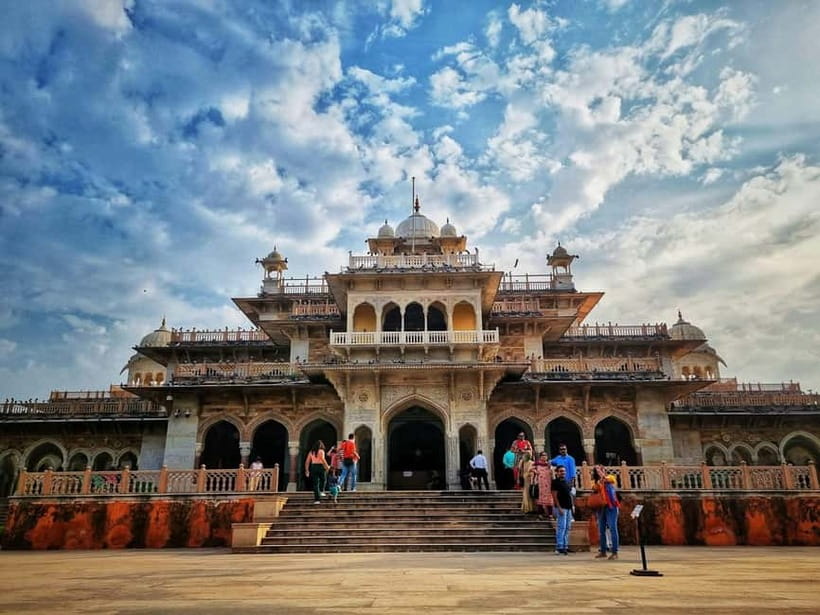
Reviewed · MONKEY TEMPLE TOURS
Private Full-Day Jaipur Guided Tour with Monkey Temple
Jaipur’s Monkey Temple, or Galtaji, gives this full-day outing its unusual edge. After the city’s famous palaces, forts, and observatory, you reach a partly abandoned temple complex built around a series of water tanks, rounded pavilions, and narrow paths. Monkeys are part of the scene, but the old stone setting is the real attraction.
I like two things right away: you get a private air-conditioned car, and the route joins Jaipur’s big sights with less familiar places such as Royal Gaitor and Panna Meena Stepwell. The main drawback is the packed schedule. Nine hours is enough to see a lot, but not enough to linger everywhere, and monument admission, lunch, and dinner cost extra.
In This Review
- Key points at a glance
- A nine-hour route through Jaipur’s royal center
- Hawa Mahal and the art of looking outward
- Panna Meena Stepwell’s precise geometry
- Amber Fort, Jaipur’s grandest stop
- Jal Mahal from the lakeside road
- Royal Gaitor and Jaipur’s quieter royal side
- City Palace, still partly a royal home
- Jantar Mantar, where stone measures the sky
- Galtaji, the Monkey Temple, and its water tanks
- Markets, street food, and the part of Jaipur beyond monuments
- What the guide and driver add
- Is $13 good value for Jaipur?
- Who should book this private Jaipur day?
- Should you book it?
- FAQ
- How long does the Jaipur tour last?
- Where can pickup and drop-off take place?
- Is the tour private?
- Is a guide included?
- Are monument entrance fees included?
- Is lunch included?
- What should I wear to the Monkey Temple?
Key points at a glance
- Monkey Temple after the main sights: Galtaji offers a quieter, more atmospheric finish than another palace or museum.
- A full private route: You visit Hawa Mahal, Amber Fort, Jal Mahal, Royal Gaitor, City Palace, Jantar Mantar, and Panna Meena Stepwell.
- Good value at $13 per person: The price covers the private car, driver, fuel, parking, water, taxes, and handling charges, but not entrance tickets or meals.
- Guide quality can shape the day: Guide names associated with this outing include Farman, Vishan Singh, Abdul, Mustak, and Shamshu. Assignments can vary.
- Useful for solo visitors and small groups: The car size changes with party size, from a four-seat sedan for one to three people to a ten-seat tempo traveler for six to ten.
- Markets and food add local flavor: Ask about street food and market time, especially if you want to end with Jaipur’s evening food streets.
A nine-hour route through Jaipur’s royal center
This is a big sightseeing day, not a slow walking tour. You are collected in Jaipur or Kukas, then driven between stops in a private, air-conditioned vehicle. That matters in Jaipur, where the heat, traffic, and distance between Amber and the central city can make an independent day tiring.
Your driver handles the road, parking, and water supply. Your guide, if you select the guide option, explains the buildings and helps organize the visits. The outing is private, so you can ask for photographs, clarification, or a little more time at a favorite stop, though the long list of sights limits how much the schedule can bend.
For one to three people, the vehicle is an air-conditioned four-seat sedan. Groups of four or five use a six-seat car, while six to ten people travel in a ten-seat tempo traveler. Pickup from the airport or railway station is available when requested, with the driver waiting under your name.
More Monkey Temple visits:
- Jaipur Tuk Tuk Sightseeing Tour with Monkey Temple Sunset View
★ 5.0 · 108 reviews - Jaipur Guided Tour with Monkey Temple
★ 5.0 · 55 reviews - Jaipur: Private Evening Tour with Monkey Temple Sunset
★ 4.6 · 27 reviews
Hawa Mahal and the art of looking outward
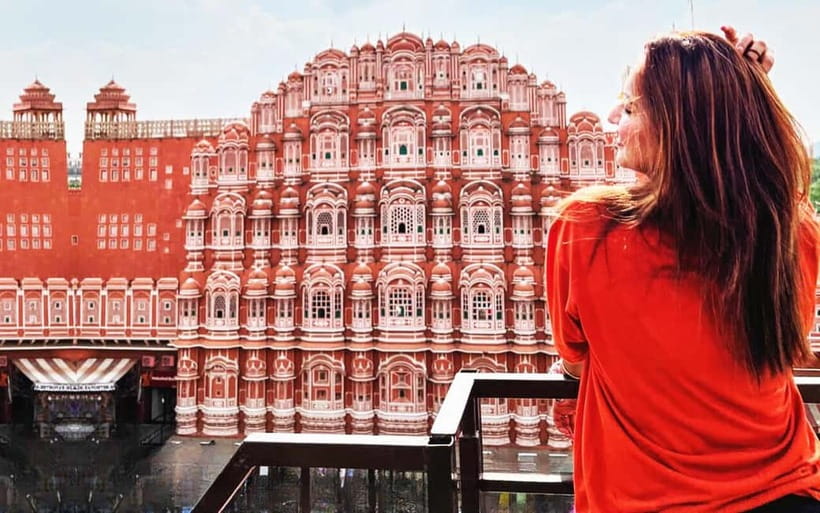
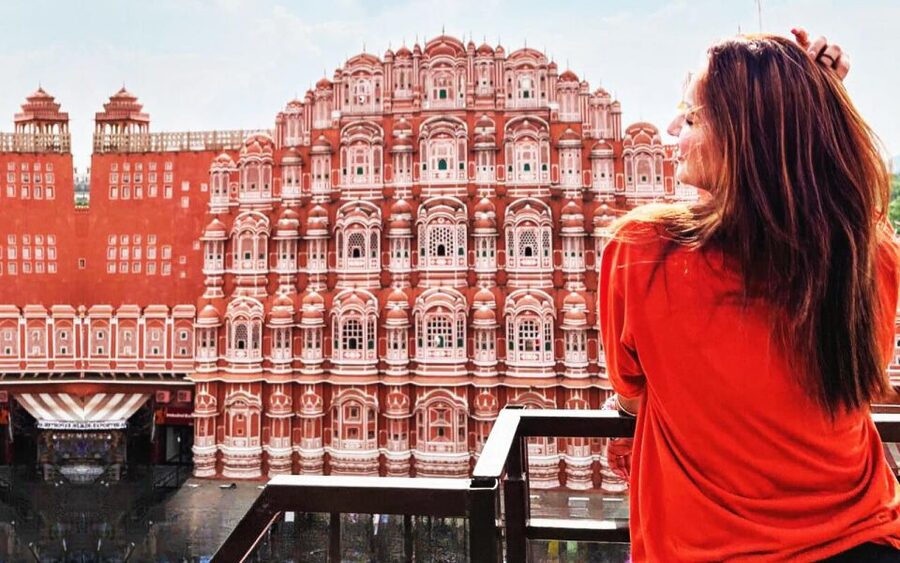
Hawa Mahal is usually the first major stop, and it is best understood from the outside. Its famous pink facade is covered with small windows and stone screens. These openings allowed royal women to watch street life without being seen, while also helping air move through the building.
You get about an hour here for photographs, a guided visit, and a walk. The stop is visually strong but can feel brief if you want a full architectural explanation or time inside nearby streets. Ask your guide to point out the details in the latticework rather than simply taking the standard front-facing photo.
This is also a useful place to begin understanding Jaipur’s design. The city was planned with broad streets and distinct quarters, while Hawa Mahal connected royal life with the public city below.
Panna Meena Stepwell’s precise geometry
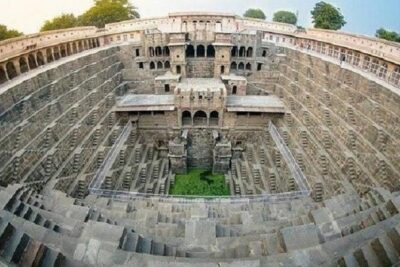
Panna Meena ka Kund is a short stop, listed at about 30 minutes. That is enough to see the striking stair pattern and hear how the well worked as a water source, but it leaves little room for a long visit.
The stepwell is built around repeated flights of stairs that form a sharp geometric pattern. From above, the design looks almost like a honeycomb cut into the earth. Its quiet appearance makes a useful contrast with the grand scale of Amber Fort nearby.
You should wear shoes with a firm grip. The steps are the point of the site, and the surfaces may feel uneven. Take care with photographs and follow local instructions about where you can walk.
Amber Fort, Jaipur’s grandest stop
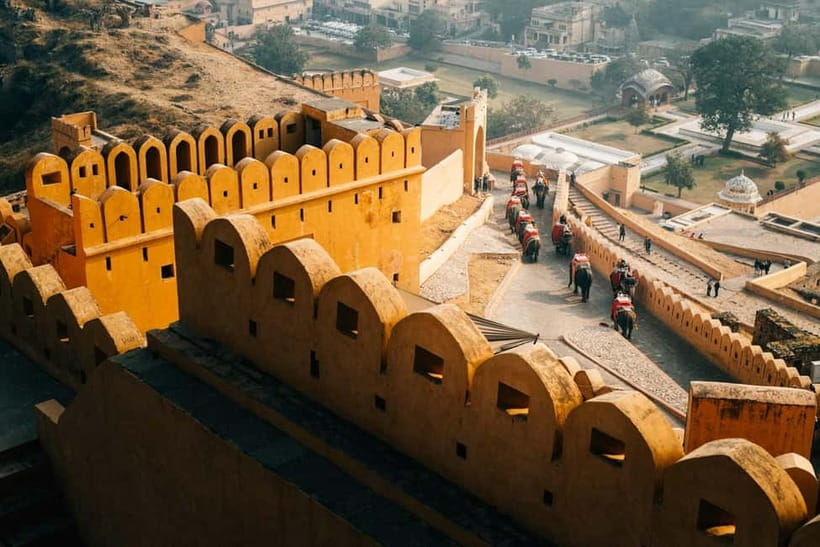
Allow two hours for Amber Fort, the longest single visit on the route. This is sensible. The complex spreads over a hill and combines red sandstone, marble, courtyards, gateways, halls, and views across the surrounding area.
Your guide can help separate the different layers of the fort from one another. You will see formal spaces built for rulers, decorative interiors, and areas designed for court life. The visual pleasure comes from the meeting of strong defensive walls and finely worked detail.
Two hours sounds generous, but it can pass quickly. The fort involves walking, stairs, and uneven ground, so comfortable shoes are important. The tour does not list entrance tickets as included, so carry cash or a payment method suitable for monument fees.
The private vehicle is especially useful here. You are not trying to connect the hill fort with the city by local transport, and you can leave your belongings in the car between stops. The driver also handles parking, which several people specifically valued.
A few more Jaipur tours worth weighing up
- Jaipur: Private Full Day Sightseeing Tour By Car with Guide
★ 4.9 · 1,839 reviews - Jaipur: Private Full-Day Sightseeing Tour by Tuk-Tuk
★ 4.8 · 573 reviews - Jaipur: Full-Day City Tour with Car, Guide & Skip-the-Line
★ 4.8 · 512 reviews - Full-Day Jaipur Private Sightseeing Tour by Car with Guide
★ 5.0 · 472 reviews
Jal Mahal from the lakeside road
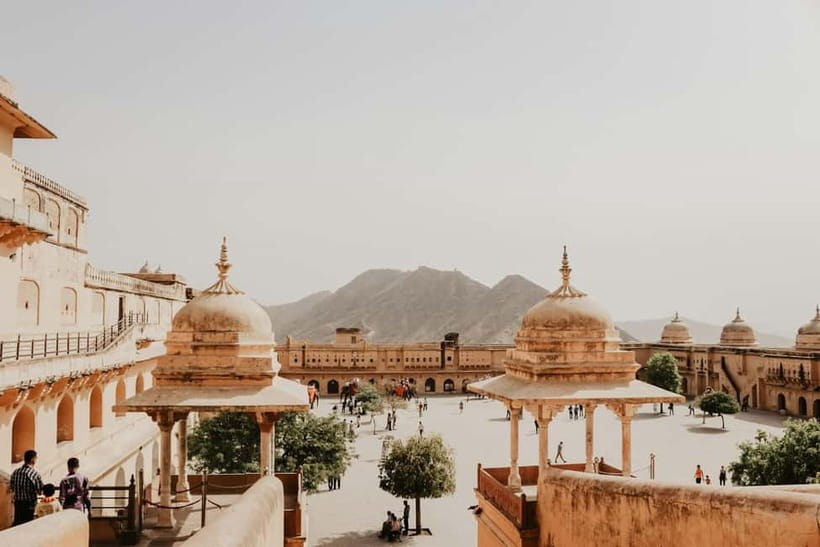
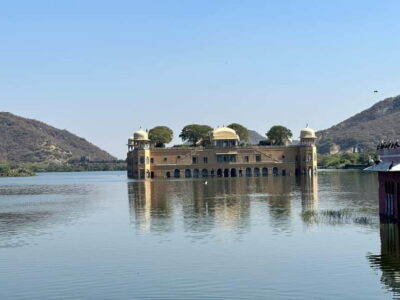
Jal Mahal is a 30-minute photo and sightseeing stop. The palace appears to sit in the water, with only its upper levels clearly visible from the roadside viewpoint. It is a quick visit, but the unusual setting gives the day a change of rhythm after the fort.
Do not expect a long interior tour here. The appeal is the view, the symmetry, and the chance to photograph the palace against the water. Your guide can explain its place in Jaipur’s royal setting, while the driver keeps the stop efficient.
This is one of the places where a private route helps. You can make the photograph, hear the explanation, and continue without losing a large part of the day.
Royal Gaitor and Jaipur’s quieter royal side
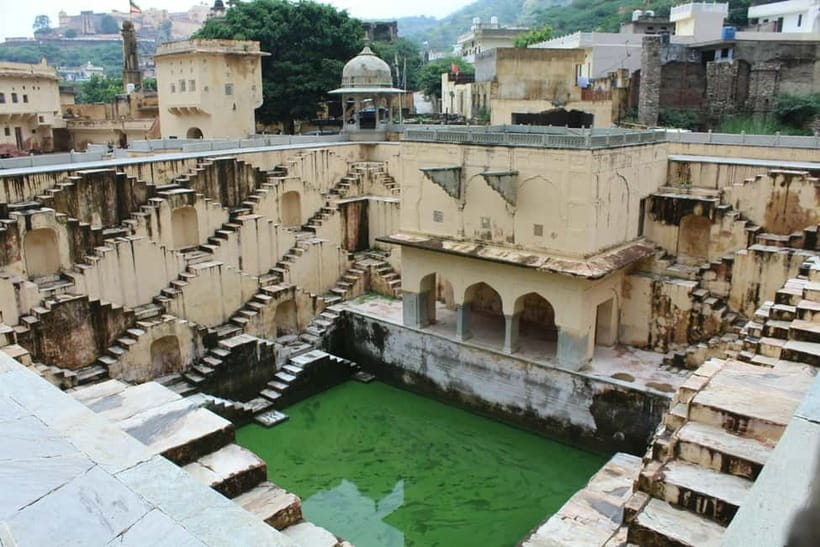
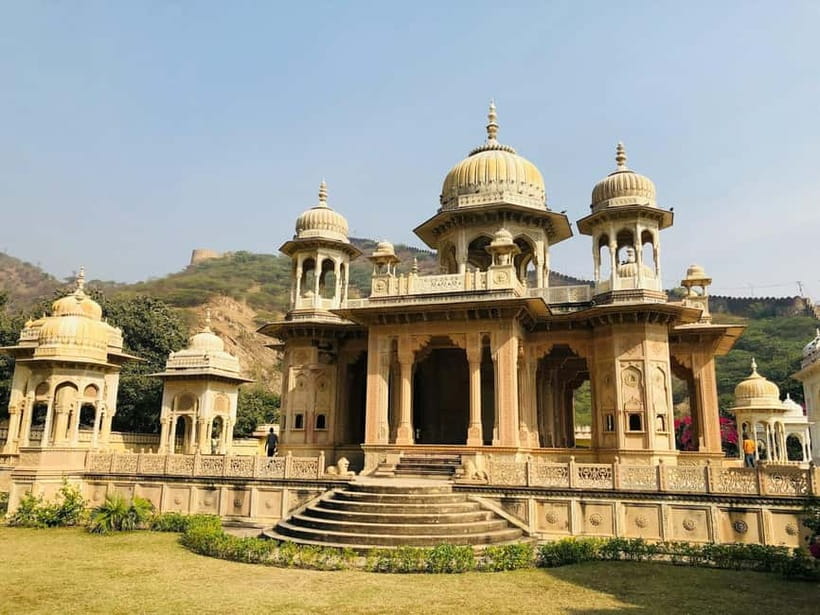
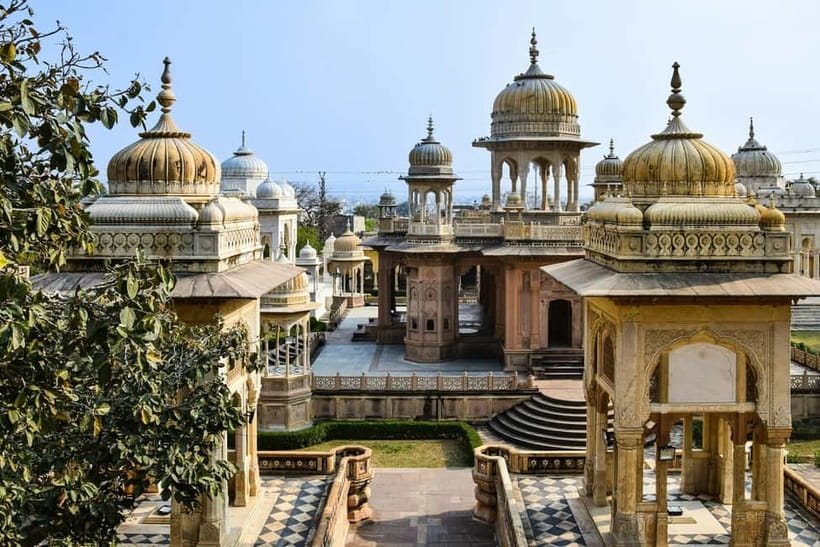
Royal Gaitor, also called Gaitor Ki Chhatriyan, receives about an hour. It is a series of carved cenotaphs for Jaipur’s Maharajas and their families, with domed canopies and detailed stonework.
I consider this one of the most worthwhile inclusions because it is less predictable than another palace room. The setting lets you focus on memorial architecture, carved surfaces, and the way Rajput rulers were honored after death. It also gives your guide room to explain the royal succession and family connections behind the monuments.
The site is still a walk, with outdoor surfaces and some uneven areas. Keep your camera ready, but give the carvings more than a quick glance. Light and shadow can bring out details that are easy to miss from a distance.
City Palace, still partly a royal home
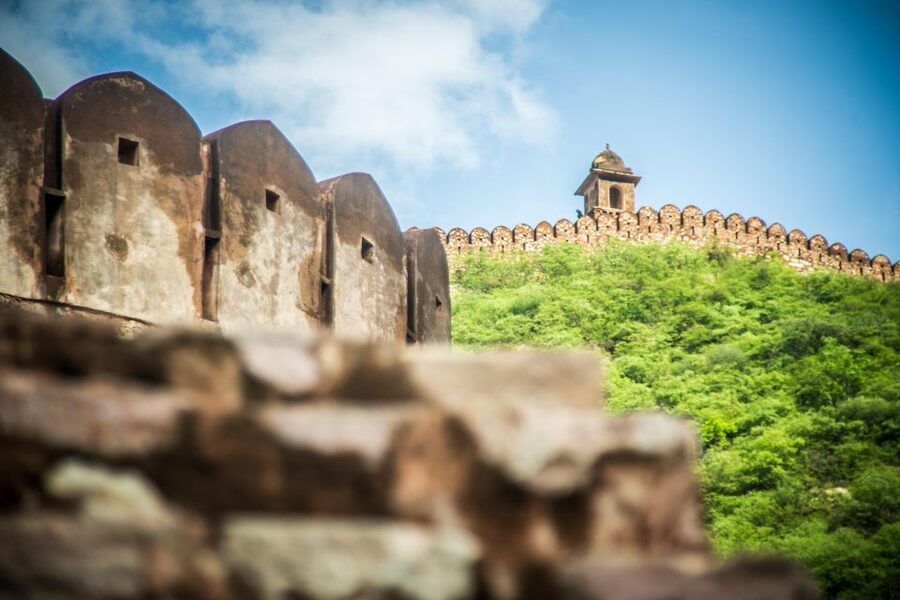
City Palace takes about two hours, and it deserves the time. Part of the complex functions as a museum, while much of it remains a royal residence connected with the Maharaja of Jaipur and the Kachwaha Rajput clan.
The visit is less about one single building than about moving through courtyards, gateways, galleries, and ceremonial spaces. Your guide can help explain what you are seeing, since the complex can otherwise feel like a sequence of decorative rooms without a clear story.
This is a major paid attraction, so remember that entrance fees are separate from the tour price. If you are watching your budget, ask in advance what ticket level you need and which areas are covered. The low tour price is attractive, but the monument costs can become the larger part of your day’s spending.
Jantar Mantar, where stone measures the sky
Jantar Mantar is scheduled for one hour. Its huge masonry instruments may look abstract at first, but they were built to measure time, track celestial positions, and support astronomical calculations.
This stop rewards explanation. Without a guide, you may see large ramps, arcs, and angular structures without understanding what each one does. With a clear introduction, the site becomes a practical scientific instrument rather than a collection of unusual shapes.
The observatory is also a good reminder that Jaipur’s royal culture was not only about ornament and ceremony. It included careful observation, mathematics, and the desire to organize the heavens. Bring your camera, but listen closely before moving on.
Galtaji, the Monkey Temple, and its water tanks
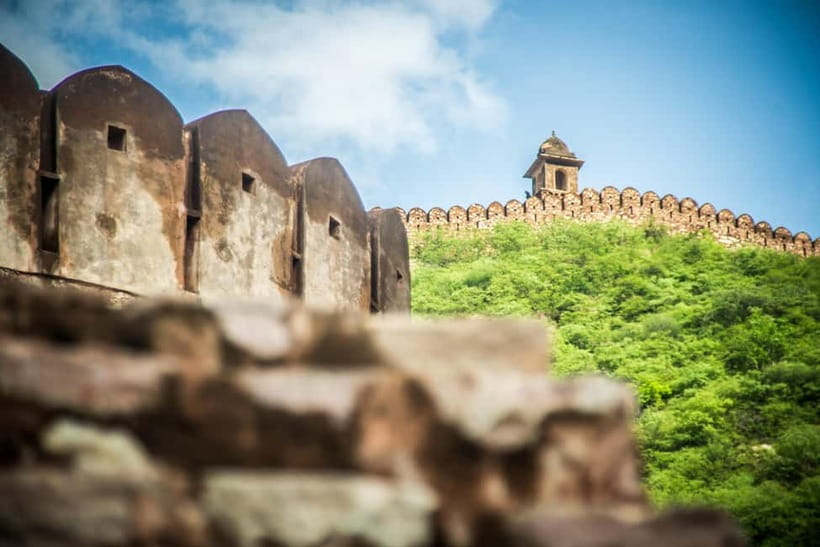
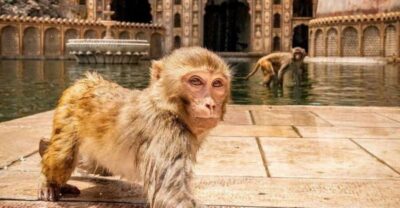
The final major stop is Galtaji, commonly called the Monkey Temple. The complex dates to the 18th century and is arranged around a series of kunds, or stepped water tanks, leading toward temples with rounded roofs and pavilions.
This is not a polished palace visit. Parts of the complex are partly abandoned, and the atmosphere can feel rougher and more atmospheric than the central Jaipur monuments. Narrow paths, old walls, water tanks, and the presence of monkeys make it a memorable change from the formal city route.
You should dress respectfully. Short shorts and sleeveless tops are not recommended at the temple, and comfortable clothing will help with the walking. Carry cash, water is supplied in the car, and keep personal belongings secure around animals.
The one-hour visit is enough for a guided walk and photographs, but you may want more time if the setting interests you. The complex is best approached as a living religious place, not only as a photo stop.
Markets, street food, and the part of Jaipur beyond monuments
The day also includes time to walk through Jaipur’s narrow streets and markets. The shopping element can be useful if you want textiles, crafts, or local goods, but you should be clear about your priorities.
Some routes may include stops with merchants. You can skip those if you are not shopping. One practical way to manage the day is to tell your guide early that you prefer more time at monuments, local markets, or food streets. The schedule is private, so your preferences matter more than they would on a large group outing.
Food is not included. Lunch may be arranged at a restaurant through the guide, but you pay separately. A German-speaking customer found the suggested restaurant more expensive than expected, while considering it a safe choice. That is a fair tradeoff if you want a simple, organized meal, but ask about the price before ordering.
For a more local finish, ask Shamshu about Jaipur street food. He was specifically praised for knowing good food stops, but the exact food plan is not fixed in the tour details. If you want night markets and food streets, confirm that the timing works with your pickup time and the nine-hour limit.
What the guide and driver add
The strongest human element of this outing is the private support. Guide assignments vary, but Farman, Vishan Singh, Abdul, Mustak, and Shamshu have all been associated with particularly positive days. Farman was able to guide in Spanish, while Vishan Singh was praised for experience. Abdul was also noted for explaining the sights and taking good pictures.
For a solo woman, the private format can feel reassuring because the driver and guide stay with you through a long series of stops. Mustak and Manoj were praised for looking after a solo visitor and adapting to requests. That does not remove the need for ordinary travel awareness, but it gives you a clear point of contact throughout the day.
Driver quality matters just as much as guide quality. Sunny and Sani were praised for careful attention, parking help, and keeping water cold. One recent comment also raised a concern about driver behavior, so I would treat the service as generally well regarded but not perfectly uniform.
The best approach is simple: confirm the guide language, pickup point, and whether you want a guide before the day begins. If you have a preferred focus, such as architecture, photography, shopping, or food, say so early.
Is $13 good value for Jaipur?
At $13 per person, this is unusually inexpensive for a nine-hour private outing. The price includes private air-conditioned transport, the driver, fuel, parking, bottled mineral water, taxes, and handling charges. For a couple or small group, that can be an efficient way to cover a wide area.
The price does not include monument entrance fees, lunch, or dinner. Those extras matter because the route includes several major paid sites, especially Amber Fort, City Palace, and Jantar Mantar. You should compare the tour price with your total day budget, not look at the $13 alone.
The value is strongest if you want convenience. You avoid arranging several rides, locating each monument, and negotiating parking. It is less ideal if you prefer a slow day with long café breaks or extended time at only two or three sites.
You can cancel up to 24 hours before the activity for a full refund, and reserve now with payment later. Starting times depend on availability, so an early departure is worth requesting. One practical comment suggested leaving early to avoid heavier crowds, and that advice makes sense for Amber Fort and the central monuments.
Who should book this private Jaipur day?
I would choose this for a first visit to Jaipur when you want the major sights in one organized day. It suits couples, families, solo visitors, and small private groups who value an air-conditioned car and a guide who can explain what they are seeing.
It is also a good match if the Monkey Temple matters to you. Many standard Jaipur days focus only on forts and palaces, while this route adds Galtaji, Royal Gaitor, and the stepwell.
I would think twice if you have limited mobility or a medical condition that makes heat, stairs, or long walking difficult. The tour includes several outdoor sites, uneven surfaces, and a full nine-hour schedule. It is also not the best choice if you dislike shopping stops or want every minute devoted to monuments.
Should you book it?
Book this tour if you want maximum Jaipur coverage with minimum transport hassle. The private car, guide option, parking, water, and flexible group format make the low starting price attractive, especially for two or more people.
Before booking, confirm the guide language, expected entrance costs, lunch plan, and whether night-market time can fit the schedule. Ask for an early start, skip unwanted merchant stops, wear respectful temple clothing, and keep cash for tickets and food.
You should not book it expecting a relaxed pace. You are choosing breadth over lingering. For a first Jaipur visit, that is a sensible trade, and the Monkey Temple gives the day a distinctive finish.
FAQ
How long does the Jaipur tour last?
The tour lasts nine hours, including visits to Jaipur’s main sights, Amber Fort, the Monkey Temple, and travel between stops.
Where can pickup and drop-off take place?
Pickup and drop-off are available in Jaipur or Kukas. Airport or railway station pickup can be requested, with the driver waiting under your name.
Is the tour private?
Yes. This is a private group experience. Vehicle size depends on group size, from a four-seat sedan for one to three people to a ten-seat tempo traveler for six to ten people.
Is a guide included?
A private local guide option is available. Guide languages listed are English, German, French, Spanish, and Italian.
Are monument entrance fees included?
No. Entrance fees for the monuments are not included in the tour price.
Is lunch included?
No. Lunch and dinner are not included. Your guide may lead you to a restaurant, but you pay for the meal separately.
What should I wear to the Monkey Temple?
Smart casual clothing is recommended. Short shorts and sleeveless tops are not recommended at the temple, and comfortable shoes are advised for the walking.
Recently added around Jaipur
- Taj Mahal Entrance Ticket★ 5.0 · 3 reviews
- Agra’s Hidden Gems & Flavors on a Thrilling Tuk-Tuk Tour 3-4 Hrs★ 5.0 · 3 reviews
- Jaipur: Ajmer & Pushkar Day Trip with Lunch & Camel ride★ 4.3 · 3 reviews
- Spiritual Private Tour of Vrindavan and Mathura★ 3.0 · 3 reviews
- Jaipur: City Tour Full-Day Sightseeing with Guide★ 5.0 · 3 reviews
- Shop Agra Like a Local: Unique Indian Handicrafts Tour★ 5.0 · 3 reviews
- Agra: Taj Mahal and Agra Fort Private Guided Half-Day Trip★ 5.0 · 3 reviews
- From Jaipur: Taj Mahal Guided and Agra Tour By Car★ 5.0 · 3 reviews
Monkey Temple Tours, compared.

Jaipur Tuk Tuk Sightseeing Tour with Monkey Temple Sunset View
Read our review →
Jaipur sightseeing tour with monkey temple (Galta ji temple)
Read our review →
Abhaneri & Bhangarh Day Trip – Car, Guide, Lunch & Monkey Temple
Read our review →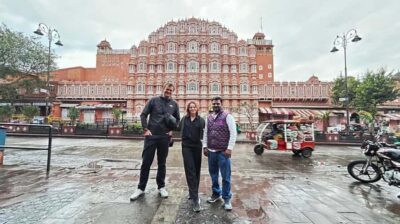
Private Day Trip to Abhaneri Stepwell & Monkey Temple from Jaipur
Read our review →Browse the lists this tour appears in