Reviewed · GUIDED
Private Temple Tour in Jaipur w/ Guide, Transportation & Sites
Jaipur’s best spiritual experiences are often found away from the headline forts and palaces. This private temple tour takes you from Shiva and Ganesha shrines to Galtaji’s pools, royal cenotaphs, old-city temples, and the flower and spice markets near Choti Chopad. It is a useful choice if you want to understand how faith fits into daily life here, not just photograph grand buildings.
I like the private car and guide, especially because the route covers widely scattered sites and ends back at the starting point. I also like the chance to ask direct questions about puja, aarti, Hindu mythology, yoga, chakras, and astrology. The main drawback is the pace: eight stops over seven to eight hours leaves limited time at some temples, and the experience may feel too spiritually focused if you mainly want Jaipur’s famous monuments.
In This Review
- What makes this Jaipur temple day different
- A spiritual route through Jaipur, not a standard sightseeing loop
- Tarkeshwar Mahadev Temple: a short introduction to Shiva worship
- Birla Mandir: polished marble and two important deities
- Moti Dungari Temple: a hill shrine devoted to Ganesha
- Galtaji Temple: the day’s most atmospheric religious site
- Royal Gaitor Tumbas: royal memorials beside the temples
- Garh Ganesh Mandir: another Ganesha shrine in the hills
- Pink City side streets: seeing faith in everyday Jaipur
- Tripolia Bazar and Choti Chopad: finish with chai, flowers, and spices
- What the private format is worth at $27.21 per group
- Who should book this temple tour?
- Cancellation and weather notes
- Should you book it?
- FAQ
- How long does the private temple tour last?
- How much does the experience cost?
- Is transportation included?
- Where does the tour start?
- Which temples are included?
- Are any non-temple sites included?
- Is food included?
- Can I cancel for a full refund?
What makes this Jaipur temple day different
- Tarkeshwar Mahadev begins the route with a Shiva shrine in the Pink City, giving you a quick introduction to worship before the longer visits.
- Galtaji receives the longest temple stop, about 1 hour and 20 minutes, so you have time to take in its setting and religious importance.
- The tour mixes sacred places with royal memorials, including Royal Gaitor Tumbas, where ornate cenotaphs honor Jaipur’s rulers.
- A private format keeps the conversation open, with room for spiritual questions and possible chakra or astrological readings.
- The final old-city section includes local markets, chai, flowers, spices, and shopping near Tripolia Bazar and Choti Chopad.
- The price is per group, not per person, making $27.21 particularly attractive for up to four people sharing the vehicle.
A spiritual route through Jaipur, not a standard sightseeing loop
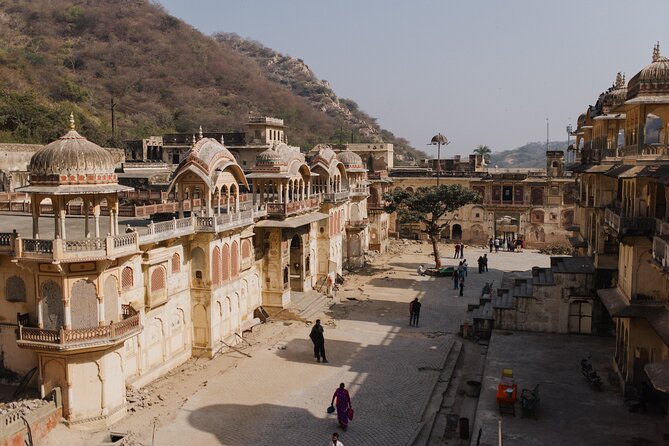
This is a specialty tour for someone who has already seen Jaipur’s main attractions or wants a different angle on the city. Instead of organizing the day around a fort or palace, the route follows temples and sacred places tied to Shiva, Vishnu, Lakshmi, and Ganesha.
You spend roughly seven to eight hours on the outing. The listed stop times add up to about seven hours and twenty minutes, before accounting for driving between sites. That tells you something important: this is a full day, not a quick temple sampler. Wear comfortable clothes, carry patience, and expect the rhythm to shift from brief visits to longer periods at Galtaji, Garh Ganesh, the Pink City, and the markets.
The tour starts at Tarkeshwar Mahadev Temple on Chaura Rasta in Bapu Bazar and ends at the same meeting point. Private transportation is included, along with bottled water. Breakfast is not included, so plan to eat before departure or arrange your morning around that gap.
The guide is central to the experience. Krishna is one guide associated with this tour, and the format allows you to ask questions beyond basic site facts. That matters here. A temple visit can be difficult to interpret if you do not understand the difference between aarti, puja, a deity’s role, and the stories connected to a shrine.
A few more Jaipur tours worth weighing up
- Jaipur: Private Full Day Sightseeing Tour By Car with Guide
★ 4.9 · 1,839 reviews - 3-Hour Morning Bike Tour of Jaipur
★ 5.0 · 1,253 reviews - Jaipur: Private Sightseeing Day Tour with Guide by Car
★ 4.8 · 773 reviews
Tarkeshwar Mahadev Temple: a short introduction to Shiva worship
Your first stop is Tarkeshwar Mahadev Temple, dedicated to Lord Shiva. The visit is scheduled for about 20 minutes, so think of it as an orientation rather than a long study of the temple.
That short opening can work well. You begin with a sacred place inside Jaipur before moving toward larger temple complexes and hill sites. The guide can explain the basic religious setting, the role of Shiva, and the worship practices you may see during the day.
There is no admission charge listed for this or any other stop. Still, free entry does not mean the visit is casual. You are entering active places of worship, so modest clothing and respectful behavior are sensible. Keep your voice low, follow the guide’s instructions, and ask before taking photographs if local rules or worshippers make that necessary.
Birla Mandir: polished marble and two important deities
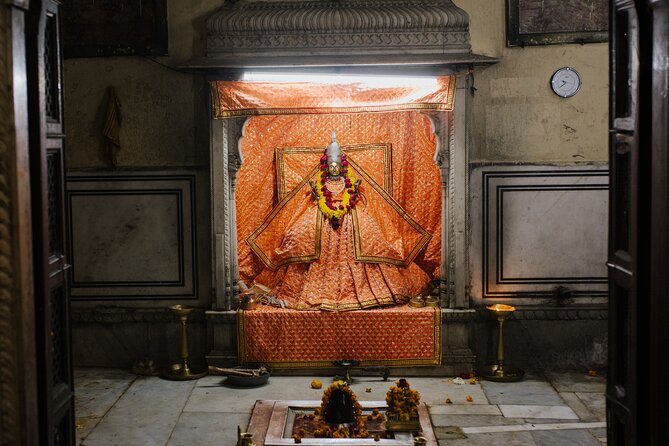
Birla Mandir receives about 30 minutes. This temple is dedicated to Lord Vishnu and Goddess Lakshmi, giving the day a different religious focus after the opening Shiva shrine.
The temple offers a clear way to compare Hindu traditions and deities as the guide explains them. The tour is not just moving you from one photogenic building to another. Its purpose is to help you understand how different forms of worship connect to mythology and daily spiritual practice.
Half an hour is enough for a focused visit, though it may feel brief if you want a slow look at every architectural detail. I would treat this as a guided introduction, then save your questions for the longer stops. If your main goal is architecture, you may wish the schedule allowed more time here. If your goal is context, the short visit keeps the day moving.
Moti Dungari Temple: a hill shrine devoted to Ganesha
The next stop is Moti Dungari Temple, dedicated to Lord Ganesha, and lasts about 20 minutes. Its position on Moti Dungari Hill gives the visit a change of setting and helps show how Jaipur’s religious sites relate to the hills around the city.
Ganesha is one of the most widely recognized Hindu deities, often associated with beginnings and the removal of obstacles. That makes this a useful point for asking the guide about the differences between deities, devotional practices, and the reasons people visit particular temples.
Again, twenty minutes is a compact stop. You will get an overview, not a long period for quiet reflection. The private format helps because you can make the visit fit your interests. If you want more explanation about Ganesha or the temple’s traditions, say so rather than assuming the guide will know which details matter most to you.
A completely different kind of day out from Jaipur:
- Agra: Skip-the-Line Taj Mahal & Agra Fort Private Tour
★ 4.9 · 1,546 reviews - Spiritual City Walking Tour-THE Pushkar Route
★ 5.0 · 907 reviews - Agra: Taj Mahal Express Entry Tickets
★ 4.8 · 684 reviews - Agra: Taj Mahal and Mausoleum Guided Tour with Skip-the-Line
★ 4.8 · 631 reviews
Galtaji Temple: the day’s most atmospheric religious site
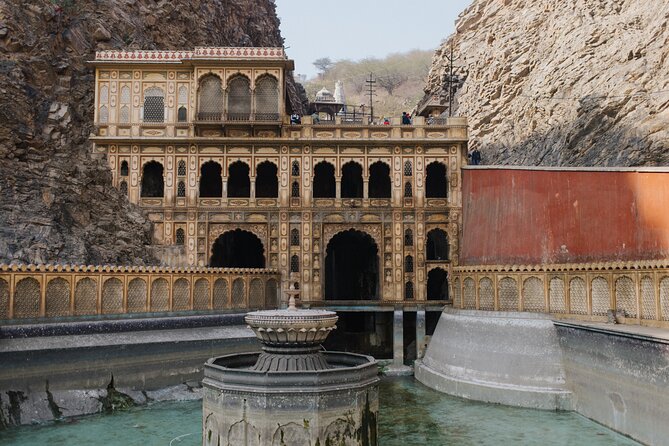
Galtaji is allotted 1 hour and 20 minutes, the longest temple stop on the route. Set among the Aravalli Hills, the complex is known as a place where religious belief and natural surroundings meet.
This is likely the day’s strongest stop for anyone interested in spiritual practice. The setting offers more time to observe the relationship between temple buildings, hills, water, and worship. The guide can also connect the site to local myths and explain the customs that make it important.
Give yourself room to move slowly here. A longer visit is valuable because sacred places are not always understood in a quick photo stop. You can ask about aarti, puja, the deities connected with the complex, and the stories behind the site. The tour description also includes opportunities to discuss chakras, astrology, and self-discovery, and Galtaji is a natural place to have a broader spiritual conversation.
The practical tradeoff is time. Since the route includes several more stops, you cannot treat Galtaji as a full morning excursion. Still, the 80-minute allocation is generous compared with the other temples and makes this the part of the day where you can slow down.
Royal Gaitor Tumbas: royal memorials beside the temples
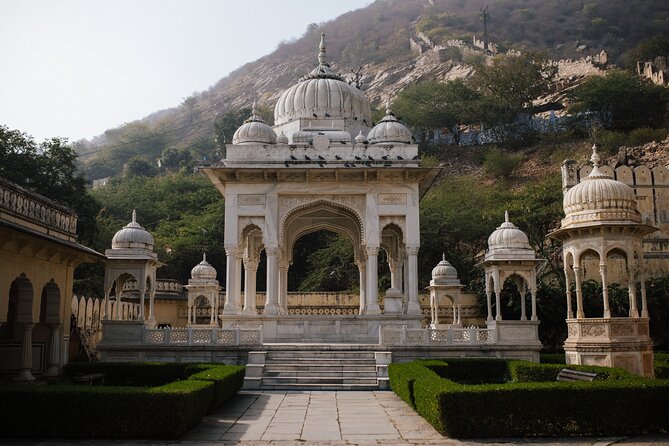
Royal Gaitor Tumbas receives about 40 minutes. This is not a temple in the same sense as the other stops. It is a collection of royal cenotaphs, or memorial structures, connected to Jaipur’s rulers.
The visit adds historical and architectural contrast. After several active religious sites, the quiet stone memorials change the mood. Ornate carving and the surrounding hills provide a different way to think about Jaipur’s past, linking royal power with the city’s religious setting.
Forty minutes is a sensible amount of time for an introduction. You can inspect the cenotaphs, hear about their purpose, and take a break from the more active temple visits. A previous outing with Krishna included both Galtaji and Maharaja Ki Chhatri, so be sure to clarify the exact memorial stop if that distinction matters to you. The supplied route names Royal Gaitor Tumbas, while the experience may also be described using the nearby cenotaph name.
Garh Ganesh Mandir: another Ganesha shrine in the hills
Garh Ganesh Mandir is scheduled for one hour. Located in the Nahargarh area, this temple gives you another chance to learn about Ganesha, but in a different setting from Moti Dungari.
The longer stop suggests a more reflective part of the day. You can ask the guide to compare the two Ganesha temples rather than treating them as repeats. Their locations, access, local customs, and place in Jaipur’s religious life may help you see why multiple shrines dedicated to the same deity can each matter.
Because this temple is associated with an elevated hill setting, ask your guide about the amount of walking involved when you meet. The supplied details confirm that most people can take part, but they do not give a precise route or step count. Comfortable footwear remains a smart choice for a day that includes several temple grounds and hill locations.
Pink City side streets: seeing faith in everyday Jaipur
The Pink City section lasts about 1 hour and 30 minutes and shifts the focus from major named sites to smaller temples along side streets and alleyways.
This is one of the tour’s most useful ideas. Jaipur’s spiritual character is not confined to large monuments. Smaller heritage temples can show how worship fits into neighborhoods, where religious buildings sit alongside homes, shops, and ordinary city life.
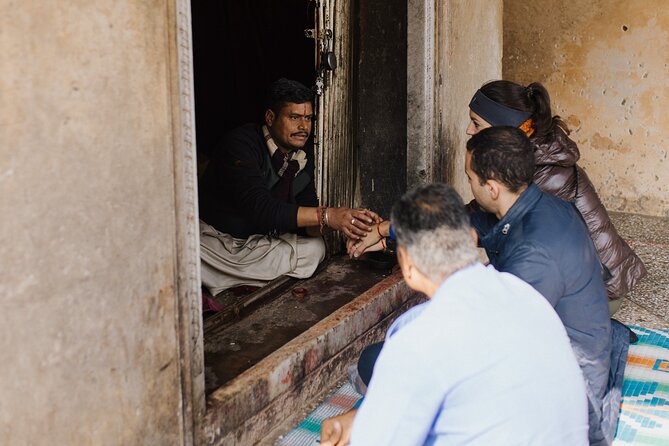
The guide may point out places such as Shri Radha Gopinath Temple. The value here comes from interpretation. Without local guidance, you might walk past a small shrine without knowing its age, deity, customs, or place in the community.
This part also gives you the best chance to ask questions that come up naturally during the day. You can talk about how aarti and puja work, how Hindu mythology shapes temple traditions, and how yoga connects to older Indian spiritual ideas. The tour is designed for that kind of exchange, rather than a fixed lecture delivered without interruption.
Tripolia Bazar and Choti Chopad: finish with chai, flowers, and spices
The final 1 hour and 30 minutes takes you toward Tripolia Bazar and the Choti Chopad area. The schedule includes time for quiet contemplation, chai, shopping, and visits to flower and spice markets.
This ending gives the day a practical local flavor. After spending hours discussing worship, you see some of the items that support religious and household life in the city. Flowers can be linked to offerings, while spices bring you back to everyday commerce and cooking. The market time also prevents the tour from ending on a purely formal note.
You should view shopping as optional, not the main reason to book the tour. If you prefer a quiet finish, use the time for tea and reflection. If you enjoy browsing, the market section gives you a chance to buy something small or simply watch the flow of local trade.
The stop lasts as long as some of the major temple visits, so you have room to set the pace. Tell the guide if you want more market time, more spiritual discussion, or a calmer pause before returning to the meeting point.
What the private format is worth at $27.21 per group
At $27.21 for a group of up to four, the price is unusually low for a private day with transportation. Split four ways, the cost is less than $7 per person before any optional personal spending. Even for one person, it remains a modest price for seven to eight hours of a private route.
The real value is not admission savings, since the listed sites are free to enter. You are paying for the driver, vehicle, guide, route planning, bottled water, and the ability to ask questions without a large group setting.
The private format is especially useful in Jaipur because the stops are spread across the city and surrounding hills. You do not need to work out a separate route between Tarkeshwar Mahadev, Birla Mandir, Galtaji, the royal cenotaphs, Garh Ganesh, the Pink City, and the markets.
There are limits. Breakfast is excluded, and the price does not include personal purchases at the market. The schedule is also ambitious. You get breadth, but some early temple stops are short. I would book this for access and conversation, not for lengthy independent photography at every location.
Who should book this temple tour?
I would recommend it most strongly if you have already visited Jaipur’s headline attractions or if Hindu religious life is a main reason for your trip. It suits people who want to ask questions, compare deities, and understand practices such as puja and aarti in context.
It also works well for a small group of friends or family members. Since the price covers up to four people, sharing the booking makes the value especially strong. A private guide can adjust the conversation to your group instead of giving a generic explanation aimed at everyone.
You may want a different tour if your first visit to Jaipur must include the city’s major forts, palace interiors, and royal collections. None of those are listed here. This is a specialty route, and its strength is focus.
The optional chakra and astrological elements will appeal to some people and not others. Treat them as part of the conversation and personal experience rather than the reason to expect a formal scientific assessment. If you have specific spiritual questions, prepare them before the tour so you make good use of the guide’s time.
The activity is suitable for most people, and service animals are allowed. It is near public transportation, though private transportation is included. Confirmation arrives at booking, and the activity returns to the starting point at Tarkeshwar Mahadev Temple.
Cancellation and weather notes
You can cancel up to 24 hours before the start time for a full refund. Changes or cancellations inside that 24-hour window are not accepted for a refund.
The experience requires good weather. If poor weather cancels the outing, you are offered another date or a full refund. The tour also requires a minimum number of participants, and if that condition causes cancellation, you are offered another option or a full refund.
Should you book it?
Book this if you want Jaipur through its shrines, stories, and living religious customs rather than through palaces alone. The combination of Galtaji, Garh Ganesh, local Pink City temples, Royal Gaitor, and the flower and spice markets gives you a broad day with a clear spiritual theme.
I especially like the balance between major temples and smaller neighborhood sites, plus the chance to work with a guide such as Krishna and ask personal questions. Just remember that the route is long, the first temple visits are brief, and breakfast and shopping costs are your responsibility. For up to four people, the low group price makes this a strong value for a private, question-friendly introduction to Jaipur’s sacred side.
FAQ
How long does the private temple tour last?
The tour lasts approximately 7 to 8 hours. The listed visits total about 7 hours and 20 minutes, before travel time between stops.
How much does the experience cost?
The price is $27.21 per group for up to four people.
Is transportation included?
Yes. Private transportation is included, and the activity ends back at the meeting point.
Where does the tour start?
The tour starts at Tarkeshwar Mahadev Temple, located at WRFF+53C, Chaura Rasta, Bapu Bazar, Pink City, Jaipur, Rajasthan 302003, India.
Which temples are included?
The route includes Tarkeshwar Mahadev Temple, Birla Mandir Temple, Moti Dungari Temple, Galtaji Temple, Garh Ganesh Mandir, and smaller temples in the Pink City.
Are any non-temple sites included?
Yes. The route includes Royal Gaitor Tumbas and the market area around Tripolia Bazar and Choti Chopad.
Is food included?
Breakfast is not included. Bottled water is included, and the final market stop includes time for chai.
Can I cancel for a full refund?
Yes. You can cancel at least 24 hours before the start time for a full refund. Cancellations within 24 hours are not refunded.
Recently added around Jaipur
- Taj Mahal Entrance Ticket★ 5.0 · 3 reviews
- Jaipur: Ajmer & Pushkar Day Trip with Lunch & Camel ride★ 4.3 · 3 reviews
- Spiritual Private Tour of Vrindavan and Mathura★ 3.0 · 3 reviews
- Agra’s Hidden Gems & Flavors on a Thrilling Tuk-Tuk Tour 3-4 Hrs★ 5.0 · 3 reviews
- Jaipur: City Tour Full-Day Sightseeing with Guide★ 5.0 · 3 reviews
- Shop Agra Like a Local: Unique Indian Handicrafts Tour★ 5.0 · 3 reviews
- Agra: Taj Mahal and Agra Fort Private Guided Half-Day Trip★ 5.0 · 3 reviews
- From Jaipur: Taj Mahal Guided and Agra Tour By Car★ 5.0 · 3 reviews
Guided, compared.
Private Full Day Sightseeing Tour By Car with Guide
Read our review →

Taj Mahal and Mausoleum Guided Tour with Skip-the-Line
Read our review →
Private Guided Taj Mahal Tour with Skip The Line Entry Ticket
Read our review →
Full-Day City Tour with Car, Guide & Skip-the-Line
Read our review →
Full-Day Jaipur Private Sightseeing Tour by Car with Guide
Read our review →