Reviewed · MORNING
Take in the Beauty of an Early Morning with Fresh Flowers
Jaipur’s flower market is at its best before the day heats up. This 1.5-hour walk takes you from Hawa Mahal through the quiet early streets to heaps of marigolds and roses, active temples, and the daily trade of farmers from nearby villages. The flower market is the real star.
I like the useful route and the small local touches: a guide who can explain the city as you walk, and a hot cup of masala chai at a street stall. The main drawback is the early start and uneven, traffic-filled walking conditions, so this is not a good fit if you have back trouble or need a wheelchair.
In This Review
- Key points at a glance
- Why this early Jaipur walk works so well
- Meeting beside Hawa Mahal
- Through the Blue Gate and old Jaipur streets
- The flower market is the heart of the tour
- Temples and a glimpse of living worship
- Masala chai at Chaura Rasta
- What $16 buys you
- Who should book this walk
- My verdict: a smart first morning in Jaipur
- FAQ
- Where does the Jaipur flower market walking tour begin?
- Where does the tour finish?
- How long does the experience last?
- What language is the tour conducted in?
- Is Hawa Mahal included?
- What market will I visit?
- Is masala chai included?
- Are private transfers included?
- What should I bring?
- Is the tour suitable for wheelchair users?
- Can I cancel the tour?
Key points at a glance
- Flower market at daybreak: See farmers bringing fresh marigolds, roses, and other flowers into the Pink City.
- Hawa Mahal photo stop: Begin beside Jaipur’s famous Palace of Winds, with time for pictures and a short introduction.
- A working city, not just a monument: Walk past the Blue Gate, Town Hall building, temples, and ordinary morning streets.
- Temple life along the route: You might arrive during singing, drumming, flower offerings, or another active religious moment.
- Street-side chai: End with masala tea, with some tour experiences also including a samosa or chickpea snack.
- Good value at $16: A short guided walk, market visit, photo help, and tea make this a sensible first activity in Jaipur.
Why this early Jaipur walk works so well
Jaipur can feel like a lot at first. There are grand palaces, painted facades, motorbikes, rickshaws, shopkeepers, temples, and markets all competing for your attention. This walk gives you a manageable introduction before the streets become more crowded and the heat builds.
You are not simply driven between famous sights. You move through the city on foot, passing working streets and stopping where daily life is unfolding. That matters because Jaipur’s character is not limited to its monuments. The flower sellers, tea vendors, worshippers, and farmers give you a clearer sense of how the city functions.
The price is $16 per person, which is strong value for a 1.5-hour guided experience. You receive a walking tour, a visit to the fresh flower and vegetable market, several photo stops, cultural explanation, and masala chai. Private transfers are not included, but that is less of a problem here because the meeting point is central and the tour finishes at Chaura Rasta.
The timing is the main tradeoff. You need to get to Hawa Mahal early enough for the morning start, and the exact departure time depends on availability. In return, you get cooler air, softer light for photographs, and a better look at the market before the day reaches full speed.
A few more Jaipur tours worth weighing up
- 3-Hour Morning Bike Tour of Jaipur
★ 5.0 · 1,253 reviews - Agra : Private Sunrise Taj Mahal & Agra City Tour
★ 5.0 · 367 reviews - Taj Mahal Sunrise & Sunset All Inclusive Private Luxury Agra Tour
★ 5.0 · 348 reviews
Meeting beside Hawa Mahal
Your meeting point is just outside the Hawa Mahal building, next to an ATM. This is a practical landmark, but take care when you arrive. Hawa Mahal faces busy streets, and the tour does not include a private pickup, so you must make your own way there.
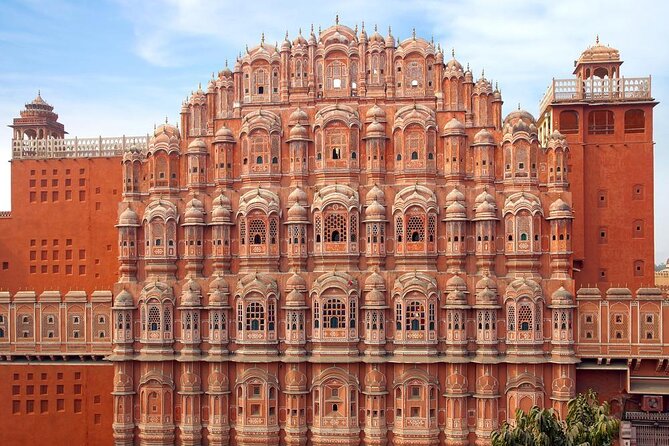
The first stop is a photo opportunity at the Palace of Winds. This is more than a quick snap before moving on. Your guide explains the building and gives you a chance to look closely at its famous honeycomb facade, small windows, and layered pink exterior.
Early morning light suits Hawa Mahal. The softer conditions make it easier to photograph the building without the harsh glare that can appear later in the day. Your guide may also help with pictures. Ansh, one guide named in the tour feedback, was praised for taking good photographs and helping a solo visitor feel safe while walking between stops.
You should still keep this opening stop in perspective. You are not entering Hawa Mahal on this experience. The focus is the view from outside, the history of the building, and the walk that follows.
Through the Blue Gate and old Jaipur streets
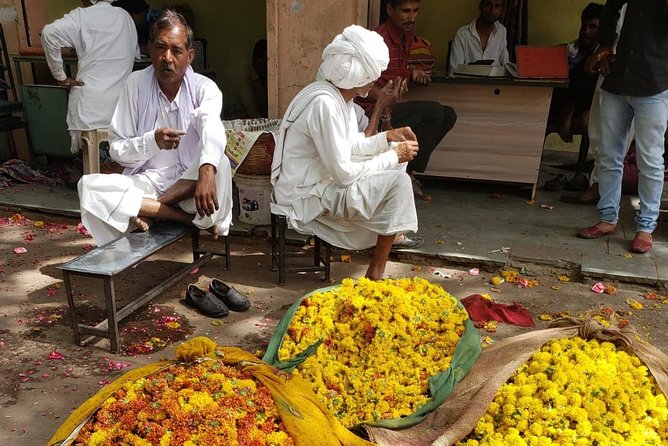
From Hawa Mahal, you walk toward the Pink City and its market streets. The Blue Gate is one of the route’s useful visual markers. It gives you another strong photo stop and helps show how Jaipur’s older urban spaces connect grand architecture with everyday movement.
You also pass the Town Hall building and several temples. These stops are not presented as long indoor visits. Instead, they form a moving lesson in Jaipur, with your guide pointing out architectural details, local customs, and stories linked to the places along the way.
That format suits you if you like context in small pieces. You can ask questions while walking rather than stand through a long formal talk. The guide also gives you room to take photographs and look around, which makes the pace feel less rigid.
The streets are part of the experience, but they can also be the hardest part. Traffic is present, even in the morning, and sidewalks or walking surfaces may not be smooth. Wear shoes with good support, stay close to the guide when crossing, and keep your phone secure while taking pictures.
For a solo woman, the guide’s role can be especially useful. The route involves real city traffic and busy public spaces, and one account specifically praised the guide for helping with safe movement between sites. That does not remove the need for normal urban awareness, but it adds comfort to the walk.
The flower market is the heart of the tour
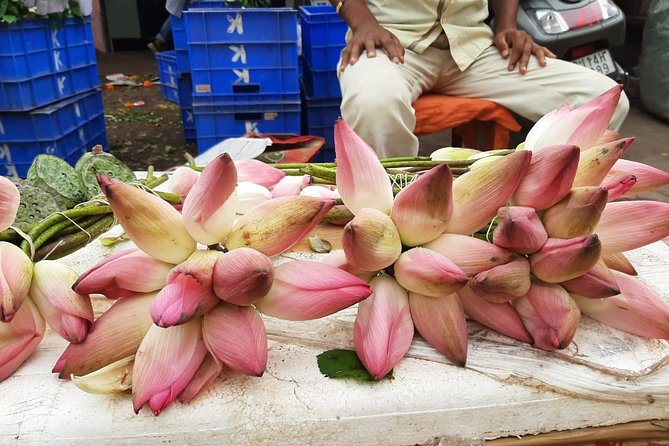
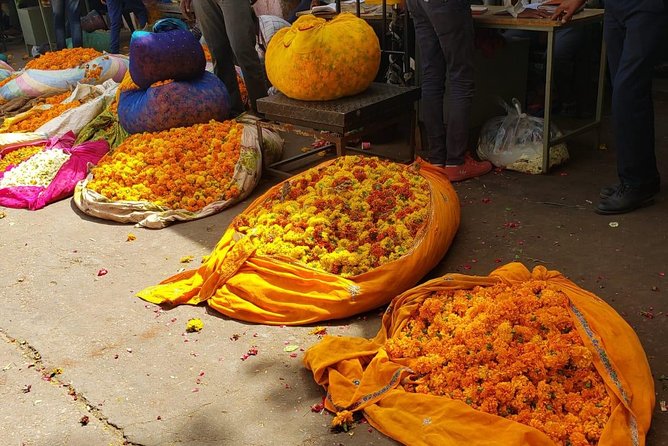
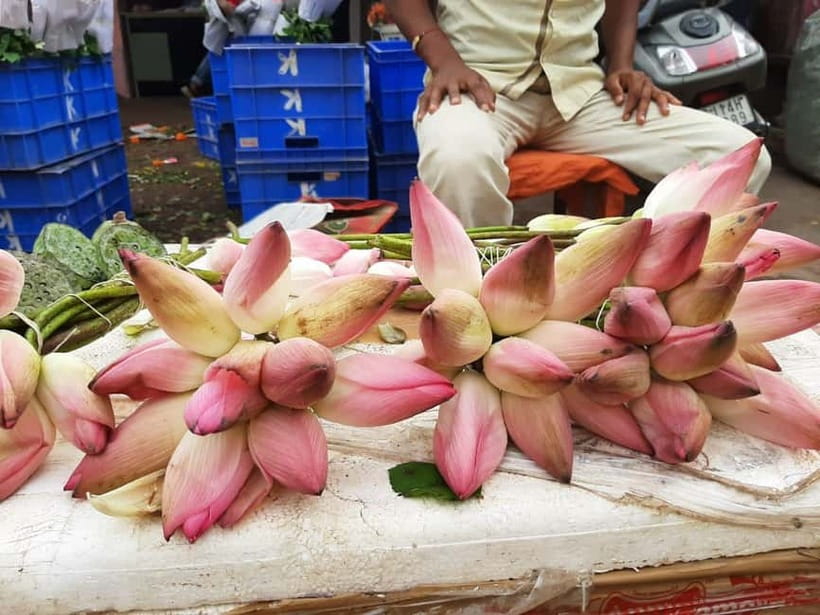
The flower market gives this experience its strongest sense of place. You see fresh flowers being brought in and sold, including the marigolds and roses that create the market’s most memorable colors and scents.
This is not a staged attraction built for sightseeing. Farmers come from villages to sell their flowers, making the market a direct look at work, trade, and religious life in Jaipur. Your guide explains the importance of the flowers and helps you understand what you are seeing instead of leaving you to wander without context.
The market is also excellent for photography. You can take close shots of flower piles, baskets, sellers, and the movement of goods. Ask before photographing people, and follow your guide’s lead around the stalls. A camera is useful, but a charged smartphone is enough if you prefer to travel light.
The flower market can feel very different from European markets, which is one reason local guidance matters. The setting is active and practical, not arranged for visitors. You might find narrow passages, changing foot traffic, and sellers focused on their work. A guide can help you move through without blocking business or missing the details that make the place worthwhile.
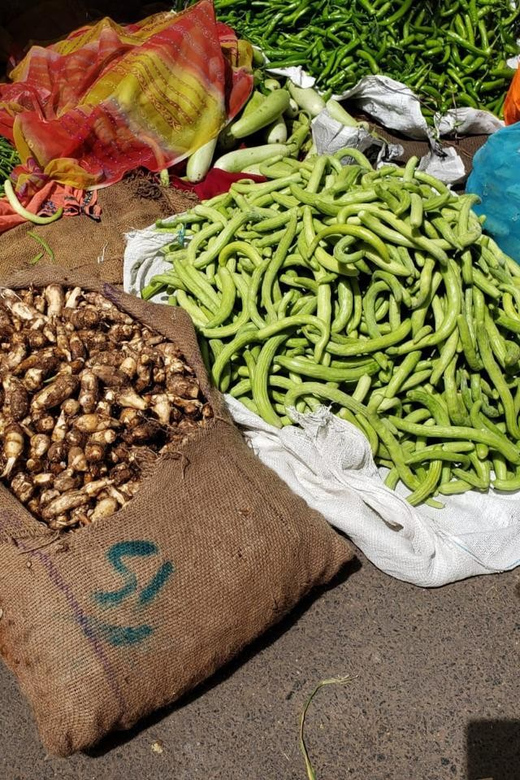
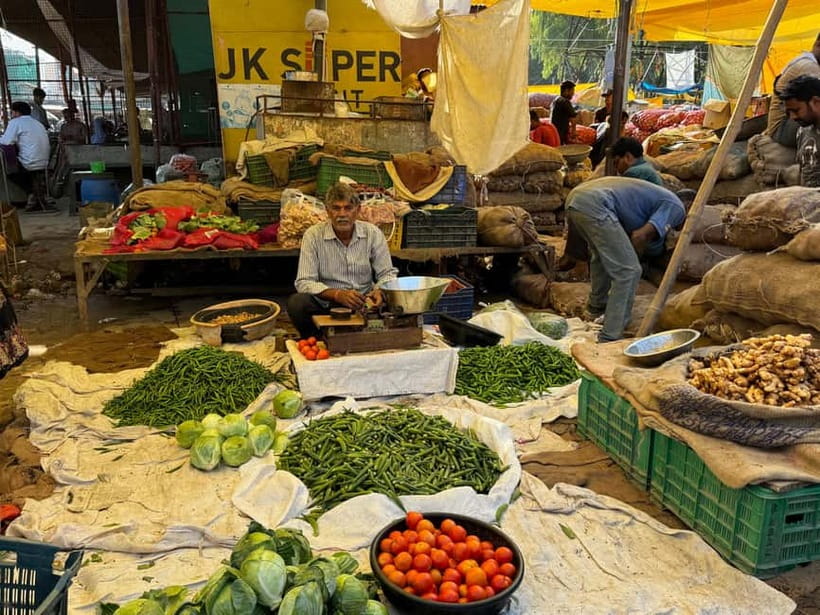
The vegetable market adds another layer. Flowers provide the color, but vegetables show the wider food trade and ordinary shopping rhythm of the city. Together, the two markets help you see Jaipur as a place where people work and buy what they need, not only as a collection of palaces and photo backdrops.
A completely different kind of day out from Jaipur:
- Jaipur: Private Full Day Sightseeing Tour By Car with Guide
★ 4.9 · 1,839 reviews - Agra: Skip-the-Line Taj Mahal & Agra Fort Private Tour
★ 4.9 · 1,546 reviews - Spiritual City Walking Tour-THE Pushkar Route
★ 5.0 · 907 reviews - Jaipur: Private Sightseeing Day Tour with Guide by Car
★ 4.8 · 773 reviews
Temples and a glimpse of living worship
Temples along the route add a different mood. You may pass while worshippers are singing, playing drums, or offering flowers. One morning included a temple celebration with a view toward the City Palace, giving the walk an especially strong connection to current religious life.
The timing here is unpredictable, which is part of the appeal. You are not promised a particular ceremony, but an early walk gives you a better chance of seeing morning worship in progress. Your guide can explain what is happening and help you behave respectfully.
Wear clothing suitable for a temple setting, even though the tour description does not require a formal dress code. Keep your voice low during worship, follow instructions about where to stand, and avoid treating active prayer as a performance.
The temple stop can be brief, and you should not expect a full religious tour. Its value is the glimpse it provides. You see how flowers from the market may connect with worship, and you begin to understand how public streets, small shrines, and daily devotion overlap in Jaipur.
Masala chai at Chaura Rasta
The walk finishes at Chaura Rasta with masala chai from a local tea stall. This is a small stop, but it gives the morning a pleasant ending. After walking through the market and temples, you can sit or pause with a warm, spiced drink and ask final questions about Jaipur.
The tea is included, and the tour information says no extra payments are required during the experience. Some morning outings have also included a samosa and chickpea snack from local street vendors. Those food items are worth treating as a possible extra touch rather than a guaranteed part of every booking, since the stated inclusion is masala chai.
I like this ending because it is simple. You are not being taken to a polished restaurant or a tourist showroom. A tea stall lets you see one of the city’s everyday habits and gives you a chance to try a famous Indian drink in the setting where people commonly enjoy it.
If you have food allergies or dietary restrictions, ask your guide before accepting any snack. The supplied information confirms the tea, but it does not provide details about ingredients or dietary alternatives.
What $16 buys you
At $16, the tour offers good value if you want a short, guided introduction to Jaipur. A private vehicle is not part of the package, but the route is designed around walking, and the central meeting point keeps the cost down.
You are paying for more than a landmark checklist. The guide provides explanations at Hawa Mahal, the Blue Gate, Town Hall, temples, and the markets. You also get help navigating streets, advice on photography, and a local perspective on farmers and flower sales.
The strongest value comes from the combination of sights. A standard city walk might show you Hawa Mahal and a few old buildings. This one adds a working flower market and a tea stall, which are often more revealing than another formal monument.
The short duration is both an advantage and a limit. At 1.5 hours, it fits neatly before breakfast, a palace visit, or a longer day of sightseeing. It is also too brief to cover Jaipur in depth. Think of it as a first look and a useful orientation, not a complete city tour.
Who should book this walk
I would recommend it to first-time visitors who want to get their bearings early in a Jaipur stay. The route introduces architecture, street markets, temples, food culture, and local work without demanding a full day.
It is also a good choice for photographers. The Hawa Mahal facade, Blue Gate, heritage buildings, flower piles, and temple scenes provide varied subjects. Bring a camera or a charged phone, and wear comfortable shoes.
Solo visitors may appreciate the clear meeting point and the guide’s help with traffic and navigation. The English-language guiding also makes the experience accessible to people who want explanations as they walk.
You should think twice if you have back problems, cannot manage a 1.5-hour walk, or use a wheelchair. Wheelchair users and people with back problems are listed as unsuitable, and electric wheelchairs are not allowed. The tour also involves public streets and market conditions rather than a controlled, step-free route.
Winter visitors should bring warm clothes from November through February. Jaipur mornings can be cool, even though the day may warm up later. In other seasons, light clothing and water may be sensible, though the supplied information specifically emphasizes comfortable shoes and winter layers.
Cancellation is flexible: you can cancel up to 24 hours before the tour for a full refund, and the reserve-now, pay-later option lets you hold a place without paying today. Check the available start times before booking, since the tour is specifically built around early morning.
My verdict: a smart first morning in Jaipur
Book this tour if you want Jaipur to feel like a living city from the start. The flower market, temple activity, tea stall, and short walks between major landmarks offer more local texture than a simple photo stop at Hawa Mahal.
Skip it if you want a private car, a long palace visit, a leisurely pace, or guaranteed access inside every building. The roads can be demanding, the start is early, and the market is a working place rather than a quiet attraction.
For $16, though, the balance is excellent. You get a friendly English-speaking guide, strong photo chances, a fresh flower market, local history, and masala chai in just 90 minutes. I would place it near the beginning of a Jaipur visit, when the city is still new and you want a practical, memorable introduction before tackling the larger sights.
FAQ
Where does the Jaipur flower market walking tour begin?
Meet your guide just outside Hawa Mahal, next to an ATM.
Where does the tour finish?
The walking tour finishes at Chaura Rasta.
How long does the experience last?
The tour lasts 1.5 hours.
What language is the tour conducted in?
The live tour guide speaks English.
Is Hawa Mahal included?
Hawa Mahal is included as an exterior photo stop and starting point. The provided information does not state that entry inside the building is included.
What market will I visit?
You will visit a local fresh flower and vegetable market, where farmers from villages come to sell flowers.
Is masala chai included?
Yes. A cup of masala chai at a local tea stall is included.
Are private transfers included?
No. Private transfers are not included, so you must make your own way to Hawa Mahal.
What should I bring?
Bring comfortable walking shoes, a camera, a charged smartphone, and hand sanitizer or tissues. Warm clothes are recommended from November through February.
Is the tour suitable for wheelchair users?
No. Wheelchair users are listed as unsuitable, and electric wheelchairs are not allowed. People with back problems are also advised not to book.
Can I cancel the tour?
Yes. You can cancel up to 24 hours in advance for a full refund. You can also reserve now and pay later.
Recently added around Jaipur
- Taj Mahal Entrance Ticket★ 5.0 · 3 reviews
- Jaipur: Ajmer & Pushkar Day Trip with Lunch & Camel ride★ 4.3 · 3 reviews
- Spiritual Private Tour of Vrindavan and Mathura★ 3.0 · 3 reviews
- Agra’s Hidden Gems & Flavors on a Thrilling Tuk-Tuk Tour 3-4 Hrs★ 5.0 · 3 reviews
- Jaipur: City Tour Full-Day Sightseeing with Guide★ 5.0 · 3 reviews
- Shop Agra Like a Local: Unique Indian Handicrafts Tour★ 5.0 · 3 reviews
- Agra: Taj Mahal and Agra Fort Private Guided Half-Day Trip★ 5.0 · 3 reviews
- From Jaipur: Taj Mahal Guided and Agra Tour By Car★ 5.0 · 3 reviews
Morning, compared.


Taj Mahal Sunrise & Sunset All Inclusive Private Luxury Agra Tour
Read our review →
Taj Mahal: Express Entry Ticket For Sunrise Tour with guide
Read our review →
Skip The Line: Sunrise Taj Mahal & Agra Day Tour From Jaipur
Read our review →
Private Taj Mahal Sunrise and Agra Fort Skip the Line Tour
Read our review →