
Reviewed · COOKING CLASSES
Agra Cooking Classes (Pick up and Drop available)
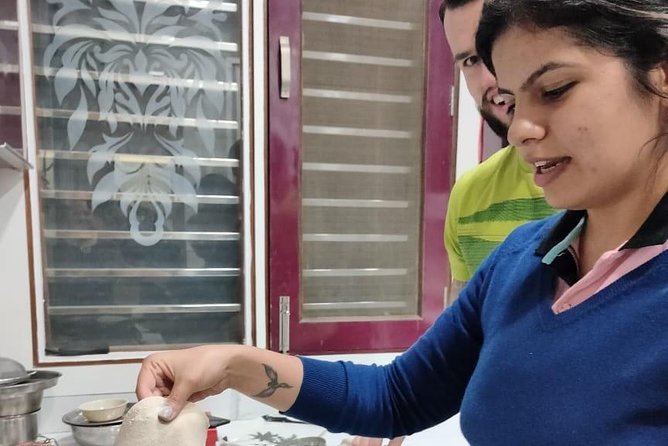
The best part of this Agra experience is the setting: you cook inside a local family home, not in a restaurant kitchen built for tourists. I like the hands-on format, especially the chance to make roti, kabab, and a vegetarian dish. I also like that the Indian mother leads the cooking while her son helps explain the process.
The main consideration is that this is a short class, about two hours, so it is designed as a friendly introduction rather than a full course in Indian cuisine. Pickup and drop-off are available, but confirm the arrangements when booking. The class begins and ends at the listed meeting point in the Tajganj area.
In This Review
- Key points to know before booking
- Cooking with an Agra family instead of watching a demonstration
- What you prepare during the two-hour class
- The family hosts and the value of interpretation
- Eating a home-cooked meal after the lesson
- Why this works well for first-time visitors to India
- Getting there and planning the timing
- What the $8 price really delivers
- Who will enjoy this class most
- A few practical tips for a better visit
- Should you book the Agra cooking class?
- FAQ
- How long does the Agra cooking class last?
- Where does the activity start and end?
- Is pickup and drop-off available?
- What food will I learn to prepare?
- Is the cooking class private?
- Are cooking equipment and water included?
- What is the cancellation policy?
Key points to know before booking
- Cook in an Indian family home: You spend the class with a local mother and her son, who acts as an interpreter.
- Make several dishes: The class covers roti, kabab, Indian spices, and a vegetarian main dish of your choice.
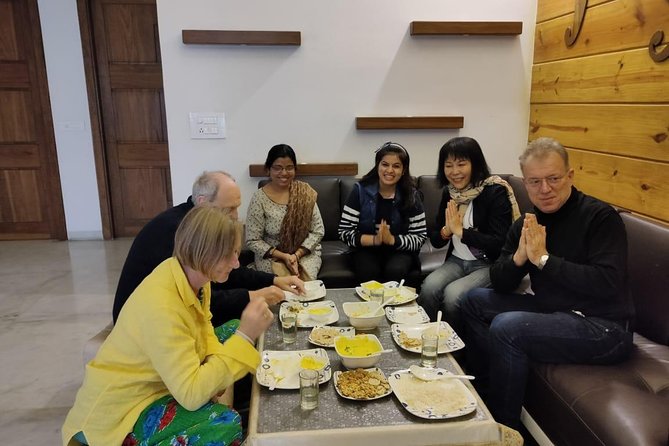
- Eat the meal you prepare: Cooking ends with a full meal, giving the class a satisfying finish.
- Recipes help you repeat it at home: A recipe list is provided, and the dishes are intended to be practical for home cooks.
- Private and flexible for your group: Only your party takes part, with group discounts available.
- Easy short activity in Agra: The class lasts about two hours, and pickup and drop-off are offered.
Cooking with an Agra family instead of watching a demonstration
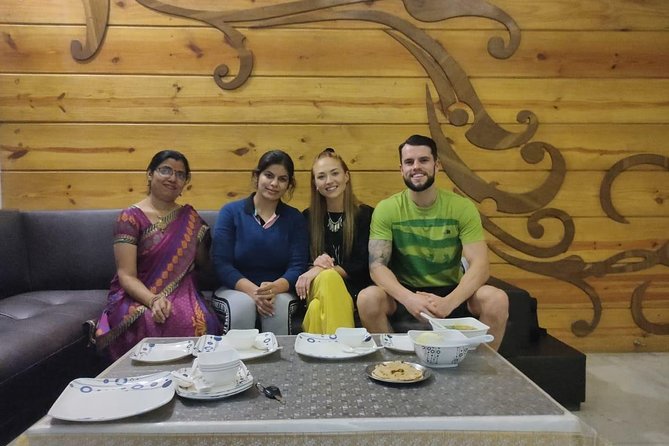
Many cooking classes begin with a chef talking while you stand back and watch. This one is more personal. You enter a private home in Agra and work with an Indian mother who shows you how the food is made. Her son helps interpret, which is useful if you need explanations in clear, careful English.
That family arrangement gives the class a natural rhythm. You are not simply shown a finished dish and handed a plate. You handle ingredients, follow instructions, and see how ordinary home cooking comes together. The family atmosphere is a large part of the appeal, especially if your time in Agra has mostly involved monuments, restaurants, and hotel service.
I also like the fact that the experience includes a meal. Once the cooking is done, you sit down and eat what you prepared. That makes the class feel like a shared evening in someone’s home rather than a quick demonstration followed by a rushed tasting.
The setting is comfortable and clean according to the information available about the class. Still, remember that a home kitchen is not a commercial cooking school. You should expect a personal, informal experience, not a polished studio with several workstations and a large teaching staff.
More cooking classes in Agra:
- Agra: Indian Food Private Cooking Class
★ 4.6 · 21 reviews - Cooking class with taj
★ 4.0 · 3 reviews - Pink City Cooking Class
★ 5.0 · 452 reviews
What you prepare during the two-hour class
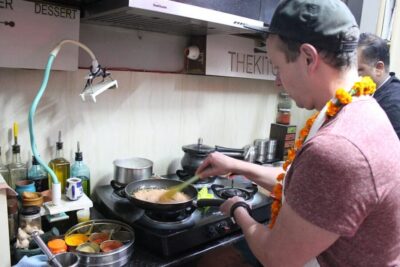
The class focuses on a few familiar Indian staples rather than trying to cover an entire regional menu. You learn how to prepare roti, kabab, and a vegetarian main dish of your choice.
Roti is a useful choice for a cooking lesson because it teaches a basic part of Indian home dining. You get to see how dough becomes a flatbread and how it is cooked. It is also one of the dishes you can realistically try again at home, even if your first attempts are not perfectly round.
Kabab gives the class a different texture and cooking method. The exact style is not specified, so you should ask your host what version will be prepared on your visit. The vegetarian main dish is selected from available options, giving your group some room to choose according to taste.
The class also introduces Indian spices and other traditional ingredients. This matters more than simply memorizing a recipe. Indian cooking often depends on how spices are combined, when they are added, and how their aromas change during cooking. A local host can explain those practical details in a way a printed recipe cannot.
The instructions are meant to be clear and manageable. One class participant described the recipes as tasty but easy to follow, which is good news if you are a beginner. You do not need to arrive with serious cooking skills. You do need to be willing to take part rather than sit back and wait for dinner.
Because the experience lasts about two hours, the menu has sensible limits. You will learn several dishes, but you should not expect a long survey of North Indian cooking or a lesson on advanced techniques. The value comes from personal help, familiar food, and the chance to repeat the recipes later.
The family hosts and the value of interpretation
The Indian mother is the cook leading the class, while her son works as an interpreter. The two-person arrangement is important because it combines practical instruction with a bridge between languages and cultures.
If you are not comfortable with English, this may still work well. One participant who was visiting India for the first time and was not confident in English found that the owner explained Indian home cooking slowly and carefully. That suggests you can ask for repeated instructions and take the lesson at a comfortable pace.
The interpreter also gives you a chance to ask questions about ingredients and home food customs. You can find out how a spice is normally used, how a dish fits into a meal, or how to adjust a recipe for ingredients available in your own country.
Do not expect a formal lecture about Indian cuisine. The useful information comes through the work itself: touching the dough, mixing ingredients, watching the cooking process, and tasting the finished food. That is often the best way to understand how a cuisine works.
The host names are not provided, so the experience is best understood as a family-led class rather than a celebrity chef event. Its strength is the welcome and the direct contact, not a famous instructor or a long list of professional credentials.
Eating a home-cooked meal after the lesson
The meal at the end is not an extra detail. It is the point where the class comes together. You can taste the food with a better sense of what went into it, and you can compare the result with the flavors you have eaten in restaurants around Agra.
The meal is described as a full dinner, with the dishes prepared during the class. Several details make this especially appealing. The food is made in a family home, the recipes are intended to be repeatable, and the host provides a recipe list after the course.
That recipe list gives the experience value after you leave India. You may be able to find the ingredients in your own country, and the dishes are simple enough to try with friends. One useful feature of the class is that it does not treat Indian food as something too complicated to make at home.
Of course, a recipe sheet cannot fully reproduce the host’s judgment about spice levels, dough texture, or cooking time. Take notes while you work. If you like a dish, ask how to make it milder, hotter, thicker, or less oily before the class ends.
There is also a small practical point about the recipe material. One participant was still waiting for a promised PDF, while another said a recipe list was received after the course. If the recipes matter to you, confirm how they will be delivered and make sure you have a way to receive them after the class.
More workshops in Agra:
- Jaipur Market Tour & Vegetarian Rajasthani Home Cooking Class
★ 5.0 · 113 reviews - Cooking Class in Jaipur – Family Experience with Meal & Transport
★ 5.0 · 101 reviews - Interactive Cooking Class with a Local Family in Jaipur
★ 5.0 · 90 reviews - Jaipur: Block Printing Workshop and Hands-on Experience
★ 5.0 · 78 reviews
Why this works well for first-time visitors to India
Agra can feel intense on a first visit. You may spend much of your day moving between major sights, navigating traffic, and eating in places designed for short visits. A home cooking class gives you a quieter way to connect with daily life.
The experience can also help you understand Indian food beyond a restaurant menu. You learn that spices are not simply added at random, and that a meal is often made from several elements prepared together. Making the food yourself gives you a stronger sense of how the dishes relate to one another.
I would recommend it to visitors who want personal contact but do not have time for a long food tour. Two hours is enough to create a proper activity in the middle of an Agra itinerary without taking up an entire day.
It also suits families, couples, and small groups. Since this is a private activity, your party does not need to share the kitchen with strangers. That can make it easier to ask questions, work at your own pace, or accommodate different levels of cooking experience.
Group discounts may improve the value for larger parties. The exact discount is not stated, so check the current price before booking. At the advertised $8, the class is priced far below many organized food experiences, especially considering that equipment, bottled water, transportation, instruction, and a meal are included.
Getting there and planning the timing
The listed meeting point is TrocalsB-3 Rahul Vihar, Agra Shamshabad Raja Kherah Marg, Rajpur Chungi, Indrapuram, Tajganj, Agra, Uttar Pradesh 282001. The activity ends back at the meeting point.
Pickup and drop-off are available, and private transportation is included. This is useful in Agra, where reaching a residential address can be less straightforward than reaching a major hotel or monument. Contact the provider in advance with your exact accommodation details rather than assuming the driver will automatically know where to find you.
The activity is near public transportation, but the pickup option may be the simpler choice if you are carrying bags or visiting after a long sightseeing day. Ask for the pickup time and meeting instructions before the day of the class.
At about two hours, the experience is easy to fit around other plans. You may prefer to schedule it in the evening so the meal becomes dinner, though the specific start time should be confirmed when booking. Avoid placing it too close to a train departure or another fixed appointment. Cooking has a natural pace, and you will enjoy it more if you are not checking the clock.
The class is available as a mobile ticket, and confirmation is received at booking. Keep the booking details accessible on your phone, especially if you are using pickup service.
What the $8 price really delivers
The advertised price of $8 is unusually low for a private home-based activity. Its value comes from the combination of several inclusions: cooking equipment, bottled water, private transportation, instruction, and a full meal.
The food alone is not the only measure. You are also paying for access to a local home and for time with a family who explains how the dishes are prepared. A restaurant meal might cost less, but it would not teach you how to make the food or provide recipes to take home.
The price can make this a good add-on for a budget-conscious Agra visit. You get a cultural activity without committing to a costly culinary program. Group discounts may make it even more attractive for families or friends traveling together.
There are limits. Personal expenses are not included, and the advertised amount may change. The details of the vegetarian dish, the pickup arrangement, and the recipe delivery should be confirmed before you finalize your plans.
The class also does not promise a market visit, a restaurant stop, or a broad food tour. If you want to shop for spices or explore Agra’s street food, you will need a separate activity. This is a focused lesson and meal in a family home.
Who will enjoy this class most
I think this experience is best for people who value contact with local families over a polished tourist production. It suits anyone who enjoys learning by doing, including beginners who have never made Indian food before.
It is a strong pick for:
- Couples wanting a relaxed cultural activity in Agra
- Families looking for something hands-on
- Small groups that can use the private format and group discount
- First-time visitors who want help understanding Indian home cooking
- Home cooks who want recipes they can try after returning home
- Visitors who need a short activity with optional transport
It may be less suitable if you have serious food allergies or strict dietary needs that have not been discussed in advance. The experience specifically includes a vegetarian main dish, but the complete menu and ingredient substitutions are not provided. Contact the host before booking if this is important to you.
It is also not the right choice if you want a technical chef-training course. The available details point to a friendly family class with simple, practical recipes. That is a strength for most visitors, but it may feel basic to an experienced cook.
Service animals are allowed, and the experience is near public transportation. Other accessibility details are not provided, so ask specific questions before booking if you need particular facilities or assistance.
A few practical tips for a better visit
Arrive ready to participate. Wear comfortable clothing that you do not mind wearing in a kitchen, and keep your hands free for cooking. The equipment is provided, so you do not need to bring cooking tools.
Ask questions as you go. If you want to recreate a dish at home, ask about ingredient names, spice amounts, cooking temperatures, and possible substitutes. Those small details are often more useful than the recipe title alone.
Tell the host your food preferences early. The class includes a vegetarian main dish, and you can ask what options are available. If you avoid certain foods, make that clear before the cooking begins.
Keep enough time after the class to eat without rushing. The meal is part of the experience, not just a final sample. You will get more from the evening if you can sit, talk, and enjoy the food with your group.
The cancellation policy is simple but strict near the start time. You receive a full refund if you cancel at least 24 hours before the experience. Cancellations or changes made within 24 hours are not refunded or accepted.
Should you book the Agra cooking class?
Book this class if you want a low-cost, personal way to experience Indian food in Agra. The strongest reasons are the family home, the hands-on cooking, the clear interpreter support, and the meal you eat afterward. The recipe list also gives you a chance to keep the experience alive in your own kitchen.
I would not book it expecting a large culinary school, a long menu, or a formal professional demonstration. The class is short and home-based, with limited information about the exact vegetarian dish and pickup schedule.
At the advertised $8, it offers excellent value for visitors who want more than sightseeing. Confirm the transport details, ask about dietary needs, and clarify how the recipes will be sent. If those points suit your plans, this is an easy, practical choice for adding a little local warmth to an Agra visit.
FAQ
How long does the Agra cooking class last?
The class lasts approximately two hours.
Where does the activity start and end?
It starts at TrocalsB-3 Rahul Vihar, Agra Shamshabad Raja Kherah Marg, Rajpur Chungi, Indrapuram, Tajganj, Agra, Uttar Pradesh 282001, India. It ends back at the meeting point.
Is pickup and drop-off available?
Yes. Pickup and drop-off are available, and private transportation is included.
What food will I learn to prepare?
The class covers roti, kabab, and a vegetarian main dish of your choice. You also learn about Indian spices and other traditional ingredients.
Is the cooking class private?
Yes. This is a private activity, so only your group participates.
Are cooking equipment and water included?
Yes. Cooking equipment and bottled water are included.
What is the cancellation policy?
You can cancel at least 24 hours before the start time for a full refund. Cancellations or changes made within 24 hours are not refunded or accepted.
Recently added around Agra
- Taj Mahal Entrance Ticket★ 5.0 · 3 reviews
- Agra’s Hidden Gems & Flavors on a Thrilling Tuk-Tuk Tour 3-4 Hrs★ 5.0 · 3 reviews
- Spiritual Private Tour of Vrindavan and Mathura★ 3.0 · 3 reviews
- Agra: Taj Mahal and Agra Fort Private Guided Half-Day Trip★ 5.0 · 3 reviews
- Shop Agra Like a Local: Unique Indian Handicrafts Tour★ 5.0 · 3 reviews
- From Jaipur: Taj Mahal Guided and Agra Tour By Car★ 5.0 · 3 reviews
- Private Transfers Jaipur To Agra Drop with sikri & stepwell★ 5.0 · 3 reviews
- Full day Taj Mahal, Agra Fort, Fatehpur Sikri By Car From Agra★ 5.0 · 3 reviews
Cooking Classes, compared.
Jaipur Market Tour & Vegetarian Rajasthani Home Cooking Class
Read our review →
Cooking Class in Jaipur – Family Experience with Meal & Transport
Read our review →
Interactive Cooking Class with a Local Family in Jaipur
Read our review →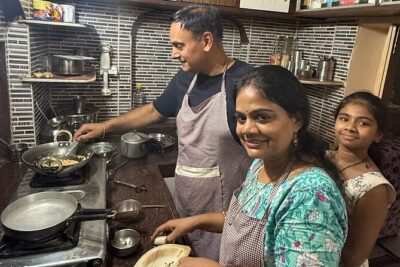
Traditional cooking class and storytelling session
Read our review →
Indian Cooking Class with Local Family in Jaipur
Read our review →Browse the lists this tour appears in