
Reviewed · COOKING CLASSES
Interactive Cooking Class with a Local Family in Jaipur
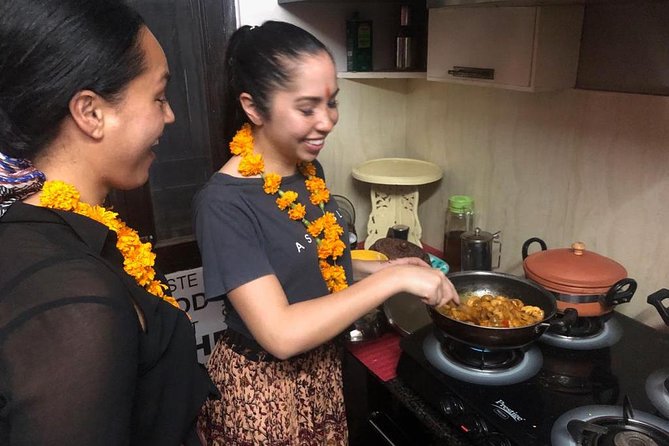
Jaipur’s best food lesson may be the one held away from a restaurant, in the working home kitchen of a local family. This small class introduces you to North Indian cooking through chapati, paratha, dal, seasonal curries, and other everyday dishes.
I like the hands-on format, where you help prepare the food instead of simply watching. I also like the chance to meet Monty and Harshita, hosts who welcome you into their own home and serve a meal made together.
The main consideration is transport. Hotel pickup and drop-off are not included, so you’ll need to reach the Gopalpura Bypass meeting point yourself. The class lasts about two and a half hours, and the group is limited to five people.
In This Review
- Key points to know before booking
- A Jaipur cooking class in a lived-in home
- Meeting Monty and Harshita
- Making chapati and paratha by hand
- Seasonal curries and everyday North Indian food
- From cooking lesson to shared meal
- What the two and a half hours feel like
- Why the $26 price can make sense
- Getting to the Gopalpura Bypass meeting point
- Who will enjoy this experience most
- Practical details worth knowing
- Should you book the Jaipur family cooking class?
- FAQ
- Where does the cooking class take place?
- How long does the experience last?
- Who teaches the cooking class?
- What food can I learn to cook?
- Are vegetarian and non-vegetarian options available?
- Is a meal included?
- Are drinks included?
- Is hotel pickup and drop-off provided?
- Can I cancel for a full refund?
Key points to know before booking
- Cook in a real Jaipur home: You visit the family’s own residence, not a staged restaurant kitchen.
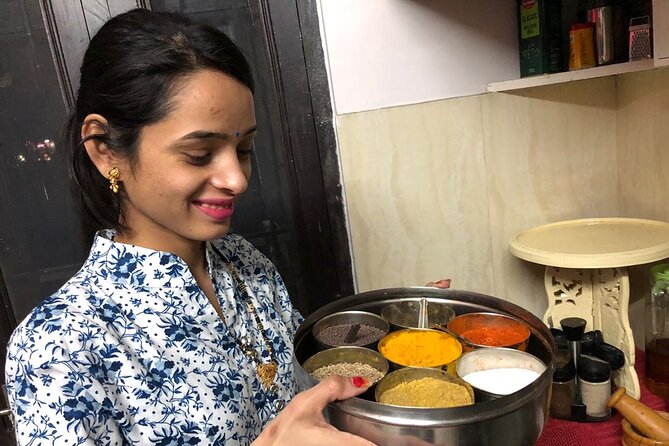
- Focus on North Indian food: Learn breads such as chapati and paratha, plus dal and seasonal vegetable curries.
- Small groups make a difference: A maximum of five people allows more time at the cooking counter.
- Vegetarian and non-vegetarian options are available: Confirm your preference when arranging the class.
- A meal is part of the experience: Your cooking becomes lunch, brunch, or dinner, with a prepared Indian dessert.
- Recipes arrive by email: You can try the dishes again after returning home.
A Jaipur cooking class in a lived-in home
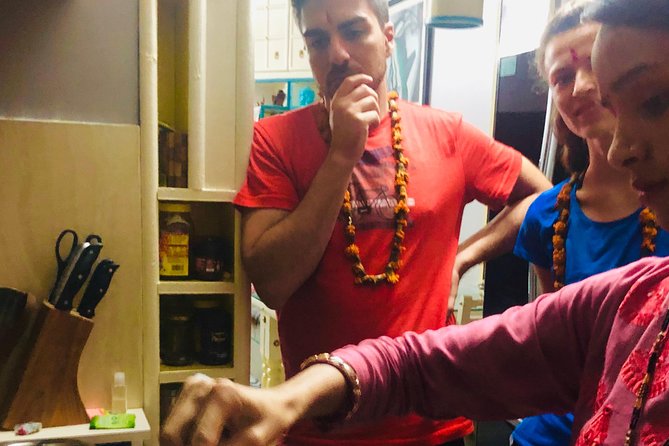
The appeal here is simple: you are invited into the home where the family cooks and carries on its ordinary daily life. That gives the class a more personal feel than a demonstration in a commercial venue.
You begin with a welcome drink, then get an introduction to the Indian kitchen and the broad range of Indian food. The focus narrows to North Indian cooking, which is especially useful if you want to understand the food you are likely to encounter across Rajasthan and northern India.
This setting also gives you a chance to ask practical questions. You can learn how dishes are built, how breads are handled, and how several vegetable preparations fit together in a home meal. The point is not only to copy a recipe. It is to see how Indian cooking works as part of family life.
The home was described as clean, organized, and ready for the class. That matters when you are working with food in an unfamiliar kitchen. It also helps make the experience comfortable for people who may feel slightly unsure about entering a private home.
More cooking classes in Jaipur:
- Pink City Cooking Class
★ 5.0 · 452 reviews - Jaipur Market Tour & Vegetarian Rajasthani Home Cooking Class
★ 5.0 · 113 reviews - Cooking Class in Jaipur – Family Experience with Meal & Transport
★ 5.0 · 101 reviews
Meeting Monty and Harshita
Monty and Harshita are named as the hosts for the cooking class. Their role is central to the experience. You are not being sent through a large cooking school with a rotating cast of instructors. You are spending time with a Jaipur family in its own space.
The class is private if you book it that way, and the maximum group size is five people. That is a useful limit for a hands-on activity. With fewer people around the work area, you should have a better chance to take part in shaping breads, preparing ingredients, and following the cooking steps.
A small class does not guarantee a completely private experience unless you select the private option, so check the booking details carefully. Still, the five-person maximum is far more personal than a class designed for a large group.
The warm welcome is one of the strongest parts of the experience. The hosts serve a drink, explain the kitchen, and guide you through the food rather than expecting you to know what to do. One class participant described the cooking as informative, practical, and easy to follow, with the hosts making the work feel manageable.
Making chapati and paratha by hand
Indian breads are often the most satisfying part of a cooking lesson because the finished result depends on your hands. Chapati and paratha are listed among the dishes you may learn to prepare.
You will work with dough and learn the basic process of turning it into a flatbread. The class description does not promise a fixed, step-by-step menu for every date, so the exact bread preparation may vary. Still, these breads are a clear part of the North Indian focus.
Chapati and paratha also show the difference between home cooking and simply ordering bread at a restaurant. You get to see the technique, feel the dough, and understand why shape and handling matter. Even if your first bread is not perfectly round, that is part of the fun.
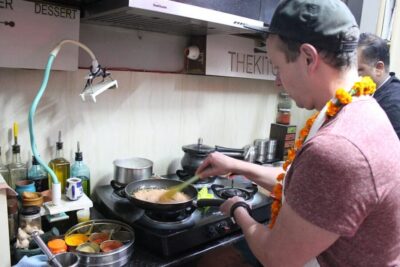
The class is intended to be hands-on. You are encouraged to help create the food rather than stand at a distance while somebody else does all the work. That makes this a good choice for anyone who wants a skill to take home, not just a meal to eat.
Seasonal curries and everyday North Indian food
The curry selection is broad. Depending on the day and the available ingredients, the class may include garlic bhindi, aloo gobhi, dal, pumpkin curry, carrot curry, paneer masala, tinda curry, eggplant masala, baigan bharta, or gutaa curry.
That list gives you a sense of the class’s character. It is not limited to one famous restaurant dish. It covers home-style vegetable cooking, lentils, paneer, and preparations built around seasonal produce.
Some of the names may be new to you. Tinda curry, for example, uses a vegetable that many people outside South Asia rarely encounter. Baigan bharta is an eggplant preparation, while aloo gobhi combines potato and cauliflower. Paneer masala offers a familiar vegetarian option for anyone who enjoys the soft texture of Indian cheese.
The menu is not fixed in the information provided, so you should not book expecting to cook every dish on the list. Think of the selection as a sample of the foods the family may prepare. The seasonal approach is a plus because it reflects the way home meals are actually planned.
Vegetarian and non-vegetarian options are available. If your diet matters to you, clarify your preference before the class so the hosts can plan the suitable dishes.
More workshops in Jaipur:
- Jaipur: Block Printing Workshop and Hands-on Experience
★ 5.0 · 78 reviews - Hands-on Block Printing Workshop
★ 5.0 · 76 reviews - Jaipur Pink City Cooking Class
★ 5.0 · 73 reviews - Jaipur: Interactive Cooking Class with a Local Family
★ 4.9 · 58 reviews
From cooking lesson to shared meal
The food you help prepare becomes part of the meal served during the experience. Lunch, brunch, or dinner is included, along with non-alcoholic drinks and bottled water. An Indian dessert is prepared in advance and served with the meal.
This makes the class feel like one complete visit rather than a lesson followed by a separate search for food. You learn, sit down, and taste the results in the same home. I like that rhythm because it connects the techniques to the finished meal.
The prepared dessert is a small but useful touch. It lets the hosts serve something sweet without taking time away from the main cooking work. It also gives you a fuller sense of how an Indian meal may finish.
Do not expect a cocktail class or a drink-focused evening. Alcohol is not included, and the listed beverages are non-alcoholic. The emphasis is firmly on food and conversation.
What the two and a half hours feel like
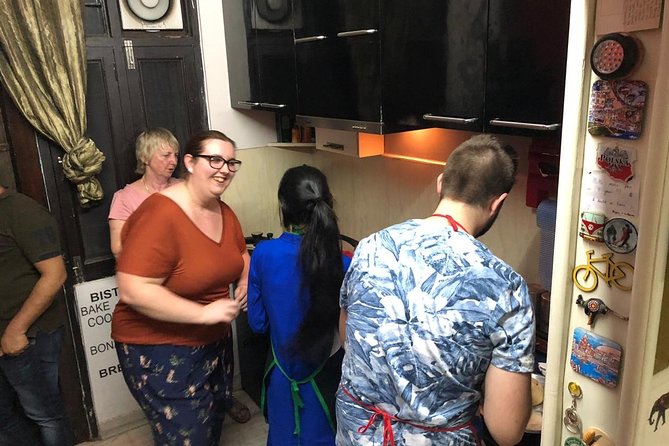
The experience lasts about two hours and thirty minutes. That is enough time for a welcome, kitchen introduction, cooking, and a meal, but it is not a full-day culinary course.
The opening is likely to be relaxed. You receive a welcome drink and get oriented to the kitchen. The hosts then explain different types of Indian cuisine before concentrating on North Indian food.
The middle portion is the practical heart of the class. You help prepare breads and curries, with the family assisting as you work. The pace should suit a short class, though the exact order and menu can change according to the dishes being made.
The final part is the meal. You eat what has been prepared and receive the dessert made beforehand. Recipes are sent to your email after the class, which gives the experience value beyond the afternoon or evening itself.
A two-and-a-half-hour format suits people with a busy Jaipur schedule. You can fit it between sightseeing plans without giving up an entire day. The tradeoff is that you will not cover every technique or dish in great depth.
Why the $26 price can make sense
At $26 per person, the price is modest for a small-group food experience that includes instruction, a home-cooked meal, drinks, bottled water, and recipes afterward. You are paying for both the lesson and the hospitality.
The value is strongest if you would otherwise spend money on a restaurant meal and still want a meaningful local activity. Here, the meal is not an extra charge after the class. It is part of the visit.
The price is less attractive if you only want a quick cooking demonstration or if your schedule is so tight that you cannot stay for the meal. The experience is built around time in the home, so it works best when you treat the class as a full activity rather than a short stop.
You also need to budget for your own transport to and from the meeting point. Hotel pickup and drop-off are not included. Since the class ends back at the same meeting point, plan your onward journey from there.
Getting to the Gopalpura Bypass meeting point
The starting point is 166, Gopalpura Bypass Road, Prem Nagar Vistar, Mangal Vihar, Ganesh Vihar, Arjun Nagar, Jaipur, Rajasthan 302018, India.
The location is near public transportation, which is helpful if you are not using a private car. The precise travel time from your hotel will depend on where you are staying in Jaipur, so allow enough time to find the address without rushing.
The activity ends at the meeting point. That makes the return plan straightforward, but it also means the class does not function as a hotel-based excursion. You arrange both legs yourself.
A mobile ticket is accepted, and confirmation is received at the time of booking. Keep the meeting address available on your phone, especially if you are arranging local transport.
Who will enjoy this experience most
I would choose this class if you want personal contact with a Jaipur family and prefer learning by doing. It suits couples, friends, solo visitors, and small groups who enjoy food and do not mind entering a private home.
It is also a strong choice for vegetarians. The menu includes a long list of vegetable curries, dal, breads, paneer, and eggplant dishes. People who eat meat can request a non-vegetarian option, though the available dishes are not specified.
Families and beginners may appreciate the supportive format. The hosts help you create the dishes, and the cooking has been described as easy to follow. You do not need to arrive with advanced kitchen skills.
This may not suit you if you want a polished restaurant setting, a fixed tasting menu, or a long professional course. The attraction is the family home and the shared cooking, not formal culinary certification.
Practical details worth knowing
The experience is available at a variety of times, so you have some flexibility when fitting it into your Jaipur plans. The exact time should be selected during booking.
You can book a private class, which is useful if you want the kitchen time to belong only to your own party. Otherwise, the class has a maximum of five people.
Free cancellation is available if you cancel at least 24 hours before the local start time. Cancellations within 24 hours are not refunded, and changes inside that window are not accepted.
The class requires good weather. If poor weather causes a cancellation, you are offered another date or a full refund. That condition is worth remembering when planning around monsoon weather or other unsettled conditions.
Should you book the Jaipur family cooking class?
Book it if you want a friendly, practical food experience with a real local family. The strongest reasons are the small group size, hands-on bread and curry preparation, included home meal, and recipes sent afterward.
I especially like that you are not only shown how Indian food is made. You take part, sit down to eat, and leave with recipes you can try again. The welcome from Monty and Harshita, along with the clean and organized home setting, adds comfort to what could otherwise feel unfamiliar.
Skip it if you need hotel transport, dislike private-home settings, or want a strictly fixed menu. For most food-minded visitors, though, $26 is a fair price for two and a half hours of cooking, conversation, and a meal in Jaipur.
FAQ
Where does the cooking class take place?
The class takes place at a local family home at 166, Gopalpura Bypass Road, Prem Nagar Vistar, Mangal Vihar, Ganesh Vihar, Arjun Nagar, Jaipur, Rajasthan 302018, India.
How long does the experience last?
The cooking class lasts approximately two hours and thirty minutes.
Who teaches the cooking class?
The class is taught by a local Jaipur family. Monty and Harshita are named as the hosts.
What food can I learn to cook?
The North Indian-focused class may include chapati, paratha, dal, garlic bhindi, aloo gobhi, pumpkin curry, carrot curry, paneer masala, tinda curry, eggplant masala, baigan bharta, and gutaa curry.
Are vegetarian and non-vegetarian options available?
Yes. Both vegetarian and non-vegetarian options are available.
Is a meal included?
Yes. The experience includes a home-cooked lunch, brunch, or dinner, along with an Indian dessert prepared beforehand.
Are drinks included?
Yes. Non-alcoholic beverages and bottled water are included.
Is hotel pickup and drop-off provided?
No. Hotel pickup and drop-off are not included. The activity ends back at the meeting point.
Can I cancel for a full refund?
Yes, if you cancel at least 24 hours before the local start time. Cancellations made within 24 hours are not refunded. If poor weather causes the experience to be canceled, you are offered another date or a full refund.
Recently added around Jaipur
- Taj Mahal Entrance Ticket★ 5.0 · 3 reviews
- Jaipur: Ajmer & Pushkar Day Trip with Lunch & Camel ride★ 4.3 · 3 reviews
- Spiritual Private Tour of Vrindavan and Mathura★ 3.0 · 3 reviews
- Agra’s Hidden Gems & Flavors on a Thrilling Tuk-Tuk Tour 3-4 Hrs★ 5.0 · 3 reviews
- Jaipur: City Tour Full-Day Sightseeing with Guide★ 5.0 · 3 reviews
- Shop Agra Like a Local: Unique Indian Handicrafts Tour★ 5.0 · 3 reviews
- Agra: Taj Mahal and Agra Fort Private Guided Half-Day Trip★ 5.0 · 3 reviews
- From Jaipur: Taj Mahal Guided and Agra Tour By Car★ 5.0 · 3 reviews
Cooking Classes, compared.
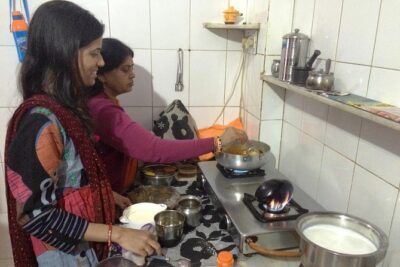
Jaipur Market Tour & Vegetarian Rajasthani Home Cooking Class
Read our review →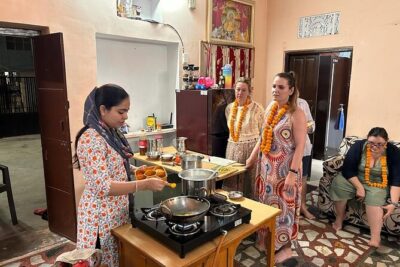
Cooking Class in Jaipur – Family Experience with Meal & Transport
Read our review →
Traditional cooking class and storytelling session
Read our review →
Agra Cooking Classes (Pick up and Drop available)
Read our review →
Indian Cooking Class with Local Family in Jaipur
Read our review →Browse the lists this tour appears in