
Reviewed · BLOCK PRINTING WORKSHOPS
Hands-on Block Printing Workshop
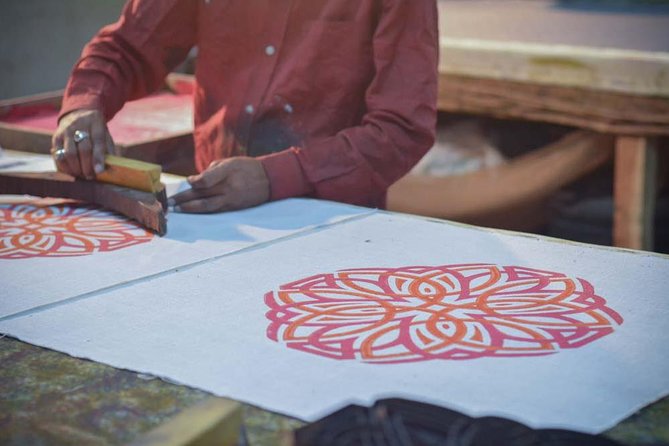
Sanganeri block printing is best learned with your hands, not from a display case. At Creatis, you’ll work through the old process in Jaipur’s own region of origin, layering carved blocks and pigments until plain cloth becomes your own patterned stole.
I especially like the small-group setting, which gives you room to ask questions, and the fact that you leave with two stoles you made yourself. The calm workshop is also a welcome change from Jaipur’s busy streets. One thing to note: the class is advertised as capped at six for personal help, but the general activity information allows up to 15 people, so confirm the group size when booking.
In This Review
- Key points to know
- Why Sanganeri printing makes sense in Jaipur
- Arriving at the Creatis workshop
- The opening lesson: tools, blocks, and local craft
- Practicing before you print the final stoles
- Choosing motifs and building your pattern
- The printing process, one layer at a time
- Finishing the two stoles
- What the two-hour schedule feels like
- Group size and personal attention
- The value of $25.16
- Who should book this class
- Booking and cancellation details worth knowing
- Should you book the Creatis block printing workshop?
- FAQ
- Where does the block printing workshop take place?
- Is hotel pickup included?
- How long does the class last?
- What will I make during the workshop?
- What kinds of blocks will I learn about?
- What printing materials are used?
- What is the minimum age?
- How many people can join the activity?
- Can I cancel for a full refund?
Key points to know
- You print two stoles to keep, turning the class into both an art lesson and a useful souvenir.
- You learn three block types, including ground, outline, and filler designs.
- You build patterns in layers, using water-based pigments and careful block placement.
- The workshop is held at Creatis, a working textile space in Sudarshanpura rather than a polished tourist attraction.
- Mohit and his team guide each stage, from selecting designs to testing colors and printing borders.
- The $25.16 price is strong value, especially if you want a hands-on activity instead of another bought souvenir.
Why Sanganeri printing makes sense in Jaipur
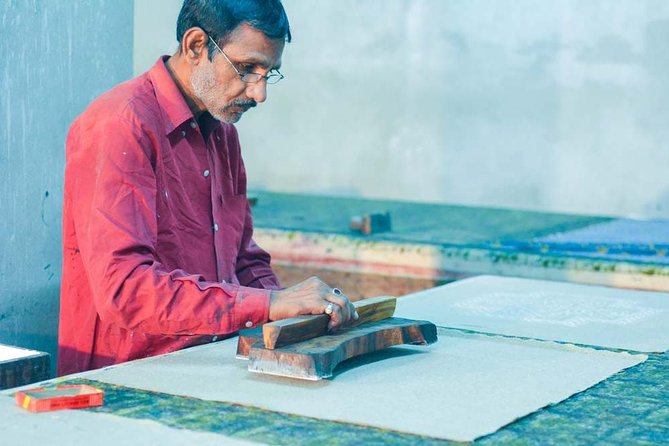
Sanganeri printing developed in the Jaipur region about 500 years ago. Its look comes from repeated carved motifs, clear outlines, and bright pigment combinations. The design may appear simple when you see a finished scarf in a shop, but the process depends on steady hands and careful order.
You do not simply press one stamp onto fabric and call it done. A finished pattern can require several blocks, with each color added in turn. The blocks must line up closely, and small errors become part of the final piece.
That is the useful lesson here. You gain a better feel for the labor behind the textiles sold across India. I like this kind of activity because it changes the way you shop afterward. A printed stole is no longer just a pretty object. You can see the sequence, repetition, and patience built into it.
More block printing workshops:
- Private Jaipur Full-Day Tour with Block Printing
★ 5.0 · 206 reviews - Learn Hand Block Printing Techniques & Print Your Own Fabric
★ 5.0 · 95 reviews - Jaipur: Block Printing Workshop and Hands-on Experience
★ 5.0 · 78 reviews
Arriving at the Creatis workshop
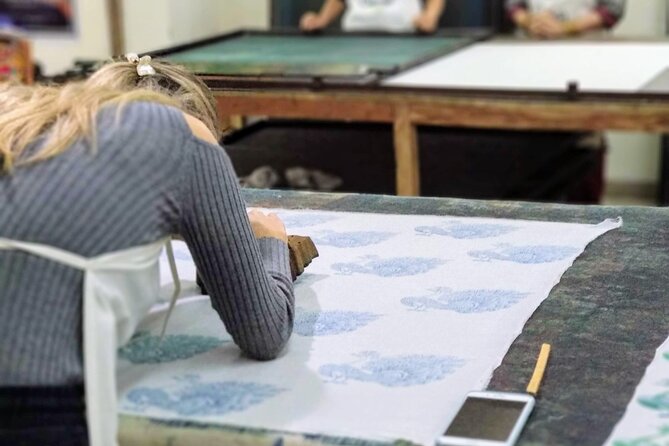
You make your own way to Creatis at A12 Sudarshanpura RIICO, behind the Tata Motors Service Center in the Sudarshanpura Industrial Area, Bais Godam, Jaipur. Hotel pickup is not included, so plan your route before the class begins.
The setting is part of the appeal. This is a working textile business, not a staged heritage room built only for short demonstrations. The space is described as calm, open, and practical. You may see the working side of textile production around you, which gives the activity a more direct connection to Jaipur’s craft trade.
The location is near public transportation, but the information provided does not give a travel time from central Jaipur. Allow extra time if you are unfamiliar with the industrial area. You do not want to arrive hurried, since printing rewards a relaxed pace.
The activity ends back at the same meeting point. Dress in smart casual clothing. You are handling pigments, blocks, and fabric, so clothing that you can move in makes sense.
The opening lesson: tools, blocks, and local craft
The class begins with an introduction to block printing and its cultural importance. You learn about the tools and materials before handling the fabric yourself. This opening matters because the method can seem mysterious if you only see the finished cloth.
You are introduced to three useful types of blocks:
- Gad, or ground blocks, help establish the base of a pattern.
- Rekh, or outline blocks, define the main shape.
- Datte, or filler blocks, add interior marks and smaller details.
The terms give you a simple way to understand how a motif is built. Instead of treating each carved block as an isolated stamp, you begin to see how several blocks work as a set.
A stronger introduction could explain more about Creatis itself and how its textile work fits into Jaipur’s craft tradition. One person specifically wanted more background at the start. That is a fair point. The workshop focuses mainly on doing, so you should choose it for hands-on learning rather than a long lecture.
Practicing before you print the final stoles
Before working on your finished pieces, you get a test section to practice. Do not rush this part. It helps you learn how much pigment to use, how firmly to press, and how to judge the position of the next block.
The tricky bit is alignment. You may need to place an outline, ground color, and filler design in a set order. Your eye has to judge where the next shape belongs, and the design may not look complete until several layers are in place.
A peacock design, for example, can take four colors and several overlay stages. It may fit within the two-hour class, but it requires attention. The process is harder than it first appears, which is exactly why the practice fabric is useful.
You can also use the test stage to check the color. The shade shown on a swatch may not look exactly the same once the pigment is prepared and printed. If the test result does not suit you, ask about changing the color before moving to the final cloth.
That small decision can make a big difference. A color you dislike on a sample will not become better simply because it appears on a larger stole.
More workshops in Jaipur:
- Pink City Cooking Class
★ 5.0 · 452 reviews - Jaipur Market Tour & Vegetarian Rajasthani Home Cooking Class
★ 5.0 · 113 reviews - Cooking Class in Jaipur – Family Experience with Meal & Transport
★ 5.0 · 101 reviews - Interactive Cooking Class with a Local Family in Jaipur
★ 5.0 · 90 reviews
Choosing motifs and building your pattern
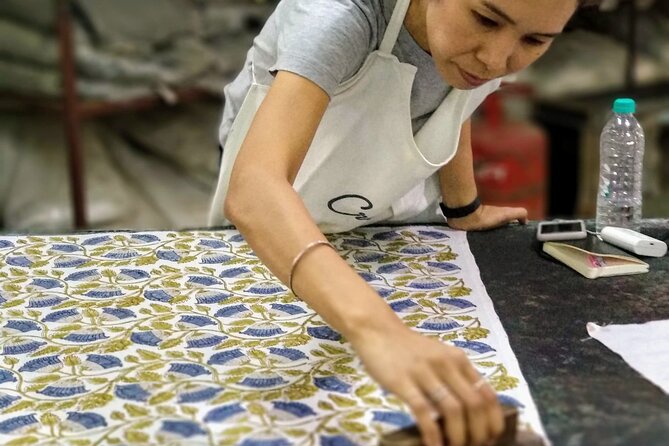
You choose from designs inspired by Sanganeri printing and from the studio’s fabric collection. The selection gives you some direction without forcing every person to make the same object.
The class lets you work with a single motif design or an all-over pattern. A motif design can make one central image the focus. An all-over design repeats the block across the cloth and calls for more care with spacing.
You can mix colors and patterns to make the piece your own. The staff can help with color choices and block placement, but you still control the result. That balance works well. You receive enough support to avoid getting lost, while the final cloth still feels personal.
Some designs are more demanding than others. If you want a calm, straightforward session, select a simpler pattern. If you enjoy a challenge and do not mind staying focused, choose a multi-color image such as a peacock.
The practical choice is to ask how many layers a design needs before you commit. Two hours is enough for a finished piece, but a complex design can use nearly all of your time.
The printing process, one layer at a time
Once you begin on the final fabric, you apply the pigment and press the carved block onto the cloth. You then repeat the process with the next block and color. The result grows slowly, not all at once.
This is where the class becomes more than a craft souvenir. You feel the need for consistent pressure and careful placement. The repeated action is quiet and focused, especially compared with sightseeing in Jaipur.
The pigments are water-based, which makes the process suitable for a practical workshop setting. Still, you should pay attention to your hands and clothing. The dress code is smart casual, not formal, and sensible clothing is the safer choice.
The staff stays available to help you choose colors, place blocks, and correct mistakes. Their patience is one of the strongest parts of the experience. You can work at your own level, from a simple repeating design to a more involved layered image.
The finished print may not have factory-perfect regularity. That is part of its value. You made it by hand, and small variations show the process rather than ruining it.
Finishing the two stoles
The main product is two block-printed stoles for you to take home. The activity description also refers to making a scarf or placemats, so the exact fabric project may depend on the session or the options offered that day. Confirm the final format if you have a particular item in mind.
The stoles make good souvenirs because they are light, useful, and easy to pack. More important, they carry a clear memory of your time in Jaipur. You will remember the color choices and the moment when the layers finally formed a recognizable design.
The borders are machine embroidered after the printing stage, according to the tour description. That gives the finished stoles a more complete look than a loose piece of printed cloth.
You may also be able to print on clothing you bring with you. This has worked successfully for some participants, but it is not clearly listed as a guaranteed feature. Ask before bringing a favorite garment. You do not want to risk an important item without knowing the workshop’s policy.
What the two-hour schedule feels like
The class lasts about two hours. That is enough time for an introduction, practice, design selection, layered printing, and finishing, but it is not an open-ended studio session.
I would think of the timing this way:
- The opening explains the craft and materials.
- The practice stage lets you test pressure, spacing, and color.
- The main printing period is where most of your concentration goes.
- The final stage completes the stoles and prepares them for you to take away.
A basic design should fit comfortably into the schedule. A complicated design may require you to work steadily, and some people have stayed beyond the scheduled time when they selected difficult stencils. That extra patience is a nice sign of the staff’s attitude, but you should not assume that an extended session is always available.
If you are visiting Jaipur with a packed sightseeing plan, schedule the class when you can slow down afterward. The activity is relaxing, but the printing itself needs attention. Trying to squeeze it between two fixed appointments would take away from the fun.
Group size and personal attention
The experience is presented as a small class capped at six people. That is the ideal size for this kind of work. You can ask for help without waiting long, and the instructor can see when a block is being placed incorrectly.
The general information also gives a maximum of 15 people, while one large school group found that choices of colors and patterns became more limited. That difference matters. A class of six should feel personal. A much larger group may involve more shared supplies and less individual choice.
If your booking is for a large party, contact Creatis before you pay and ask how many people will be in your time slot. This is the main practical issue to check. The workshop earns its value through direct guidance, so group size affects the experience more than it would on a standard sightseeing tour.
The minimum age is 18. Although the activity can sound family-friendly, the stated booking requirement is for adults only.
The value of $25.16
At $25.16 per person, this is a good buy if you want an activity with something tangible at the end. The price includes taxes, handling charges, and GST. It does not include transportation to the studio.
You are paying for instruction, materials, studio time, and two handmade stoles. Bought textiles in Jaipur can cost more or less depending on quality and design, but a shop purchase does not give you the understanding that comes from making your own.
The value is strongest for people who enjoy creative work. If you want a quick demonstration followed by shopping, this may feel too slow. If you like learning through practice, the price compares well with other two-hour activities.
The two finished stoles also reduce the pressure to find a separate Jaipur souvenir. You have already made something personal, and it takes up little luggage space.
Who should book this class
I would recommend it to adults who want a quiet, creative break from forts, markets, and city traffic. It suits couples, friends, solo visitors, and small groups that enjoy making something together.
It is also a good choice if you have seen block-printed textiles throughout India and want to understand how they are made. The lesson gives you a practical connection to an art form that can otherwise become background scenery in shops.
You do not need previous craft experience. The step-by-step instruction and practice fabric make the class approachable. You do need moderate physical fitness, as noted in the activity details, and enough patience to repeat the printing process carefully.
It may be less suitable if you dislike working with your hands, want a long historical talk, or have only a narrow window in your schedule. It is also not the best match for anyone under 18 because the stated minimum age is 18.
Booking and cancellation details worth knowing
Confirmation is provided at booking. The activity requires a minimum number of participants, so a cancellation by the provider could lead to another date or a full refund.
You can cancel for a full refund up to 24 hours before the start time. Inside that 24-hour window, cancellations and changes are not accepted for a refund. The cut-off uses Jaipur local time, so check the clock carefully if you are booking from another country.
Because there is no hotel pickup, make the meeting point part of your planning. Creatis is at A12 Sudarshanpura RIICO, behind the Tata Motors Service Center, in Bais Godam, Jaipur.
Should you book the Creatis block printing workshop?
Yes, if you want to do more than look at Jaipur’s textiles. The best parts are the patient help from Mohit and his team, the chance to choose your own colors and designs, and the two stoles you take home.
Book with realistic expectations. This is a working textile class, not a grand museum presentation. The introduction could offer more background about the studio, and a larger group may limit your choices. Ask about the group size and final product before booking, especially if you want a complex pattern.
For $25.16, the class offers a useful mix of local craft, quiet concentration, and a souvenir with your fingerprints all over it. That is a fair trade for two hours in Jaipur.
FAQ
Where does the block printing workshop take place?
The workshop takes place at Creatis, A12 Sudarshanpura RIICO, behind the Tata Motors Service Center, Industrial Area, Sudarshanpura, Bais Godam, Jaipur, Rajasthan 302006, India.
Is hotel pickup included?
No. You must travel independently to the workshop. The studio is near public transportation.
How long does the class last?
The class lasts approximately two hours.
What will I make during the workshop?
You will use block printing techniques to create two stoles to keep. The activity information also mentions a scarf or placemats as possible finished products, so confirm the exact option for your session.
What kinds of blocks will I learn about?
You will learn about Gad ground blocks, Rekh outline blocks, and Datte filler blocks.
What printing materials are used?
The workshop uses water-based pigments and carved blocks. You will layer motifs and colors to create the design.
What is the minimum age?
The minimum age is 18.
How many people can join the activity?
The workshop is described as capped at six people for personal tutoring. The general activity information lists a maximum of 15 participants, so ask Creatis to confirm the group size for your booking.
Can I cancel for a full refund?
Yes. You can cancel at least 24 hours before the experience start time for a full refund. Cancellations or changes made less than 24 hours before the start time are not accepted for a refund.
Recently added around Jaipur
- Taj Mahal Entrance Ticket★ 5.0 · 3 reviews
- Jaipur: Ajmer & Pushkar Day Trip with Lunch & Camel ride★ 4.3 · 3 reviews
- Spiritual Private Tour of Vrindavan and Mathura★ 3.0 · 3 reviews
- Agra’s Hidden Gems & Flavors on a Thrilling Tuk-Tuk Tour 3-4 Hrs★ 5.0 · 3 reviews
- Jaipur: City Tour Full-Day Sightseeing with Guide★ 5.0 · 3 reviews
- Shop Agra Like a Local: Unique Indian Handicrafts Tour★ 5.0 · 3 reviews
- Agra: Taj Mahal and Agra Fort Private Guided Half-Day Trip★ 5.0 · 3 reviews
- From Jaipur: Taj Mahal Guided and Agra Tour By Car★ 5.0 · 3 reviews
Block Printing Workshops, compared.

Private Jaipur Full-Day Tour with Block Printing
Read our review →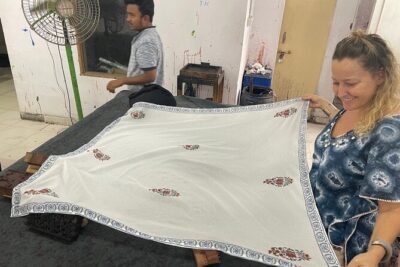
Learn Hand Block Printing Techniques & Print Your Own Fabric
Read our review →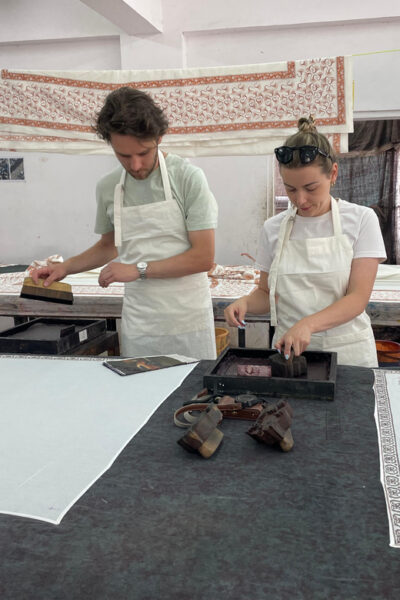
Block Printing & Village Stories: Discover Bagru’s Craft Legacy
Read our review →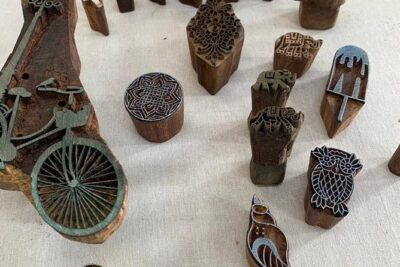
Block Printing Workshop in Jaipur! (including lunch)
Read our review →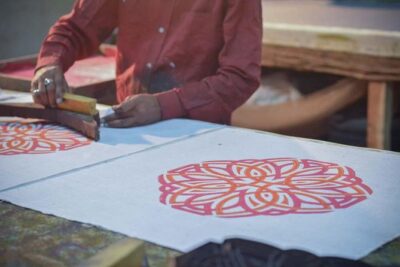
Jaipur Half-Day Shopping Tour with Hand Block Printing Class
Read our review →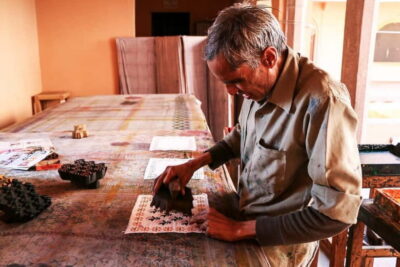
Private Shopping Tour with Block Printing Workshop
Read our review →Browse the lists this tour appears in