
Reviewed · BLOCK PRINTING WORKSHOPS
Hands-on Block Printing Workshop
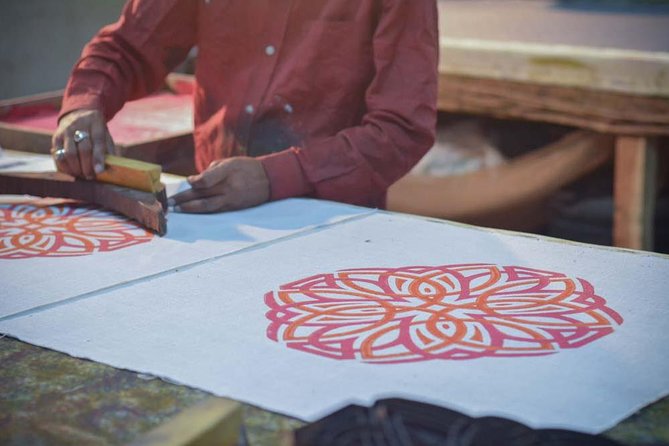
The satisfying surprise here is how quickly a simple wooden stamp turns into a finished piece of fabric. At Creatis, you learn the basics of Rajasthan’s block-printing tradition, choose from Sanganeri-inspired designs, and spend most of the two hours making a scarf or sarong with your own hands. I especially like the small group of up to 10 and the chance to watch professionals working in the nearby factory. The patient help from Mohit, Vivek, and Aftab is another real plus.
The main consideration is that this is a beginner workshop, not a full course in carving blocks or textile production. You print with prepared blocks rather than carve your own, and mistakes can happen on fabric. That is part of the lesson, but anyone expecting a polished artisan finish should keep the $24 price and short format in mind.
In This Review
- Key points at a glance
- Why block printing makes a better souvenir
- Your first look at the tools and tradition
- Choosing a pattern and color plan
- Learning the rhythm of hand printing
- Watching professionals work next door
- Making the scarf or sarong
- How much value do you get for $24?
- Who will enjoy this workshop most?
- Practical timing and booking advice
- The best way to approach your finished piece
- Should you book it?
- FAQ
- Where does the block printing workshop take place?
- How long does the activity last?
- How much does the workshop cost?
- What do I make during the class?
- Are materials included?
- Which languages does the instructor speak?
- How many people can join the group?
Key points at a glance
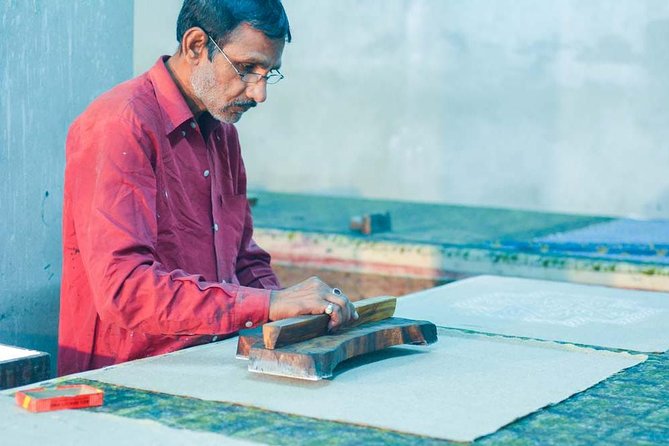
- A wearable souvenir: You leave with a Pico stitch scarf or sarong that you have printed yourself.
- Traditional Sanganeri designs: Choose from intricate patterns using Ground, Outline, and Filler blocks.
- A hands-on two hours: You practice directly on fabric instead of simply watching a demonstration.
- Helpful instructors: Mohit, Vivek, and Aftab guide beginners through color choice, printing, and mistakes.
- Small-group setting: The class is limited to 10 people, so you should have room for questions and practice.
- Useful local context: The studio sits beside a small factory where you can see skilled production continuing nearby.
Why block printing makes a better souvenir
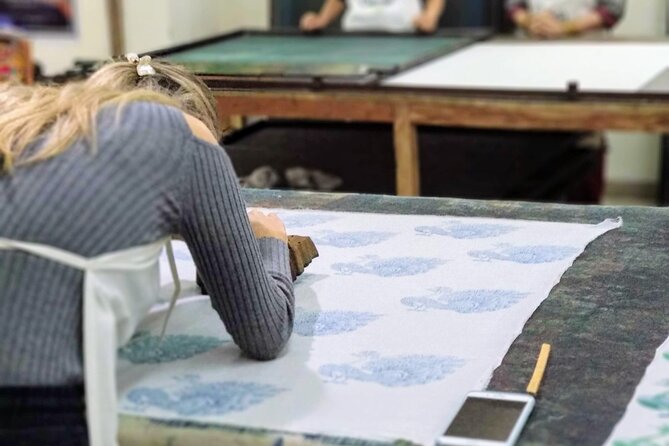
Rajasthan is closely linked with hand-printed textiles, and this class gives you a practical way to understand the work behind the finished cloth. Instead of buying another scarf from a shop, you create one while learning how repeated motifs, color layers, and careful alignment shape the final design.
I like souvenirs that carry a story, and this one does. Each mark reflects a choice you made: the design, the pigment, the order of the layers, and the way you placed the block. The result may not look factory-perfect, but that is precisely why it feels personal.
The process also changes how you see printed fabric afterward. A repeating border might look simple until you try to keep each impression aligned. A small slip in pressure can leave a pale patch or a blurred edge. The class gives you respect for the skill required by the artisans working in the factory next door.
More block printing workshops:
- Private Jaipur Full-Day Tour with Block Printing
★ 5.0 · 206 reviews - Learn Hand Block Printing Techniques & Print Your Own Fabric
★ 5.0 · 95 reviews - Jaipur: Block Printing Workshop and Hands-on Experience
★ 5.0 · 78 reviews
Your first look at the tools and tradition
The workshop begins with a short introduction to block printing’s cultural importance, along with the basic tools and materials. You learn how carved wooden blocks transfer water-based pigments to cloth and how several blocks can work together to form one design.
The blocks are grouped into three useful types:
- Gad, or Ground: These blocks help establish the base or filled areas of a pattern.
- Rekh, or Outline: These define the edges and structure of the motif.
- Datte, or Filler: These add smaller interior details and complete the design.
This terminology matters because block printing is not simply stamping one picture again and again. A finished motif may depend on several carefully carved blocks, each adding a different layer. Once you understand that, the work becomes easier to follow and the finished pattern makes more sense.
The introduction is brief, which suits the two-hour schedule. You will not spend half the session in a lecture. Instead, the explanation gives you enough background to start making something while the process is still fresh.
Choosing a pattern and color plan
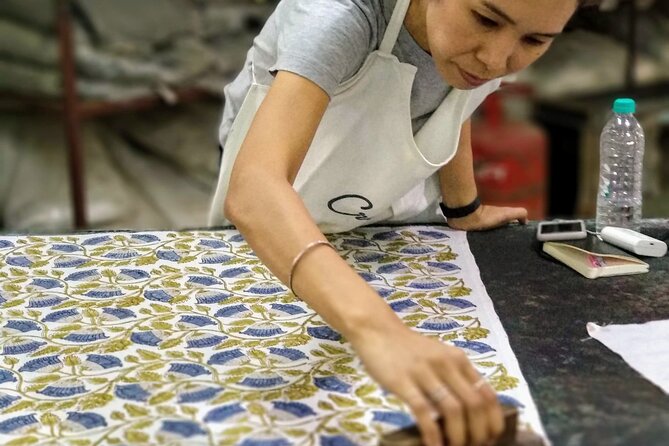
After the introduction, you choose from a range of designs inspired by Sanganeri printing. These include intricate motifs suitable for a scarf or sarong, along with designs from the signature fabric collection available with Elevate.
You also select your colors. This is one of the most enjoyable parts, but it is worth taking a moment before you begin. Strong contrasts can make a design easy to read, while similar shades create a softer effect. You can mix and match colors and decide how much of the cloth to cover.
The class allows two broad approaches. You can build a single motive design, placing one main pattern across the fabric, or work toward an all-over design with repeated impressions. The first approach is easier to control. The second takes more patience, especially if you want the spacing to look regular.
I recommend starting with a simple plan rather than trying to use every block and color available. A clear design usually looks better than a crowded one, and you can always add more impressions as you go.
Learning the rhythm of hand printing
The heart of the workshop is the repeated act of applying pigment to a wooden block, positioning it on the fabric, and pressing firmly enough to transfer the design. You then lift the block and repeat the process.
There is a quiet rhythm to it. Several people who have taken the class found the repetition calming, and I can see why. Once you get past the first few attempts, your attention shifts away from the room and toward the next placement, the amount of color on the block, and the pattern taking shape.
That rhythm also reveals the technical side of the craft. You need to manage pressure, spacing, and alignment. If you press too lightly, the print may not transfer fully. Too much pigment can muddy the details. If the block is placed at an angle, the motif may blur or sit out of line.
You receive guidance before working independently, and the team remains available as you print. Aftab is particularly good at helping correct errors, according to the experience of the session, which is useful when a first attempt does not go as planned. Do not treat a small mistake as a failure. It becomes part of the handmade character of the finished cloth.
More workshops in Jaipur:
- Pink City Cooking Class
★ 5.0 · 452 reviews - Jaipur Market Tour & Vegetarian Rajasthani Home Cooking Class
★ 5.0 · 113 reviews - Cooking Class in Jaipur – Family Experience with Meal & Transport
★ 5.0 · 101 reviews - Interactive Cooking Class with a Local Family in Jaipur
★ 5.0 · 90 reviews
Watching professionals work next door
A special feature of the Creatis setting is the nearby small factory. The workshop itself gives you a beginner’s view of printing, while the factory lets you see the level of control used by professionals.
This comparison adds real value to the class. You might begin by thinking that the main challenge is pressing the stamp onto the cloth. After watching skilled workers, you can see that speed, consistency, clean edges, and accurate repetition require years of practice.
The factory also keeps the activity tied to local production rather than turning it into a purely decorative craft session. You are not only making a souvenir for yourself. You are seeing a working tradition in the same setting where trained printers produce textiles at a much higher level.
The factory visit is not described as a separate tour with a detailed schedule, so expect it to serve as context around the workshop rather than a long guided production visit. Still, even a brief look can help you understand the difference between a fun first attempt and professional textile work.
Making the scarf or sarong
The included product is a Pico stitch scarf or sarong. That means the $24 price covers more than access to a class. You receive the fabric, blocks, pigments, instruction, and the finished wearable item.
Your fabric becomes the main project for the second part of the session. You apply the chosen design and colors, adjust your pattern as you go, and work toward a piece that can be worn or given as a gift.
Do not expect every scarf or sarong to look identical. The workshop is built around personal choices, and hand printing naturally creates small variations. If you want a perfectly uniform textile, a shop-bought item may suit you better. If you want something that records your own learning process, this class offers much more.
Wear comfortable clothing that can handle a hands-on activity. The materials are provided, but the process involves pigments and direct contact with fabric, so your best outfit is not the one you plan to wear for a formal dinner afterward.
How much value do you get for $24?
At $24 per person, this is a strong-value activity for a two-hour cultural experience. You receive instruction in English or Hindi, all necessary materials, a small-group setting, and a scarf or sarong to take away.
The value improves because the class combines several things that are often sold separately: cultural background, a practical craft lesson, contact with local instructors, and a finished souvenir. You also get a better sense of the work behind Rajasthan’s printed textiles than you would from simply purchasing fabric.
The price does not mean you are receiving a professional textile-making course. You will not learn to carve a block from raw wood, and the short session cannot cover every stage of commercial printing. Think of it as a focused introduction with a useful finished result.
For solo visitors, the small group is helpful. You have a ready-made social setting without needing to arrange a private class, and the activity gives you an easy subject to discuss with others. Couples and friends can compare designs, while families with older children may appreciate the clear, practical nature of the work.
Who will enjoy this workshop most?
I would choose this experience if you like making things, collecting meaningful souvenirs, or learning through direct practice. It suits people who prefer an activity with a clear result rather than a passive sightseeing stop.
It is also a good fit for anyone curious about Indian textile traditions but short on time. Two hours is long enough to learn the basic method and produce a finished object, yet short enough to fit into a busy Rajasthan itinerary.
Solo visitors should give it serious consideration. The group size keeps the class personal without making it feel too private, and the shared work naturally creates conversation.
You may want to skip it if you dislike repetitive tasks, feel anxious about making imperfect work, or want a detailed technical course in textile production. The printing process rewards patience. It is simple to understand, but not always easy to execute neatly.
Practical timing and booking advice
The activity lasts two hours, with starting times based on availability. Check the schedule before committing, especially if you are coordinating it with sightseeing or transport.
The group is limited to 10 participants. That is small enough for personal support, but the exact feel of the class can still depend on how many people book your time slot. A full group should be sociable, while a quieter session may give you more space to concentrate.
You can cancel up to 24 hours in advance for a full refund, and the reserve-now, pay-later option keeps your plans flexible. Those terms are useful if your Rajasthan schedule is still shifting.
The listed teaching languages are English and Hindi. If you need an explanation repeated, ask early, especially when learning how to layer blocks or line up repeated motifs.
The best way to approach your finished piece
Keep your first design manageable. Choose one main motif or a simple repeat, then test your preferred color combination before covering a large part of the fabric.
Pay attention to the instructor’s demonstration of pressure and placement. The block should make full contact with the cloth, but you do not need to force it down excessively. Careful positioning usually matters more than speed.
Leave room for small irregularities. Handmade printing is not meant to look like a machine-made pattern, and a minor variation can make the piece feel more individual. If a print goes wrong, ask for help rather than trying to disguise it with too many additional layers.
The final scarf or sarong makes a practical gift because it is light, easy to pack, and connected to a specific place and skill. It also gives you a story to tell: you selected the design and colors, learned the method, and printed the cloth yourself.
Should you book it?
Book this workshop if you want a creative Rajasthan souvenir and a close look at the effort behind local textile production. The $24 fee is reasonable because it includes materials, instruction, a small group, and a finished scarf or sarong.
I especially recommend it for solo visitors, first-time crafters, and anyone who likes a calm, social activity. Go in expecting a beginner lesson rather than flawless artisan work. If you can accept a few uneven prints, you will likely leave with both a wearable keepsake and a much better understanding of block printing.
FAQ
Where does the block printing workshop take place?
The workshop takes place in Rajasthan, India, at Creatis.
How long does the activity last?
The workshop lasts two hours.
How much does the workshop cost?
The listed price is $24 per person.
What do I make during the class?
You create a Pico stitch scarf or sarong using wooden blocks and water-based pigments.
Are materials included?
Yes. Wooden blocks, pigments, and fabrics are provided.
Which languages does the instructor speak?
Instruction is available in English and Hindi.
How many people can join the group?
The workshop is a small-group activity limited to 10 participants.
Recently added around Jaipur
- Taj Mahal Entrance Ticket★ 5.0 · 3 reviews
- Jaipur: Ajmer & Pushkar Day Trip with Lunch & Camel ride★ 4.3 · 3 reviews
- Spiritual Private Tour of Vrindavan and Mathura★ 3.0 · 3 reviews
- Agra’s Hidden Gems & Flavors on a Thrilling Tuk-Tuk Tour 3-4 Hrs★ 5.0 · 3 reviews
- Jaipur: City Tour Full-Day Sightseeing with Guide★ 5.0 · 3 reviews
- Shop Agra Like a Local: Unique Indian Handicrafts Tour★ 5.0 · 3 reviews
- Agra: Taj Mahal and Agra Fort Private Guided Half-Day Trip★ 5.0 · 3 reviews
- From Jaipur: Taj Mahal Guided and Agra Tour By Car★ 5.0 · 3 reviews
Block Printing Workshops, compared.

Private Jaipur Full-Day Tour with Block Printing
Read our review →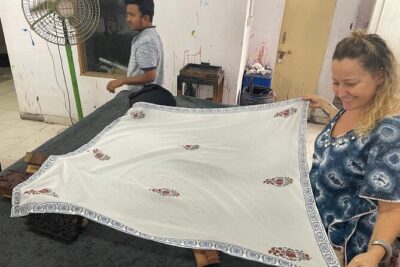
Learn Hand Block Printing Techniques & Print Your Own Fabric
Read our review →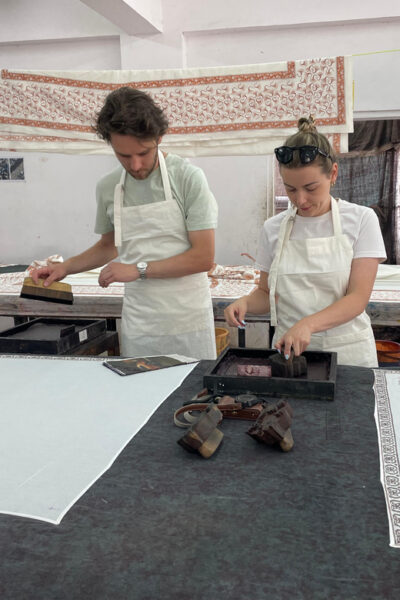
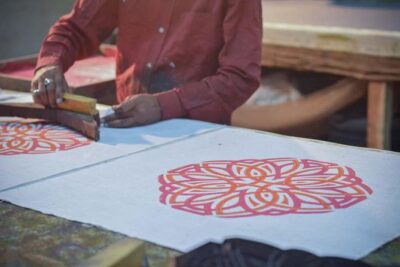
Block Printing & Village Stories: Discover Bagru’s Craft Legacy
Read our review →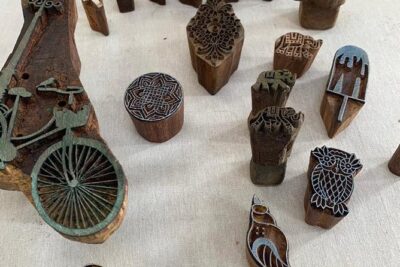
Block Printing Workshop in Jaipur! (including lunch)
Read our review →
Jaipur Half-Day Shopping Tour with Hand Block Printing Class
Read our review →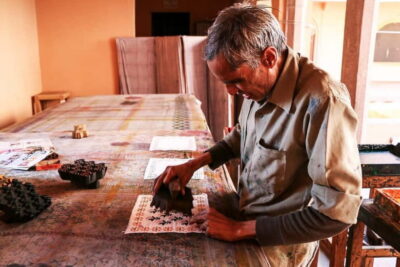
Private Shopping Tour with Block Printing Workshop
Read our review →Browse the lists this tour appears in