
Reviewed · RANTHAMBORE TIGER SAFARIS
Golden Triangle & Ranthambore: 4-Day Private Tour from Delhi
The great hook here is the pairing of India’s most famous monuments with a real chance to see a Bengal tiger. In four days, you move from Delhi’s crowded old quarters to the Taj Mahal, then onward to Ranthambore’s forests and Jaipur’s grand forts and palaces.
I like the private car and flexible Delhi pickup, which save you from wrestling with buses and train connections. I also like the local guides, especially the way guides such as Sadiq, Arham, Maahi, and Brajesh have helped visitors understand the sites and find good photo spots. The tradeoff is a lot of road time, and a tiger sighting is never guaranteed.
In This Review
- Key points at a glance
- Why this four-day route works
- Day one: Old Delhi, Mughal Delhi, and the road to Agra
- Day two: Taj Mahal at sunrise, Agra Fort, and the Baby Taj
- Day three: Ranthambore and the chance of a tiger
- Day four: Jaipur’s forts, observatory, and pink sandstone
- The car, guides, and hotel setup
- What the $215 price really covers
- Who should book this trip
- FAQ
- Where can pickup and drop-off take place?
- Are monument entrance fees included?
- Is the Ranthambore safari private?
- Is a tiger sighting guaranteed?
- What type of accommodation is provided?
- Can I cancel the tour?
- Should you book the Golden Triangle and Ranthambore tour?
Key points at a glance

- Sunrise at the Taj Mahal: Begin early in Agra for softer light, cooler air, and a better chance of seeing the monument before the biggest crowds.
- Private transport across four cities: Your air-conditioned car, driver, fuel, tolls, and parking are covered, with pickup and drop-off anywhere in Delhi NCR.
- Three different city guides: Delhi, Agra, and Jaipur each have their own private guide, and tours can be arranged in your preferred language.
- Ranthambore safari by shared canter: The safari lasts about three hours, with an English-speaking naturalist and a chance, but no promise, of seeing a tiger.
- A packed Golden Triangle route: You visit Humayun’s Tomb, Agra Fort, the Baby Taj, Jaigarh Fort, City Palace, Jantar Mantar, and Hawa Mahal.
- Good value at $215 per person: Hotels, breakfast, car, guides, and safari transport are included, but monument tickets and lunches are extra.
Why this four-day route works
The Golden Triangle is India’s classic first trip: Delhi, Agra, and Jaipur. Adding Ranthambore gives the route a second mood. Instead of only moving between forts and palaces, you get a morning among forest tracks, old ruins, and the possibility of spotting a tiger.
At $215 per person, the tour offers solid value if you want the main arrangements handled for you. The price includes three nights of accommodation, breakfast, a private air-conditioned vehicle for sightseeing, city guides, the Ranthambore shared canter, parking, tolls, fuel, and taxes.
You still need to budget for monument entrances, lunches, tips, and any extra services. That matters because the admission fees for the Taj Mahal, Agra Fort, Jaipur’s sights, and other monuments are not part of the advertised price. The exact hotel level is also not described in detail, so ask what property is planned before booking if accommodation matters to you.
This is not a slow, stay-in-one-place holiday. It is a practical way to cover a great deal of northern India in a short time.
More Golden Triangle itineraries:
- From Delhi: Private 3-Day Golden Triangle Tour with Hotels
★ 4.9 · 339 reviews - From Delhi: Private 5-Day Golden Triangle Tour
★ 4.9 · 208 reviews - 3-Days Golden Triangle’s Private Tour
★ 5.0 · 69 reviews
Day one: Old Delhi, Mughal Delhi, and the road to Agra
Your pickup can take place between 7:00 and 11:00 AM from any location in Delhi, Noida, Gurugram, Faridabad, or Ghaziabad. That wide window is useful if you are arriving from a hotel and want a later start, though a later pickup leaves less time for Delhi sightseeing.
The day begins at Gurudwara Bangla Sahib, a Sikh place of worship with a golden dome and a calm water tank. You have about 45 minutes here, enough to pause and see a side of Delhi that feels more reflective than monumental. It is a good opening stop because it introduces daily religious life, not just royal architecture.
Next comes Jama Masjid, the immense 17th-century mosque built under Shah Jahan. You spend about an hour in and around its broad courtyard, learning about its Mughal design and place in Old Delhi. Admission is extra, and visitors should dress with respect at religious sites.
A tuk-tuk ride then carries you through the narrow lanes of Old Delhi. This short trip is one of the more local-feeling parts of the day. You pass shops, pedestrians, and street scenes that are difficult to experience from a sealed tour vehicle.
At Khari Baoli, Asia’s largest wholesale spice market, you have around 30 minutes to see sacks and stacks of turmeric, cardamom, chilies, and other spices. Your guide explains how these ingredients fit into Indian cooking. Be prepared for a busy market setting and strong aromas, especially if you are sensitive to dust or spice.
You pass the Red Fort, India Gate, Parliament House, and Rashtrapati Bhavan from the vehicle. These drive-by views give you useful orientation, but they are not full visits. The Red Fort, in particular, deserves more time than a passing look if you have extra days in Delhi.
The afternoon includes Connaught Place, where your guide can suggest restaurants serving Mughlai food, international dishes, vegetarian meals, and options for special diets. Lunch is not included, so you choose and pay for your own meal.
Humayun’s Tomb is the final major Delhi sight. This UNESCO World Heritage Site is often described as India’s first garden tomb, and its layout helped shape later Mughal architecture. The one-hour visit gives you time to appreciate the symmetry, gardens, and red sandstone and marble work.
After Delhi, the driver takes you to Agra. The journey is listed at about three hours, but traffic can affect the timing. You spend the night in Agra, which is important because the next morning begins with the Taj Mahal.
Day two: Taj Mahal at sunrise, Agra Fort, and the Baby Taj
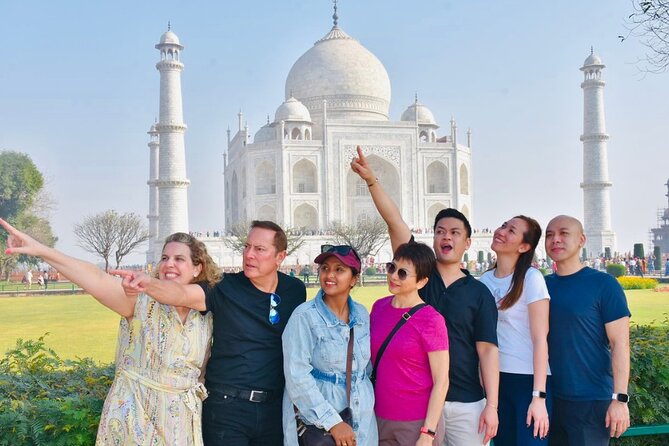
The early start is the right choice for the Taj Mahal. The building catches the changing morning light, the air is usually cooler, and an early arrival can make the visit feel less hurried. You have about two hours with a guide inside the UNESCO-listed monument.
Your guide can help with the best viewpoints and photographs. Several guides, including Arham, Amaan, Sadiq, and Maahi, have been praised for explaining the monument clearly and helping with photos. Guide assignments can change, but the company uses a separate private guide for Agra rather than asking one person to cover every city.
The Taj is not just a photo stop. Ask your guide about Shah Jahan, Mumtaz Mahal, the marble work, and the building’s place in Mughal architecture. The guided visit is especially useful if you want more than a quick look at the famous facade.
Taj Mahal admission is not included. Your guide can assist with buying monument tickets and help you avoid waiting in the wrong line, but you should still plan for this extra cost.
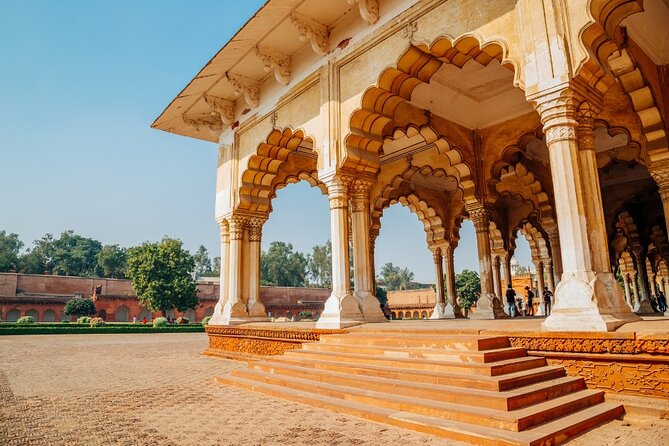
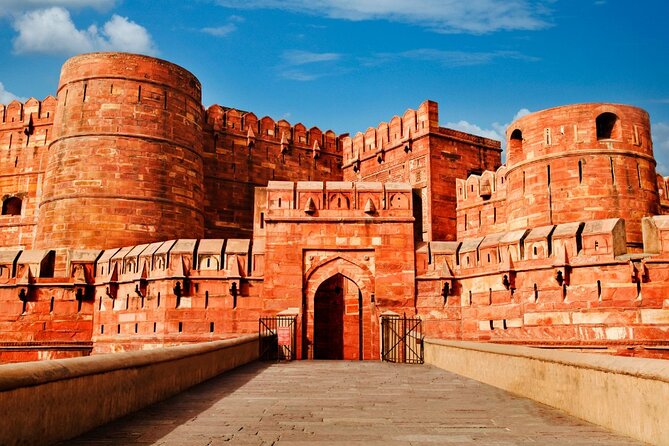
Agra Fort follows, with about an hour inside the former Mughal imperial residence. The fort has courtyards, halls, apartments, and views toward the Taj Mahal. This visit gives the morning more substance because it explains the rulers and court life behind the monument you have just seen.
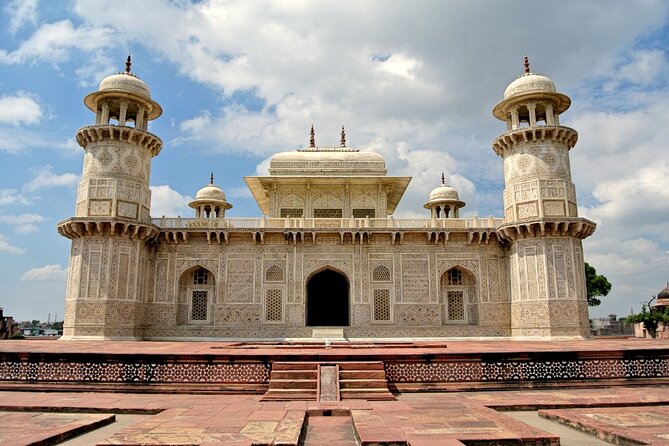
The Tomb of Itmad-ud-Daulah, known as the Baby Taj, takes about 30 minutes. It is smaller than the Taj Mahal but detailed, delicate, and important as an earlier example of the marble decoration later used on a grander scale. If you enjoy close-up architectural detail, you may find this stop more rewarding than its nickname suggests.
The afternoon drive to Sawai Madhopur takes about four hours. This is one of the tour’s harder stretches. You spend the night near Ranthambore, and the next morning starts early, so do not expect much sightseeing after arrival.
Day three: Ranthambore and the chance of a tiger
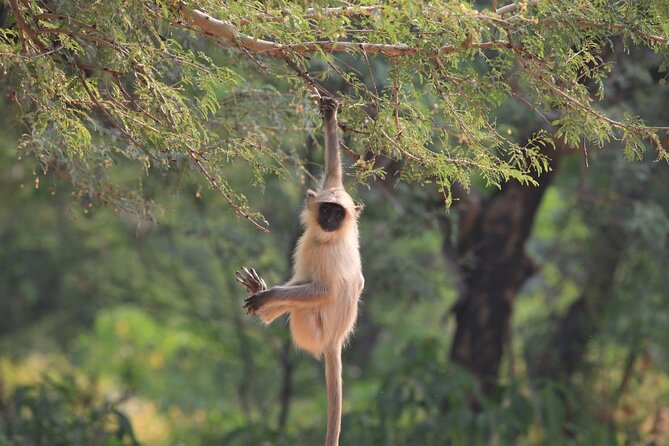
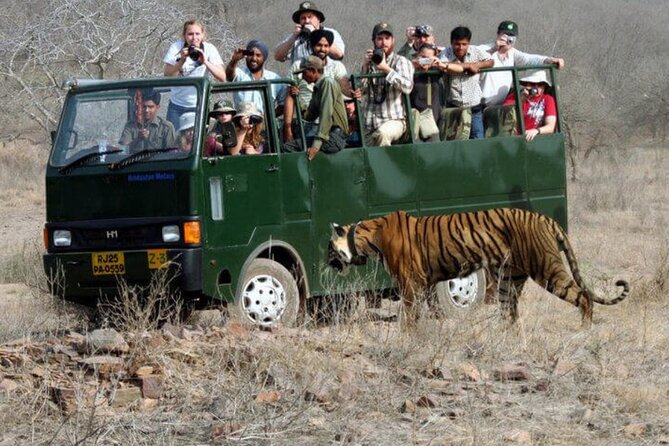
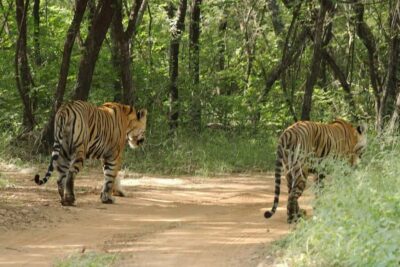
Ranthambore National Park changes the pace completely. You leave the monuments behind and spend about three hours on a shared jeep or canter with a trained naturalist. The safari vehicle and naturalist are included, but this is not a private safari for your party.
A shared canter can carry more people than a jeep, so it may feel less intimate. On the other hand, it is part of the normal safari system and gives you access to the park with an experienced naturalist. The schedule depends on park availability and ticket allocation.
Tiger sightings are possible in any zone because the animals move around the park. That also means nobody can promise one. You may see other wildlife and enjoy the forest setting, but you should book this part for the chance to observe nature, not as a guaranteed tiger show.
One practical point deserves attention: safari times can change if the preferred tickets are unavailable. A morning safari is often easier to combine with the drive to Jaipur, but an afternoon slot may be assigned instead. One itinerary adjustment placed the safari in Jaipur rather than Ranthambore to avoid a late-night drive. If the safari is central to your trip, confirm the exact timing and location before departure.
After the safari, you travel to Jaipur, listed at about four hours. The rest of the day is free after hotel check-in. That free time may be welcome after several early starts, though you should not count on a large amount of usable sightseeing time.
A few more Jaipur tours worth weighing up
- From Delhi: Private 4-Day Golden Triangle Tour with Pickup
★ 4.6 · 38 reviews - 4 Days Golden Triangle Tour – Private, Guided & All Inclusive
★ 5.0 · 27 reviews - Private 4-Day Wildlife & Taj Mahal Tour from Jaipur to Delhi
★ 5.0 · 23 reviews - From Jaipur- 4 Day Private Jaipur & Agra Tour With Delhi Drop
★ 5.0 · 17 reviews
Day four: Jaipur’s forts, observatory, and pink sandstone
Jaigarh Fort begins the Jaipur day. Built in 1726 by Maharaja Jai Singh II to guard Amber Fort below, it sits high above the city and is linked with the world’s largest wheeled cannon. You have about two hours here, including time for views and fort walls.
Jaigarh is a better choice for visitors who enjoy military architecture and broad city views. It is less polished than a palace museum, and the hilltop setting means you should be ready for walking and uneven surfaces.
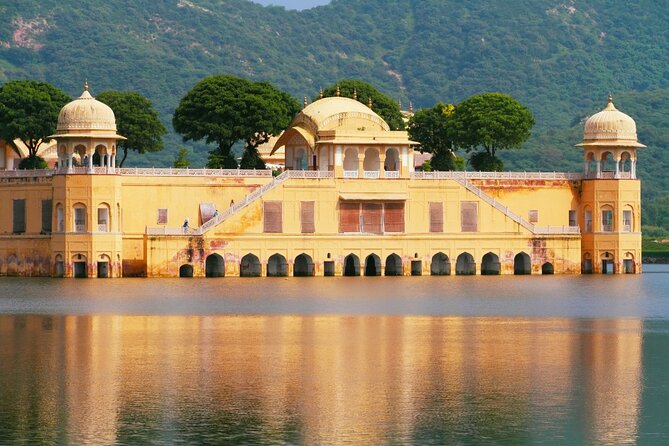
Jal Mahal is a short photo stop, about 30 minutes. The palace sits in Man Sagar Lake, and you generally view it from the shore rather than touring the interior. It is a picturesque pause between larger sites.
The City Palace takes around two hours. Once the seat of Jaipur’s Maharaja, it now includes the Maharaja Sawai Man Singh II Museum. The complex combines royal courtyards, decorative details, and displays tied to Jaipur’s ruling family. Admission is extra, and two hours lets you see the principal areas without turning the visit into a marathon.
Jantar Mantar is next. This UNESCO World Heritage Site contains large astronomical instruments built in 1734 by Sawai Jai Singh II. The structures were designed for observations made with the naked eye, and a guide helps explain what can otherwise look like a collection of unusual stone forms.
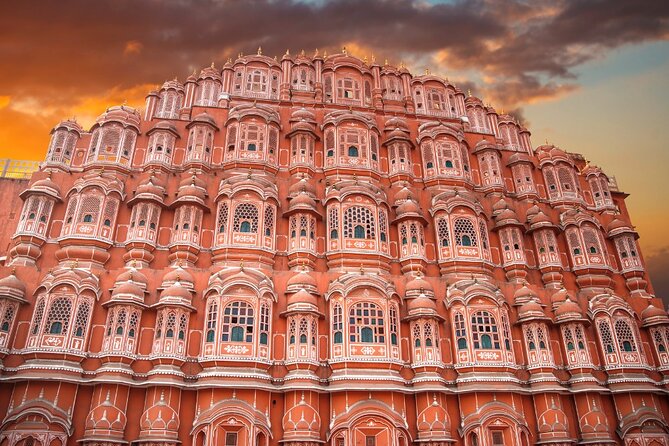
Hawa Mahal closes the sightseeing portion of the day. You have about 15 minutes, enough for the famous exterior of the five-story Palace of Wind and its rows of small lattice windows. It is a quick stop, not a full palace visit, so treat it as a final photograph rather than a long exploration.
Lunch at a multicuisine restaurant is scheduled for about 45 minutes, but lunch is not included in the tour price. From Jaipur, you can either end the trip there or take the roughly five-hour drive back to your preferred Delhi NCR location.
The car, guides, and hotel setup
The private vehicle is one of the strongest practical features. One or two people travel in a four-seat sedan, three to five use a six-seat wagon, and groups of six to twelve use a 12-seat van. Larger parties receive a bus sized for the number of adults.
Your driver handles the long transfers while a different private guide joins you in Delhi, Agra, and Jaipur. This arrangement works well because each guide can focus on one city. Names that have received especially warm attention include Delhi guides Vimal Mathur and Naved, Agra guides Sadiq Hussain, Arham, Amaan, and Maahi, and Jaipur guide Brajesh Sain.
The strongest pattern is personal help. Guides have taken photos, adjusted the pace for tired visitors, explained architecture in clear English, and helped families with children. One guide continued the tour at a slower pace when a visitor felt unwell in the heat. If language matters, tours can be conducted in your preferred language, though the Ranthambore naturalist is English-speaking only.
Three hotel nights and three breakfasts are included. Rooms are normally twin-sharing. A booking of three defaults to a triple room, while two rooms require an additional $199 charge. Clarify the room arrangement before you pay if separate beds or separate rooms are important.
What the $215 price really covers
The price is attractive because the expensive logistical pieces are bundled together. A private car for four days, fuel, tolls, parking, multiple guides, hotels, breakfasts, and the Ranthambore canter would be difficult to arrange independently in such a short window.
Still, the headline figure is not the complete trip cost. Add entrance fees for the Taj Mahal, Agra Fort, Baby Taj, Jama Masjid, Humayun’s Tomb, Jaigarh Fort, City Palace, Jantar Mantar, and Hawa Mahal. You also pay for lunch and gratuities.
The value is best for two or more people sharing the vehicle and room. Solo visitors may still appreciate the convenience, but the per-person price has less room to absorb those extra admission costs.
Who should book this trip
I would choose this tour if you have only four days, want a private vehicle, and prefer a fixed plan over arranging every transfer yourself. It suits first-time visitors who want the essential Delhi, Agra, and Jaipur sights with a wildlife experience added.
Families can benefit from the private car and flexible pace. The guides have experience helping children and taking family photographs. It can also work well for small groups, since the vehicle grows with the party size.
I would hesitate if you want long, quiet visits at each monument. The route covers a lot of ground, and the drives from Delhi to Agra, Agra to Ranthambore, Ranthambore to Jaipur, and Jaipur to Delhi take real time. I would also hesitate if seeing a tiger is your main reason for going, since the sighting depends entirely on luck and park conditions.
The schedule changes around certain start days. Thursday departures reverse the order, beginning with Delhi and ending with Agra before the Delhi drop-off. Monday departures in July, August, or September use another sequence, with the final Ranthambore morning safari followed by the Delhi transfer. Check your exact dates carefully.
FAQ
Where can pickup and drop-off take place?
Pickup and drop-off are available anywhere in Delhi NCR, including Delhi, Noida, Gurugram, Faridabad, and Ghaziabad. You should enter your hotel name when booking, or use the option for a hotel that is not listed.
Are monument entrance fees included?
No. Monument entrances are extra. Your guide can help you purchase tickets at the sites.
Is the Ranthambore safari private?
No. The safari uses a shared jeep or canter. A naturalist accompanies the safari, and the naturalist speaks English.
Is a tiger sighting guaranteed?
No. Tigers can be found in different park zones, but they move freely and sightings depend on luck.
What type of accommodation is provided?
Accommodation with breakfast is included for three nights. Rooms are generally twin-sharing. Three-person bookings normally receive a triple-sharing room, while two rooms cost an additional $199.
Can I cancel the tour?
You receive a full refund if you cancel at least 24 hours before the experience starts. Cancellations or changes made within 24 hours are not accepted for a refund.
Should you book the Golden Triangle and Ranthambore tour?
Book it if your goal is to see the big sights without losing time to transport planning. The combination of sunrise at the Taj Mahal, a private Delhi and Jaipur guide, comfortable road travel, and a Ranthambore safari gives you a broad first look at northern India.
Go in with clear expectations: this is an energetic road trip, not a restful holiday, and the tiger is a possibility rather than a promise. If you accept the long transfers, extra monument fees, and changing safari schedules, $215 per person is strong value for a tightly organized four-day introduction to the Golden Triangle.
Recently added around Jaipur
- Taj Mahal Entrance Ticket★ 5.0 · 3 reviews
- Jaipur: Ajmer & Pushkar Day Trip with Lunch & Camel ride★ 4.3 · 3 reviews
- Spiritual Private Tour of Vrindavan and Mathura★ 3.0 · 3 reviews
- Agra’s Hidden Gems & Flavors on a Thrilling Tuk-Tuk Tour 3-4 Hrs★ 5.0 · 3 reviews
- Jaipur: City Tour Full-Day Sightseeing with Guide★ 5.0 · 3 reviews
- Shop Agra Like a Local: Unique Indian Handicrafts Tour★ 5.0 · 3 reviews
- Agra: Taj Mahal and Agra Fort Private Guided Half-Day Trip★ 5.0 · 3 reviews
- From Jaipur: Taj Mahal Guided and Agra Tour By Car★ 5.0 · 3 reviews
Ranthambore Tiger Safaris, compared.

Ranthambore Safari Admission tickets : Choose your Option
Read our review →
Ranthambore Tiger Safari from Jaipur – 1 or 2 Days
Read our review →
Ranthambore Tiger Safari Day trip from Jaipur – All Inclusive
Read our review →
Sharing Safari In Canter Or Gypsy Vehicle All Incl.
Read our review →
Ranthambore National Park: Safari Ticket with Pickup Option
Read our review →
Ranthambore Wildlife Safari with Tickets & Transfer Options
Read our review →Browse the lists this tour appears in