

Reviewed · HISTORICAL TOURS
Heritage Culture and History Walking Tour in Jaipur
Jaipur’s royal center makes the most sense on foot, where an astronomy observatory, palace courtyards, active temples, narrow bazaars, and the pink facade of Hawa Mahal sit close together. This walk connects those places with stories about rulers, religion, architecture, and daily life rather than treating each sight as a quick photo stop.
I like the way the route mixes famous sights with less obvious stops such as Govind Devji Temple and Chandi Ki Taksal. I also like the personal approach: guides including Aditya, Ankit, and Richi are described as warm, flexible, and able to shape the discussion around your interests. The main caution is cost. The $20 tour price does not include major entry fees, and the listed tickets can add 1,600 INR if you enter every chargeable sight.
In This Review
- Key points at a glance
- Why this Jaipur walk works
- Jantar Mantar begins with Jaipur’s scientific side
- City Palace puts royal Jaipur in context
- Govind Devji Temple brings living worship into the route
- Chandi Ki Taksal shows the old city at street level
- Two temples add different religious viewpoints
- Hawa Mahal is a facade stop, not an interior visit
- Johri Bazar and Katla Purohit Ji Ka keep shopping optional
- Sargasooli finishes the walk above the city
- What the guides add to the experience
- Price, tickets, and the real value
- Who should book this walking tour
- Should you book the Heritage Culture and History Walking Tour?
- FAQ
- How long does the Jaipur walking tour last?
- Where does the tour begin?
- Where does the tour finish?
- Is this a private tour?
- What attractions are included in the route?
- Are admission tickets included?
- Does the tour enter Hawa Mahal?
- What is included in the tour price?
- Can I cancel for a full refund?
Key points at a glance
- A royal-center route: Begin at Jantar Mantar and finish at Isarlat Sargasooli, with Jaipur’s central sights linked on foot.
- Temples are part of the story: Govind Devji Temple, Mandir Shri Ram Chandra Ji, and Mandir Shree Laxminarayan Ji add living religious traditions to the palace sightseeing.
- Strong guide-led history: Aditya, Ankit, and Richi are noted for clear English, cultural insight, and answers to detailed questions.
- Markets without a forced shopping pitch: Chandi Ki Taksal, Johri Bazar, and Katla Purohit Ji Ka show working Jaipur beyond its monuments.
- Private format: Only your group participates, so you can ask questions and request more focus on architecture, religion, or daily life.
- Budget carefully: Jantar Mantar, City Palace, and Isarlat Sargasooli have separate fees. Hawa Mahal entry is listed at 200 INR, although this walk only views the outside.
Why this Jaipur walk works

The best feature here is the compact route. Jaipur can feel spread out when you move between forts, palaces, markets, and temples by car, but this experience keeps its attention on the old city and its layered center. In a little under two and a half hours, you move from scientific ambition to royal power, Hindu worship, traditional markets, and a high city view.
I especially like that the walk does not stop at Jaipur’s postcard landmarks. Jantar Mantar and City Palace are major attractions, but the temples and market lanes give you a closer look at how the city functions today. You are not simply hearing about a palace from the outside. You are also passing through places of worship and trade.
The private setup matters. Your group alone takes part, so you can ask Aditya or another guide to explain a temple ritual, a royal custom, an architectural detail, or the meaning of a local market. A private walk also makes it easier to pause, though the schedule is fairly full and the listed stops allow limited time at each one.
The drawback is that the tour’s short length demands tradeoffs. You will see many places, but you will not have time for a long palace visit, extensive shopping, or a slow examination of every temple. Hawa Mahal is viewed from outside, and four stops have separate admission fees. Think of this as a guided orientation to central Jaipur, not a substitute for spending half a day inside the City Palace.
More Walking Tours in Jaipur
- Jaipur Bazaar & Food Walking Tour
★ 5.0 · 281 reviews - Heritage Walk & Street Food Tasting in Jaipur
★ 5.0 · 158 reviews - Magical Walk of Jaipur
★ 5.0 · 121 reviews
Jantar Mantar begins with Jaipur’s scientific side
Meet your guide at the Jantar Mantar ticket counter. The opening discussion centers on the astronomical instruments built under Raja Sawai Jai Singh II, whose interest in astronomy shaped this unusual Jaipur landmark.
You have about 20 minutes here, with admission not included. That is enough time for a useful introduction to the instruments and the ruler’s vision, but it is not a full technical visit. If you want to study the structures carefully, ask questions, and understand how they were used, you may wish to return on your own.
This is a smart place to start because it gives the walk an intellectual opening. Jaipur’s heritage is not only palaces and painted facades. It also includes science, measurement, planning, and the ambitions of an 18th-century court. A guide who can explain those connections adds real value to the ticket.
City Palace puts royal Jaipur in context
From Jantar Mantar, you walk to the City Palace. The stop lasts about 20 minutes, and the admission fee is listed separately at 1,000 INR.
The City Palace is the clearest place to discuss Jaipur’s ruling family, court life, architecture, and the relationship between royal power and the planned city. Your guide explains the complex as you move through it, pointing out its design and telling stories connected with the royal household.
Here, the short time is the biggest limitation. The City Palace is large enough to reward a longer visit, particularly if you want to examine galleries, courtyards, and decorative details. On this walk, you get a guided framework and historical explanation, then continue into the city rather than spending the whole morning inside.
For many people, that is a fair exchange. A palace without context can become a blur of painted walls and ornate doors. A guide helps you understand what you are seeing before the route shifts to places that are more closely tied to daily religious and commercial life.
Govind Devji Temple brings living worship into the route
The next stop is Govind Devji Temple, where the focus shifts from royal architecture to Hindu devotion. The tour is timed around the possibility of seeing the aarti ceremony, a worship service involving ritual offerings and light.
The listed time is 20 minutes. That is not long, but it can be enough to sense the atmosphere and observe the rhythm of the temple. Since this is an active sacred place, your guide’s help with local customs is useful. You will want to follow instructions, dress and behave respectfully, and pay attention to any restrictions at the entrance.
I like this stop because it keeps Jaipur from becoming a museum of the past. You see religion as part of the city’s present life, not just as a topic in a history lecture. The experience may vary depending on the timing of the ceremony, so treat the aarti as a planned possibility rather than a guarantee.
More history tours in Jaipur:
- Private Full-Day Sightseeing Tour of Jaipur’s Heritage by Car
★ 5.0 · 110 reviews - Jaipur Heritage Walk with Rickshaw Ride
★ 5.0 · 105 reviews - Jaipur Heritage Evening Walk – The Twilight Magic of Pink City
★ 5.0 · 93 reviews - Nahargarh Water Walk – Guided 2-Hour Heritage Tour in Jaipur
★ 5.0 · 89 reviews
Chandi Ki Taksal shows the old city at street level
After the temple, the route passes through Chandi Ki Taksal, a local bazaar dating to the 17th century. This is one of the more useful sections for anyone who wants to understand Jaipur beyond its official monuments.
You can browse at your own pace, but the tour does not promote buying anything. That distinction is welcome. You can look at the street activity, shops, and traditional trade without feeling that the walk has turned into a sales stop.
The bazaar also breaks up the formal sightseeing. Instead of moving from one ticketed attraction to another, you walk through a working part of the old city. Keep your attention on the surroundings, because the charm here comes from the narrow streets and everyday details rather than a single grand object.
Two temples add different religious viewpoints
Mandir Shri Ram Chandra Ji is the next temple stop, with about 20 minutes and no admission fee listed. It is dedicated to Lord Rama, and the guide discusses its architecture and religious meaning.
The route then continues to Mandir Shree Laxminarayan Ji, dedicated to Lord Vishnu and Goddess Laxmi. This visit lasts about 25 minutes and is also listed as free. You can expect a quieter pause, time to look at the building, and an explanation of its place in Hindu culture.
These temple visits are valuable because they give the walk more range. Govind Devji introduces an active ceremony, while the other two stops provide space to consider temple design, sacred figures, and the role of worship in Jaipur. You are seeing different kinds of religious spaces rather than repeating the same experience.
Still, temple visits require flexibility. Religious activity does not always run on a sightseeing timetable, and the guide may need to adjust the pace. You should also be ready to remove shoes or follow other local customs if requested, though the supplied tour details do not specify exact entry rules.
Hawa Mahal is a facade stop, not an interior visit
The walk then reaches Hawa Mahal, Jaipur’s best-known landmark. You admire the Palace of Winds from outside and hear about its design and purpose, but you do not go inside.
The stop lasts about 15 minutes. That makes sense for a famous photo point, especially because the facade is the main feature visible from the street. The listed 200 INR admission is not included, but since the tour does not enter, you should not assume that an interior visit forms part of this experience.
This is both a strength and a limitation. You get the essential exterior view without spending time in another ticket line, but anyone wanting to explore the interior windows and passages will need to return separately. The guide’s architectural explanation helps turn a quick photo stop into something more meaningful.
Johri Bazar and Katla Purohit Ji Ka keep shopping optional
The route continues through Johri Bazar, famous for jewelry and handicrafts, then into the narrow streets of Katla Purohit Ji Ka. These are good sections for seeing Jaipur’s commercial traditions and the texture of its old lanes.
You are free to browse, but there is no pressure to purchase. That makes the markets useful even if you have no interest in jewelry or souvenirs. You can focus on the layout, the shopfronts, the narrow streets, and the way older trade areas remain part of the city’s identity.
If you do want to shop, the private format gives you a chance to ask your guide for context or wait briefly while someone in your group looks around. One account of the tour specifically valued the guide’s patience during shopping, but you should keep in mind that the route has a planned finish and cannot become an open-ended market visit.
Sargasooli finishes the walk above the city
The final stop is Isarlat Sargasooli, also called Sarkasuli, a historic tower built in the 18th century. The visit is listed at about 10 minutes, and admission costs 200 INR if you enter.
The tower provides a closing view over Jaipur and a good place for photographs. Ending here gives the walk a clear visual finish after the crowded lanes, temples, palace grounds, and street-level markets. The guide also explains the tower’s importance and architectural features.
Ten minutes is a short visit, so do not expect a long climb or an extended viewing session as part of the standard timing. Still, the location works well as the final chapter. You finish by looking across the city you have just crossed on foot.
What the guides add to the experience
The guide is the main reason to choose this walk over simply following a map. Aditya is praised for making history interesting and for answering questions in detail. Ankit and Aditya are also described as speaking with passion about Jaipur’s culture, while Richi is noted for personal attention and a strong grasp of local customs.
One unusual detail is that one guide is a PhD student. That background can be useful if you enjoy asking about architecture, religion, history, or the ideas behind Jaipur’s design. At the same time, the tour is not presented as an academic lecture. The guide connects formal history with local life, markets, temples, and practical observations.
You can help make the private format work by saying what interests you early on. If you care most about architecture, ask for more detail on buildings. If religion interests you, ask about the temples and aarti. If you want daily-life context, use the market sections for questions.
The strongest praise centers on clear English, friendliness, patience, and the ability to answer questions. An English and Spanish written guide is included, but the supplied information does not say that live guiding is offered in Spanish, so confirm that point before booking if it matters to you.
Price, tickets, and the real value
The tour costs $20, which is a reasonable price for a private walking introduction, especially if you are traveling with a small group and want personal attention. The value depends heavily on whether you plan to enter every ticketed attraction.
The listed extra fees are:
- Jantar Mantar: 200 INR
- City Palace: 1,000 INR
- Hawa Mahal: 200 INR
- Isarlat Sargasooli: 200 INR
That totals 1,600 INR if all four admissions apply. Hawa Mahal is an exterior-only stop on this walk, so its fee may not matter unless you choose to visit inside separately. City Palace is the largest added cost, and it is worth deciding in advance whether a 20-minute guided visit is enough for you.
Water is included, which is a small but useful touch on a warm walk. Group discounts are available, and the mobile ticket makes booking simple. Since the tour is private, the $20 price may make more sense for two or more people sharing the experience than for a solo participant.
The tour has free cancellation up to 24 hours before the start time. Changes or cancellations inside that window are not accepted for a refund, so keep your Jaipur schedule firm once the deadline passes.
Who should book this walking tour
I would choose this for a first look at Jaipur’s old center, particularly if you want history and culture explained as you walk. It suits people who prefer temples, markets, and local streets alongside the headline sights.
Families can also enjoy it because the route changes scenery often and the guides use stories to make the past easier to follow. Children may find the astronomical instruments, tower views, markets, and colorful architecture more engaging than a long indoor museum visit.
The tour is also a good fit for anyone arriving in Jaipur and wanting quick orientation. It runs for about 2 hours and 25 minutes, starts at Jantar Mantar, and finishes at Isarlat Sargasooli. Both points are near public transportation, according to the supplied details.
I would hesitate if your main goal is a thorough City Palace visit, a full Hawa Mahal interior tour, or extensive shopping. The schedule favors breadth. You see many places, but most stops last between 10 and 25 minutes.
Should you book the Heritage Culture and History Walking Tour?
Book it if you want a private, guide-led introduction to central Jaipur and value explanations of religion, architecture, royal life, and local markets. The mix is stronger than a standard monument circuit, and the route gives you a useful sense of how the old city fits together.
Before paying, budget for the separate admissions and decide if you are comfortable seeing Hawa Mahal only from outside. I would also confirm which guide is assigned if you have a strong preference for Aditya, Ankit, or Richi.
For a short visit, this is a smart way to get your bearings and learn the stories behind Jaipur’s streets. For a slower, more detailed sightseeing day, use the walk as an introduction, then return on your own to Jantar Mantar, City Palace, or Hawa Mahal.
FAQ
How long does the Jaipur walking tour last?
The experience lasts approximately 2 hours and 25 minutes.
Where does the tour begin?
It begins at the Jantar Mantar ticket counter in Jaipur, at Malve Nagar, J.D.A. Market, Kanwar Nagar, Jaipur, Rajasthan 302002, India.
Where does the tour finish?
The walk ends at Isarlat Sargasooli, also called Sarkasuli, in the Aatish Market and Gangori Bazaar area of Jaipur.
Is this a private tour?
Yes. Only your group participates in the private tour or activity.
What attractions are included in the route?
The route includes Jantar Mantar, City Palace, Govind Devji Temple, Chandi Ki Taksal, Mandir Shri Ram Chandra Ji, Hawa Mahal from the outside, Mandir Shree Laxminarayan Ji, Johri Bazar, Katla Purohit Ji Ka, and Isarlat Sargasooli.
Are admission tickets included?
No. Jantar Mantar, City Palace, Hawa Mahal, and Isarlat Sargasooli have separate listed fees. The two named smaller temple visits are listed as free.
Does the tour enter Hawa Mahal?
No. You view Hawa Mahal from outside and hear about its history and design.
What is included in the tour price?
A water bottle and an English and Spanish written guide are included.
Can I cancel for a full refund?
Yes. You can cancel at least 24 hours before the experience start time for a full refund. Cancellations or changes made less than 24 hours before the start time are not refunded or accepted.
Recently added around Jaipur
- Taj Mahal Entrance Ticket★ 5.0 · 3 reviews
- Jaipur: Ajmer & Pushkar Day Trip with Lunch & Camel ride★ 4.3 · 3 reviews
- Spiritual Private Tour of Vrindavan and Mathura★ 3.0 · 3 reviews
- Agra’s Hidden Gems & Flavors on a Thrilling Tuk-Tuk Tour 3-4 Hrs★ 5.0 · 3 reviews
- Jaipur: City Tour Full-Day Sightseeing with Guide★ 5.0 · 3 reviews
- Shop Agra Like a Local: Unique Indian Handicrafts Tour★ 5.0 · 3 reviews
- Agra: Taj Mahal and Agra Fort Private Guided Half-Day Trip★ 5.0 · 3 reviews
- From Jaipur: Taj Mahal Guided and Agra Tour By Car★ 5.0 · 3 reviews
Historical Tours, compared.

Private Full-Day Sightseeing Tour of Jaipur’s Heritage by Car
Read our review →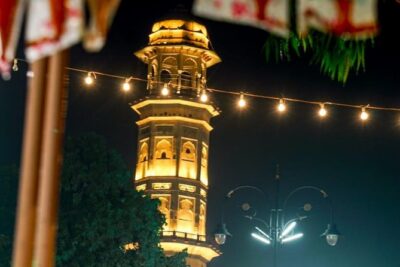
Jaipur Heritage Evening Walk – The Twilight Magic of Pink City
Read our review →
Nahargarh Water Walk – Guided 2-Hour Heritage Tour in Jaipur
Read our review →
Jaipur Heritage Walking Tour – Local life, Havelis and Temples
Read our review →
Jaipur@Twilight Guided Heritage City walk tour with Food Tasting
Read our review →
Browse the lists this tour appears in