
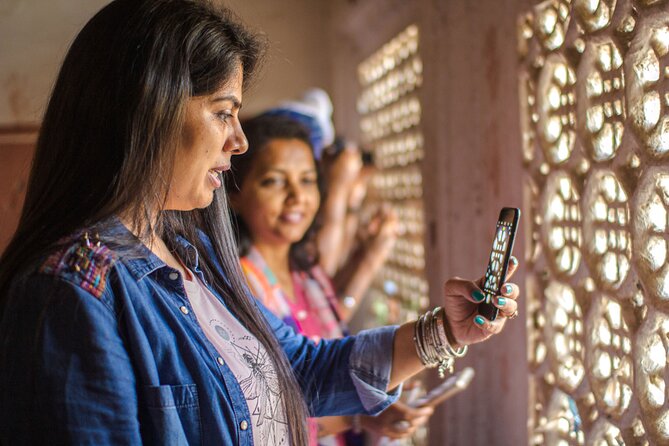
Reviewed · CITY TOURS
Agra 101 City Walk
Agra 101 City Walk takes you away from the Taj Mahal crowds and into the city’s older quarters, where spice markets, mosques, temples, and worn 18th-century facades tell a more everyday story. I like the private format, which lets you pause for questions, photos, or a closer look instead of marching with a large group.
I also like the rooftop visit in Rawat Para and the chance to try local snacks along the way. The main consideration is simple: this is a real city walk, not a polished sightseeing route. Expect busy streets, old buildings, uneven walking conditions, and a tour shaped by local life.
In This Review
- Key points to know before booking
- Why this walk changes your view of Agra
- Starting at Jama Masjid
- Rawatpara, spices, temples, and a rooftop
- Fuvara and Agra’s old walls
- The old courtesan-market quarter
- Life above Rawat Para
- Kala Mahal and the birthplace of Mirza Ghalib
- Finishing where you started
- What $41.12 gets you
- Who will enjoy this most
- Practical booking advice
- Should you book Agra 101 City Walk?
- FAQ
- How long does the Agra 101 City Walk last?
- Where does the tour begin?
- Where does the tour end?
- Is this a private tour?
- How much does the tour cost?
- Are snacks included?
- Can the guide take photographs?
- Is the tour available every day?
- Is the tour accessible by public transportation?
- What is the cancellation policy?
Key points to know before booking
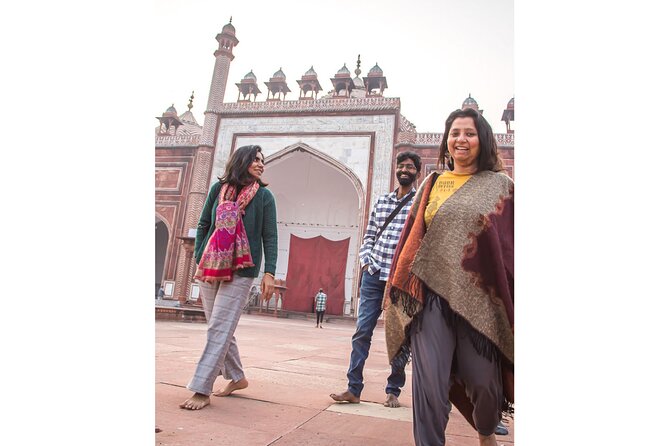
- A three-hour walk through old Agra: The route begins and ends at Jama Masjid, making it easy to fit around other plans.
- Rawatpara’s spice-trading quarter: You visit a historic market, medieval temples, and a rooftop while learning how trade shaped the city.
- A local rooftop viewpoint: The view gives you a useful sense of Agra beyond the Taj Mahal.
- Kala Mahal and Mirza Ghalib: The walk visits the birthplace of the famous Urdu poet and nearby 18th-century bungalows.
- Private, flexible touring: Only your group takes part, so you can move at your own pace and ask plenty of questions.
- A practical price for a local introduction: At $41.12 per person, the value depends on how much you want to see Agra beyond its famous monument.
Why this walk changes your view of Agra
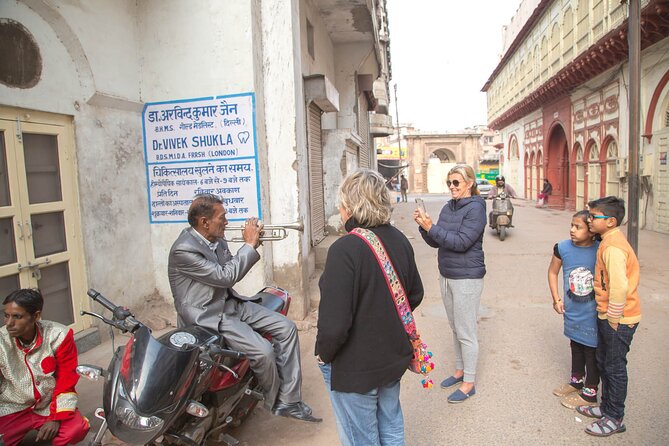
The Taj Mahal can make Agra feel like a one-sight city. You arrive, see the monument, take your photographs, and move on. This walk makes a useful correction. It places the Taj in the setting of a living city with markets, places of worship, old homes, local businesses, and neighborhoods that have grown around centuries of change.
I like that the route is done on foot. A car can move you between famous sights, but it also keeps you sealed off from the city. Walking brings smaller details into view: a spice stall, a temple doorway, a faded facade, or a narrow lane leading to a home or courtyard.
The tour also gives your guide room to explain how Agra relates to the Mughal period, the old fort city, British rule, poetry, trade, and present-day life. That mix matters. You are not only looking at old buildings. You are hearing why those places still matter.
The walk is private, and that is one of its strongest features. You can ask for more detail about a mosque, slow down for photographs, or move on when a stop has less appeal. Guides connected with this experience include Arhaan, Kaleem, and Tahir. The guide you receive may vary, but the personal format remains the same.
More Walking Tours in Agra
- Agra Walking Tour
★ 5.0 · 109 reviews - Agra: Street Food Walking Tour, Spice Market, & Tuk-tuk Ride
★ 4.9 · 102 reviews - Agra: Sadar Bazar Food Market Night Walking Tour by Tuk-Tuk
★ 4.9 · 25 reviews
Starting at Jama Masjid
The meeting point is Jama Masjid in Agra, and the walk returns here at the end. The opening stop lasts about 20 minutes and gives you a basic orientation to the city and the route.
Inside the mosque, the guide sets the stage with stories about Agra and an explanation of how the walk will work. This is a sensible beginning because the rest of the route can otherwise feel like a string of unrelated lanes and buildings. The mosque gives you a clear starting point for understanding the old city.
Jama Masjid is also a practical meeting place. It is near public transportation, and the experience operates daily between 8:00 a.m. and 5:00 p.m. The stated tour duration is about three hours, so you should still have room in your day for the Taj Mahal, Agra Fort, or another planned activity.
You should dress and behave respectfully inside the mosque. The supplied details do not specify a dress code, so check current local expectations when booking or ask your guide at the start.
Rawatpara, spices, temples, and a rooftop

The next stop is Rawatpara, a spice market with roots reaching back to the 15th century. The route includes medieval temples, a rooftop visit, and conversation about spices and the city’s trading past.
This is one of the most appealing parts of the walk for me. Spices are not just a shopping detail here. They help explain how the old city worked, how goods moved through Agra, and why market neighborhoods became important meeting points.
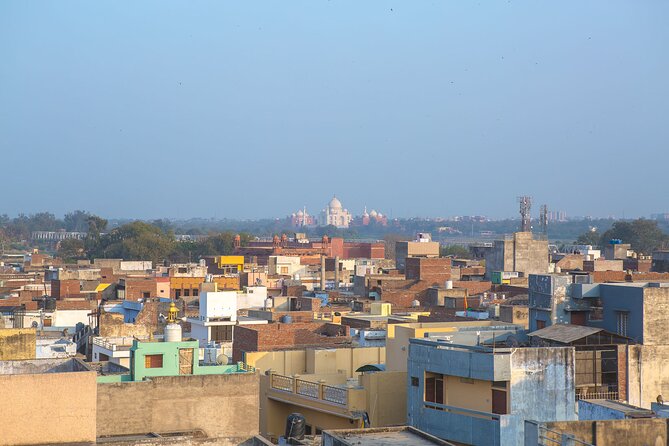
You will also get a view from above by climbing to a rooftop. The tour description does not promise a Taj Mahal viewpoint, so do not book this expecting the classic postcard angle. The value is different: you get a broad look at the city and a better sense of how old neighborhoods sit beside modern Agra.
The stop lasts about 30 minutes. That is enough time for a quick look and some explanation, but not a long market shopping session. The walk includes local snacks, though the exact food is not specified. If you have allergies or dietary restrictions, ask about the snack before accepting it.
Fuvara and Agra’s old walls
Fuvara takes about 40 minutes, making it the longest stop on the route. Here you pass through the historic walled city, where 18th-century buildings remain among the more recent layers of Agra.
The route may take you inside selected homes and temples, giving you a look at spaces that are easy to miss from a vehicle. You also visit an old marble shop with beautiful displays. This part of the walk connects Agra’s architecture with its craft traditions.
I would pay close attention to the guide here. Old facades can look worn or neglected at first glance, but a good explanation can reveal their former role and design. The tour’s appeal depends heavily on storytelling, and the names associated with it, especially Arhaan and Kaleem, are praised for making the city’s history easy to follow without overloading you with dates.
The drawback is that access to homes, shops, and temples can depend on what is open and acceptable at the time. The route says you will enter certain places, but it does not guarantee access to every interior on every departure. Treat these visits as part of a local walk rather than a formal museum tour.
A completely different kind of day out from Agra:
- Agra: Skip-the-Line Taj Mahal & Agra Fort Private Tour
★ 4.9 · 1,546 reviews - Agra: Taj Mahal Express Entry Tickets
★ 4.8 · 684 reviews - Agra: Taj Mahal and Mausoleum Guided Tour with Skip-the-Line
★ 4.8 · 631 reviews - Private Guided Taj Mahal Tour with Skip The Line Entry Ticket
★ 5.0 · 562 reviews
The old courtesan-market quarter
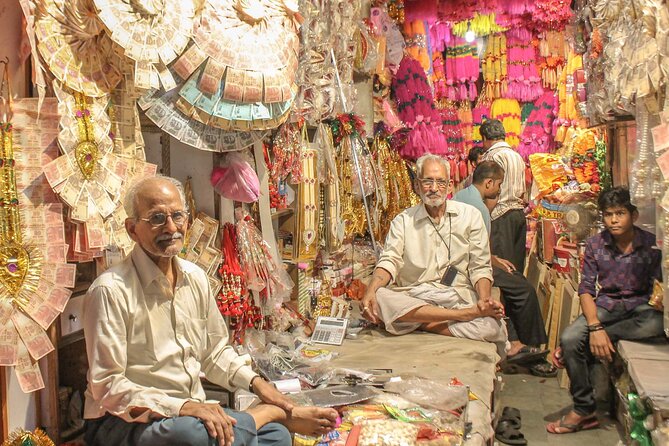
Near the Police Station Gudri Mansoor Khan, the walk passes through the former courtesan market inside the old fort city. The stop lasts about 20 minutes.
This is a thoughtful inclusion. Agra’s grand monuments often push aside the stories of working people, performers, traders, and communities that supported court life. A former courtesan quarter adds social history to the route and gives your guide a chance to explain another side of the walled city.
You should expect the information to be historical rather than theatrical. The available details do not promise performances or preserved interiors. The point is to understand what this part of the city once was and how its streets fit into Agra’s past.
As with the rest of the walk, the surroundings are lived-in. That may mean noise, traffic, crowded lanes, and buildings in various states of repair. I see that as part of the setting, but visitors who want quiet monuments and carefully managed paths may find this section less comfortable.
Life above Rawat Para
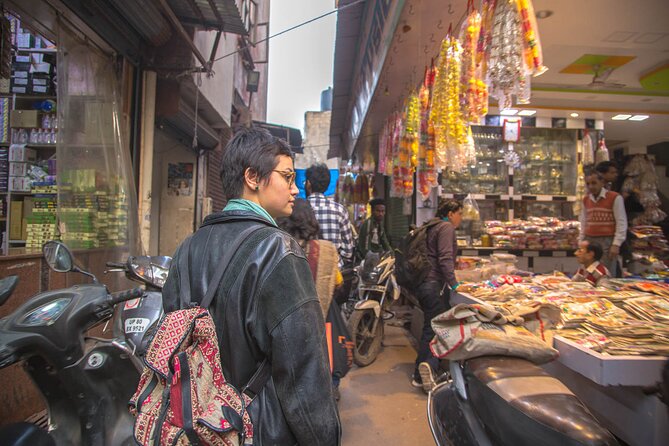
The Rawat Para Road stop lasts about 30 minutes and takes you onto the rooftop of a local home. From there, you get a panoramic view of Agra and hear about local life, neighborhood stories, and the way people live in this part of the city.
This is more than a viewpoint. The rooftop gives you a chance to meet local people and interact with the neighborhood, although the extent of that contact can vary. It also helps you read the city from above: roofs, streets, old structures, and newer development become part of one picture.
I especially value this stop because it shifts the focus from royal Agra to domestic Agra. You are seeing a home and a neighborhood, not only a monument built for an emperor. That contrast gives the whole experience more meaning.
There is one practical point to keep in mind. You climb to the rooftop of a local home, and the listing does not give details about stairs, railings, or accessibility. Most people can take part, but anyone with mobility concerns should ask before booking.
Kala Mahal and the birthplace of Mirza Ghalib
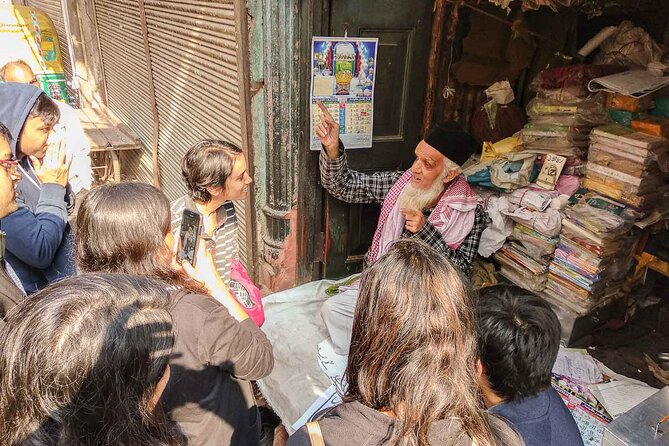
The route then visits Kala Mahal, identified as the birthplace of Mirza Ghalib, one of the best-known Urdu poets. You also see the facades of 18th-century bungalows in the Rawatpara area.
This stop gives the walk a literary dimension. You are not only tracing royal power, commerce, and religion. You are also connecting Agra with language, poetry, and the people who shaped North Indian culture.
The stop lasts about 30 minutes, which gives your guide time to explain Ghalib’s connection to the city and point out architectural details in the surrounding bungalows. The route description does not promise a full museum visit or a preserved writer’s house, so keep your expectations focused on the place, its story, and the nearby streets.
I like the way this section rounds out the walk. The old city is presented through several lenses: religious buildings, trade, homes, social history, craft, and literature. That is a far more useful introduction than simply collecting more photographs.
Finishing where you started
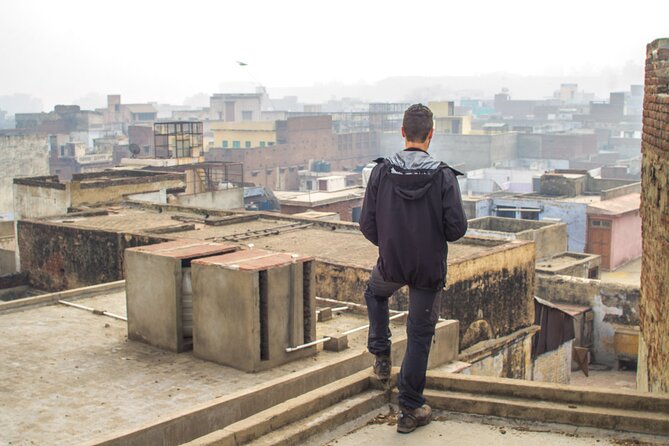
The walk returns to Jama Masjid for a final 10-minute stop. Ending at the starting point makes the tour easier to plan, especially if you have arranged transport or another activity afterward.
The total route takes about three hours, though the pace is private and can feel different depending on questions, photographs, market conditions, and access to interiors. You should allow a little flexibility rather than scheduling another activity immediately afterward.
Photo help is included as part of the guide’s role. That can be handy during a private walk, since you do not need to rely only on selfies or ask strangers in every location. It is a small feature, but it adds value for couples, families, and solo visitors who want a few photographs together.
What $41.12 gets you
The listed price is $41.12 per person. For a private three-hour walk with a local guide, included snacks, photo assistance, and several neighborhood stops, I consider that a fair price if your main goal is to understand Agra beyond the Taj Mahal.
You are not paying for major admission tickets here. Each listed stop has no separate admission charge, so the cost goes toward the guide, planning, local access, and the time spent moving through the old city. That makes the quality of the guide especially important.
The best value comes if you are curious about ordinary Agra and enjoy asking questions. If you only want famous monuments, the walk may feel less essential because it does not replace visits to the Taj Mahal or Agra Fort. If you already have those covered, this adds context that a standard monument tour often misses.
The experience is private, and only your group takes part. That makes the per-person cost easier to justify for a small group, especially if you value a flexible pace. It may feel expensive for one person who wants only a quick orientation, but reasonable for a couple or family sharing the guide.
Who will enjoy this most
I would choose this walk if you have two or three days in Agra and want to see more than the city’s headline sight. It suits people who enjoy local markets, old buildings, religious sites, neighborhood stories, and photography.
It is also a good choice after visiting the Taj Mahal or Fatehpur Sikri. The grand monuments can be visually overwhelming, while this walk offers a slower look at the city’s streets and people. A night-time version has also been associated with the experience, but the supplied operating hours are 8:00 a.m. to 5:00 p.m., so confirm the time you want before booking.
Families can take part because most visitors are permitted to join, though the route includes walking, market streets, and rooftop stairs. Service animals are allowed. The tour is near public transportation, but no hotel pickup is listed, so you should arrange your own way to Jama Masjid.
I would be less quick to recommend it if you dislike uneven urban walking, close market streets, or old buildings that have not been restored for tourism. This is not a polished attraction. Its appeal comes from seeing Agra as it is.
Practical booking advice
The tour is offered Monday through Sunday during the stated operating period, from December 29, 2021, through November 26, 2026. Confirmation is provided when you book, and the experience uses a mobile ticket.
The tour is usually booked about 10 days ahead. That is a useful planning guide, especially if you want a particular date or guide, but it is not a guarantee of availability. The experience provider is Agra Heritage Walks.
Free cancellation is available if you cancel at least 24 hours before the start time. Cancellations within 24 hours are not refunded, and changes inside that period are not accepted. The cut-off uses local time in Agra.
Should you book Agra 101 City Walk?
I would book it if the Taj Mahal is only part of your Agra plan. The strongest parts are the spice market, the rooftop view, the old homes and temples, the courtesan-market quarter, and Kala Mahal. Together, they show a city with more layers than its most famous monument suggests.
Choose it for a personal, story-led walk rather than a list of major sights. Guides such as Arhaan, Kaleem, and Tahir are associated with the experience, and the private format lets you make the most of their local knowledge and storytelling.
Skip it if you want air-conditioned transport, formal museum interiors, or a route built around admission-ticket attractions. For everyone else, $41.12 buys a useful three-hour introduction to Agra’s old quarters, with enough variety to make the city feel like a place to understand, not just a place to photograph.
FAQ
How long does the Agra 101 City Walk last?
The walk lasts approximately three hours, including the stops at Jama Masjid, Rawatpara, Fuvara, Gudri Mansoor Khan, Rawat Para Road, and Kala Mahal.
Where does the tour begin?
The tour begins at Jama Masjid in Agra, Uttar Pradesh, India.
Where does the tour end?
The walk ends back at Jama Masjid, the original meeting point.
Is this a private tour?
Yes. Only your group takes part in the activity.
How much does the tour cost?
The listed price is $41.12 per person.
Are snacks included?
Yes. Local snacks are included with the walk, though the exact snacks are not specified.
Can the guide take photographs?
Yes. The guide can help take photographs of you during the tour.
Is the tour available every day?
The stated opening hours are Monday through Sunday, from 8:00 a.m. to 5:00 p.m., during the listed operating period.
Is the tour accessible by public transportation?
Yes. The experience is near public transportation.
What is the cancellation policy?
You can receive a full refund if you cancel at least 24 hours before the experience start time. Cancellations or changes made within 24 hours are not accepted for a refund.
Recently added around Agra
- Taj Mahal Entrance Ticket★ 5.0 · 3 reviews
- Agra’s Hidden Gems & Flavors on a Thrilling Tuk-Tuk Tour 3-4 Hrs★ 5.0 · 3 reviews
- Spiritual Private Tour of Vrindavan and Mathura★ 3.0 · 3 reviews
- Agra: Taj Mahal and Agra Fort Private Guided Half-Day Trip★ 5.0 · 3 reviews
- Shop Agra Like a Local: Unique Indian Handicrafts Tour★ 5.0 · 3 reviews
- From Jaipur: Taj Mahal Guided and Agra Tour By Car★ 5.0 · 3 reviews
- Private Transfers Jaipur To Agra Drop with sikri & stepwell★ 5.0 · 3 reviews
- Full day Taj Mahal, Agra Fort, Fatehpur Sikri By Car From Agra★ 5.0 · 3 reviews
City Tours, compared.
Full-Day City Tour with Car, Guide & Skip-the-Line
Read our review →
Taj Mahal, Agra Fort, Baby Taj & Mehtab Bagh Private City Tour
Read our review →
Private Jaipur Full One Day Tour In Pink City With Guide
Read our review →
Jaipur Guided City Tour: City Palace, Jantar, Hawa & Jal Mahal
Read our review →Browse the lists this tour appears in