
Reviewed · WALKING TOURS
“Jaipur Cultural Walk: Explore life behind the pink walls”
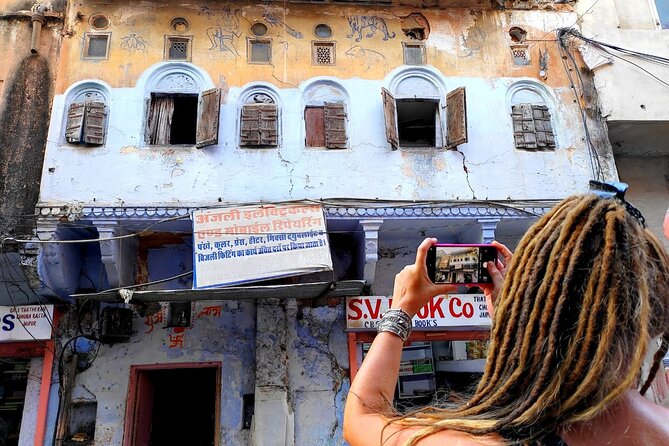
Jaipur’s pink-walled center makes the most sense on foot, where a brass vessel workshop, a spice stall, a flower seller, and a tea break can appear within the same few blocks. This three-hour walk follows the Old City from Tripolia Bazar toward Badi Chaupar, with a small group of no more than eight people.
I like the small group, which makes it easier to hear explanations and ask about daily life, Hindu traditions, shopping, food, and architecture. I also like the local tastings, especially masala chai, hot snacks, and freshly made sweets. The main drawback is simple: you need a moderate level of fitness, and hotel pickup is not included.
In This Review
- Key points
- Why a walking tour fits Jaipur’s Old City
- Tripolia Bazar: bangles, brass, and working hands
- Chhoti Chaupar: chai before the narrow lanes
- Badi Chaupar: sweets, spices, and flowers
- What the small group changes
- What the $30 price gets you
- The food stops are modest but well chosen
- Architecture, faith, and daily life
- Practical fit for different types of visitors
- Should you book the Jaipur Cultural Walk?
- FAQ
- How long does the Jaipur Cultural Walk last?
- How many people can join the tour?
- What food and drinks are included?
- Where does the tour start?
- Where does the tour end?
- Is hotel pickup included?
- What level of fitness is needed?
- What is the cancellation policy?
Key points
- Tripolia Bazar workshops: Watch makers produce lacquer bangles, brass vessels, and metal goods in designated artisan areas.
- Chhoti Chaupar tea stop: Pause for masala chai and freshly cooked snacks before continuing through narrow lanes.
- Badi Chaupar food and spice markets: Taste fresh milk sweets, then walk past spice and flower sellers.
- Guide Kumar’s local focus: The walk can include back streets, alleyways, old havelis, temples, and everyday customs.
- Eight-person maximum: A useful size for hearing the guide and moving through crowded market lanes.
- Three-hour point-to-point route: Start near Tripolia Gate and finish by the City Palace parking area.
Why a walking tour fits Jaipur’s Old City
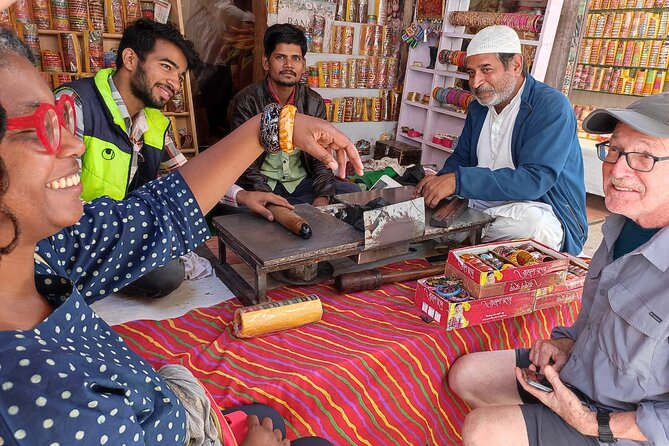
Jaipur’s central streets were planned in a grid, but the experience at street level is less tidy. Main roads give way to lanes, courtyards, workshops, shrines, market stalls, and old homes. A bus can show you the pink facades. It cannot easily show you the work taking place behind them.
This walk is designed around that closer view. You move through the old commercial quarters rather than simply stopping for photographs. You can watch artisans work, ask about the objects they make, and see how shopping, worship, food, and small-scale production share the same urban space.
The route also gives you a useful introduction to Jaipur before you tackle larger sights such as the City Palace or Amber Fort. Those monuments explain royal Jaipur. This walk explains the city that grew around it.
Guide Kumar is named in the tour material and is praised for taking people into less-touristed streets, explaining Hindu traditions, and pointing out old architecture and havelis. Guide assignments can vary, so Kumar is not guaranteed for every departure. Still, the format clearly favors a personal guide rather than a scripted procession.
More Walking Tours in Jaipur
- Jaipur Bazaar & Food Walking Tour
★ 5.0 · 281 reviews - Heritage Walk & Street Food Tasting in Jaipur
★ 5.0 · 158 reviews - Magical Walk of Jaipur
★ 5.0 · 121 reviews
Tripolia Bazar: bangles, brass, and working hands
The first hour centers on Tripolia Bazar, near the Government Maharaja Public Library and Tripolia Gate. The meeting point is on Chaura Rasta Road, opposite Tripolia Gate, in the Bapu Bazar area.
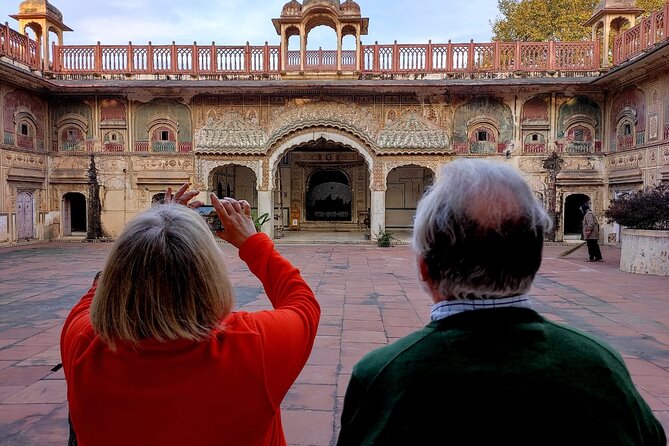
This is a practical starting point because you begin among working shops rather than at a grand monument. The designated areas include local artisans and handicraft makers. You may watch lacquer bangles being made, along with brass and metal vessels. Photography is allowed, which matters if you want to record the process rather than only the finished souvenirs.
I find this part especially useful for anyone who plans to shop in Jaipur. A market object has more meaning when you have seen the labor behind it. You can also ask your guide about materials, methods, and how to judge what you are buying. The supplied details do not promise a shopping stop or fixed discounts, so treat purchases as optional and ask before photographing people or work closely.
The drawback is that workshops are working spaces, not museum displays. Conditions may be tight, noisy, or crowded, and the pace of a walking group can limit how long you watch one task. That is part of the point, though. You are seeing production in its everyday setting, not a polished demonstration built only for visitors.
The guide also uses this area to explain the shape of downtown Jaipur and the city’s older buildings. If architecture interests you, pay attention to the havelis and facades between the shops. The walk’s value is often in these connections: a building is not just pretty, since it can also be a home, a business, or part of a religious neighborhood.
Chhoti Chaupar: chai before the narrow lanes
The second hour brings you to Chhoti Chaupar, one of the Old City’s open squares. Here you stop for masala chai and freshly cooked hot snacks. Tea and snacks are included, along with bottled water, so you do not need to budget separately for this part.
This pause breaks up the walking in a sensible way. Jaipur can be tiring when you are constantly crossing roads, watching traffic, and keeping pace in a crowded quarter. Sitting down for a short tea stop gives you time to ask questions and compare what you have seen so far.
The food is also a small but useful introduction to local eating habits. The tour describes the snacks as freshly cooked and the street food as clean and safe. That does not mean you should ignore personal dietary needs. If you have allergies or strict food restrictions, ask the guide what is being served before eating.
After tea, the route goes into alleyways lined with incense, candles, and decorative wall strings. These lanes offer a different view from the broad market roads. You might find devotional goods, household decorations, and objects made for festivals or daily prayer. The guide’s role is important here because the purpose of an item is not always obvious at a glance.
This is also where the walk can feel most intimate. You are not simply looking at a shop window. You are moving through places where people live, work, pray, and buy ordinary necessities. Be respectful with cameras and avoid blocking entrances. The tour allows photography at the artisan area, but that permission should not be read as unlimited permission everywhere.
Badi Chaupar: sweets, spices, and flowers

The final hour takes you to Badi Chaupar and through more food-centered parts of the Old City. One stop is a small factory where confectioners make curd, cheese, and sweets from milk. You can taste freshly cooked sweets there.
For many people, this will be the most memorable food stop. The point is not a formal cooking class. It is a chance to see how familiar ingredients become everyday treats and to try something while it is fresh. The description does not identify the exact sweets, so do not book this expecting a particular dessert.
From there, the guide leads you through the spice bazaar and flower market. These are strong places to use your senses, but the tour does not promise a formal spice lesson or a flower-making activity. Instead, you get context as you walk, with a guide able to explain what you are seeing and how these market trades fit into city life.
The route ends near the City Palace parking area in Gangori Bazaar, close to J.D.A. Market and Kanwar Nagar. That ending is convenient if you plan to continue sightseeing in the City Palace area, but hotel drop-off is not included. You will need to arrange your own onward transport.
A completely different kind of day out from Jaipur:
- Jaipur: Private Full Day Sightseeing Tour By Car with Guide
★ 4.9 · 1,839 reviews - Agra: Skip-the-Line Taj Mahal & Agra Fort Private Tour
★ 4.9 · 1,546 reviews - 3-Hour Morning Bike Tour of Jaipur
★ 5.0 · 1,253 reviews - Spiritual City Walking Tour-THE Pushkar Route
★ 5.0 · 907 reviews
What the small group changes
The maximum group size is eight. That is small enough for a guide to speak while walking, rather than stopping constantly to gather a large crowd. It also makes it easier to ask about a shop, a temple custom, a food item, or a building that catches your eye.
A compact group matters in market lanes. You can stay together without taking up an entire passage, and the guide has a better chance of noticing if someone needs a pause. The tour is still a public-city walk, not a private bubble. Traffic, pedestrians, uneven pavement, and sudden stops are part of the setting.
The three-hour duration is long enough to cover three distinct areas without taking over your day. I would schedule it early in your Jaipur visit. You will learn the street layout, see where shopping happens, and gain useful context for later visits. It can also help you decide which markets deserve a return visit.
You should be comfortable walking for roughly three hours. The activity calls for moderate physical fitness, and that is worth taking seriously. There is no promise of hotel pickup or drop-off, so factor in the time and cost of reaching the Government Maharaja Public Library and leaving from the City Palace parking area.
What the $30 price gets you
At $30 per person, this is not a bargain transport tour, because you are paying for a guide and a focused look at places you could technically visit on your own. The value comes from interpretation, route planning, and the included food and drinks.
If you explored the same markets independently, you could see the shops and stalls, but you might miss the working areas, fail to find the right alleyways, or struggle to understand the customs behind the objects on sale. You would also need to arrange your own tea, snacks, bottled water, and sweet tasting.
The price makes the most sense for a first visit, especially if you want more than monument photographs. It is less useful for someone who already knows Jaipur’s markets well or prefers to wander without a schedule.
The tour is booked, on average, five days ahead. That is a practical clue rather than a rule. If your Jaipur dates are fixed, reserve before arriving instead of assuming you can find a place at the last minute. Confirmation is provided at booking, and the mobile ticket makes it easy to keep the booking on your phone.
The food stops are modest but well chosen
Food is not the whole tour, and you should not expect a long meal. The included offerings are coffee or tea, snacks, bottled water, and the described tastings at the tea and sweet stops.
Masala chai at Chhoti Chaupar gives you a break and a familiar Jaipur ritual. The hot snacks add a taste of street food without turning the walk into a restaurant crawl. At Badi Chaupar, the fresh sweets connect food with local milk production and small-scale confectionery.
I appreciate this restraint. A three-hour walk works better with small tastings than with a heavy lunch. You can keep moving and still learn how food appears in the market. If you have dietary concerns, ask before sampling. The supplied information does not list vegetarian, vegan, allergy, or religious-diet options.
Architecture, faith, and daily life
The strongest version of this walk is not just a food and shopping route. It links ordinary commerce with Jaipur’s built and religious environment.
The guide can point out old havelis and interesting architecture while taking you through back streets. The route also includes incense, candles, decorative strings, flowers, and references to Hindu traditions. Together, these details show how worship and household life are woven into the market economy.
You should come ready to ask questions. The experience is better when you want to know why a lane sells a certain object, how a custom affects daily routines, or what a building was used for. The tour is aimed at curious people, not only at shoppers collecting souvenirs.
At the same time, do not expect a full architectural survey or a formal temple tour. The information supports a street-level introduction, and the exact balance of food, craft, architecture, and religious explanation may depend on the guide and the group.
Practical fit for different types of visitors
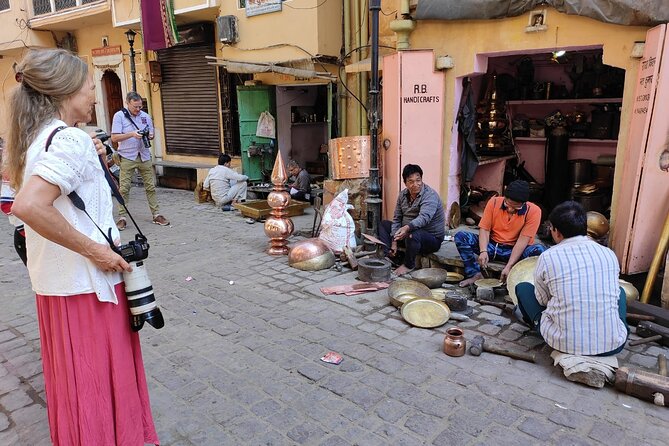
This walk suits you best if you enjoy being on your feet, prefer local streets to panoramic bus routes, and want a guide who can explain what is happening around you. It is also a good fit if you have only a short time in Jaipur and want a compact introduction to the Old City.
It may suit families with older children, provided everyone can manage the walking and crowded market setting. The eight-person limit helps, but the tour is not described as specifically designed for children.
It is less suitable if you have limited mobility, dislike uneven or crowded streets, or want hotel-to-hotel transportation. The activity is near public transportation, but the details provided do not specify the nearest bus or train stop.
If you are an enthusiastic photographer, the artisan areas allow photography. Still, ask before photographing workers, homes, or religious activity. A respectful camera is more useful than a fast one.
The route is also weather-dependent. If poor weather causes cancellation, you are offered another date or a full refund. Otherwise, cancel at least 24 hours before the start time for a full refund. Cancellations within 24 hours are not refunded, and late changes are not accepted.
Should you book the Jaipur Cultural Walk?
I would book this if you want to understand Jaipur through its working streets rather than only its palaces. The combination of Tripolia’s craft shops, Chhoti Chaupar’s chai, and Badi Chaupar’s sweets and spice market gives you a clear three-part look at the Old City.
The tour is particularly good early in a Jaipur stay. Guide Kumar’s reported focus on less-touristed lanes, Hindu traditions, havelis, and everyday life is exactly the kind of orientation that can improve the rest of your visit.
Skip it if you want a vehicle, a slow sightseeing pace, or a major-monument tour. For most curious, reasonably fit visitors, though, $30 is fair value for a small group, included refreshments, and a route that helps you see behind Jaipur’s famous pink walls.
FAQ
How long does the Jaipur Cultural Walk last?
The walk lasts approximately three hours.
How many people can join the tour?
The group has a maximum of eight people.
What food and drinks are included?
Coffee or tea, snacks, and bottled water are included. The route also includes masala chai, freshly cooked hot snacks, and a tasting of freshly made sweets.
Where does the tour start?
The meeting point is the Government Maharaja Public Library on Chaura Rasta Road, opposite Tripolia Gate, in the Bapu Bazar area of Jaipur.
Where does the tour end?
The walk ends at the City Palace parking area in Gangori Bazaar, near J.D.A. Market and Kanwar Nagar.
Is hotel pickup included?
No. Hotel pickup and drop-off are excluded from the group tour.
What level of fitness is needed?
You should have a moderate level of physical fitness because this is a walking tour.
What is the cancellation policy?
You can receive a full refund if you cancel at least 24 hours before the start time. Cancellations within 24 hours are not refunded. If poor weather causes the tour to be canceled, you are offered another date or a full refund.
Recently added around Jaipur
- Taj Mahal Entrance Ticket★ 5.0 · 3 reviews
- Jaipur: Ajmer & Pushkar Day Trip with Lunch & Camel ride★ 4.3 · 3 reviews
- Spiritual Private Tour of Vrindavan and Mathura★ 3.0 · 3 reviews
- Agra’s Hidden Gems & Flavors on a Thrilling Tuk-Tuk Tour 3-4 Hrs★ 5.0 · 3 reviews
- Jaipur: City Tour Full-Day Sightseeing with Guide★ 5.0 · 3 reviews
- Shop Agra Like a Local: Unique Indian Handicrafts Tour★ 5.0 · 3 reviews
- Agra: Taj Mahal and Agra Fort Private Guided Half-Day Trip★ 5.0 · 3 reviews
- From Jaipur: Taj Mahal Guided and Agra Tour By Car★ 5.0 · 3 reviews
Walking Tours, compared.



Afternoon Walk Tour with Sunset & Fire Ritual -The Pushkar Route
Read our review →
Evening Walking Tour with Fire Rituals-The Pushkar Route
Read our review →Browse the lists this tour appears in