
Reviewed · WALKING TOURS
Afternoon Walk Tour with Sunset & Fire Ritual -The Pushkar Route
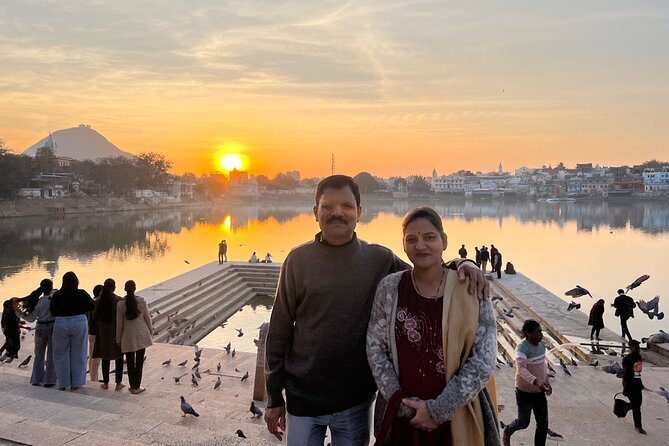
Pushkar’s best moment comes as the sun drops behind the lake and the ghats turn toward prayer. This three-hour walk brings you from old temples and a Sikh shrine to sunset music and a fire ceremony at Brahma Ghat, with local guide Manish often leading the way.
I like the small maximum of six people, which gives you room to ask questions and keep the walk personal. I also like the practical extras: hot drinks, snacks, and a route through narrow lanes that you might skip if you were finding your way alone.
The main consideration is timing. The 4:00 pm start packs many stops into one afternoon, so this is a steady walk rather than a slow, leisurely temple visit. Some sites also involve religious customs, and any blessing or ceremony participation should be treated as optional.
In This Review
- Key points at a glance
- Why the sunset timing makes this walk work
- Varaha Temple and the story of Vishnu
- Gurudwara Sahib and Pushkar’s Sikh connections
- Pushkar Lake and the sunset ghats
- The fire ceremony at Brahma Ghat
- Atmateshwar Mahadev Mandir below street level
- Brahma Temple, Pushkar’s essential pilgrimage stop
- The older Rangji Temple and the lanes beyond
- Malpua in Halwai Gali and Pushkar Market
- What the $7 price really gives you
- The guides and the style of explanation
- Who should book this Pushkar walk?
- Should you book The Pushkar Route?
- FAQ
- What time does the tour start?
- How long does the walk last?
- How many people can join the tour?
- Which major places does the walk visit?
- Are drinks and snacks included?
- Can I cancel for a full refund?
Key points at a glance
- Sunset at Pushkar Lake: Sit by the ghats with music before the evening fire ritual begins.
- Six-person limit: A small group makes it easier to hear the guide and ask about Hindu and Sikh traditions.
- Eight main stops: The route includes Varaha Temple, Gurudwara Sahib, Pushkar Lake, Brahma Ghat, Atmateshwar Mahadev Mandir, Brahma Temple, and Pushkar’s market lanes.
- Manish often leads the walk: He is praised for explaining temple philosophy, religion, and local customs in clear English.
- Hot drinks and snacks included: A useful lift during a three-hour walk through town.
- Good value at $7: For the price of a simple meal or less, you get a guide, several temple visits, sunset, music, and a fire ceremony.
Why the sunset timing makes this walk work
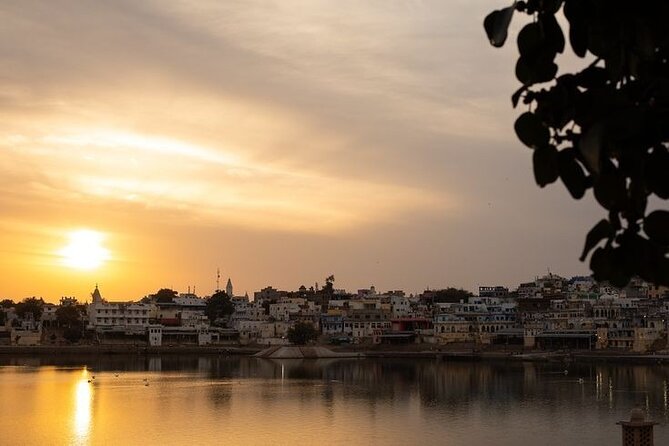
Pushkar can feel confusing at first. Temples, lake ghats, shrines, market lanes, and religious activity are packed into a relatively small area. This route gives the afternoon a clear shape, beginning with temples and local religious sites, then moving toward the lake as daylight fades.
The schedule starts at 4:00 pm and lasts about three hours. That timing matters. You see Pushkar in two moods: the practical, everyday town of narrow lanes and market stalls, followed by the quieter, more ceremonial setting around the lake.
The final part is not simply a photo stop. You sit near the ghats, listen to live music, watch the sun go down, and then see the evening fire ceremony. The combination gives the walk a stronger sense of place than a tour that only checks off temples.
You should still expect a full afternoon on foot. The route covers several stops, and Pushkar’s lanes can be winding. If you want a detailed visit inside every temple, this may feel brisk. If you want a guided introduction that brings together religion, architecture, local customs, and daily life, the pace makes sense.
More Walking Tours in Pushkar
- Spiritual City Walking Tour-THE Pushkar Route
★ 5.0 · 907 reviews - Evening Walking Tour with Fire Rituals-The Pushkar Route
★ 4.9 · 108 reviews - Spiritual Walking tour with Puja Ceremony -The Pushkar Route
★ 5.0 · 101 reviews
Varaha Temple and the story of Vishnu
The first stop is Varaha Temple, dedicated to Varaha, the boar incarnation of Lord Vishnu. It is described as one of Pushkar’s ancient temples and one of the eight Swayambhu Kshetra sites associated with Vishnu.
The temple is linked to a 12th-century foundation by King Anaji Chouhan. That age gives the stop weight, but the more useful part of the visit is the explanation. A guide can help you understand why a temple dedicated to a particular form of Vishnu matters within Hindu belief, rather than leaving you to decode the shrine on your own.
About 25 minutes are set aside here, with admission included. That is enough time for an introduction and a look around, though not a lengthy study of every carving or object. I would pay close attention to the guide’s explanation at this point, since it sets up the religious ideas that return at later temples and ghats.
Gurudwara Sahib and Pushkar’s Sikh connections
Gurudwara Sahib adds a different religious voice to the route. The stop lasts about 20 minutes and focuses on Sikh history, beliefs, and the reasons Pushkar is also sacred within Sikh tradition.
This is one of the most useful choices on the walk. A route focused only on Hindu temples could give you a narrow picture of the town. The gurudwara widens the conversation and shows that Pushkar’s importance is not limited to one faith.
Admission is free. The stop is short, so expect an overview rather than a full lesson in Sikhism. Still, it gives you a better framework for understanding Pushkar as a pilgrimage town with several religious layers.
Pushkar Lake and the sunset ghats
The walk then reaches Pushkar Lake, one of the town’s defining places. The route includes a ghat built by Raja Man Singh I of Amer in the early 16th century and later renovated by Jai Singh in the 18th century. It is also known as Sunset Point and Raj Ghat.
This is where the afternoon changes pace. Instead of moving from one temple entrance to another, you spend time beside the water and watch the light soften over the ghats. Live music is part of the experience here, and the setting gives you a chance to sit, listen, and take photographs.
The scheduled visit lasts about 20 minutes. Sunset times change during the year, so the exact quality of the light will depend on the date of your walk. The route is designed around the evening, but the supplied details do not promise a particular sunset view every day.
The lake is also a place where religious offerings and blessings may be discussed. A blessing at the ghat can be optional, and you should feel free to observe rather than participate. The useful rule is simple: ask what is included, ask about any suggested payment, and choose only what feels right for you.
A completely different kind of day out from Pushkar:
- Walking Sightseeing Tour – The Shine Pushkar
★ 5.0 · 64 reviews - Pushkar Day Trip from Jaipur – Private Car, Safari, Guide & Lunch
★ 4.5 · 45 reviews - Evening Walking tour with Fire Ceremony – The Pushkar Route
★ 5.0 · 35 reviews - From Jaipur : Private Ajmer Pushkar Tour by Cab
★ 4.5 · 29 reviews
The fire ceremony at Brahma Ghat
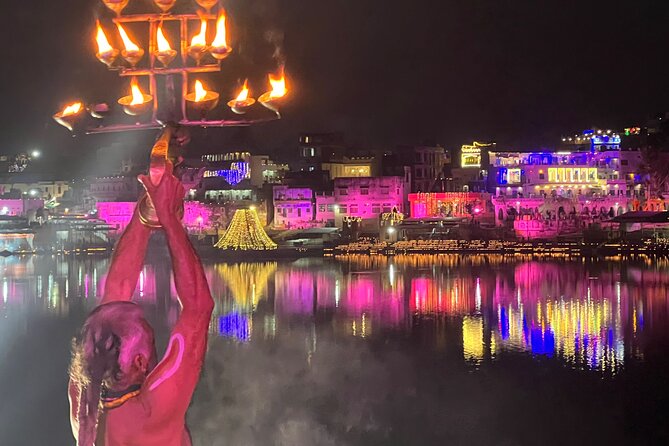
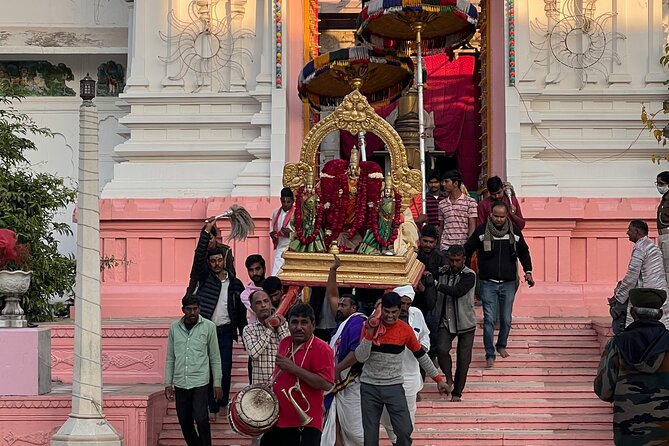
The evening ritual at Brahma Ghat is the emotional center of the walk. The Aarti, or fire ceremony, takes place beside the lake and includes prayers and flame offerings. The experience can be watched, and participation may be available, but it should not be treated as compulsory.
About 30 minutes are assigned to the ceremony, with admission included. That gives you time to see the ritual without racing away as soon as it begins. The music, flames, lake, and gathering at the ghat create a setting that is very different from a standard sightseeing stop.
This is also where respectful behavior matters most. Keep your voice low, follow the guide’s directions, and ask before taking close photographs. If you are not familiar with Hindu worship, Manish’s explanations can help you understand what is happening without turning the ceremony into a performance for outsiders.
The fire ritual is the reason I would choose this walk over a basic daytime town tour. Temples tell you about Pushkar’s religious importance, but the Aarti lets you see that faith practiced in the present.
Atmateshwar Mahadev Mandir below street level
After the lake, the route visits Ati Prachin Shri Atamteshwar Mahadev Mandir, a temple dedicated to Lord Shiva. The temple is described as an underground cave shrine, dating to the 12th century, with Hemadpanti architectural carvings.
The stop lasts about 15 minutes, and admission is included. Its underground setting makes it different from the larger, more visible temples on the route. You are not just moving between grand gateways. You are also seeing a compact shrine with a very distinct architectural character.
Because the visit is short, the guide’s commentary is especially useful. This is a place where a few clear details can make the stop memorable. If you prefer long periods for quiet prayer or close architectural study, 15 minutes may feel limited.
Brahma Temple, Pushkar’s essential pilgrimage stop
Brahma Temple is the route’s most important religious landmark. It is presented as the only temple in the world dedicated to Lord Brahma, the Hindu creator god. The structure dates partly to the 14th century and was renovated later, with black and white marble used throughout.
The visit lasts about 30 minutes and admission is included. That makes it one of the longer temple stops, which is appropriate given its importance. You can expect the guide to explain the temple’s place in Pushkar and the beliefs connected with Brahma.
This is a useful point to ask questions. Several people who have taken the walk praised the guides for explaining the philosophy behind each temple, not just naming the buildings. Manish in particular is described as patient, clear in English, and strong on Pushkar’s religious customs.
The temple is an active place of worship, not a museum. Your experience may depend on the religious activity taking place when you arrive. The tour gives you context, but it cannot guarantee a quiet or empty visit.
The older Rangji Temple and the lanes beyond
The route also passes the old Rangji Temple near Varaha Ghat. This roughly 200-year-old temple is dedicated to Lord Vishnu and sits in the middle of town.
The provided schedule does not give a separate duration for this stop, so think of it as part of the walk between the main sites rather than a long formal visit. That is still worthwhile. Seeing another Vishnu temple after Varaha Temple helps you compare different religious sites within the same town.
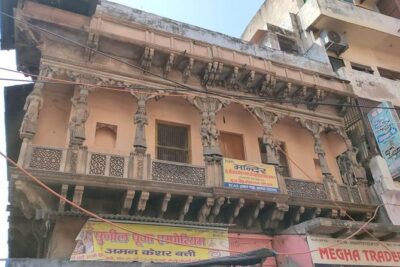
From there, the route heads through narrow lanes toward Pushkar’s main market. These lanes are part of the appeal. They bring you past local corners and photography spots that are easy to miss when you stay on the broadest streets.
The guide’s role becomes practical here. Pushkar’s winding streets can be confusing, especially as the light fades and the market becomes more active. A small group also makes it easier to keep together without blocking the lane.
Malpua in Halwai Gali and Pushkar Market
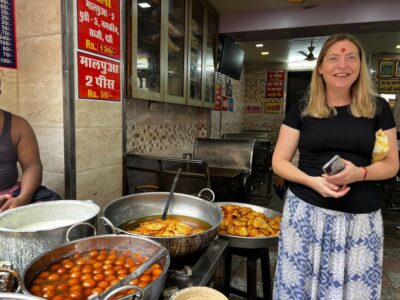
The walk finishes in the main market, passing through Halwai Gali, known for malpuas, and onward toward Gandhi Ghat. Malpua is a sweet fried pancake, and the lane gives the route a welcome food detail after so much temple and ritual discussion.
Hot drinks and snacks are provided during the experience. The exact snack selection is not specified, so do not book this expecting a full meal. Think of the food as a useful refreshment that helps you keep going through the afternoon.
The market section is not only shopping time. It lets you see how pilgrimage, food, photography, and ordinary town life sit side by side in Pushkar. You may find this final section less structured than the temple visits, but that is part of its value.
What the $7 price really gives you
At $7 per person, this is an unusually inexpensive way to get a guided introduction to Pushkar. The price includes the walking tour, several listed temple admissions, hot drinks and snacks, and the guided sunset and fire ceremony portion.
The value is strongest if you would otherwise visit the sites without context. A temple entrance by itself tells you very little about why the place matters. A guide who can explain Hindu philosophy, Sikh connections, religious customs, and the meaning of the Aarti adds the part that is hardest to arrange independently.
You are not paying for a private guide, and the group can include up to six people. That is still a comfortably small number, but the experience will depend on the group’s walking speed and questions. Pickup is offered, though the meeting details provided only specify a 4:00 pm start, so confirm the exact pickup arrangement when booking.
The walk is also a good fit for a short stay. One participant with only a few hours in Pushkar was able to see a large portion of the town after the guide adjusted the route. That flexibility should not be assumed as a guarantee, but it suggests the guide can respond to timing and group needs.
Free cancellation is available if you cancel at least 24 hours before the start time. Changes or cancellations inside that window are not accepted for a refund.
The guides and the style of explanation
Manish receives the strongest praise in the supplied comments. He is described as passionate about Pushkar, patient with questions, and able to explain both the city and its religious ideas in good English. That combination matters here because the walk includes several temples with unfamiliar names and customs.
Vishwanath is also mentioned as an accommodating guide who adjusted the route when a group was delayed. The experience is provided by The Pushkar Route, so your guide may vary by date.
A useful detail concerns the so-called Pushkar passport. It may be mentioned during the walk, and some people receive a blessing at the lake, but participation is optional. The guide was described as not making this a hard sell. Even so, I recommend asking about any ceremony or donation before agreeing, as you would at any religious site.
Who should book this Pushkar walk?
I would choose this tour if you want a clear first look at Pushkar, especially if you care about religion, local stories, and the feel of the town after sunset. It suits solo visitors, couples, and small groups who prefer explanation and orientation over wandering without a plan.
It is also a good choice if you have limited time. In three hours, you see major temples, a gurudwara, the lake, the market, and an evening ritual. The route gives you a useful map of Pushkar for later independent exploring.
You may want a different experience if you dislike walking, prefer to avoid religious ceremonies, or want an unhurried visit inside each temple. The schedule is active, and the emphasis is on seeing many important places rather than spending an hour at one shrine.
Wear comfortable footwear and bring water, even though drinks and snacks are supplied. Keep your schedule flexible around the 4:00 pm start, since the sunset and ceremony are central to the timing.
Should you book The Pushkar Route?
Book it if you want a low-cost, well-organized introduction to Pushkar with a real evening payoff. The fire ceremony, sunset music, and lake setting give the walk more feeling than a standard temple checklist.
Skip it if you are seeking a private, slow architectural tour or do not want any contact with religious ceremonies. For most first-time visitors who have three hours and want a guide to explain what they are seeing, the $7 price is hard to fault.
FAQ
What time does the tour start?
The tour starts at 4:00 pm.
How long does the walk last?
The experience lasts approximately three hours.
How many people can join the tour?
The maximum group size is six people.
Which major places does the walk visit?
The route includes Varaha Temple, Gurudwara Sahib, Pushkar Lake, Brahma Ghat, Atmateshwar Mahadev Mandir, Brahma Temple, the old Rangji Temple area, and Pushkar’s main market.
Are drinks and snacks included?
Yes. Hot drinks and snacks are provided during the walk.
Can I cancel for a full refund?
Yes, if you cancel at least 24 hours before the experience start time. Cancellations or changes made less than 24 hours before the start are not accepted for a refund.
More Evening Tours in Pushkar
- Camel Desert Safari with Sunset -The Pushkar Route
★ 5.0 · 8 reviews - Pushkar: Camel Sunset Safari Adventure
★ 3.5 · 7 reviews - Taj Mahal Sunrise & Sunset All Inclusive Private Luxury Agra Tour
★ 5.0 · 348 reviews - Experience Jaipur By Night
★ 5.0 · 215 reviews
Recently added around Pushkar
- Jaipur: Ajmer & Pushkar Day Trip with Lunch & Camel ride★ 4.3 · 3 reviews
- Private Day Trip to Pushkar From Jaipur★ 4.5 · 3 reviews
- Explore Chittorgarh Fort With Udaipur Drop from Pushkar★ 5.0 · 4 reviews
- Rajasthan tours: Luxury and private tour by car with guide.★ 4.8 · 4 reviews
- Food & Culture Walking Tour – The Pushkar Route★ 5.0 · 4 reviews
- Private Day Trip to Holy City of Pushkar from Jaipur★ 5.0 · 4 reviews
- From Jaipur: One-Day Trip From Jaipur to Pushkar★ 3.8 · 4 reviews
- From Jaipur : Ajmer Pushkar Private Tour by Cab with Guide★ 4.0 · 5 reviews
Walking Tours, compared.


Evening Walking Tour with Fire Rituals-The Pushkar Route
Read our review →Browse the lists this tour appears in