
Reviewed · WALKING TOURS
Spiritual Walking tour with Puja Ceremony -The Pushkar Route
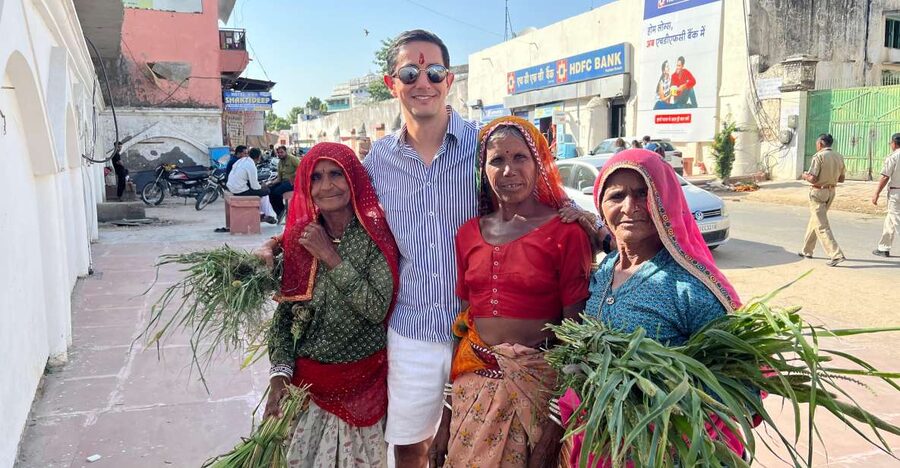
Pushkar is easiest to understand on foot, especially when a local guide connects its temples, ghats, rituals, food, and daily life. This shopping-free walking tour takes you from a Sikh temple to the Brahma Temple and the lake, with a puja ceremony that gives the visit a personal spiritual focus.
I like two things right away: you see a large share of Pushkar’s important sights in only three hours, and the tour does not waste time steering you toward shops. The guide, usually identified as Manish in booking feedback and as Vishwanath Parashar in the company information, also makes room for questions, photographs, and local snacks.
The main consideration is that this is a temple-and-lake walking tour, not a relaxed sightseeing drive. You need comfortable clothes, sandals or slippers, and enough energy for uneven lanes, busy streets, religious spaces, and several hours on your feet.
In This Review
- Key points at a glance
- Why Pushkar makes a good walking tour
- Starting at the Sikh Temple
- Varaha Temple and the older Vishnu shrine
- Jaipur Ghat and the walk around Pushkar Lake
- The Brahma Temple and Pushkar’s spiritual focus
- Brahma Ghat, Gau Ghat, and the puja ceremony
- Local lanes, street food, and a slower look at daily life
- What the guide adds
- How the $6 price compares
- Practical advice before you go
- Who should book the Pushkar Route
- FAQ
- How long does the Pushkar Route walking tour last?
- What language is the tour offered in?
- Is hotel pickup included?
- What food and drinks are included?
- Are temple entry tickets included?
- What should I wear and bring?
- Should you book it?
Key points at a glance
- A no-shopping route: The tour is built around temples, ghats, local lanes, customs, food, and spiritual practice, with no shopping stops.
- The Brahma Temple: Visit one of Pushkar’s most important religious sites and learn why the town is closely linked with Brahma.
- A puja at Pushkar Lake: Take part in a lake ceremony if you wish, with the guide explaining its meaning and proper conduct.
- Fifty-two ghats and local lanes: The route gives you a close look at ritual spaces, architecture, street life, and photography spots.
- Local tastes included: Malpua, a sweet pancake, masala tea, lemon tea, and bottled water are part of the experience.
- Strong value at $6: Temple entry, refreshments, luggage and camera lockers, and hotel pickup and drop-off are included.
Why Pushkar makes a good walking tour
Pushkar is not a place you understand by ticking off one temple and leaving. Its meaning is spread around a lake, through narrow lanes, along ghats, inside shrines, and in the everyday routines of pilgrims, shopkeepers, priests, residents, and visitors.
A guide helps connect those pieces. Without context, you may see painted doorways, temple bells, bathing steps, offerings, and flower sellers without knowing what they mean. With Manish, you can ask direct questions about Hindu gods, rituals, local customs, and the links between different religious communities.
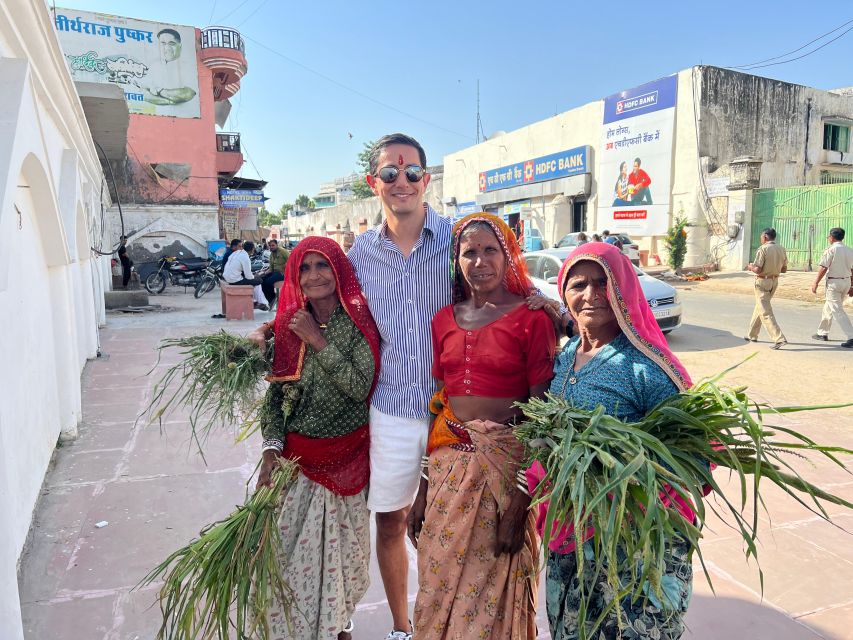
The tour also includes the less polished side of Pushkar. You walk through working lanes and busy public areas rather than viewing the town only from a vehicle. That makes the experience more revealing, but you should expect crowds, noise, uneven pavement, and ordinary street activity.
The tour is advertised at three hours, though the pace can stretch when you stop for photographs, questions, food, or ceremony. One booking party spent around four and a half hours with the guide, so do not schedule a tight onward connection immediately afterward.
More Walking Tours in Pushkar
- Spiritual City Walking Tour-THE Pushkar Route
★ 5.0 · 907 reviews - Afternoon Walk Tour with Sunset & Fire Ritual -The Pushkar Route
★ 5.0 · 119 reviews - Evening Walking Tour with Fire Rituals-The Pushkar Route
★ 4.9 · 108 reviews
Starting at the Sikh Temple
The route begins at a Sikh temple, an unusual and useful starting point for a tour usually associated with Hindu pilgrimage. This gives the guide a chance to explain that Pushkar is not simply a collection of temples for one tradition. It is also a place where several communities and religious practices form part of the town’s identity.
This first stop helps set the tone. You are not just looking at old buildings. You are learning how faith, local customs, and public life overlap in Pushkar.
Wear clothing that is suitable for temples. The practical advice is simple: cover up comfortably, choose sandals or slippers, and avoid bringing a large bag. Temple visits require respect, and the right clothing saves you from having to think about it at every stop.
Varaha Temple and the older Vishnu shrine
The walk continues to Varaha Temple, described as an 11th-century temple. Its importance comes from both its religious connection and its age, giving you a sense of how long Pushkar has functioned as a sacred center.
The older Vishnu Temple adds another layer. It is noted for its architecture, so this is a good place to pay attention to design rather than rushing in, taking one photograph, and moving on. A guide can point out details you might otherwise miss and explain how the building fits into Pushkar’s wider religious setting.
These stops are especially useful if Hindu worship is unfamiliar to you. The tour is designed to explain the relationships among deities, temples, customs, and ceremonies in plain English. That matters because Pushkar can feel confusing at first, even when you are standing in front of something visually impressive.
Do not expect every temple to feel like a museum. These are active religious places. Conditions can be busy and informal, and the experience depends partly on how respectfully you observe what is happening around you.
Jaipur Ghat and the walk around Pushkar Lake
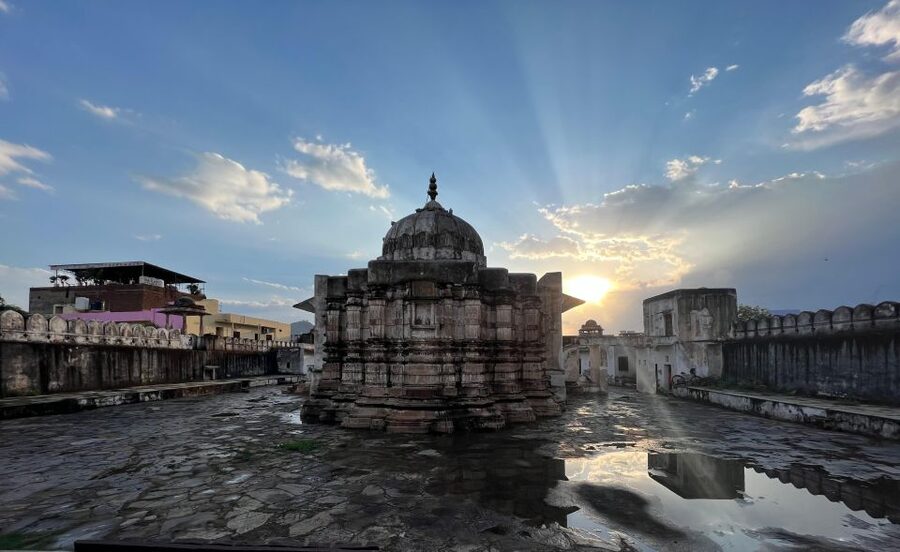
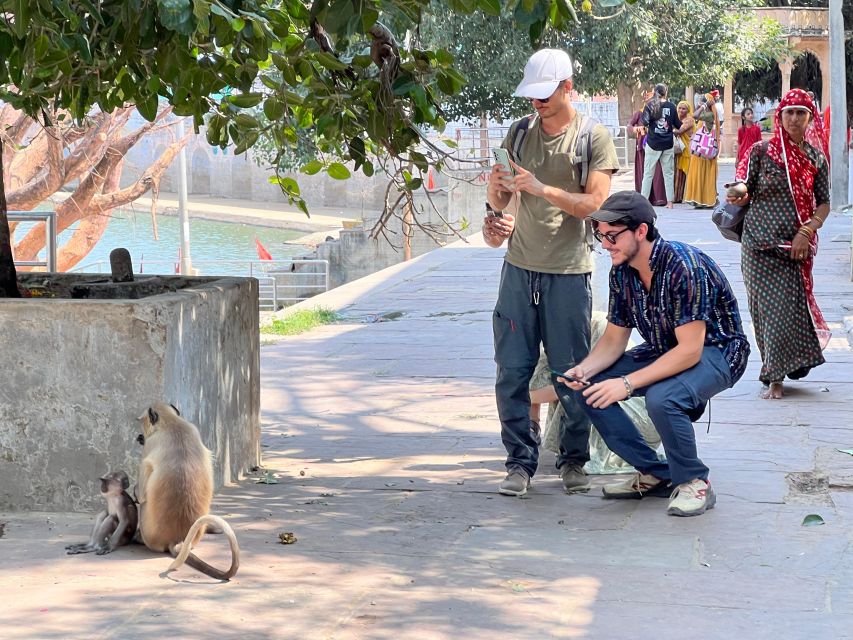
Jaipur Ghat is included as a photography stop. The ghats are the stepped areas along Pushkar Lake, and they are among the best places to see the town’s spiritual life in one view.
The walk around the lake is not just a scenic pause. Ghats are places connected with prayer, offerings, bathing, remembrance, and other rituals. The guide explains how these spaces are used, helping you take photographs without treating a sacred setting as a stage.
A good detail here is the chance to stop for lemon tea with a view of the lake. That small break gives the walking route a human scale. You can sit, look across the water, and absorb the setting instead of hearing one explanation after another.
Photography is welcomed, but sensitivity matters. Ask before photographing people involved in prayer or ceremony, and follow the guide’s lead around ritual activity. One of the tour’s useful strengths is that the pace can adapt to photographs and questions rather than forcing you through every stop.
A completely different kind of day out from Pushkar:
- Walking Sightseeing Tour – The Shine Pushkar
★ 5.0 · 64 reviews - Pushkar Day Trip from Jaipur – Private Car, Safari, Guide & Lunch
★ 4.5 · 45 reviews - Evening Walking tour with Fire Ceremony – The Pushkar Route
★ 5.0 · 35 reviews - From Jaipur : Private Ajmer Pushkar Tour by Cab
★ 4.5 · 29 reviews
The Brahma Temple and Pushkar’s spiritual focus
The Brahma Temple is the central religious stop and one of the main reasons to choose this experience. Pushkar is strongly associated with Brahma, and the temple gives the guide a clear place to explain the town’s spiritual importance.
The visit is more valuable with guidance than it would be as a quick independent stop. Temple customs may not be obvious, and the setting can include people offering blessings or approaching visitors. The guide can help you understand what is happening and avoid confusion.
Several people who took the tour appreciated the help offered at the Brahma Temple, where visitors can encounter aggressive approaches or unclear requests. If you choose to take part in Hindu blessings or offerings, ask questions first and make sure you understand what is being proposed. Participation should feel voluntary, not pressured.
The tour description includes entry tickets to temples and palaces of interest, though the named route focuses mainly on temples and ghats. It also includes lockers for luggage and cameras. That is useful because large bags are not allowed, and carrying bulky belongings through narrow lanes would make the walk less pleasant.
Brahma Ghat, Gau Ghat, and the puja ceremony
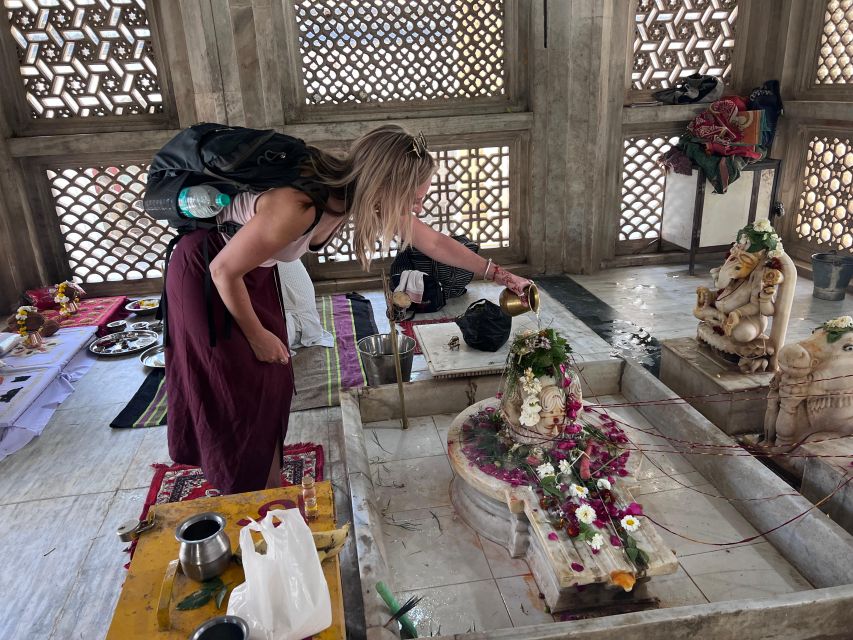
The ceremony at the lake is the emotional center of the experience. At Brahma Ghat and Gau Ghat, the guide explains the role of ritual and may lead you through a puja connected with Pushkar Lake and the Brahma Temple.
You do not need to be a practicing Hindu to find this meaningful. The value comes from being told what the actions represent and being given a respectful way to observe or participate. The ceremony is optional in spirit, and you should feel free to ask for an explanation before joining.
This is also the part that requires the most cultural awareness. Keep your clothing appropriate, listen carefully, and do not treat the ritual as a performance. If you are uncomfortable with participating, you can still learn by watching respectfully.
The ceremony may be particularly worthwhile for someone trying to understand the spiritual side of Pushkar rather than simply collect temple photographs. It gives the town’s religious traditions a direct, personal context. At the same time, this is not a substitute for formal religious instruction. The guide offers practical explanation during a walking visit, not a lengthy theological course.
Local lanes, street food, and a slower look at daily life
Between the main religious stops, you walk through Pushkar’s local lanes and public areas. This is where the tour feels most grounded. You see daily activity close up, pass small streets, and notice how ordinary life continues around sacred places.
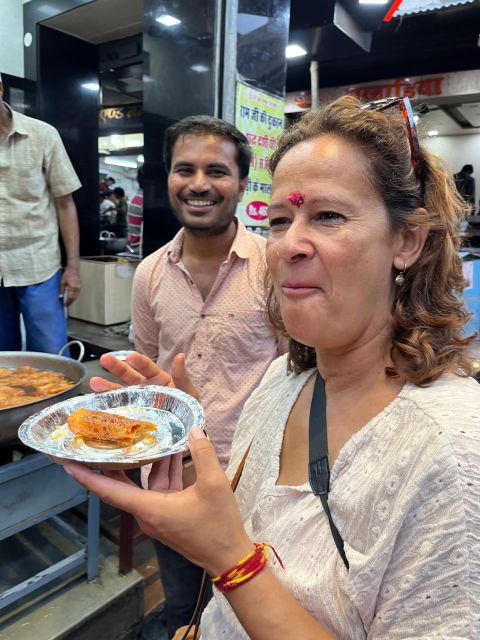
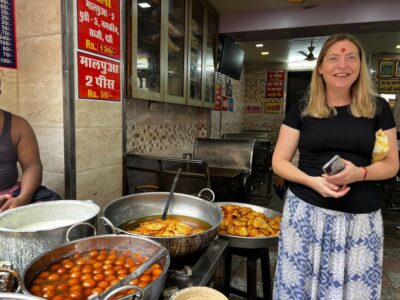
The food stops are modest but well chosen. Malpua is a sweet pancake and a Pushkar favorite, while masala tea offers a familiar Indian refreshment. Lemon tea is served with a lake view, making it one of the nicest pauses on the route.
The food is included, as are water bottles. That makes the $6 price especially strong, though you should not expect a full meal. Think of the snacks as small local tastings that break up the walk and introduce you to everyday flavors.
If food allergies or dietary restrictions matter to you, ask before booking or at the start of the tour. The supplied information does not specify alternatives, ingredients, or a complete food menu.
What the guide adds
The strongest part of this experience is the guide’s teaching style. Manish is repeatedly described as warm, patient, fluent in English, and clear when discussing Hinduism, Pushkar’s customs, temples, and ceremonies. He is also praised for adjusting the pace and allowing time for photographs.
That flexibility matters. A walking tour can become tiring when the guide rushes from one landmark to the next. Here, the route can include extra explanation, photo pauses, help finding the meeting point, and time to try local sweets or tea.
The company information identifies Vishwanath Parashar as the owner and founder of The Pushkar Route, with several years in tourism and hospitality. Booking feedback often names the guide as Manish or Manesh. Because the names do not match perfectly, I would confirm who will lead your particular departure if that matters to you.
The tour is offered in English. The guide’s ability to explain religious ideas in accessible language is important, especially if you have little background in Hindu traditions. You can also ask about Sikh practices, other religions connected with India, and the meaning of specific temple spaces.
How the $6 price compares
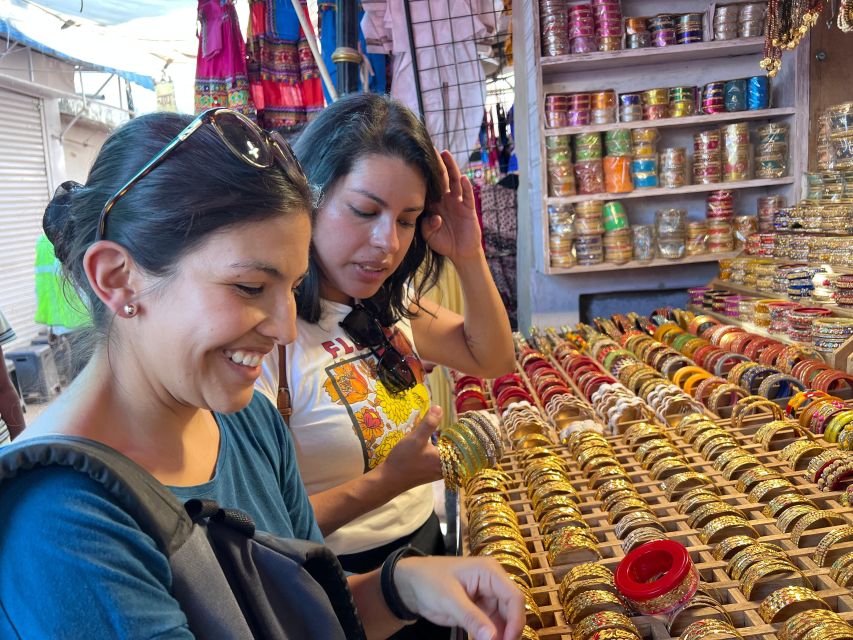
At $6 per person, this is unusually inexpensive for a guided cultural walk. You receive a live English-speaking guide, temple entry tickets, water, malpua, masala tea, and access to luggage and camera lockers. Hotel pickup and drop-off are also listed as included.
The value is not just the number of stops. A low-cost independent visit could still leave you unsure about temple etiquette, ritual meaning, or the significance of the ghats. The guide provides the framework that turns separate sights into a connected visit.
There are limits. This is a short walking tour, so the price does not imply private transport, a full meal, or a long visit inside every temple. The listing does not state the group size, so you should ask if a private experience or a particular group arrangement is important to you.
The company also describes its tours as shopping-free. That is a real advantage if you want your limited time focused on Pushkar’s culture rather than sales stops.
Practical advice before you go
Wear loose, comfortable clothing that works in religious places. Sandals or slippers are recommended, and large bags or oversize luggage are not allowed.
Hotel pickup and drop-off are available. If you do not use pickup, the provider suggests a suitable meeting point before the activity begins. Contact the guide in advance if you are unsure where to go. One solo participant was collected from a hostel after having trouble finding the meeting point, but you should not rely on that as a guaranteed service.
Bring a camera only if you can carry it comfortably and follow local rules. Lockers are provided for luggage and cameras, which is helpful at temple stops.
Plan for more than exactly three hours if you want plenty of photographs or expect a longer conversation. The tour can be completed in three hours, but the flexible style may lead to extra time.
You can cancel up to 24 hours before the activity for a full refund, and reserve now while paying later. Check the available start times before booking, since the schedule is not fixed in the supplied information.
Who should book the Pushkar Route
I would choose this tour if you want cultural explanation, religious context, and a close look at Pushkar’s daily life. It suits first-time visitors, solo visitors who want help finding their way, photographers who appreciate patient stops, and anyone curious about Hindu ceremonies.
It is also a good match for a short stay. In three hours, you cover several important religious sites and get a first orientation to the town. You can then return independently to the places that interest you most.
I would think twice if you dislike walking, active religious settings, local street conditions, or participation in ceremonies. You can observe rather than join the puja, but the spiritual focus is central to the route, not a minor extra.
FAQ
How long does the Pushkar Route walking tour last?
The stated duration is three hours. It may take longer if you spend extra time on photographs, questions, food stops, or the lake ceremony.
What language is the tour offered in?
The tour is offered in English with a live guide.
Is hotel pickup included?
Yes. Hotel pickup and drop-off are listed as included. If you do not use hotel pickup, the provider suggests a meeting point before the tour begins.
What food and drinks are included?
The tour includes Pushkar’s famous pancakes, called malpua, masala tea, lemon tea, and water bottles.
Are temple entry tickets included?
Yes. Entry tickets to the temples and palaces of interest are included in the activity price.
What should I wear and bring?
Wear comfortable clothing suitable for temples, and use sandals or slippers. Oversize luggage is not allowed. Lockers are available for luggage and cameras.
Should you book it?
Book this if you want Pushkar explained, not just photographed. The combination of the Brahma Temple, Varaha Temple, Vishnu architecture, lake ghats, local lanes, snacks, and optional puja offers a lot for $6.
The best reason to go is the guide’s personal explanation of religion and custom, especially at the Brahma Temple and Pushkar Lake. Just arrive dressed respectfully, ready to walk, and open to an active sacred town rather than a polished sightseeing circuit.
Recently added around Pushkar
- Jaipur: Ajmer & Pushkar Day Trip with Lunch & Camel ride★ 4.3 · 3 reviews
- Private Day Trip to Pushkar From Jaipur★ 4.5 · 3 reviews
- Explore Chittorgarh Fort With Udaipur Drop from Pushkar★ 5.0 · 4 reviews
- Rajasthan tours: Luxury and private tour by car with guide.★ 4.8 · 4 reviews
- Food & Culture Walking Tour – The Pushkar Route★ 5.0 · 4 reviews
- Private Day Trip to Holy City of Pushkar from Jaipur★ 5.0 · 4 reviews
- From Jaipur: One-Day Trip From Jaipur to Pushkar★ 3.8 · 4 reviews
- From Jaipur : Ajmer Pushkar Private Tour by Cab with Guide★ 4.0 · 5 reviews
Walking Tours, compared.

Afternoon Walk Tour with Sunset & Fire Ritual -The Pushkar Route
Read our review →
Evening Walking Tour with Fire Rituals-The Pushkar Route
Read our review →Browse the lists this tour appears in