
Reviewed · WALKING TOURS
Walking Sightseeing Tour – The Shine Pushkar
Pushkar’s appeal comes into focus on foot, where a short walk can take you from a holy lake to a Sikh gurdwara, an old Shiva shrine, and one of India’s few major Brahma temples. This private tour with Akash Sharma gives you a local guide for the town’s sacred places, stories, and lanes rather than just a string of photo stops.
I like the small private format, since you can ask questions and set the pace with your own group. I also like the mix of major sights and less familiar temples, especially the chance to compare the Old Rangji and New Rangji temples. The main consideration is time: with nine stops, the tour can feel brisk, and the optional Savitri cable car costs extra.
In This Review
- Key points to know before booking
- Why a walking tour works so well in Pushkar
- Pushkar Lake and its 52 sacred ghats
- The Brahma Temple and Pushkar’s unusual claim to fame
- Gurudwara Sahib and a wider view of faith
- Old Rangji Temple and the puzzle of two similar shrines
- Brahma Ghat and the living ritual of Pushkar
- New Rangji Temple and its golden pillar
- Atamteshwar Mahadev, one of the oldest Shiva temples
- Varaha Temple and the old Varah Ghat
- Savitri Temple and the view above town
- What the $5.58 price really gets you
- Who should book this Pushkar walk?
- Should you book The Shine Pushkar?
- FAQ
- Where does the Walking Sightseeing Tour begin and end?
- How long does the tour last?
- Is this a private tour?
- Is pickup available?
- Is admission included?
- Does the price include the Savitri Temple cable car?
- Is food or drink included?
- Are service animals allowed?
- What is the cancellation policy?
Key points to know before booking
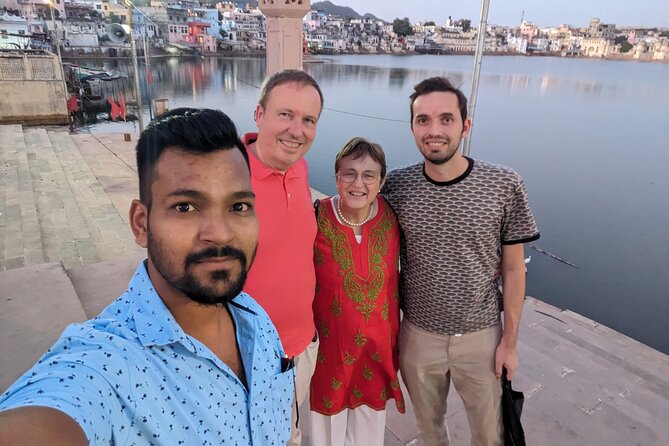
- Pushkar Lake and 52 ghats: Begin with a spiritual walk around the town’s central lake, including the holy bridge and a sunset viewpoint.
- Brahma Temple access: The tour includes temple admission and listed VIP entry, a useful inclusion at one of Pushkar’s most important shrines.
- Private guiding by Akash Sharma: The group stays together, with pickup and return offered at the Pushkar meeting point.
- Nine religious and cultural stops: See Hindu temples, a Sikh gurdwara, sacred bathing ghats, and the old Varah area.
- Optional hilltop views: The Savitri Temple offers a broad view over Pushkar, but the cable car charge is not included.
- Low price, broad coverage: At $5.58 per person, the tour offers strong value if you want orientation and cultural explanation in a short visit.
Why a walking tour works so well in Pushkar
Pushkar is compact enough to explore on foot, yet its religious meaning can be hard to read without help. A ghat may look like a set of steps beside the water, but it is also a place for prayer, ritual bathing, offerings, and evening aarti. A guide helps you understand what you are seeing and how the sites connect.
This tour is built around that kind of context. You are not only taken to the famous Brahma Temple. You also visit several smaller shrines and ghats that give Pushkar a wider religious picture. The result is more useful than a quick temple visit alone, especially if this is your first time in town.
The tour is private, so only your group participates. That matters at religious sites, where you may want to pause, ask about customs, or keep the pace gentle. The advertised duration is about two to four hours, depending on the route and how much time you spend at each place.
The listed stop times add up to about three hours and five minutes, before walking between sites or adding the Savitri hill visit. That puts the experience comfortably inside the stated time range, but you should allow room for pauses and local conditions.
More Walking Tours in Pushkar
- Spiritual City Walking Tour-THE Pushkar Route
★ 5.0 · 907 reviews - Afternoon Walk Tour with Sunset & Fire Ritual -The Pushkar Route
★ 5.0 · 119 reviews - Evening Walking Tour with Fire Rituals-The Pushkar Route
★ 4.9 · 108 reviews
Pushkar Lake and its 52 sacred ghats
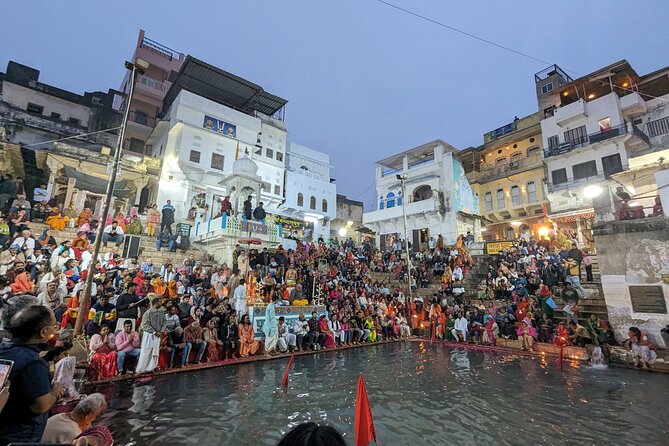
The tour starts at Pushkar Lake, the spiritual center of town. The lake is surrounded by 52 ghats, each with its own religious role and visual character. You get about 20 minutes here, enough for an introduction, a walk near the water, and time at the holy bridge and sunset viewpoint.
This is a good first stop because it gives you the basic setting for Pushkar. Pilgrims come here for holy bathing, prayers, and ceremonies. The lake is not simply a scenic pond, so respectful behavior matters. Dress modestly, keep voices low near ceremonies, and be careful about photographing people engaged in worship.
The lake stop is brief. If you want a long sunset session or extended time watching ceremonies, you may need to return later on your own. Still, the guide’s introduction can help you make sense of the lake before exploring the rest of town.
The Brahma Temple and Pushkar’s unusual claim to fame
Next comes the Brahma Temple, with about 30 minutes scheduled for the visit. Brahma is a major Hindu deity, but temples dedicated to him are uncommon. The guide explains why this shrine is regarded as one of the few important Brahma temples in the world and points out details inside the building.
Admission is listed as included, along with VIP entry. That is a useful feature at a major stop, though entry procedures can still depend on temple rules. Religious sites may restrict shoes, photography, bags, or access to certain areas, so listen carefully to Akash’s instructions.
This is one of the places where the guide’s role matters most. Without context, the temple can become a quick look at a colorful building. With explanation, you get a clearer sense of why Brahma is central to Pushkar’s identity and why this temple draws pilgrims.
Gurudwara Sahib and a wider view of faith
The 30-minute visit to Gurudwara Sahib adds a different religious tradition to the day. This Sikh place of worship gives you a chance to learn about the Sikh community and to compare its customs with the Hindu practices you see around the lake and temples.
Including a Sikh shrine is a thoughtful choice. Pushkar is often presented only through its Hindu temples, but this stop broadens the picture. It also breaks up the temple sequence and gives the walk a more varied rhythm.
As at all religious sites, modest clothing and respectful conduct are important. The tour information confirms that service animals are allowed, but it does not specify individual site rules, so you should still check with the guide before entering each shrine.
A completely different kind of day out from Pushkar:
- Spiritual Walking tour with Puja Ceremony -The Pushkar Route
★ 5.0 · 101 reviews - Pushkar Day Trip from Jaipur – Private Car, Safari, Guide & Lunch
★ 4.5 · 45 reviews - Evening Walking tour with Fire Ceremony – The Pushkar Route
★ 5.0 · 35 reviews - From Jaipur : Private Ajmer Pushkar Tour by Cab
★ 4.5 · 29 reviews
Old Rangji Temple and the puzzle of two similar shrines
Pushkar has both an Old Rangji Temple and a New Rangji Temple. The Old Rangji stop lasts about 25 minutes and focuses on why two temples in town share a similar structure and how their histories differ.
This is the kind of detail that makes a guided walk worthwhile. On your own, you might see two related-looking temples and move on. Akash can explain the connection and point out architectural features that would otherwise be easy to miss.
The word old does not mean the site will provide a long, quiet visit. The tour has several stops, so this is more of an informed introduction than a full architectural study. If temple design is your main interest, ask for extra time here and consider shortening another stop.
Brahma Ghat and the living ritual of Pushkar
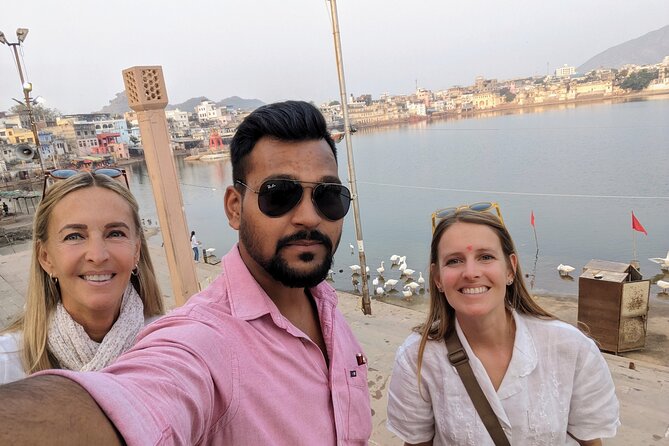
At Brahma Ghat, you spend about 10 minutes. This is one of the places where people take a holy dip, and pilgrims can join the aarti of Shri Pushkar Raj in the morning and evening each day.
The short stop works as a pause between larger temple visits. It also helps you understand that Pushkar’s religious life is active and ongoing. The lake and ghats are not museum displays. People come here to worship, and you are observing a living tradition.
Aarti times can shape the feel of the visit, but the tour details do not promise that your walking time will match a ceremony. If you particularly want to see aarti, ask Akash when booking or at the start of the tour. You may need to return separately at the appropriate morning or evening time.
New Rangji Temple and its golden pillar
The tour then visits Shri Rama Vaikunth Nath Temple, commonly called the New Rangji Temple. It is located on the east side of Pushkar and was built by Marwari merchant Bangarh of Didwana.
You get about 25 minutes to see the temple’s golden pillar and its distinctive structure. This stop pairs naturally with the Old Rangji Temple, since the guide can compare the two instead of treating them as unrelated buildings.
The New Rangji visit is especially useful for anyone interested in how different communities shaped Pushkar’s religious architecture. The tour gives you a quick look at the building and its background, but the pace may not suit someone who wants extended time for close architectural observation.
Atamteshwar Mahadev, one of the oldest Shiva temples
The Atamteshwar Mahadev Mandir receives about 15 minutes. The original temple dates to the period of the Chauhans, while the upper part was built by Guman Ji Rao, a subedar of Ajmer, in 1816.
That layered construction gives the shrine a useful place in Pushkar’s story. You are looking at a temple shaped over different periods, not a single building from one moment. It is dedicated to Lord Shiva and is described as one of the oldest temples in Pushkar.
Fifteen minutes is enough for a concise explanation and a look inside, but not a long meditation or detailed study. The stop is best understood as part of the town’s wider religious network.
Varaha Temple and the old Varah Ghat
The Varaha Temple is near Varah Ghat, described as the oldest ghat in the area. The temple is dedicated to Varaha, an incarnation of the Hindu god Vishnu, and the stop lasts about 15 minutes.
This visit gives you another example of how Pushkar’s temples sit alongside its ghats. The connection between shrine and water is a recurring theme throughout the walk. You see how religious sites are placed within the town rather than isolated from daily life.
The short time here means the guide’s explanation will be central. If you want a slow, reflective visit at every temple, this tour may feel too full. If you want a broad introduction to Pushkar’s sacred places, the variety is a strength.
Savitri Temple and the view above town
The final listed stop is Savitri Temple, on the hill west of Pushkar. Savitri is regarded as Brahma’s wife, and the hilltop gives you a view over the entire town.
This is the tour’s best opportunity for a wide view and a change of scale. After walking through lanes, temple courtyards, and ghats, you can look back over Pushkar from above. The view helps you understand the town’s compact layout and its setting around the lake.
The cable car is optional and costs extra. The supplied details do not state how long this part takes or whether the cable car ride is always added to the walking route, so confirm the plan before booking if the hilltop visit is important to you. The tour includes the religious and town sights, but you should budget separately for the cable car.
What the $5.58 price really gets you
At $5.58 per person, this is an unusually inexpensive private tour. The price includes guide fees, arrival and departure service, listed taxes and fees, admission to Brahma Ghat and Varah Ghat, listed VIP admission to Brahma Temple, and coffee or tea.
The value comes from the range of places covered in a short period. A self-guided walk would cost less in cash, but you would lose the explanations linking the lake, Brahma Temple, Rangji shrines, ghats, and smaller temples. For a first orientation, the guide fee is modest.
The low price does not mean the tour can give every stop unlimited time. You are paying for efficient coverage and local explanation, not a full-day private cultural program. Optional extras such as the Savitri cable car are not part of the price.
The company also offers camel safaris, jeep rides, desert-bike expeditions, gypsy dance, and folk music experiences. These are presented as additional ways to build a personalized Pushkar visit, but the walking tour itself is the part described in detail here.
Who should book this Pushkar walk?
I would choose this tour if you have only a few hours in Pushkar and want a clear introduction before exploring alone. It suits solo visitors, couples, and families who prefer a private guide rather than a large group.
It is also a good fit if you care about religious context. The route includes several Hindu temples, a Sikh gurdwara, and active ghats, giving you more than the standard lake and Brahma Temple combination.
Families should note the moderate physical fitness requirement. The tour involves walking between multiple sites, and the Savitri hill section may add extra effort depending on how you reach it. The information does not give a detailed accessibility plan, so ask before booking if anyone in your group has mobility concerns.
Akash Sharma’s strengths, based on the supplied details, are punctuality, professionalism, hospitality, and strong familiarity with Pushkar. Those qualities matter in a town where the route, temple customs, and local timing can affect the experience.
You can start and finish at the Pushkar meeting point, and pickup is offered. Confirmation arrives when you book. Service animals are allowed, and the tour is near public transportation, though the exact pickup area and transport arrangements should be confirmed directly.
Free cancellation is available up to 24 hours before the local start time for a full refund. Cancellations or changes made inside that 24-hour window are not accepted for a refund.
Should you book The Shine Pushkar?
Book it if you want low-cost private guiding, a wide set of sacred sites, and a practical introduction to Pushkar in two to four hours. The Brahma Temple, lake, ghats, Rangji temples, gurdwara, and smaller shrines make this a fuller route than a simple highlights walk.
Think twice if you want a slow photography tour, long temple visits, or a guaranteed Savitri cable car ride included in the price. For most first-time visitors, though, the combination of breadth, local explanation, pickup, tea, and private format makes the $5.58 price easy to justify. Ask Akash at the start which stops matter most to you, then use the tour as your map for exploring Pushkar at your own pace afterward.
FAQ
Where does the Walking Sightseeing Tour begin and end?
The tour begins in Pushkar, Rajasthan, at the listed meeting point in the 305022 postal area. The activity ends back at the meeting point.
How long does the tour last?
The advertised duration is approximately two to four hours. The listed sightseeing stops total about three hours and five minutes, before time spent walking between locations or adding the optional Savitri visit.
Is this a private tour?
Yes. Only your group participates in the activity.
Is pickup available?
Yes. Pickup is offered, and arrival and departure service are included in the listed inclusions.
Is admission included?
Guide fees, all listed fees and taxes, admission to Brahma Ghat and Varah Ghat, and listed VIP admission to Brahma Temple are included. The Savitri Temple cable car charge is not included.
Does the price include the Savitri Temple cable car?
No. The cable car charge is an additional cost if you choose to use it.
Is food or drink included?
Coffee and/or tea are included.
Are service animals allowed?
Yes. Service animals are allowed.
What is the cancellation policy?
You can cancel at least 24 hours before the experience start time for a full refund. Cancellations or changes made less than 24 hours before the local start time are not accepted for a refund.
Recently added around Pushkar
- Jaipur: Ajmer & Pushkar Day Trip with Lunch & Camel ride★ 4.3 · 3 reviews
- Private Day Trip to Pushkar From Jaipur★ 4.5 · 3 reviews
- Explore Chittorgarh Fort With Udaipur Drop from Pushkar★ 5.0 · 4 reviews
- Rajasthan tours: Luxury and private tour by car with guide.★ 4.8 · 4 reviews
- Food & Culture Walking Tour – The Pushkar Route★ 5.0 · 4 reviews
- Private Day Trip to Holy City of Pushkar from Jaipur★ 5.0 · 4 reviews
- From Jaipur: One-Day Trip From Jaipur to Pushkar★ 3.8 · 4 reviews
- From Jaipur : Ajmer Pushkar Private Tour by Cab with Guide★ 4.0 · 5 reviews
Walking Tours, compared.


Afternoon Walk Tour with Sunset & Fire Ritual -The Pushkar Route
Read our review →
Evening Walking Tour with Fire Rituals-The Pushkar Route
Read our review →Browse the lists this tour appears in