
Reviewed · FOOD & DRINK
Jaipur: Guided History Walking Tour with Food Tasting
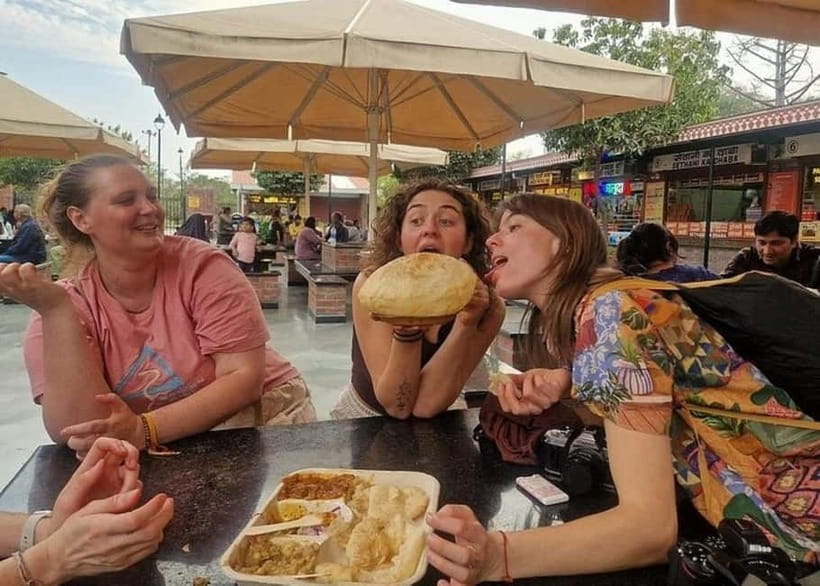
Jaipur’s best introduction may be on foot, with a plate of hot pyaaz kachori in one hand and a local story in the other. This three-hour walk starts at New Gate and threads through old bazaars, temples, traditional houses, food stalls, and the flower market around Choti Chaupar.
I like two things right away: the tour links daily life with royal Jaipur, instead of treating the city as a row of monuments, and the food stops give you a practical way to taste several local specialties without ordering full meals. Guides named Rajesh, Krishna, and Ali Irfan have led this walk, and their approach includes showing artisans at work without pressuring you to buy.
The main drawback is the walking itself. Jaipur can be hot, crowded, and uneven underfoot, and the tour is not suitable for wheelchair users or people with food allergies. You should also come ready for a private walking tour, not a quiet museum visit.
In This Review
- Key points to know before booking
- Why this Jaipur walk works so well
- Starting at New Gate and entering the old city
- Chaura Rasta: tea, street food, and city details
- Badi Chaupar and the first major food tasting
- Tripolia Bazar and the craft side of Jaipur
- Choti Chaupar and the second round of flavors
- The flower market and the walk back to ordinary Jaipur
- The guides and the tone of the experience
- What the $13 price really includes
- Who should book this three-hour experience
- Should you book the Jaipur history and food walk?
- FAQ
- Where does the Jaipur walking tour begin?
- Where does the tour finish?
- How long does the tour last?
- What food is included?
- Is masala chai included?
- Is the tour private?
- Which languages are available?
Key points to know before booking
- New Gate to Choti Chaupar: The route covers Chaura Rasta, Badi Chaupar, Tripolia Bazar, and the flower market.
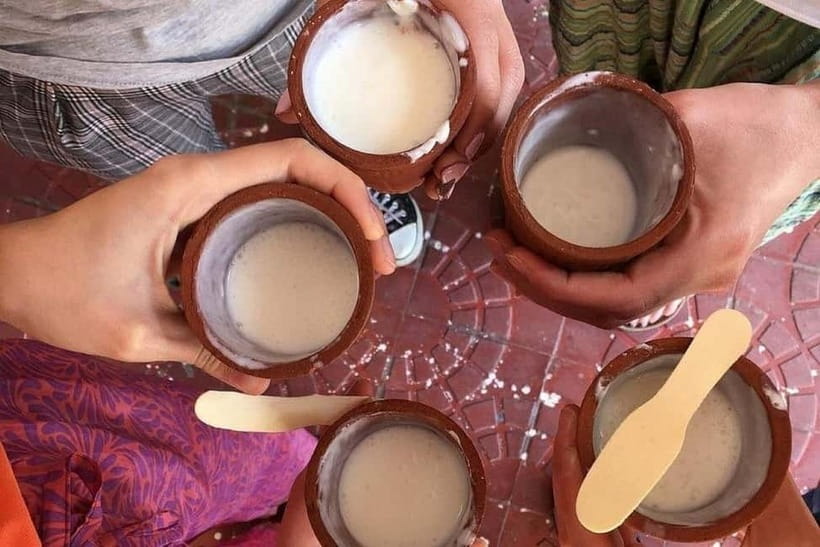
- Several small tastings: Expect pyaaz kachori, aloo tikki or chaat, samosa, mirchi bada, tea or lassi, traditional sweets, and kulfi or another regional dessert.
- Local guides: Rajesh, Krishna, and Ali Irfan are among the guides associated with the experience.
- Culture beyond monuments: You hear about customs, clothing, language, rituals, spiritual beliefs, and Jaipur’s city plan.
- Private three-hour format: The tour is offered for a private group, with guides available in several languages.
- Good value at $13: Food, bottled water, dessert, masala chai, and a guide are included, while personal purchases cost extra.
Why this Jaipur walk works so well
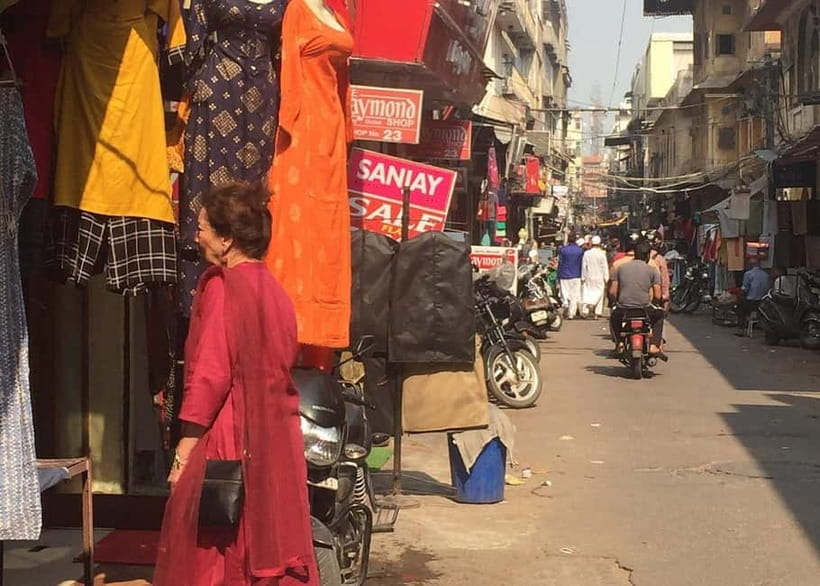
Many first-time visits to Jaipur focus on forts and palaces outside the old center. Those places matter, but they do not show you how the city works at street level. This walk takes you into the Pink City’s older core, where shops, shrines, workshops, homes, markets, and food vendors share the same narrow network of streets.
I like the way the tour combines three subjects that are often split apart: history, architecture, and food. You might hear why a doorway is shaped a certain way, then stop for masala chai, then learn how a local custom fits into everyday life.
The guide is important here. This is not simply a route between food stalls. You are meant to hear stories about royal dynasties, the growth of Jaipur, spiritual beliefs, rituals, attire, and small language details. The best moments will likely come when the guide explains something you would otherwise walk past.
The food also gives the walk a clear rhythm. Instead of spending three hours listening to dates and names, you stop, taste, look around, and move on. At $13 per person, the included samples make the price especially fair, provided you are happy with small portions rather than a full lunch.
More Food Tours in Jaipur
- Jaipur Bazaar & Food Walking Tour
★ 5.0 · 281 reviews - Heritage Walk & Street Food Tasting in Jaipur
★ 5.0 · 158 reviews - Cultural Walk and Food Tasting In Jaipur
★ 5.0 · 118 reviews
Starting at New Gate and entering the old city
The meeting point is New Gate, a useful place to begin because it puts you at the edge of Jaipur’s historic center. From there, the walk heads into the old streets, where the city’s planned character becomes easier to read.
Your guide can point out traditional houses, courtyards, temples, havelis, and architectural details along the way. Some of these features are easy to miss if you are focused only on traffic or shop displays. Ask questions early, especially if you want more attention on architecture, religion, food, or local crafts.
The walk is designed to reveal ordinary spaces, not just grand facades. You may pass old neighborhoods, small shrines, workshop fronts, and lanes where local business continues much as it has for generations. Since the group is private, you have a better chance to shape the conversation than you would on a large group outing.
Bring comfortable shoes. A hat, sunscreen, water, and a camera are also sensible choices. Bottled water is included, but Jaipur’s heat can make a long walk feel harder than its three-hour duration suggests.
Chaura Rasta: tea, street food, and city details
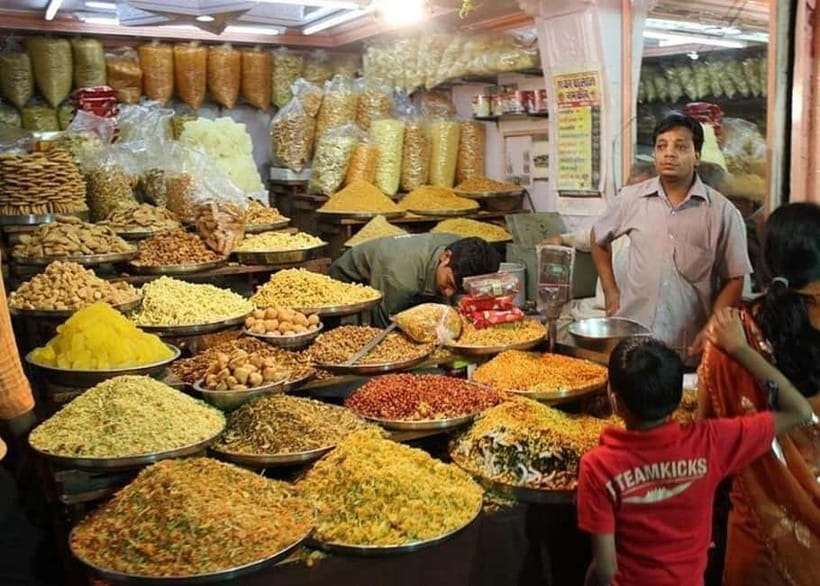
Chaura Rasta brings you into one of the old city’s main commercial corridors. It is a good early stop for getting your bearings, with time for photographs, tea, street food, and commentary from the guide.
The value here is not one single sight. It is the combination of movement and explanation. Shopfronts, signs, passing pedestrians, old buildings, and food stalls become easier to understand when someone explains the customs and history behind them.
This is also where the tour begins to show its food-first character. Masala chai at a local tea shop is included, giving you a warm, spiced pause before the walk continues. If you are sensitive to spice or unfamiliar with Indian street food, tell your guide before tasting. The tour includes several strongly seasoned dishes, and people with food allergies should not book this experience.
Badi Chaupar and the first major food tasting
At Badi Chaupar, the route combines a guided walk with local snacks, regional food, and views along the way. This is one of the more useful parts of the experience because a busy public square lets you see Jaipur as a working city, not a display prepared for tourists.
Expect a food tasting rather than a sit-down meal. Possible items include pyaaz kachori, aloo tikki or chaat, samosa, and mirchi bada. These are familiar names to many visitors, but they are worth tasting in Jaipur because the city has its own versions and habits around them.
Pyaaz kachori is a pastry filled with spiced onion. Aloo tikki is a potato-based snack, while chaat usually combines crisp, sour, sweet, and spicy elements. A samosa needs little introduction, and mirchi bada brings a peppery kick. The exact selection can vary, so do not assume every item will appear in one sitting.
I like this format for first-time visitors. You get several tastes without committing to a large plate of one unfamiliar dish. It also lets the guide explain what you are eating and how the flavors fit into local food culture.
More Walking Tours in Jaipur
- Magical Walk of Jaipur
★ 5.0 · 121 reviews - Jaipur Heritage Walk with Rickshaw Ride
★ 5.0 · 105 reviews - Jaipur Heritage Evening Walk – The Twilight Magic of Pink City
★ 5.0 · 93 reviews - Nahargarh Water Walk – Guided 2-Hour Heritage Tour in Jaipur
★ 5.0 · 89 reviews
Tripolia Bazar and the craft side of Jaipur
Tripolia Bazar is the walk’s main shopping and craft-focused stretch. You stop for photographs and hear more about the old city, while the route passes through shops and traditional working areas.
Depending on the flow of the tour, you might meet potters, jewelers, miniature painters, or spice vendors. The important point is that the tour presents artisans as part of Jaipur’s living economy, not just as a photo opportunity.
A particularly useful detail is the low-pressure approach. One guide, Rajesh, is specifically associated with showing interesting places without forcing purchases. That matters in a market setting, where visitors can feel unsure about whether a stop is a cultural visit or a sales pitch.
You can still buy something if you want, but personal purchases are not included. Keep your wallet separate from the tour price, and treat any shopping as optional. The experience works best when you see the craft process first and decide later if an item genuinely interests you.
Choti Chaupar and the second round of flavors
Choti Chaupar brings another food stop, with street snacks and regional tastes. By this point, the walk has moved from the main opening streets through markets and into a wider view of Jaipur’s customs and neighborhoods.
This is a good place to ask about the difference between a snack and a meal in local routines, or about the spices and sauces used in the dishes you have tasted. The guide can also help you understand unfamiliar food names and suggest how to pace yourself.
Drinks may include lassi or masala chai. Lassi is a yogurt-based drink that can be a cooling change after spicy snacks, while masala chai gives you another chance to try Jaipur’s tea-shop style. Because the tasting menu is not fixed to one published sequence, you should ask the guide what is being served before accepting anything with ingredients that concern you.
The food is one of the tour’s strongest features, but it also creates a practical limitation. If you want a large lunch, this is not the right booking. If you want a broad sample of local specialties at a modest price, it makes good sense.
The flower market and the walk back to ordinary Jaipur

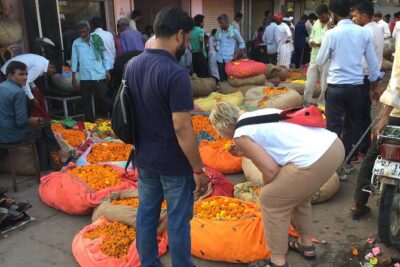
The tour finishes at the flower market near Choti Chaupar. This is a fitting final setting because flowers connect commerce, worship, family rituals, and the look of Jaipur’s religious spaces.
You get a photo stop and more guided commentary here. The market helps show how spiritual beliefs are part of ordinary city life. Flowers are not only decorative goods. They can be tied to temple visits, offerings, ceremonies, and household customs, subjects the guide may explain as you walk.
The ending is practical too. Since you finish at the flower market rather than returning to New Gate, plan your next move from Choti Chaupar. The tour does not include transport, so you will need to arrange your own onward travel.
The guides and the tone of the experience
The guide can make or break a walking tour, and the named guides connected with this experience bring different strengths. Krishna is described as taking particular pleasure in Jaipur’s stories and food, with a friendly, open manner. Ali Irfan is associated with explaining local culture and leading visitors through the city’s lanes. Rajesh is noted for showing interesting places without pushing purchases.
That gives you a useful picture of the expected tone: personal, local, and conversational. The tour is not built around a formal lecture. It depends on a guide who can connect a building, ritual, snack, or workshop to a larger story.
Languages offered include English, Spanish, Russian, German, Japanese, Chinese, and French. Since the tour is private, you may find it easier to ask for explanations at your pace. Still, guide availability can depend on the selected date and language, so check that when booking.
Smoking is not allowed. The walk is also not suitable for wheelchair users, and the food-heavy format makes it unsuitable for people with food allergies. Those are not minor details. Narrow streets, market areas, and varied food ingredients require a reasonable level of mobility and flexibility.
What the $13 price really includes
At $13 per person, this is inexpensive for a private three-hour city walk that includes a guide, bottled water, masala chai, several food tastings, and a traditional dessert. You are not paying only for steps on a map. The guide’s local knowledge is the main product, and the snacks make the experience feel less like a standard sightseeing walk.
Included foods can feature ghewar or rabri, followed by kulfi or another regional dessert. Ghewar is a Rajasthani sweet with a distinctive texture, while rabri is a thick, sweetened milk dessert. Kulfi is a dense frozen dessert, often a pleasant finish after spicy street food.
The price does not cover personal purchases or extra food. That is normal, but keep it in mind if the market stops tempt you. You may want to buy spices, jewelry, crafts, or sweets, but those costs are yours.
For value, this tour is strongest for someone who wants an introduction to Jaipur rather than a detailed visit inside major palaces. It gives you context, food, and contact with working neighborhoods at a price that leaves room in your budget for other sights.
Who should book this three-hour experience
I would choose this walk if you want to understand Jaipur through its streets and food. It suits first-time visitors, curious eaters, photographers, and anyone who prefers small local details to a long list of monuments.
It is also a useful first-day activity because it can help you learn the city’s layout and food vocabulary. Afterward, markets and food stalls may feel less puzzling, and you will have a better sense of which questions to ask on later visits.
You should think twice if you dislike walking, avoid spicy food, have allergies, or want a carefully fixed menu. You should also skip it if shopping pressure is a major concern, although the experience is specifically presented as low-pressure and personal purchases are optional.
Book with comfortable footwear, sun protection, and an appetite for sampling rather than feasting. Three hours passes quickly when the route keeps changing from street scenes to stories to snacks.
Should you book the Jaipur history and food walk?
Yes, if you want a low-cost, private introduction to Jaipur that brings together old streets, local customs, artisans, and food. The strongest reasons are the sensible $13 value, the variety of tastings, the finish at the flower market, and the guides’ focus on stories rather than forced shopping.
I would not book it for a full meal, a wheelchair-accessible route, or an allergy-safe food experience. For most able walkers who want to see the Pink City at street level, this is a practical way to spend three hours and come away with a better feel for how Jaipur lives.
FAQ
Where does the Jaipur walking tour begin?
The tour begins at New Gate.
Where does the tour finish?
It finishes at the flower market near Choti Chaupar.
How long does the tour last?
The walking tour lasts three hours.
What food is included?
Possible tastings include pyaaz kachori, aloo tikki or chaat, samosa, mirchi bada, lassi or masala chai, ghewar or rabri, and kulfi or another regional dessert.
Is masala chai included?
Yes. Masala chai at local tea shops is included, along with bottled water, food tastings, a traditional dessert, and the tour guide.
Is the tour private?
Yes. The experience is offered as a private group tour.
Which languages are available?
Guides are available in English, Spanish, Russian, German, Japanese, Chinese, and French. Availability may depend on the selected tour time.
More History Tours in Jaipur
- Private Full-Day Sightseeing Tour of Jaipur’s Heritage by Car
★ 5.0 · 110 reviews - Jaipur Heritage Walking Tour – Local life, Havelis and Temples
★ 5.0 · 72 reviews - Jaipur@Twilight Guided Heritage City walk tour with Food Tasting
★ 5.0 · 67 reviews - Jaipur: History Street Food Tour with Local Guide
★ 4.4 · 50 reviews
Recently added around Jaipur
- Taj Mahal Entrance Ticket★ 5.0 · 3 reviews
- Jaipur: Ajmer & Pushkar Day Trip with Lunch & Camel ride★ 4.3 · 3 reviews
- Spiritual Private Tour of Vrindavan and Mathura★ 3.0 · 3 reviews
- Agra’s Hidden Gems & Flavors on a Thrilling Tuk-Tuk Tour 3-4 Hrs★ 5.0 · 3 reviews
- Jaipur: City Tour Full-Day Sightseeing with Guide★ 5.0 · 3 reviews
- Shop Agra Like a Local: Unique Indian Handicrafts Tour★ 5.0 · 3 reviews
- Agra: Taj Mahal and Agra Fort Private Guided Half-Day Trip★ 5.0 · 3 reviews
- From Jaipur: Taj Mahal Guided and Agra Tour By Car★ 5.0 · 3 reviews
Food & Drink, compared.

Guided Morning Bicycle Tour with Food Tasting in Jaipur
Read our review →

Street Food Walking Tour, Spice Market, & Tuk-tuk Ride
Read our review →

Jaipur@Twilight Guided Heritage City walk tour with Food Tasting
Read our review →Browse the lists this tour appears in