
Reviewed · WALKING TOURS
Jaipur Night Wonders: A Guided Night Walking Tour
Jaipur changes after sunset. The pink façades glow, traffic takes on a different rhythm, and familiar monuments can look entirely new under floodlights. This two-hour walk moves from Hawa Mahal to Albert Hall Museum, using the city streets to show you Jaipur after the daytime heat has eased.
I like the small group limit of six, which should make it easier to hear the guide and ask questions. I also like the practical extras: tasting portions, bottled water, time for photographs, and a route that mixes famous sights with everyday streets. The main consideration is that this is a walking tour through Jaipur traffic, so you should be comfortable staying alert around vehicles and on busy roads.
In This Review
- Key points to know before booking
- Jaipur after sunset, with the Pink City lit up
- Hawa Mahal to Tripolia Gate
- Isarlat Sargasooli and Jaipur’s evening skyline
- Partanion Ka Rasta at 1673
- Golcha Cinema and the city’s everyday rhythm
- Sawai Man Singh Statue before the final walk
- Finishing at Albert Hall Museum
- What $8 buys you in practical terms
- Who should book this Jaipur night walk
- Should you book Jaipur Night Wonders?
- FAQ
- How long does the Jaipur night walking tour last?
- Where does the tour begin?
- Where does the tour finish?
- What language is the tour conducted in?
- How many people can join the group?
- Are food and drinks included?
Key points to know before booking
- Hawa Mahal start: Meet the Nine Tours guide at this famous pink façade and begin on foot.
- Five short stops: The route gives you about 15 minutes at each listed location, keeping the evening moving.
- Guide Aadi: Aadi is named in the booking feedback as a friendly local guide who adapted the pace to the group.
- Night lighting: Tripolia Gate, Isarlat Sargasooli, and Albert Hall Museum take on a different look after dark.
- Local tastes included: You receive tasting portions and bottled water, while alcoholic drinks are not included.
- Low-cost, flexible booking: The tour costs $8 per person, with free cancellation up to 24 hours ahead and reserve-now, pay-later booking.
Jaipur after sunset, with the Pink City lit up
The strongest reason to book this walk is simple: Jaipur looks different at night. Daytime sightseeing often means bright sun, warm pavement, and a constant stream of activity. After dark, the illuminated façades become the focus. Details that can blur together during a busy afternoon may be easier to appreciate when the buildings are lit against the night sky.
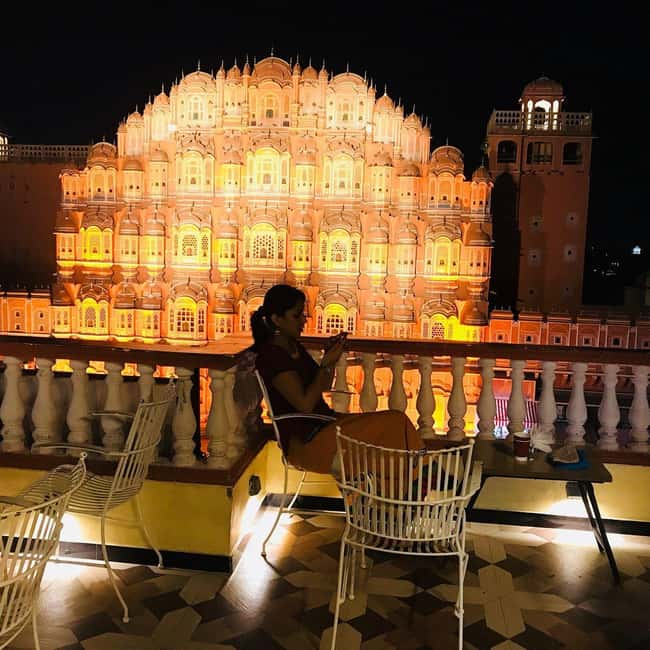
You will begin at Hawa Mahal, one of Jaipur’s most recognizable landmarks. The building is famous for its honeycomb façade and small windows, and it makes a natural meeting point because it is easy to identify. From there, the route heads toward several central sights, ending at Albert Hall Museum.
This is not a long historical lecture inside a monument. It is a moving city walk, with short stops, local explanation, food samples, and time to watch Jaipur carry on around you. That format works well if you want an introduction to the city’s evening mood rather than another formal museum visit.
The group is limited to six participants. That matters on a night walk. You can stay close to the guide, hear the explanation more clearly, and ask for a slower pace or extra information without holding up a large crowd. Aadi is the guide named in the tour feedback, and he reportedly adjusted the timing when the group requested it. That suggests some flexibility, though you should not expect a completely private tour.
More Evening Tours in Jaipur
- Experience Jaipur By Night
★ 5.0 · 215 reviews - Full-Day Jaipur Tour Ending with a Sunset Experience
★ 5.0 · 128 reviews - Jaipur Tuk Tuk Sightseeing Tour with Monkey Temple Sunset View
★ 5.0 · 108 reviews
Hawa Mahal to Tripolia Gate
Hawa Mahal is the right place to begin. Its ornate front is one of Jaipur’s visual calling cards, and seeing it at night gives the tour an immediate sense of occasion. The illuminated stonework draws your eye upward, while the street below keeps the setting grounded in daily city life.
Your guide meets you at the designated point wearing a Nine Tours identification card. That is a useful detail in a city where several tour groups may gather near a major monument. Look for the guide rather than assuming any person offering directions is connected with the tour.
From Hawa Mahal, you walk toward Tripolia Gate. The route itself is part of the point. You are not being carried between isolated attractions in a vehicle. You get to see the transitions between monuments, streets, shops, and traffic, and that gives the evening a more local feel.
Tripolia Gate is scheduled for about 15 minutes. The short stop lets you take photographs and hear the basic story of the gate without turning the walk into a long architectural seminar. At night, the lighting gives the entrance a strong outline, though the exact brightness and street activity can vary.
Keep your attention on the road as you walk. One booking account specifically praised Aadi for leading the group carefully through chaotic traffic. That is important, but it does not mean you can switch off. Stay with the group, follow the guide’s instructions, and wear shoes that feel secure on city streets.
Isarlat Sargasooli and Jaipur’s evening skyline
The next stop is Isarlat Sargasooli, also known as Sargasooli. The itinerary allows around 15 minutes here. Its tall, narrow form gives the route a change of scale after the broad façade of Hawa Mahal and the gateway architecture of Tripolia Gate.
This stop is useful for photography because night lighting can emphasize the tower’s height and outline. You will have adequate time for pictures, but do not expect an extended visit. The walk is designed around several compact stops, so the guide needs to keep the group moving toward the final museum.
The value here is contrast. Jaipur’s night sights are not all grand palaces or broad courtyards. A tall city landmark, a gate, a cinema, a statue, and a museum can each tell a different part of the city’s story. The guide’s role is to connect those pieces and explain what you are seeing in the context of Jaipur after dark.
Because the tour is in English, it suits visitors who want local context without relying only on guidebook captions. The supplied information does not promise interpretation in other languages, so English should be comfortable for you before booking.
Partanion Ka Rasta at 1673
The address 1673, Partanion Ka Rasta is one of the more unusual entries on the route. It does not have the instant name recognition of Hawa Mahal or Albert Hall Museum, and that is part of its appeal. You get a look at a less obvious section of Jaipur rather than spending the entire evening at the city’s best-known monuments.
The stop lasts roughly 15 minutes. You may find this is where the walk feels most like a street-level introduction to Jaipur. The route description places markets and lit streets at the heart of the evening, so this part helps shift the focus from landmark viewing to the city’s working public spaces.
Food tastings are included during the tour. The available information does not specify each dish or drink, so you should treat them as tasting portions rather than a full dinner. That makes sense for a walking route. You can sample local and street delicacies without needing to stop for a long restaurant meal.
Special dietary needs are included in the tour details. It is still wise to tell the provider about your needs in advance, since the information does not list the specific dietary options or guarantee a particular menu. Bottled water is provided, which is a small but helpful addition during an evening spent on foot.
More Walking Tours in Jaipur
- Jaipur Bazaar & Food Walking Tour
★ 5.0 · 281 reviews - Heritage Walk & Street Food Tasting in Jaipur
★ 5.0 · 158 reviews - Magical Walk of Jaipur
★ 5.0 · 121 reviews - Cultural Walk and Food Tasting In Jaipur
★ 5.0 · 118 reviews
Golcha Cinema and the city’s everyday rhythm
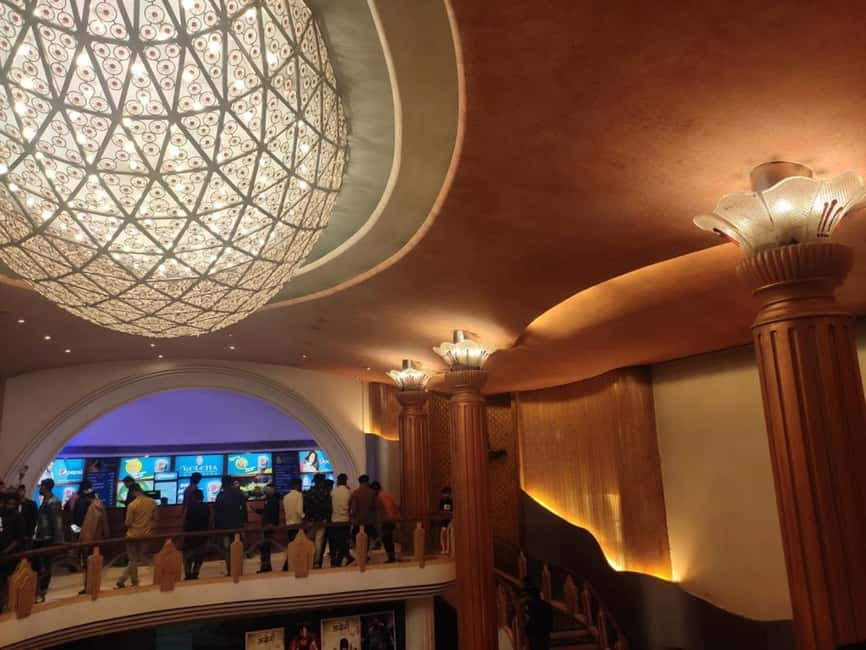
Golcha Cinema adds a more everyday urban note to the route. A cinema is not the sort of sight most visitors would put at the top of a Jaipur checklist, but that is precisely why it can make a walking tour feel less polished and more connected to local life.
You are scheduled to spend about 15 minutes here. The stop gives the guide a chance to discuss the area and its evening character, while you take in the lights and movement around the cinema. The exact level of activity can change from one night to the next, so consider this a street scene rather than a guaranteed show or performance.
This is also a good point to remember what the tour does not include. Alcoholic drinks are excluded, and the tour is not built around nightlife venues or a pub crawl. Its idea of nightlife is the open city: illuminated buildings, public streets, local snacks, and people moving through the evening.
That makes the tour a better fit for you if you want cultural sightseeing after dark. If you are looking for clubs, bars, or a late meal, this is not the right product.
Sawai Man Singh Statue before the final walk
The Sawai Man Singh Statue is another short stop, with about 15 minutes set aside. Like the other locations, it gives the route a clear pause without breaking the walking rhythm.
The statue provides a chance to hear more about Jaipur’s royal and civic identity through a public monument. The supplied details do not spell out the exact interpretation, so the depth of the explanation will depend on the guide and your questions. In a small group, you have a better chance to ask about the figure, the setting, and how the site fits into Jaipur’s story.
By this stage, the route has moved through several types of place: a famous façade, a historic gate, a tall landmark, a local street, a cinema, and a statue. That variety is one of the tour’s practical strengths. You are not simply checking off five similar monuments.
The tradeoff is time. With five listed stops at about 15 minutes each, much of the two-hour tour is divided into short sections. You get breadth rather than a long, detailed visit at any one site. I would choose this walk as an orientation tour, then return independently to any location that catches your interest.
Finishing at Albert Hall Museum
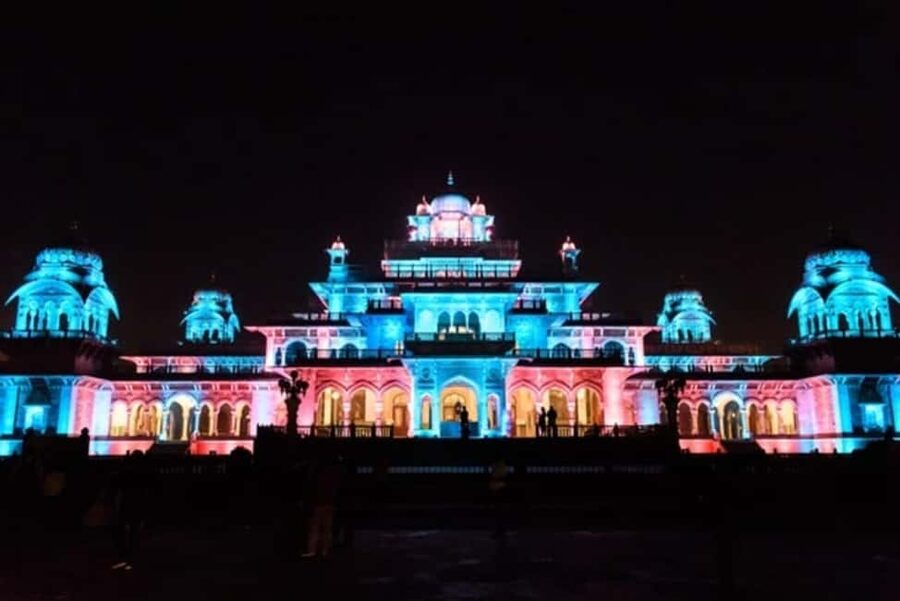
The tour finishes at Albert Hall Museum, one of Jaipur’s most striking buildings. Its exterior is especially effective at night, when the lighting brings out the arches, domes, and detailed Indo-Saracenic design.
Ending here gives the walk a strong visual finish. You begin with Hawa Mahal, the image most associated with Jaipur, and close with another major architectural landmark. The route does not include an indoor museum visit, so you should think of Albert Hall as the final exterior sight and meeting point rather than a museum admission experience.
The ending location is also useful for planning the rest of your evening. The tour itself does not include hotel pickup or drop-off, so you will need to arrange your own onward travel. The supplied information does not provide a transfer service or a specific return route, so check your plans before setting out.
The final stop is meant to leave you with photographs and a broader sense of Jaipur at night. You will have seen the city through monuments, streets, food, and traffic rather than through a single enclosed attraction.
What $8 buys you in practical terms
At $8 per person, this is a low-cost way to add an evening activity to a Jaipur stay. The price includes a two-hour guided walk, tasting portions, bottled water, photography time, and the guide’s local commentary. For a small group capped at six, that is good value if you want a structured introduction to central Jaipur after dark.
The price does not include hotel transportation or alcoholic drinks. You should also allow for your own costs after the tour, especially if you want a larger meal or transport back to your accommodation.
I see the strongest value in the combination of small-group guidance and local food samples. A cheap walk can feel thin if it only points at buildings. Here, you get a route with several stops, explanations from an English-speaking guide, and a few tastes that help connect the sights with daily life.
The two-hour length is another advantage. It is long enough to make the evening feel worthwhile but short enough to fit around dinner or other plans. Since start times depend on availability, check the schedule before booking.
The free cancellation policy allows you to cancel up to 24 hours in advance for a full refund. You can also reserve now and pay later, which helps if your Jaipur plans are still shifting. These policies do not change the nature of the walk, but they reduce the risk of committing too early.
Who should book this Jaipur night walk
I would recommend this tour to first-time Jaipur visitors who want an easy introduction to the city after dark. It is also useful if you have already seen the major monuments in daylight and want to compare their nighttime appearance.
The walk should suit you if:
- You prefer a small group over a large guided crowd.
- You want an English-speaking guide and local explanations.
- You enjoy street scenes, architecture, and short photo stops.
- You like sampling food but do not need a full evening meal included.
- You want a budget-friendly activity lasting two hours.
- You are comfortable walking beside active city traffic.
I would be more cautious if you have limited walking ability, need hotel transportation, or want long visits inside monuments. The tour provides time at each stop, but the schedule favors movement and variety. It also does not promise a specific dish list, a private guide, or a nightlife program with bars and entertainment.
Wear comfortable shoes and keep your belongings secure. Follow the guide closely when crossing or walking through traffic. Aadi’s careful handling of the roads was specifically praised, but city traffic remains part of the setting, not something the tour can remove.
Should you book Jaipur Night Wonders?
Book it if you want to see Jaipur’s famous buildings under lights, taste a few local treats, and hear the city explained by a local guide without spending much. The route has enough variety to avoid feeling like a simple monument checklist, and the group size gives the evening a more personal feel.
Skip it if your main goal is a full meal, nightlife venues, indoor monument visits, or private transportation. For everyone else, this $8 walk is a sensible evening add-on, especially near the start of a Jaipur visit when you want to get your bearings quickly.
FAQ
How long does the Jaipur night walking tour last?
The tour lasts two hours.
Where does the tour begin?
The tour begins at Hawa Mahal.
Where does the tour finish?
The tour finishes at Albert Hall Museum.
What language is the tour conducted in?
The live tour guide conducts the tour in English.
How many people can join the group?
The group is limited to six participants.
Are food and drinks included?
Tasting portions and bottled water are included. Alcoholic beverages are not included.
Recently added around Jaipur
- Taj Mahal Entrance Ticket★ 5.0 · 3 reviews
- Jaipur: Ajmer & Pushkar Day Trip with Lunch & Camel ride★ 4.3 · 3 reviews
- Spiritual Private Tour of Vrindavan and Mathura★ 3.0 · 3 reviews
- Agra’s Hidden Gems & Flavors on a Thrilling Tuk-Tuk Tour 3-4 Hrs★ 5.0 · 3 reviews
- Jaipur: City Tour Full-Day Sightseeing with Guide★ 5.0 · 3 reviews
- Shop Agra Like a Local: Unique Indian Handicrafts Tour★ 5.0 · 3 reviews
- Agra: Taj Mahal and Agra Fort Private Guided Half-Day Trip★ 5.0 · 3 reviews
- From Jaipur: Taj Mahal Guided and Agra Tour By Car★ 5.0 · 3 reviews
Walking Tours, compared.

Afternoon Walk Tour with Sunset & Fire Ritual -The Pushkar Route
Read our review →
Evening Walking Tour with Fire Rituals-The Pushkar Route
Read our review →Browse the lists this tour appears in