

Reviewed · WORKSHOPS
Private Natural Dye and Block Print Workshop with Lunch
The most appealing part of this Jaipur workshop is that you do not just look at finished cloth. You work with natural colors made from kitchen and local waste, then use them in dyeing, Shibori tie dye, and block printing. It is a practical look at how textile choices affect the environment.
I like the generous take-home package, especially the organic cotton garment and four 50-gram dye packs. I also like the private format, since your group can work at its own pace with Sidhant, Vaibhav, and the Dye It Yourself team. The main consideration is the price: at $190 per person, this is best for people who want a serious craft session rather than a quick Jaipur activity.
In This Review
- Key points to know before booking
- Why this workshop is different from a standard Jaipur craft stop
- Starting near Kokawas, outside central Jaipur
- The natural dye session: color starts with simple materials
- Shibori tie dye: controlled folds and marks
- Block printing adds the Jaipur connection
- Lunch, tea, and a welcome pause
- What you take home
- Is $190 per person a fair price?
- Who will enjoy it most
- Booking, cancellations, and weather
- Should you book Dye It Yourself?
- FAQ
- Where does the workshop take place?
- How long does the experience last?
- What time does the workshop operate?
- What techniques will I learn?
- Is lunch included?
- What can I take home?
- Can I bring my own fabric or clothing?
- Is transportation included?
- What is the cancellation policy?
Key points to know before booking
- Three textile skills in one session: Learn natural dyeing, Shibori tie dye, and block printing during the same workshop.
- Colors from everyday materials: The process explores yellows, orange, brown, pink, blue, red, and green from natural sources, including kitchen waste.
- A useful take-home bundle: You receive an organic cotton garment, bag, and four 50-gram natural dye packs.
- Private group setting: Only your party takes part, with hands-on help from the workshop team.
- Lunch is part of the day: A vegetarian thali, tea, cookies, and bottled water are included.
- Plan your clothing wisely: Wear comfortable shoes, and expect to leave with a few colorful marks on you.
Why this workshop is different from a standard Jaipur craft stop
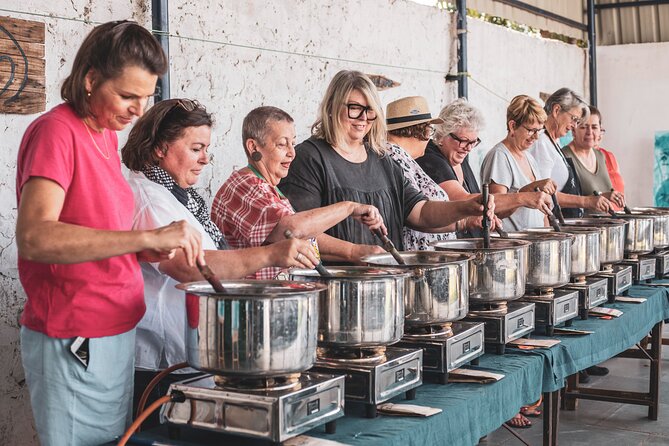
Jaipur has no shortage of textile shops and block-print displays. Those visits can show you beautiful fabric, but they often leave you on the outside of the process. Dye It Yourself puts you at the worktable, where the color is extracted, the cloth is prepared, and the pattern takes shape under your own hands.
The workshop is built around sustainability. Its central point is simple: chemical dyes are a major source of textile pollution, so learning about natural alternatives can change the way you shop for fabric. You are not only making a scarf or cushion cover. You are also being asked to think about what went into the color on a garment before it reached a store.
That gives the session more weight than a basic souvenir activity. You get an introduction to traditional methods, but the presentation is designed for modern use. You can take the ideas home and test them on fabric or old clothing of your own.
The private setup matters here. Dyeing can be messy, and every participant may need help at a different stage. Since only your group takes part, you have a more direct connection with the instructors than you would in a large class. The team includes Sidhant and Vaibhav, along with staff whose families have practiced these textile arts for generations.
A few more Jaipur tours worth weighing up
- From Jaipur: Private Taj Mahal & Agra Day Trip with 5* Lunch
★ 4.9 · 161 reviews - Taj Mahal & Agra Fort Private Tour with Lunch & Pickup
★ 4.9 · 69 reviews - Pushkar Day Trip from Jaipur – Private Car, Safari, Guide & Lunch
★ 4.5 · 45 reviews
Starting near Kokawas, outside central Jaipur
The meeting point is at QQ7J+M27 Kokawas, Rajasthan. The activity begins and ends at that same point, and private transportation is not included. You will need to arrange your own way there and back, so check the route and allow enough time before booking.
This is an important practical difference from many central Jaipur sightseeing activities. The workshop is not presented as a hotel pickup experience, and the transport gap can affect the total cost of your day. If you are traveling with a group, sharing a ride may make the visit easier to manage.
The scheduled operating hours are 10:00 a.m. to 5:00 p.m., Monday through Sunday. The workshop itself lasts about five and a half hours, so you should expect most of the day to be taken up by the activity, lunch, and drying or handling time connected with the textile work.
Wear shoes that remain comfortable for several hours. The organizers specifically warn that parts of the session can become tiring. Clothes that you do not mind marking with dye are also a sensible choice, since the aim is to work directly with color, not simply watch a demonstration.
The natural dye session: color starts with simple materials
The first part introduces the history and basic principles of natural dyeing. You learn that color can come from sources around you, including waste from the kitchen and nearby surroundings. The workshop explores ways to draw out yellow, orange, brown, pink, blue, red, and green shades.
This is where the environmental lesson becomes practical. You see that natural dyeing is not just a fashionable label. It depends on preparation, extraction, and careful handling of materials. The exact colors you produce can vary, which is part of the appeal and also one reason natural dyeing requires patience.
You should expect to take part rather than sit through a long talk. The stated format is hands-on, and the instructors explain the process while allowing you to try each stage yourself. That approach works well for beginners because you can ask questions as soon as something seems unclear.
It also suits people who already work with textiles. One participant with a professional background in the textile industry found that the course added to existing knowledge and strengthened an interest in natural dyes. You do not need that background to take part, but experienced makers may find the environmental and technical discussion worthwhile.
The subject can be more complicated than the finished product suggests. Natural color is affected by the source material and the method used to extract it. The workshop gives you an introduction rather than a full professional qualification, so anyone hoping to master large-scale dye production should treat this as a starting point.
Shibori tie dye: controlled folds and marks
The second segment covers Shibori, a tie-dye method that creates patterns through folding, tying, and resistance. You work with the cloth so that some areas take the dye while others remain lighter. This produces designs that feel personal because small changes in folding or pressure affect the final result.
Shibori is a good bridge between the science of dyeing and the pleasure of making. You have already learned where the color comes from, and now you see how the cloth responds to it. The process rewards care, but it does not require you to draw a perfect pattern by hand.
The hands-on format is especially useful here. A demonstration alone might make Shibori look simple, but the fabric can behave differently once you begin folding it yourself. Direct help from the team lets you understand the technique instead of guessing from a finished example.
The workshop provides materials for one organic cotton garment to take home. You can choose from a scarf, dress, shorts, placemat, or cushion cover. The range gives you a choice between something to wear and something for the home, though the available selection may affect what kind of project you prefer.
You may also bring your own fabric or garments to dye. That is one of the more useful features for anyone who wants to refresh something already in a wardrobe. Bring only pieces you are prepared to experiment with, since natural dyeing can produce results that are not fully predictable.
More workshops in Jaipur:
- Pink City Cooking Class
★ 5.0 · 452 reviews - Jaipur Market Tour & Vegetarian Rajasthani Home Cooking Class
★ 5.0 · 113 reviews - Cooking Class in Jaipur – Family Experience with Meal & Transport
★ 5.0 · 101 reviews - Interactive Cooking Class with a Local Family in Jaipur
★ 5.0 · 90 reviews
Block printing adds the Jaipur connection
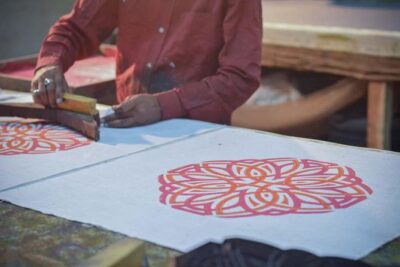
The third segment is block printing, one of the textile traditions most closely linked with Rajasthan. You learn the basics of applying carved blocks and working with natural colors to build a design on cloth.
This part gives the workshop a strong local connection. Rather than treating Jaipur’s textile culture as something to buy in a shop, you get a chance to understand the repeated movement and care behind printed fabric. The process also shows why small shifts in pressure or placement can change the finished pattern.
Block printing is likely to appeal to you if you enjoy clear, physical tasks. The method has a rhythm, but it still asks for attention. You need to handle the block, apply color, and place it with enough care to create a repeat.
The three sections work well together because each one answers a different question. Natural dyeing asks where the color comes from. Shibori asks how cloth can resist and accept color. Block printing asks how a design can be built across a surface.
You leave with a better sense of the labor behind a printed textile. That does not turn you into a professional printer in one afternoon, but it can make you more selective when buying fabric later.
Lunch, tea, and a welcome pause
Lunch is a vegetarian thali with three vegetables, chapati, rice, curd, and a sweet. Indian tea and cookies are also included, along with bottled water.
This is more than a minor extra on a five-and-a-half-hour activity. Textile work can take concentration, and a proper meal gives you a break before returning to the cloth. The thali format also keeps the meal straightforward, with several familiar Indian dishes served together.
The food is included in the listed price, so you do not need to budget separately for lunch at the workshop. If you have dietary questions, it is sensible to ask at booking, since the supplied information confirms that the meal is vegetarian but does not give more detail about allergies or substitutions.
What you take home
The take-home package is one of the strongest parts of the value. Every participant receives an organic cotton garment, an organic cotton bag, and four natural dye packs weighing 50 grams each.
The garment choice gives you a practical result from the session. You can select a scarf, dress, shorts, placemat, or cushion cover, then use the methods learned during the workshop to create something with a personal connection to the day.
The dye packs extend the experience beyond Jaipur. They give you material for further experiments at home, although you will need to supply any extra fabric and follow whatever handling guidance the workshop provides.
The cotton bag is useful in its own right, and it also fits the wider message of the activity. You are not simply collecting a decorative souvenir. You are leaving with items connected to natural materials, reuse, and more thoughtful textile buying.
If you plan to bring additional clothing, consider what will fit comfortably into the time available. The workshop says you may bring as much fabric or as many garments as you want, but the actual amount you can complete will depend on the pieces and the pace of your group.
Is $190 per person a fair price?
At $190 per person, this is not a bargain craft class. It becomes easier to justify when you count the private format, roughly five and a half hours of instruction, lunch, snacks, bottled water, the organic cotton garment, the bag, and four dye packs.
The price also covers access to a specialized subject. You are learning several processes from a team connected with textile practice, not just spending an hour applying a preselected pattern to a ready-made souvenir.
Still, value depends on your interests. If you want a low-cost introduction to Jaipur or only have a short gap between sightseeing stops, the price and duration may be too much. If you care about textiles, sustainable production, or hands-on making, the workshop offers a fuller experience than a brief demonstration.
Group discounts are available, which can improve the cost for a larger private party. Since transport is not included, add your own travel expense when comparing this with other Jaipur activities.
Who will enjoy it most
I would choose this for people who want to make something, not simply photograph it. It suits couples, families, friends, textile students, designers, and anyone curious about how natural color changes fabric.
It is also a strong choice for a private group with mixed experience levels. Beginners can ask basic questions, while people who already sew, print, or work with fabric can focus on the environmental and technical side.
Most people can participate, and service animals are allowed. The activity is private, which means your group does not have to share the session with strangers.
The main mismatch would be for anyone who dislikes mess, prefers a tightly timed sightseeing schedule, or wants a polished finished product with no uncertainty. Natural dyeing and hand printing involve process and variation. That is the point, but it may not suit every personality.
Booking, cancellations, and weather
Confirmation is provided when you book. You can cancel for a full refund up to 24 hours before the experience starts. Cancellations or changes made less than 24 hours ahead are not accepted for a refund.
The cut-off follows local time in India. The workshop also requires good weather. If poor weather causes a cancellation, you will be offered another date or a full refund.
Since the activity begins and ends at the meeting point, check your transport plan before the day. The workshop runs daily from 10:00 a.m. to 5:00 p.m., but the listed experience duration is about five and a half hours.
Should you book Dye It Yourself?
Book it if you want a substantial, private textile session with real making time, a vegetarian lunch, and useful items to take home. The mix of natural dyeing, Shibori, and block printing gives you three related skills in one day, while the sustainability focus adds a clear reason for the work.
I especially like that you can bring your own fabric and continue experimenting with the four dye packs afterward. The warm, hands-on teaching style associated with Sidhant, Vaibhav, and the wider team also makes this a good fit if you want to ask plenty of questions.
Skip it if $190 feels high for a craft activity, if you have limited time in Jaipur, or if arranging your own transport is inconvenient. For anyone with a real interest in fabric and responsible production, though, this is a thoughtful way to spend much of a day outside the usual sightseeing circuit.
FAQ
Where does the workshop take place?
The meeting point is QQ7J+M27 Kokawas, Rajasthan, India. The activity ends back at the same meeting point.
How long does the experience last?
The workshop lasts approximately 5 hours and 30 minutes.
What time does the workshop operate?
It is available Monday through Sunday between 10:00 a.m. and 5:00 p.m.
What techniques will I learn?
The workshop covers natural dyeing, Shibori tie dye, and block printing.
Is lunch included?
Yes. Lunch is a vegetarian thali with three vegetables, chapati, rice, curd, and a sweet. Indian tea, cookies, and bottled water are also included.
What can I take home?
You receive four 50-gram natural dye packs, one organic cotton garment, and one organic cotton bag. The garment options include a scarf, dress, shorts, placemat, or cushion cover.
Can I bring my own fabric or clothing?
Yes. You may bring as much fabric or as many garments as you want to dye during the workshop.
Is transportation included?
No. Private transportation is not included, and you must arrange your own travel to and from the meeting point.
What is the cancellation policy?
You can cancel at least 24 hours before the start time for a full refund. Changes or cancellations made less than 24 hours before the experience are not accepted for a refund. If poor weather forces a cancellation, you will be offered another date or a full refund.
Recently added around Jaipur
- Taj Mahal Entrance Ticket★ 5.0 · 3 reviews
- Agra’s Hidden Gems & Flavors on a Thrilling Tuk-Tuk Tour 3-4 Hrs★ 5.0 · 3 reviews
- Jaipur: Ajmer & Pushkar Day Trip with Lunch & Camel ride★ 4.3 · 3 reviews
- Spiritual Private Tour of Vrindavan and Mathura★ 3.0 · 3 reviews
- Jaipur: City Tour Full-Day Sightseeing with Guide★ 5.0 · 3 reviews
- Shop Agra Like a Local: Unique Indian Handicrafts Tour★ 5.0 · 3 reviews
- Agra: Taj Mahal and Agra Fort Private Guided Half-Day Trip★ 5.0 · 3 reviews
- From Jaipur: Taj Mahal Guided and Agra Tour By Car★ 5.0 · 3 reviews
Workshops, compared.
Jaipur Market Tour & Vegetarian Rajasthani Home Cooking Class
Read our review →
Cooking Class in Jaipur – Family Experience with Meal & Transport
Read our review →
Interactive Cooking Class with a Local Family in Jaipur
Read our review →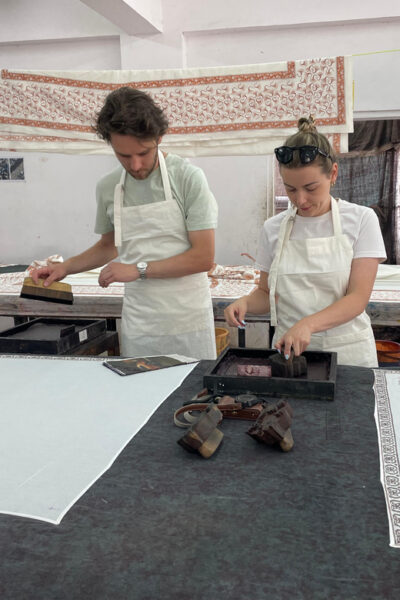
Browse the lists this tour appears in