
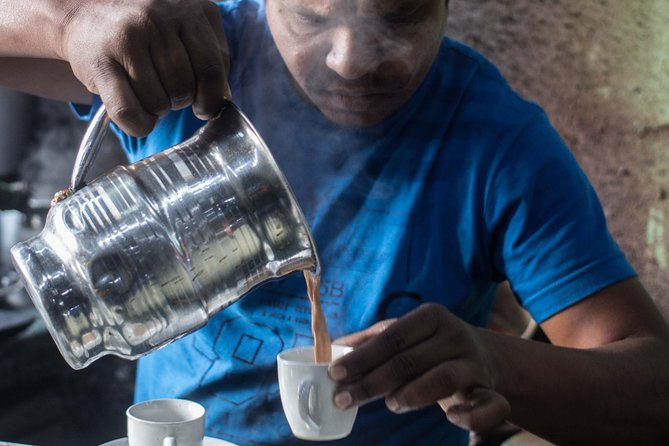
Reviewed · FOOD & DRINK
Story of Spices- A Food Tour of Agra
Agra’s old city tells its story through food. On this three-hour evening walk, you move from century-old spice shops and satvik Braj dishes to Mughlai meat, lassi, sweets, and a live flute performance on a 17th-century pathway. The food is the hook, but the real subject is how communities, courts, markets, and generations shaped Agra’s cooking.
I like two things here. First, the route takes you well beyond the Taj, into the lanes around Kinari Bazar, Rawatpada, Hing ki Mandi, and the old shopping streets. Second, guides such as Kaleem, Khaleem, and Tahir bring in poetry, music, and stories about Akbar’s kitchens instead of treating each snack as just another sample. The main consideration is physical comfort: this is a walking tour through narrow lanes, and a moderate fitness level is required.
In This Review
- Key points to know before you book
- Agra on a plate, from satvik food to Mughlai meat
- Starting with 170-year-old Braj food
- Spice talk in a 16th-century market
- Pakoda, falafel, and old family sweets
- A three-generation soda shop
- Music and Mughal-era culinary culture
- Mughlai cooking at a local meat shop
- Finishing with lassi
- What the private format adds
- Is $41.70 a fair price?
- Timing, walking, and practical comfort
- Who will enjoy this Agra food walk?
- Should you book Story of Spices?
- FAQ
- Where does the Story of Spices tour begin?
- What time does the tour start?
- How long does the food tour last?
- Where does the tour end?
- Is this a private tour?
- What foods are included?
- Does the tour include vegetarian food?
- Is a mobile ticket available?
- What is the cancellation policy?
Key points to know before you book
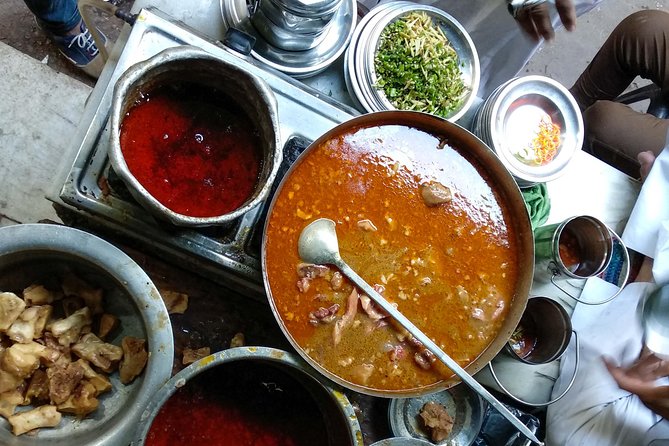
- More than a snack crawl: The tour connects food with Agra’s religious traditions, Mughal feast culture, trade routes, and neighborhood life.
- A private experience: Only your group takes part, allowing the guide to shape the conversation around your interests.
- A broad tasting menu: Expect Braj food, pakoda or falafel, indigenous sweets, soda, Mughlai meat, and lassi.
- An old-city route: You walk through a 16th-century market and shopping street linked to the former silk route.
- Culture beyond food: A live flute performance adds music and helps explain how culinary arts grew during the Mughal period.
- Best timing: The tour starts at 4:00 pm and returns to the same meeting point, making it a useful evening activity in Agra.
Agra on a plate, from satvik food to Mughlai meat
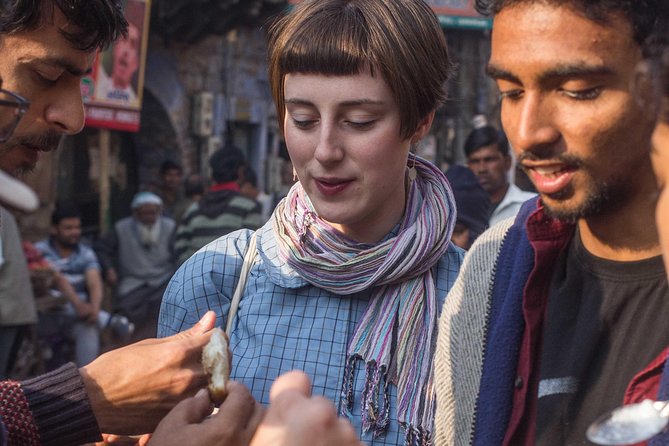
The clever idea behind Story of Spices is that Agra’s food cannot be reduced to one cuisine. The route brings together vegetarian Braj traditions, Mughlai cooking, local sweets, spiced drinks, and everyday market snacks.
That variety matters. You are not simply trying several unrelated foods. You are learning why some dishes avoid onion, ginger, and garlic, how spices move between communities, and why old recipes change without losing their local identity.
The tour begins at 4:00 pm at Subash Bazar, near Kinari Bazar, Hing ki Mandi, and Mantola. From there, the walk unfolds through the old city and ends back at the meeting point. Since this is a private activity, you are not tied to the pace or interests of a large group.
I would treat the route as an introduction to Agra’s food culture rather than a full meal at one restaurant. Portions and tastings are spread across several stops. If you arrive hungry, that is sensible, but do not expect every stop to provide a large serving.
More Food Tours in Agra
- Agra: Street Food Walking Tour, Spice Market, & Tuk-tuk Ride
★ 4.9 · 102 reviews - Flavours of Agra Food walk
★ 5.0 · 25 reviews - Agra: Sadar Bazar Food Market Night Walking Tour by Tuk-Tuk
★ 4.9 · 25 reviews
Starting with 170-year-old Braj food
One early stop focuses on Braj food at a food joint more than 170 years old. Here, you learn about satvik cooking, a style prepared without onion, ginger, or garlic.
This is one of the most useful parts of the experience because it explains that vegetarian food in North India is not one single category. Religious practice, local custom, and family tradition all affect the ingredients. The absence of certain aromatics does not mean the food lacks flavor. Spices and preparation methods do the work in a different way.
For you, this stop gives the tour a strong beginning. Instead of rushing straight to the most famous meat dish, the guide first shows how another food tradition has held its place in Agra for generations.
The age of the shop also adds a practical sense of continuity. You are eating at a place tied to the city’s older food habits, not simply visiting a modern restaurant that serves regional dishes for visitors.
Spice talk in a 16th-century market
The next part takes you to the oldest snack food shop in a 16th-century market. The focus shifts from sit-down food to the everyday ingredients that give Agra cooking its character.
This is where the tour’s name makes sense. Spices are treated as part of the city’s social and commercial life, not just as seasoning. You discuss how different spices are used in local dishes and how the old market helped food traditions travel and change.
The setting is important. Walking through a historic market lets you see the relationship between commerce and cuisine. Shops, lanes, ingredients, and prepared food sit close together. The experience asks you to pay attention to smells and preparation as you move through the area.
The market can also be the least relaxed part of the walk. Old-city lanes are narrow, and the surroundings are active. If you prefer quiet, spacious food halls, this will feel rough around the edges. If you want to see how ordinary city life shapes eating habits, it is a major strength.
Pakoda, falafel, and old family sweets
The route continues along a 16th-century shopping street that was once an important part of the silk route. At a generation-old shop, you taste pakoda or falafel along with indigenous sweets.
This stop gives the guide a chance to explain acculturation, meaning the way communities influence one another over time. Food often shows this process more clearly than architecture or official history. A snack can change ingredients, cooking methods, or name while remaining connected to the place where it developed.
I like that the tour does not present Agra’s cuisine as frozen in the past. The point is not that every dish has remained exactly as it was. Instead, modern alterations can create new flavors while preserving a dish’s cultural meaning.
The combination of savory fried food and sweets also helps you notice the range of the local palate. The tasting is not built around one style of flavor. You move between spice, salt, sweetness, texture, and the cooking traditions of different communities.
Because the information available does not specify every dish or portion, you should think of this as a guided sampling stop. The exact food may depend on what is freshly available at the shop.
A completely different kind of day out from Agra:
- Agra: Skip-the-Line Taj Mahal & Agra Fort Private Tour
★ 4.9 · 1,546 reviews - Agra: Taj Mahal Express Entry Tickets
★ 4.8 · 684 reviews - Agra: Taj Mahal and Mausoleum Guided Tour with Skip-the-Line
★ 4.8 · 631 reviews - Private Guided Taj Mahal Tour with Skip The Line Entry Ticket
★ 5.0 · 562 reviews
A three-generation soda shop
A three-generation soda shop provides a change of pace. You taste refreshing drinks while the guide continues the story of spices.
This may sound like a small stop, but it gives the tour useful rhythm. Fried snacks, sweets, and meat dishes can become heavy in a short period. A drink offers a break and shows that the story of local flavor also includes refreshment.
The family history of the shop matters too. Three generations suggest a long connection between one business and its neighborhood. The tour repeatedly returns to this idea: food culture survives through shops, recipes, and family work as much as through grand palaces.
For you, it is also a practical pause during a three-hour walk. You are still moving through the city, but the tasting sequence does not feel like one continuous plate after another.
Music and Mughal-era culinary culture
One of the tour’s more unusual features is a live flute performance on a 17th-century pathway. The guide uses this setting to discuss how culinary art flourished during the Mughal era.
This is where the experience moves beyond a standard food walk. Music and food are placed together as parts of courtly and public culture. The performance gives the history a human scale, while the old pathway provides a physical setting for the discussion.
The food traditions associated with Mughal courts were shaped by elaborate preparation, hospitality, and the movement of ingredients and techniques. The tour links that past to the dishes you taste later, especially the Mughlai food.
Do not book this expecting a long concert. The information describes a live flute performance, not a full musical program. Its value is in the connection between sound, place, and the story being told.
The guides are also known for using poetry as one of their storytelling tools. That detail helps explain the tone of the walk. This is not only a sequence of historical facts. You may hear the city’s culture presented through performance and verse as well as through food.
Mughlai cooking at a local meat shop
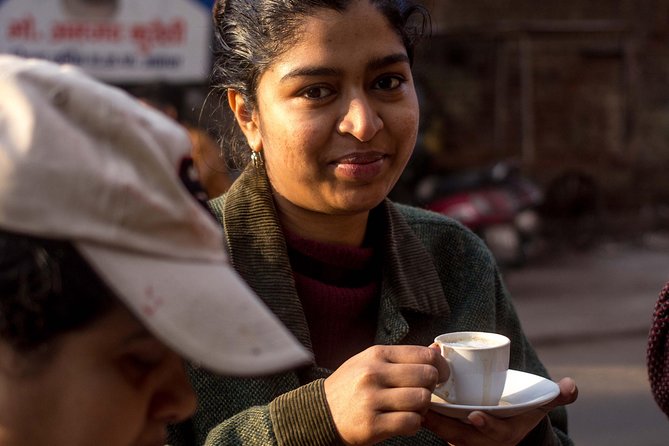
The strongest food contrast comes at a local meat shop, where you taste authentic Mughlai cuisine and try the famous mutton stew at Pakiza Meat Shop.
This stop focuses on the food associated with Mughal kitchens and feast culture. The guide discusses Akbar’s kitchen ministry and the role of large meals in Mughal tradition. That context gives the dish more meaning than simply labeling it Mughlai and moving on.
The mutton stew is likely to be the most substantial and distinctive tasting of the route. It also makes the tour less suitable for someone who wants an entirely vegetarian experience. The itinerary includes satvik vegetarian food, but it later includes meat, so you should be comfortable with that contrast before booking.
The stop also shows why a food tour can add something to a monument visit. At Agra Fort or another major sight, you hear about rulers and buildings. Here, you consider the kitchens, cooks, feasts, ingredients, and social rituals that supported royal life.
Pakiza Meat Shop is described as a local meat shop rather than a formal dining room. Keep your expectations practical. You are coming for a taste of local Mughlai food and the story around it, not for polished restaurant service.
Finishing with lassi
The final tasting is freshly made lassi, followed by another story about spices. It is a fitting ending because lassi is cooling, familiar, and easy to enjoy after the stronger flavors earlier in the walk.
The lassi also completes the tour’s movement through different parts of food culture. You have looked at ingredients in markets, tasted vegetarian and meat dishes, tried snacks and sweets, and heard about courtly meals. The last drink brings the focus back to an everyday food tradition.
Since the activity ends where it starts, you do not need to arrange a separate return transfer from a distant neighborhood. That is useful if you are planning dinner, a hotel return, or another evening activity afterward.
What the private format adds
The private format is a real advantage for this particular route. Old-city food walks work best when the guide can stop to explain a shop, answer questions, or adjust the pace without holding up a large group.
The guides connected with Agra Heritage Walks, including Kaleem, Khaleem, and Tahir, are praised for their passion for Agra, use of poetry, and ability to show streets and alleys you might not find on your own. That makes the guide central to the value of the experience.
You should not expect a detached lecture. The strongest part of the tour is the local perspective: why a shop matters, how a dish changed, and what a lane reveals about the city. If you enjoy asking questions about food, religion, trade, and family businesses, the private setup gives you room to do that.
The tradeoff is that the quality of the experience depends heavily on the guide on the day. The provider has received very strong feedback for its storytelling and local perspective, but a private tour is still a personal exchange. Come ready to take part rather than simply wait for food to appear.
Is $41.70 a fair price?
At $41.70 per person, this is not the cheapest way to eat in Agra. You could buy individual snacks and drinks for less. The price makes more sense when you count the guiding, the private format, several tastings, the historical interpretation, and the access to parts of the old city you might otherwise pass without understanding.
I see the value in the range of the experience. You are not paying for one restaurant meal. You are paying for a three-hour route that connects food, markets, music, Mughal culture, religious cooking traditions, and local family businesses.
The value is strongest for someone who has already seen Agra’s headline sights or wants to experience more than the Taj Mahal. The tour gives you a different way to understand the city, and the repeated praise for the local guides suggests that the storytelling is a central part of what you are buying.
It is less valuable if your only goal is a large dinner. Portions are spread among several stops, the route requires walking, and the food includes both vegetarian and nonvegetarian traditions rather than following one narrow menu.
Timing, walking, and practical comfort
The 4:00 pm start is well suited to an evening plan. The tour lasts about three hours, so you finish around 7:00 pm, subject to the pace of the walk and the stops.
A mobile ticket makes entry simple, and the meeting point is near public transportation. The activity begins at Subash Bazar in the Kinari Bazar, Hing ki Mandi, and Mantola area. You return to that same meeting point at the end.
The route requires a moderate level of physical fitness. You should be ready to walk through old-city streets and alleys for several hours, with stops for tasting and conversation. Comfortable shoes are a sensible choice, although the supplied details do not specify footwear or clothing requirements.
The experience depends on good weather. If poor weather causes cancellation, you are offered another date or a full refund. A minimum number of participants is also required, and if that minimum is not reached, you are offered another date or experience, or a full refund.
Free cancellation is available up to 24 hours before the 4:00 pm start time. Cancellations or changes made less than 24 hours before the start are not refunded or accepted, so keep the local cut-off time in mind.
Who will enjoy this Agra food walk?
I would recommend it most strongly to:
- People who want to see Agra beyond the Taj Mahal
- Food lovers who enjoy tasting several small dishes instead of ordering one meal
- Visitors interested in the connection between religion, trade, music, and cooking
- Couples, families, or friends who prefer a private guide
- Repeat visitors looking for old-city streets and local food traditions
- Anyone who enjoys stories and poetry alongside sightseeing
I would pause before booking if you need a fully vegetarian menu, dislike walking through narrow market lanes, or want a formal restaurant setting. The route includes satvik food, but it also includes Mughlai meat and a local meat shop.
You should also understand that this is a cultural food walk, not a cooking class. You learn about recipes, spices, markets, and history, but the listed experience does not include hands-on cooking.
Should you book Story of Spices?
Book it if you want Agra to be more than a backdrop for the Taj. The combination of old markets, satvik Braj food, Mughlai mutton, sweets, soda, lassi, and flute music gives the city several voices.
The best reason to choose it is the guide-led connection between each tasting and Agra’s past. Kaleem, Khaleem, and Tahir are presented as guides with a strong personal attachment to the city, and the route makes use of that local point of view.
Skip it if your priority is a large, inexpensive meal or a relaxed indoor dining experience. For everyone else, $41.70 is a reasonable price for a private evening that shows you the lanes, flavors, and stories behind Agra’s food culture.
FAQ
Where does the Story of Spices tour begin?
The tour begins at Subash Bazar, Kinari Bazar, Hing ki Mandi, Mantola, Agra, Uttar Pradesh 282003.
What time does the tour start?
The scheduled start time is 4:00 pm.
How long does the food tour last?
The tour lasts approximately three hours.
Where does the tour end?
The activity ends back at the meeting point.
Is this a private tour?
Yes. Only your group participates in the private activity.
What foods are included?
The tour includes Braj food, pakoda or falafel, indigenous sweets, drinks from a three-generation soda shop, Mughlai cuisine including mutton stew at a local meat shop, and freshly made lassi.
Does the tour include vegetarian food?
Yes. One stop focuses on satvik Braj food prepared without onion, ginger, or garlic. The tour also includes Mughlai meat later in the route.
Is a mobile ticket available?
Yes. The experience includes a mobile ticket.
What is the cancellation policy?
You can cancel up to 24 hours before the experience for a full refund. Changes or cancellations made less than 24 hours before the start time are not accepted or refunded. If bad weather or insufficient participants causes cancellation, you are offered another date or experience, or a full refund.
Recently added around Agra
- Taj Mahal Entrance Ticket★ 5.0 · 3 reviews
- Agra’s Hidden Gems & Flavors on a Thrilling Tuk-Tuk Tour 3-4 Hrs★ 5.0 · 3 reviews
- Spiritual Private Tour of Vrindavan and Mathura★ 3.0 · 3 reviews
- Shop Agra Like a Local: Unique Indian Handicrafts Tour★ 5.0 · 3 reviews
- Agra: Taj Mahal and Agra Fort Private Guided Half-Day Trip★ 5.0 · 3 reviews
- From Jaipur: Taj Mahal Guided and Agra Tour By Car★ 5.0 · 3 reviews
- Private Transfers Jaipur To Agra Drop with sikri & stepwell★ 5.0 · 3 reviews
- Full day Taj Mahal, Agra Fort, Fatehpur Sikri By Car From Agra★ 5.0 · 3 reviews
Food & Drink, compared.

Guided Morning Bicycle Tour with Food Tasting in Jaipur
Read our review →
Street Food Walking Tour, Spice Market, & Tuk-tuk Ride
Read our review →
Jaipur@Twilight Guided Heritage City walk tour with Food Tasting
Read our review →Browse the lists this tour appears in