
Reviewed · FOOD & DRINK
Flavours of Agra Food walk
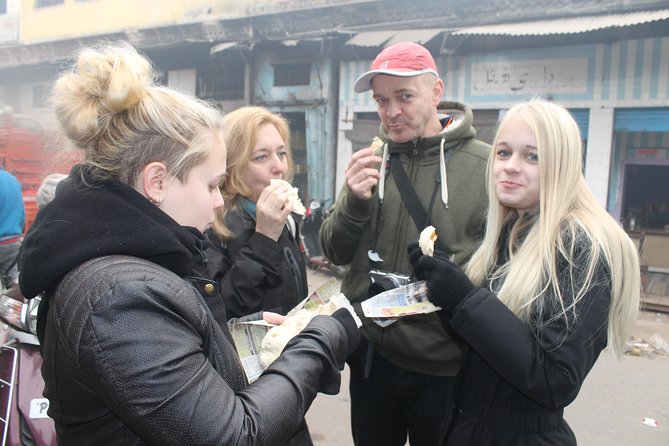
Agra’s food scene gets its own turn here, after the Taj Mahal has had the spotlight. This small-group food walk takes you into old and new Agra for local eating places, a historic Shiva temple, and a 150-year-old restaurant known for picnic snacks. It is a useful way to see how the city eats beyond the tourist circuit.
I like the mix of food and daily life, rather than a simple series of restaurant stops. I also like that food tastings, bottled water, other drinks, snacks, dinner, and hotel transfers are included. The main consideration is time: at roughly two and a half to three and a half hours, this is a focused introduction, not a full survey of Agra cuisine.
In This Review
- Key points for deciding quickly
- Why this food walk is useful after the Taj Mahal
- Jama Masjid and the first taste of old Agra
- Shri Mankameshwar Mandir adds a religious pause
- Chimman lal Puri Wale and a 150-year local tradition
- What the food coverage really includes
- Small-group size, transfers, and time on the ground
- Is $48.70 a fair price in Agra?
- Who should book this Agra food walk?
- Booking advice and cancellation terms
- Should you book Flavours of Agra Food Walk?
- FAQ
- How long does the Flavours of Agra Food Walk last?
- What is included in the price?
- Is hotel transportation provided?
- Can vegetarians join the tour?
- What is the maximum group size?
- Which places are included?
- What is the cancellation policy?
Key points for deciding quickly
- Old Agra comes first: Begin around Jama Masjid, where the guide takes you to places popular with local residents.
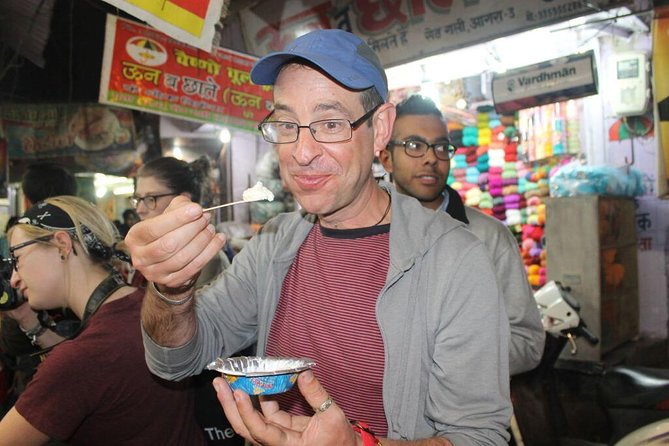
- The food list is broad: Expect vegetarian and non-vegetarian food, along with Indian and international choices.
- A temple visit adds context: Meet a priest at Shri Mankameshwar Mandir and hear about Hinduism.
- One stop reaches back 150 years: Chimman lal Puri Wale serves local picnic snacks at a long-running restaurant.
- The group stays manageable: A maximum of 15 people allows more room for questions than a large bus tour.
- Transfers and drinks are covered: Hotel pickup and drop-off, bottled water, beverages, food tastings, snacks, and dinner are included.
Why this food walk is useful after the Taj Mahal

Many Agra visits begin and end with monuments. That is understandable, but it leaves out the city where people shop, pray, meet, and eat. This experience gives you a short look at that side of Agra, with a guide who can lead you to local food spots that are difficult to locate on your own.
The tour is divided between the old part of Agra and the newer part. That matters because you are not being kept in one polished visitor zone. You get a change of setting, and the food becomes a way to understand how the city works today.
The guide’s role is especially important. The experience calls for someone with genuine interest in food tastings and cooking, and the guide is described as professional and food-focused. You should expect help identifying what you are eating and seeing how some items are prepared, rather than simply being handed plates without explanation.
There is no guide name provided for advance planning, so you cannot request a particular host by name from the information available. Still, the food-centered approach is clear. If you enjoy asking how something is cooked, what makes it local, or why a place matters to residents, this format should suit you well.
More Food Tours in Agra
- Agra: Street Food Walking Tour, Spice Market, & Tuk-tuk Ride
★ 4.9 · 102 reviews - Agra: Sadar Bazar Food Market Night Walking Tour by Tuk-Tuk
★ 4.9 · 25 reviews - Agra: Street Food Tour with Spice Market on Tuk-Tuk Ride
★ 4.7 · 23 reviews
Jama Masjid and the first taste of old Agra
The walk starts at Jama Masjid, one of the main points in the old section of the city. The listed stop is brief, about 10 minutes, with admission included, but the larger value lies in the surrounding food route.
This is where the guide takes you to popular local eating places. The exact dishes are not specified, so you should not book expecting a fixed menu of named specialties. Instead, think of this as a tasting route with variety. Vegetarian and non-vegetarian food are both available, and the experience includes Indian and international choices.
That range can work well for a mixed group. One person may want familiar vegetarian food, while another wants to try meat dishes. A vegetarian option is available if you request it when booking. Children must be accompanied by an adult, so families can join, but parents should consider how their children handle unfamiliar food and a walking-based outing.
The old-city setting also gives the meal more meaning. You are not eating in isolation. You are moving through an area tied to Agra’s religious and commercial life, then stopping where local people go for food. That is a more useful window into the city than a meal chosen only for its view of a famous monument.
The short listed stop time does not mean the entire food portion ends in 10 minutes. The tour lasts up to three and a half hours, and several stops are included. Still, you should expect movement between stops and a steady rhythm rather than a long, leisurely restaurant dinner.
Shri Mankameshwar Mandir adds a religious pause
The next named stop is Shri Mankameshwar Mandir, described as one of Agra’s oldest Shiva temples. The visit is also listed at about 10 minutes, with admission included.
This stop changes the pace. Food walks can become a blur of snacks, but a short temple visit gives you another way to read the city. You meet the priest and learn interesting facts about Hinduism. The guide can connect the religious setting with the daily life you have just seen around the old city.
Ten minutes is not enough for a detailed study of Hindu worship or temple architecture. That is worth keeping in mind. This is an introduction, not a formal religious tour. You should approach it as a compact cultural stop that breaks up the eating and adds context.
The temple also makes the experience broader than a restaurant crawl. If you have already spent much of your Agra visit looking at Mughal-era sights, this adds a Hindu religious site to your day. It gives you a more varied picture of the city without requiring a separate temple tour.
Because the visit is short, listen closely and ask questions while you have the chance. The format favors direct conversation with the guide and priest rather than a long lecture. That personal contact is one reason a group capped at 15 is helpful.
Chimman lal Puri Wale and a 150-year local tradition
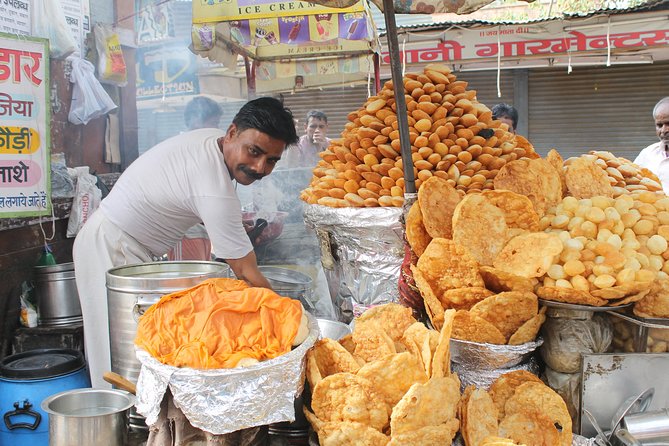
Chimman lal Puri Wale is the most specific food stop on the route. This local restaurant has been serving picnic snacks for more than 150 years. That age gives the stop a clear sense of place, even though the available details do not name every dish served there.
The word picnic is useful. It suggests food connected with informal outings and local habits, not a formal tasting menu. You may find this stop especially appealing if you like modest, established eating places more than polished dining rooms.
The listed visit is about 10 minutes, so expect a taste and a quick look rather than a full restaurant meal there. Dinner is included as part of the overall experience, along with snacks, beverages, bottled water, and other tastings. The exact order of those servings is not specified.
A long-running restaurant can also be a good point for questions. Ask the guide what makes the snacks local, how they are prepared, and how they fit into everyday eating in Agra. The guide’s interest in cooking is a strong match for this stop.
Do not assume that the restaurant alone represents all of Agra’s food. It is one part of a larger route through old and new areas. The strength is the combination: a historic food business, street-style eating, a temple, and more contemporary food choices.
More Walking Tours in Agra
- Agra Walking Tour
★ 5.0 · 109 reviews - Agra 101 City Walk
★ 5.0 · 41 reviews - Agra Fort: Guided UNESCO Heritage Walking Tour
★ 4.9 · 21 reviews - Agra Old City Walking Tour, Private Heritage walking Guided Tour
★ 5.0 · 20 reviews
What the food coverage really includes
The package is generous in categories. Food tasting, snacks, dinner, beverages, and bottled water are included. The route also covers vegetarian and non-vegetarian food, plus Indian and international items.
That does not mean every dish is guaranteed for every departure. Menus can change, and no fixed dish list is supplied. If you have dietary needs, state them when booking. A vegetarian option is specifically available, but other restrictions are not described, so you should ask before paying if you need something beyond vegetarian food.
The international food element may help people who are cautious about trying only unfamiliar dishes. At the same time, the tour’s main appeal remains local eating places and Indian flavors. I would choose it for range and guidance, not for a carefully designed fine-dining menu.
The included water is practical in a food walk. You do not need to plan around buying drinks at each stop, and the inclusion of other beverages adds value. Still, bring the usual patience for street food. The experience is built around local spots, not controlled restaurant settings.
The strongest part of the food program is the guide’s explanation. A tasting is more rewarding when you understand how a dish is cooked or why a place matters. One account describes a guide who showed real interest in food tastings and cooking, with a diverse range of Indian food to taste and observe. That is the kind of attention you should seek during the walk.
Small-group size, transfers, and time on the ground
The maximum group size is 15 people. That is not a private tour, but it is small enough for the guide to keep the group together and answer questions. It also makes food stops easier than they would be with a large coach party.
Hotel pickup and drop-off are included. This saves you from arranging transport to an unfamiliar meeting point, which is useful in Agra, especially if your visit is short. The experience is also near public transportation, so the transfer arrangement is not your only possible way to reach the area.
The duration is listed as approximately two hours and 30 minutes to three hours and 30 minutes. That one-hour range matters. Leave room around the tour rather than scheduling another fixed activity immediately afterward.
The walk includes several stops, but hotel transfers mean it is not necessarily three hours of nonstop walking. The exact balance between walking, riding, eating, and visiting is not stated. Wear sensible shoes and plan for a casual, active outing rather than a seated dinner.
Mobile tickets make entry simple. Confirmation arrives at booking, so you have the details in hand before the day of the experience. The tour is open to most people, but children need an accompanying adult.
Is $48.70 a fair price in Agra?
At $48.70 per person, this is more than paying for snacks as you go. You are also paying for a guide, transportation to and from your hotel, multiple food tastings, dinner, drinks, bottled water, a temple visit, and access to local stops you might not find independently.
The value depends on how you would otherwise spend your evening. If you are comfortable finding street food on your own and already have local contacts, the price may feel high. You would likely spend less on individual dishes.
For a first visit, though, the guide and transport add real value. The route covers old and new Agra, includes both religious and food-related stops, and removes much of the guesswork from choosing places to eat. A small group also offers more personal attention than a large city tour.
The price is easiest to justify if you want one organized evening that combines dinner and culture. It is less suitable if your goal is a long, specialist food tour with a published menu, cooking class, or detailed culinary history. Those features are not promised here.
The tour is also booked an average of 46 days ahead, which suggests you should not leave it until the last minute if the timing matters to you. The data does not guarantee that every date sells out, but advance planning is sensible.
Who should book this Agra food walk?
I would recommend it to first-time visitors who have seen or plan to see the Taj Mahal and want a more ordinary side of Agra. It also suits people who like trying several foods in small portions instead of ordering one large meal without guidance.
Families can consider it, provided children are accompanied by an adult and are comfortable with the format. Couples and solo visitors may appreciate the small group, especially if they want company without booking a private tour.
Vegetarians have a clear option, but should notify the operator at booking. People looking for only meat dishes, a fixed tasting menu, or a cooking lesson should check carefully, since the supplied details do not promise those things.
The experience is also a good fit if hotel transfers simplify your evening. You can focus on the city and food rather than working out transport between unfamiliar areas. If you prefer complete independence, the group structure may feel restrictive.
Booking advice and cancellation terms
You receive confirmation at the time of booking. Free cancellation is available if you cancel at least 24 hours before the local start time, giving you a full refund.
Inside that 24-hour window, you receive no refund, and changes are not accepted. Pay attention to local time when calculating the deadline. This is a straightforward policy, but it rewards booking only once your Agra schedule is settled.
Should you book Flavours of Agra Food Walk?
Book it if you want a short, guided introduction to Agra food, with local eating places, a 150-year-old restaurant, a Hindu temple, dinner, drinks, and hotel transfers in one package. The mix is more interesting than a basic restaurant outing, and the 15-person limit keeps it reasonably personal.
Skip it if you want a detailed culinary course, a guaranteed list of named dishes, or a private experience. Those are not part of the stated offering. For most visitors with limited time, though, this is a practical way to move beyond monument sightseeing and spend an evening eating where Agra’s local life is easier to see.
FAQ
How long does the Flavours of Agra Food Walk last?
The experience lasts approximately two hours and 30 minutes to three hours and 30 minutes.
What is included in the price?
Food tastings, snacks, dinner, beverages, bottled water, hotel pickup, and hotel drop-off are included.
Is hotel transportation provided?
Yes. Hotel pickup and drop-off are included.
Can vegetarians join the tour?
Yes. A vegetarian option is available, but you should advise the operator when booking.
What is the maximum group size?
The tour has a maximum of 15 people.
Which places are included?
The named stops are Jama Masjid, Shri Mankameshwar Mandir, and Chimman lal Puri Wale. The route also covers both the old and new parts of Agra.
What is the cancellation policy?
You can cancel at least 24 hours before the local start time for a full refund. Cancellations or changes made within 24 hours are not accepted and are not refunded.
Recently added around Agra
- Taj Mahal Entrance Ticket★ 5.0 · 3 reviews
- Agra’s Hidden Gems & Flavors on a Thrilling Tuk-Tuk Tour 3-4 Hrs★ 5.0 · 3 reviews
- Spiritual Private Tour of Vrindavan and Mathura★ 3.0 · 3 reviews
- Shop Agra Like a Local: Unique Indian Handicrafts Tour★ 5.0 · 3 reviews
- Agra: Taj Mahal and Agra Fort Private Guided Half-Day Trip★ 5.0 · 3 reviews
- From Jaipur: Taj Mahal Guided and Agra Tour By Car★ 5.0 · 3 reviews
- Private Transfers Jaipur To Agra Drop with sikri & stepwell★ 5.0 · 3 reviews
- Full day Taj Mahal, Agra Fort, Fatehpur Sikri By Car From Agra★ 5.0 · 3 reviews
Food & Drink, compared.

Guided Morning Bicycle Tour with Food Tasting in Jaipur
Read our review →

Street Food Walking Tour, Spice Market, & Tuk-tuk Ride
Read our review →
Jaipur@Twilight Guided Heritage City walk tour with Food Tasting
Read our review →Browse the lists this tour appears in