
Reviewed · WALKING TOURS
Vintage Walk Amer
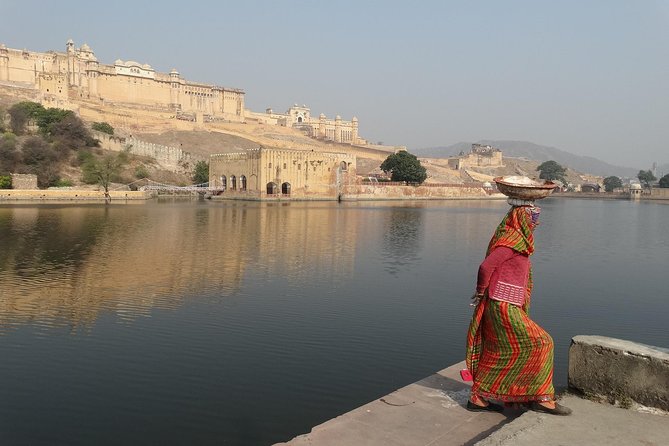
Amber is more than a quick stop at a famous fort. This three-hour walking tour connects the hilltop palace with a geometric stepwell, a 16th-century temple, and a small museum devoted to hand printing. You get a useful look at the old capital of the Dhundhar region, not just a photograph from the fort courtyard.
I like the way the route links major monuments with local culture, and I like the private format, which gives you room to ask questions. Guides Hasseb and Mudassir are praised for clear explanations in English and Spanish, along with practical advice about food and markets. The main caution is cost clarity: Amber Palace admission and private transportation are listed as extra, despite the general note about fees and taxes.
In This Review
- Key points to know before you book
- Why Amer makes a better walking subject than a quick photo stop
- Amber Palace: the main historical anchor
- Panna Meena ka Kund and the logic of water
- Jagat Shiromani Ji Temple and a royal family story
- Anokhi Museum: the tour’s craft-focused finish
- The guide can shape the whole experience
- What $25 buys you in practical terms
- Timing, transport, and comfort
- Who should choose Vintage Walk Amer
- Should you book it?
- FAQ
- How long does Vintage Walk Amer last?
- Where does the tour start?
- Does the tour include pickup?
- Is this a private tour?
- Which places are visited?
- Is Amber Palace admission included?
- Can I cancel for a full refund?
Key points to know before you book
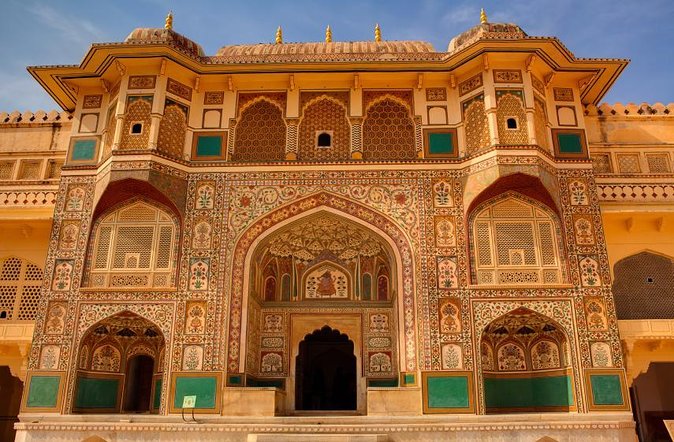
- Four distinct Amer sights: The route includes Amber Palace, Panna Meena ka Kund, Jagat Shiromani Ji Temple, and the Anokhi Museum of Hand Printing.
- Private walking format: Only your group takes part, so you can ask questions and set a comfortable pace within the roughly three-hour schedule.
- Strong guide focus: Hasseb and Mudassir are specifically praised for history, customs, and Spanish explanations.
- Palace ticket needs checking: Amber Palace entrance is listed as excluded, so confirm the current admission cost before booking.
- Start at Amer Fort: The meeting point is at Amer Fort in Devisinghpura, about 11 kilometers from Jaipur.
- Good cancellation window: You can cancel up to 24 hours before the start for a full refund, subject to the weather policy.
Why Amer makes a better walking subject than a quick photo stop

Amer, also called Amber, was once the capital of the Dhundhar region. Today it is a town outside Jaipur, with Amer Fort as its best-known sight. The setting gives the area a different feel from central Jaipur, because the monuments, lanes, temples, and old water systems sit close together.
A walking tour is useful here because the story is spread across several places. Amber Palace explains royal power and architecture. Panna Meena ka Kund shows how water was collected and managed. Jagat Shiromani Ji Temple adds a religious and personal story, while Anokhi Museum shows how craft traditions continue to shape local identity.
That combination gives you more context than a fort-only visit. You are not simply moving from one grand room to another. You are following the way a historic town worked: palace, water, worship, and skilled handwork.
The tour begins at Amer Fort, not at a Jaipur hotel. Pickup is offered, but private transportation is not included, so you need to clarify exactly what pickup means for your reservation. The meeting point is listed as Amer Fort, Devisinghpura, Amer, Rajasthan 302028.
More Walking Tours in Jaipur
- Jaipur Bazaar & Food Walking Tour
★ 5.0 · 281 reviews - Heritage Walk & Street Food Tasting in Jaipur
★ 5.0 · 158 reviews - Magical Walk of Jaipur
★ 5.0 · 121 reviews
Amber Palace: the main historical anchor
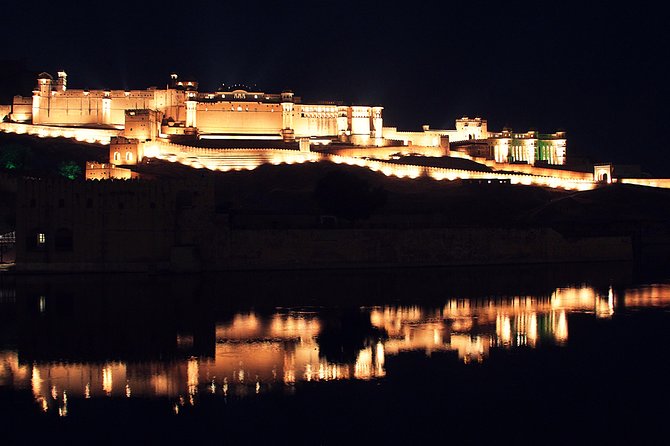
Amber Palace receives the longest scheduled stop, about 45 minutes. It is the principal attraction in Amer, set high on a hill and known for its grand royal architecture. This is the part of the tour most likely to shape your first impression of the town.
Your guide can help turn a short palace visit into a more readable one. Hasseb and Mudassir are praised for explaining the fort in detail, answering questions, and discussing customs alongside the formal history. That matters because a large palace can otherwise become a blur of courtyards, gates, and decorative rooms.
The schedule gives you enough time for an overview, but not an exhaustive examination of every section. If Amber Palace is your top priority, you may want to confirm how the 45 minutes are used and what access is included.
Pay close attention to the ticket wording before you arrive. The tour information says all fees and taxes are included, but it also clearly lists Amber Palace entrance as not included. Treat the palace ticket as an additional expense unless the operator confirms otherwise. This is the one practical detail I would settle before payment.
The fort is also the point where walking conditions matter most. The route is on foot, and the palace is located high on a hill. The experience suits most people, according to the stated participation information, but you should still allow for steps, uneven surfaces, and warm weather. The exact level of walking assistance is not specified.
Panna Meena ka Kund and the logic of water
The next stop is Panna Meena ka Kund, with about 20 minutes set aside. This historic stepwell was built as a rainwater catchment system and is known for its highly symmetrical stairways.
It is easy to treat a stepwell as a pretty background for photographs. A good explanation helps you see its practical purpose. The repeating stairs were part of a system for reaching and collecting water, not simply decoration. The design also shows how engineering and visual order could meet in an older Indian town.
Twenty minutes is a sensible amount of time for a focused visit. You can see the shape of the well, take in the symmetry, and hear its connection to local water use without losing too much time from the palace and temple. If you want a long photography session, this stop may feel brief.
The stepwell also breaks up the palace-heavy part of the morning. It gives you a more grounded look at daily needs and public infrastructure, which is one of the best reasons to choose this route instead of a simple fort transfer.
Jagat Shiromani Ji Temple and a royal family story
The schedule allows 15 minutes at Jagat Shiromani Ji Temple. The temple is dedicated to Meera Bai, Krishna, and Vishnu, and was built between 1599 and 1608 by Queen Kanakwati, the wife of King Man Singh I.
The temple was built in memory of their son, Jagat Singh. That detail gives the monument a human story, not just a date and a name. Your guide can also explain the connection between devotion, royal patronage, and the temple’s place in Amer.
Fifteen minutes is short, so think of this as an introduction rather than a full study of the building. The stop works best if you want to understand why the temple was built and what it represents. It may feel too quick if you prefer to sit, observe worship, or examine architectural details at length.
As with any active religious site, follow the guide’s instructions about respectful behavior. The supplied information does not specify photography rules, dress requirements, or current opening conditions, so ask before assuming what is allowed.
A completely different kind of day out from Jaipur:
- Jaipur: Private Full Day Sightseeing Tour By Car with Guide
★ 4.9 · 1,839 reviews - Agra: Skip-the-Line Taj Mahal & Agra Fort Private Tour
★ 4.9 · 1,546 reviews - 3-Hour Morning Bike Tour of Jaipur
★ 5.0 · 1,253 reviews - Spiritual City Walking Tour-THE Pushkar Route
★ 5.0 · 907 reviews
Anokhi Museum: the tour’s craft-focused finish
Anokhi Museum of Hand Printing receives about 20 minutes. It is housed in a traditional townhouse and presents the art and heritage of wood-block printing.
This is a welcome change of subject after forts and temples. Instead of focusing on rulers and sacred buildings, the museum introduces a hands-on craft tradition. Wood-block printing depends on repeated patterns, careful placement, and skilled manual work, making the process easier to appreciate when you see the tools and examples together.
The townhouse setting is part of the appeal. The museum is not described as a large modern complex, so you should expect a compact cultural stop rather than a full-day museum visit. Twenty minutes gives you a useful overview, though anyone interested in textiles or design may want to ask whether extra time is possible.
For many people, this is the stop that makes the tour feel less like a monument checklist. It connects Amer’s past with a living artistic tradition. The route therefore ends with something made by hand, after showing you how the town was shaped by power, water, and faith.
The guide can shape the whole experience
This tour depends heavily on the guide. The strongest descriptions of Hasseb and Mudassir point to the same qualities: attentiveness, clear explanations, patience, and an ability to discuss Indian culture as well as architecture.
Hasseb is specifically praised for answering questions and explaining customs in a way that helped visitors understand parts of Indian society that had previously been unclear. Mudassir is described as gentle and strong in Spanish, and Hasseb is also noted for speaking Spanish well. English is mentioned as well.
That makes the tour a good choice if you want more than dates and royal names. You can ask about local life, customs, restaurants, and markets, and the guide may offer practical suggestions. This kind of conversation is one of the main benefits of a private tour.
Still, guide assignment can matter. The experience information does not promise a particular guide, so if Hasseb or Mudassir is important to you, request that preference directly rather than assuming it is guaranteed. Language availability should also be confirmed when booking.
The private format is especially helpful for couples, families, and small groups with different interests. You can spend more time on the fort, ask for a slower explanation at the temple, or keep moving if the heat becomes tiring. The tour is not a large group outing where you must follow someone else’s pace.
What $25 buys you in practical terms
At $25 per person, this is a reasonably priced private cultural experience if you value a guide and a connected route. You are paying for roughly three hours of interpretation across four places, with admission fees and taxes generally addressed in the package details.
The value becomes less clear if you expected a car, hotel-to-hotel service, and every entrance ticket to be covered. Private transportation is not included, and Amber Palace entrance is listed separately. Pickup is offered, but the stated start point remains Amer Fort, so ask for precise arrangements before you go.
A useful way to judge the price is to compare it with what you would otherwise need to organize. You would need to reach Amer, find the palace entrance, understand the relationship between the monuments, and arrange your own guide or audio material. If you prefer independence, you may not need this service. If you want a person to explain the setting and answer cultural questions, the price is easier to justify.
Lunch is not included. That is not a problem for a three-hour outing, but plan your meal separately. The tour ends back at the meeting point, so it is not designed as a one-way sightseeing transfer to another part of Jaipur.
Timing, transport, and comfort
The advertised duration is approximately three hours. The scheduled stops total 100 minutes, leaving the rest of the time for walking between sites, orientation, explanations, and transitions. That is a useful clue: this is not four isolated drop-offs. The movement between them is part of the experience.
You begin at Amer Fort and return to the same meeting point. Since the route is on foot, wear comfortable shoes and bring water. The data does not specify shade, rest stops, or the exact walking distance, so ask if anyone in your group needs a slower pace.
The tour requires good weather. If poor weather causes cancellation, you are offered another date or a full refund. You can cancel for a full refund up to 24 hours before the start time, but cancellations or changes inside that window are not refunded or accepted.
Most people can participate, according to the stated information, and the tour is near public transportation. That does not answer every mobility question. If stairs, slopes, or uneven ground are a concern, contact the operator before booking and ask how the route can be adapted.
Who should choose Vintage Walk Amer
I would choose this tour if you want Amer explained through several different lenses. It fits you well if you enjoy architecture but also want to understand water management, religious life, local customs, and traditional printing.
It is particularly useful for first-time visitors to Jaipur who want a guide to help with context. The comments about Hasseb and Mudassir suggest that the human side of the tour is as important as the buildings. Spanish-speaking participants should pay attention to the language option, since Spanish explanations are specifically praised.
Families and small private groups may also like the format. You do not have to match the pace of a large party, and you can ask questions without waiting for a guide to address everyone.
You may want a different arrangement if your priority is a long, detailed palace visit, extensive photography, lunch, or door-to-door private transport. The schedule is compact, and the ticket and transport terms need careful checking.
Should you book it?
Book Vintage Walk Amer if you want a short, private introduction to Amer that goes beyond Amber Palace. The best feature is the range of subjects: royal architecture, a rainwater stepwell, a temple built in memory of a prince, and wood-block printing all appear in one route.
I would confirm three things before booking: who will guide your group, whether English or Spanish is available, and the exact price of Amber Palace admission and transport. If those terms work for you, $25 is fair value for a guided three-hour walk with a strong cultural focus.
FAQ
How long does Vintage Walk Amer last?
The experience lasts approximately three hours.
Where does the tour start?
The meeting point is Amer Fort, Devisinghpura, Amer, Rajasthan 302028, India.
Does the tour include pickup?
Pickup is offered, but private transportation is not included. Confirm the exact pickup arrangement with the operator.
Is this a private tour?
Yes. Only your group participates in the activity.
Which places are visited?
The route includes Amber Palace, Panna Meena ka Kund, Jagat Shiromani Ji Temple, and Anokhi Museum of Hand Printing.
Is Amber Palace admission included?
Amber Palace entrance is listed as not included. Confirm the current ticket cost before the tour.
Can I cancel for a full refund?
Yes, if you cancel at least 24 hours before the experience start time. Cancellations made less than 24 hours in advance are not refunded. If poor weather cancels the tour, you are offered another date or a full refund.
Recently added around Jaipur
- Taj Mahal Entrance Ticket★ 5.0 · 3 reviews
- Jaipur: Ajmer & Pushkar Day Trip with Lunch & Camel ride★ 4.3 · 3 reviews
- Spiritual Private Tour of Vrindavan and Mathura★ 3.0 · 3 reviews
- Agra’s Hidden Gems & Flavors on a Thrilling Tuk-Tuk Tour 3-4 Hrs★ 5.0 · 3 reviews
- Jaipur: City Tour Full-Day Sightseeing with Guide★ 5.0 · 3 reviews
- Shop Agra Like a Local: Unique Indian Handicrafts Tour★ 5.0 · 3 reviews
- Agra: Taj Mahal and Agra Fort Private Guided Half-Day Trip★ 5.0 · 3 reviews
- From Jaipur: Taj Mahal Guided and Agra Tour By Car★ 5.0 · 3 reviews
Walking Tours, compared.

Afternoon Walk Tour with Sunset & Fire Ritual -The Pushkar Route
Read our review →
Evening Walking Tour with Fire Rituals-The Pushkar Route
Read our review →Browse the lists this tour appears in