
Reviewed · WALKING TOURS
Walking Tour Jaipur India
Jaipur’s old town is best understood on foot, where pink façades, palace gates, market lanes, and royal observatories crowd into a compact center. This two-hour guided walk mixes local stories with history, culture, and practical tips rather than giving you a long museum lecture. I like the planned stops and the promise of tea, snacks, and bottled water. The main concern is that the published route lists six stops at 20 minutes each, leaving no clear time for walking between them.
I also like the small maximum of 20 people, mobile ticket, and easy meeting point near Hawa Mahal. At $20, the tour can be good value for an introduction to Jaipur, but monument admissions cost extra, and the final temple stop appears far from the old-town walking route. Confirm that point before booking.
In This Review
- Key points to know before you book
- What this Jaipur walking tour is trying to do
- Meeting at Hawa Mahal Road
- Hawa Mahal, Jaipur’s famous pink façade
- City Palace and the living royal connection
- Jantar Mantar and Jaipur’s scientific side
- Isarlat, the 140-foot Sargasuli tower
- Sireh Deori Bazaar and Jaipur handicrafts
- The Giriraj Ji Temple question
- What the $20 price really covers
- Timing, group size, and the real pace
- Who will get the most from this walk
- Should you book this Jaipur walking tour?
- FAQ
- Where does the Jaipur walking tour start?
- Where does the tour finish?
- How long does the walking tour last?
- What sights are included on the route?
- Are monument entry tickets included?
- What is included in the $20 tour price?
- Is private transportation included?
- How many people can join the tour?
- Can I cancel for a full refund?
Key points to know before you book
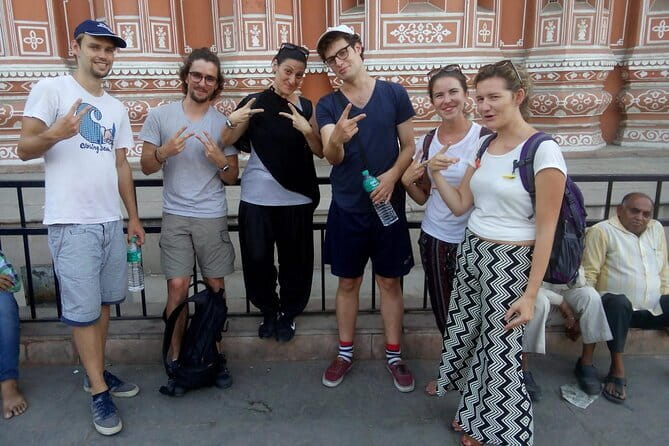
- Six major stops in about two hours: Hawa Mahal, City Palace, Jantar Mantar, Isarlat, Sireh Deori Bazaar, and Giriraj Ji Temple are all named on the route.
- Story-led sightseeing: The guide uses an infotainment style, with city stories, cultural details, fun facts, and suggestions for things to do in Jaipur.
- Extra admission costs: Monument tickets are not included. The information gives both a $10 estimate and a ₹100 per-person monument fee, so confirm the current amount.
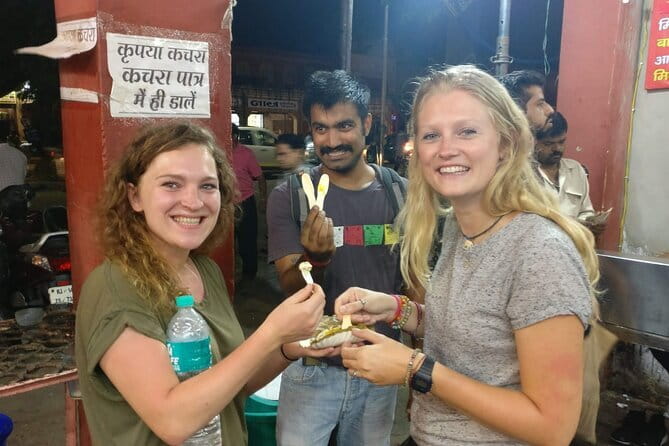
- Refreshments are included: You receive bottled water plus tea and snacks during the experience.
- Convenient old-town meeting point: The walk begins and ends on Hawa Mahal Road near Badi Choupad and J.D.A. Market.
- Check the temple stop: Giriraj Ji Temple is described as being on the Agra-Jaipur Road, east of Dausa, which does not clearly fit a two-hour Jaipur walking tour.
What this Jaipur walking tour is trying to do
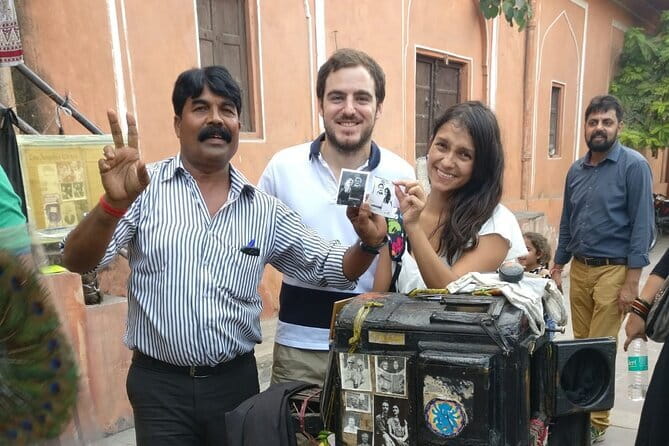
This is an orientation tour rather than a full day of palace visits. You spend short periods at several important sights, hear the basic story of Jaipur, and get a feel for how the old city fits together.
That approach suits you if you have just arrived and want context before exploring on your own. A good local guide can connect the pink city walls, royal buildings, markets, religion, and astronomy in a way that is easier to remember than isolated facts from a guidebook.
The experience is also designed to keep the pace light. Its stated style is infotainment, with stories and fun facts aimed at people who may not normally enjoy formal history tours. I see that as a strength in Jaipur, where the same building can involve royal politics, religious customs, architecture, and daily city life.
Still, you should keep your expectations in check. Six stops in roughly two hours means this is a quick introduction. You will not have time for a slow inspection of every palace room, market lane, or astronomical instrument. The tour is most useful as a first look, not as your only sightseeing in Jaipur.
More Walking Tours in Jaipur
- Jaipur Bazaar & Food Walking Tour
★ 5.0 · 281 reviews - Heritage Walk & Street Food Tasting in Jaipur
★ 5.0 · 158 reviews - Magical Walk of Jaipur
★ 5.0 · 121 reviews
Meeting at Hawa Mahal Road
The tour begins on Hawa Mahal Road, near Badi Choupad and J.D.A. Market in the Pink City. This is a practical place to start because Hawa Mahal is one of Jaipur’s clearest landmarks, and the area is near public transportation.
The exact meeting point matters in this part of town. Jaipur’s old center has busy roads, market entrances, gates, and similarly named streets, so use the mobile ticket and booking confirmation carefully. The activity ends back at the same meeting point, which makes planning easier if you have a hotel, meal, or another visit afterward.
You should arrive ready to walk in a crowded urban setting. The supplied information does not give a detailed accessibility assessment, so anyone who needs step-free access or has difficulty walking should ask the operator before booking.
Hawa Mahal, Jaipur’s famous pink façade
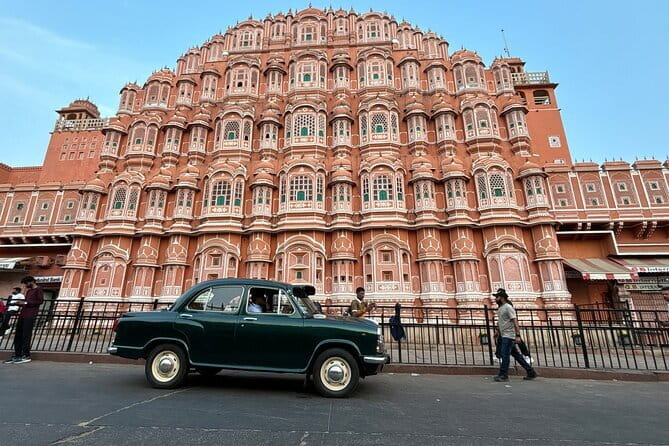
The first stop is Hawa Mahal, often called the Palace of Wind. Built from red and pink sandstone, it forms part of the City Palace area and extends toward the former women’s quarters, known as the Zenana.
The outside is the part most people recognize. Its many small windows and screened openings were designed to allow royal women to observe city life without being seen. That makes the building more than a pretty façade. It offers a quick way to understand the separation between palace life and the public street.
You have about 20 minutes here, and admission is not included. That short visit is enough for an introduction and photographs, but not a detailed examination of the interior. If you want to go inside, budget for a separate ticket and be aware that every extra admission cuts into the time available for the remaining stops.
I like beginning here because Hawa Mahal gives you an immediate sense of Jaipur’s visual character. You are not starting with an abstract history lesson. You are standing beside one of the city’s most recognizable buildings, then hearing how it relates to royal life and the old city.
City Palace and the living royal connection

The City Palace complex was commissioned by Maharaja Sawai Jai Singh II, the ruler who founded Jaipur. Its design combines Mughal and Rajput influences, and the complex remains connected with Jaipur’s former ruling family.
The important point for you is that City Palace is not one simple building. It is a group of courtyards, gateways, rooms, and museums. A 20-minute stop can explain the basic layout and royal connection, but it will not cover the complex in detail.
Admission is not included. That gives you a choice. You can stay with the group and use the stop for an outside explanation, or pay separately and return later for a longer visit. The second option is likely better if you care about painted interiors, royal objects, and close architectural details.
As part of a walking orientation, City Palace helps link the landmarks together. Hawa Mahal can seem like an isolated photo stop. City Palace explains the larger royal setting behind it.
A completely different kind of day out from Jaipur:
- Jaipur: Private Full Day Sightseeing Tour By Car with Guide
★ 4.9 · 1,839 reviews - Agra: Skip-the-Line Taj Mahal & Agra Fort Private Tour
★ 4.9 · 1,546 reviews - 3-Hour Morning Bike Tour of Jaipur
★ 5.0 · 1,253 reviews - Spiritual City Walking Tour-THE Pushkar Route
★ 5.0 · 907 reviews
Jantar Mantar and Jaipur’s scientific side
Jantar Mantar was completed in 1734 under Sawai Jai Singh II. It presents the astronomical interests of the Rajput court through large built instruments used to observe the sky and calculate time.
This is one of the most distinctive stops because it changes the usual picture of Jaipur. The city is often presented through palaces, markets, and bright façades, but Jantar Mantar shows a ruler investing in measurement and astronomy. The instruments are architectural in scale, so a guide’s explanation can help you understand what you are seeing.
You get about 20 minutes here, and admission is extra. That is enough for a clear introduction, but the site rewards a slower visit. If you are interested in science or architecture, plan to return with more time rather than expecting this tour to cover every instrument.
The guide’s storytelling format should work well here. Without context, the structures can look like oversized walls, ramps, and angles. With a simple explanation of their purpose, the site becomes much easier to appreciate.
Isarlat, the 140-foot Sargasuli tower
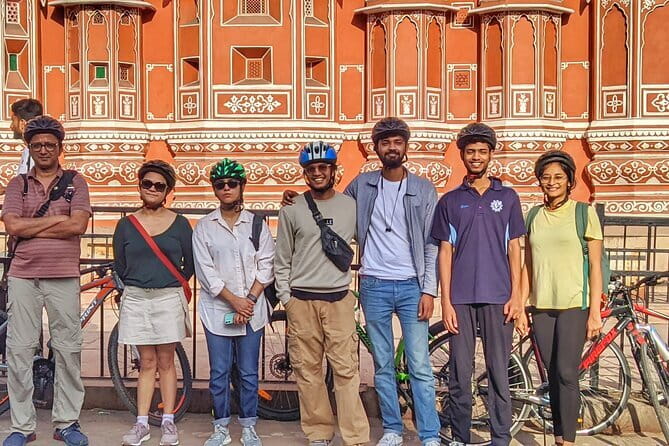
Isarlat is also known as Sargasuli, a name linked with the phrase passage to heaven. The tower is about 140 feet high and sits near the meeting point of Tripolia Bazaar and Gangori Bazaar, close to Chhoti Chaupar Chowk and Tripolia Gate.
This stop gives the walk a useful city-planning angle. You are moving away from the most photographed palace façade and into the network of bazaars and historic gates that shaped movement through Jaipur.
The 20-minute visit may focus on the tower’s place in the old city and its height. The supplied details do not confirm whether climbing the tower is included, so do not assume you will reach the top. Ask the guide about access if the view is important to you.
I like this inclusion because it adds variety. The route is not only a parade of royal buildings. Isarlat brings in a vertical landmark tied to the old market district, giving you another way to read Jaipur’s historic center.
Sireh Deori Bazaar and Jaipur handicrafts
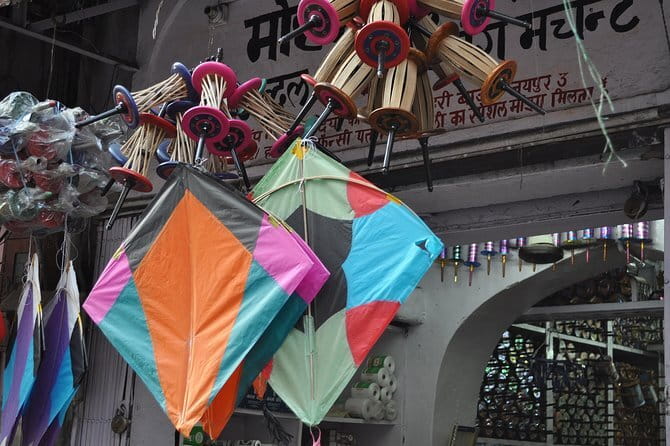
Sireh Deori Bazaar is presented as a place for street shopping near Hawa Mahal. It is associated with textiles and Jaipur’s craft trade, and the emphasis here is on seeing and browsing everyday merchandise rather than entering a formal museum.
This is where the tour can feel most connected to present-day Jaipur. Markets show how the city’s decorative traditions become clothing, fabrics, souvenirs, and household goods. You may find the stop useful even if you do not plan to buy anything, since it gives you a chance to watch the old center at work.
Unlike the monuments, this market stop includes admission. In practical terms, that means you can focus on looking around rather than worrying about another ticket. The tour may also help you identify the kind of shopping you want to do later.
Use normal market caution. Compare prices, take your time, and do not feel obliged to buy because a shopkeeper or guide points out an item. The information does not promise a shopping discount or a specific number of shops, so treat this as a market introduction, not a dedicated shopping tour.
The Giriraj Ji Temple question

The final listed stop is Giriraj Ji Temple. It is described as a colorful temple on the Agra-Jaipur Road, east of Dausa. The temple is said to be worth a stop, but its stated location raises the biggest practical issue in the whole experience.
A two-hour walking tour that begins and ends near Hawa Mahal cannot obviously include a site east of Dausa without transport. The tour information also says private transportation is not included. That does not prove the stop is impossible, but it does create a clear mismatch that you should resolve before paying.
Ask the operator whether the temple is part of the walking route, a separate stop reached by vehicle, or an error in the description. Also ask whether any transport cost is extra. This is especially important if you are booking the tour because of the temple rather than the Pink City sights.
If the temple is removed or replaced with a nearby old-town site, the route makes more sense. If it truly is included, the published two-hour duration may not describe the full experience accurately.
What the $20 price really covers
At $20, the price is reasonable for a guided introduction if the experience runs as described. You are paying for a guide, a planned route, bottled water, and tea with snacks. You are also getting a way to connect several important Jaipur sights without having to organize the sequence yourself.
The value drops if you want to enter every monument. Hawa Mahal, City Palace, and Jantar Mantar all list admission as extra. The information gives an additional monument cost of $10, while another line states ₹100 per person, so there is a currency and amount inconsistency. Confirm the current total before booking.
There is no private transportation and no bicycle use included. That is not a problem for a genuine old-town walk, but it matters if the Giriraj Ji Temple stop is truly part of the route. The maximum group size is 20, which is not a private tour, yet it is small enough for a guide to remain reasonably engaged with the group.
Tea and snacks add modest value, especially during a short city walk. They are not a substitute for lunch, so plan another meal if your tour falls around midday.
Timing, group size, and the real pace
The advertised duration is approximately two hours. Each of the six stops is assigned 20 minutes, adding up to the entire tour time before you account for walking, traffic, photos, explanations, or refreshments.
That arithmetic suggests one of three things: the stop times are rough estimates, some locations receive less time, or the total experience may run longer than two hours. I would treat the duration as approximate and avoid booking a tight connection immediately afterward.
A group of up to 20 people can work well for a city orientation. It keeps the price below that of a private guide, while still allowing a shared experience. The trade-off is that questions and photographs may take longer, and the guide may not be able to give each person equal attention.
The tour is confirmed at booking, and most people can participate. It requires good weather, and poor conditions may lead to a different date or a full refund. You can cancel for a full refund up to 24 hours before the local start time. Inside that window, the payment is not refunded and changes are not accepted.
Who will get the most from this walk
I would choose this tour if you want a quick first look at Jaipur and prefer stories to a formal lecture. It suits a first day in the city, a short stay, or anyone who wants help deciding which monuments deserve a longer return visit.
It also fits you if you appreciate practical orientation. The route introduces royal architecture, astronomy, a historic tower, and market shopping in one compact outing. Tea, snacks, and water make the short walk a little easier.
You may want a different experience if you prefer slow photography, long museum visits, or detailed architectural study. The extra ticket costs could also make the final price less attractive if you plan to enter all three major monuments.
Most of all, confirm the Giriraj Ji Temple arrangement. The old-town portion is easy to understand. The temple description is the part that needs clarification.
Should you book this Jaipur walking tour?
Book it if you want a low-cost, story-driven introduction to Jaipur’s old center, and you are comfortable paying monument fees separately. Hawa Mahal, City Palace, Jantar Mantar, Isarlat, and Sireh Deori Bazaar make a strong mix for a short orientation.
I would not book without asking about the temple location, total walking time, and current entrance fees. If the operator confirms a sensible old-town route, the $20 price offers useful structure, local storytelling, refreshments, and a good first read of Jaipur. If you need a precise two-hour schedule or guaranteed interior visits, choose a more clearly defined private or monument-focused tour.
FAQ
Where does the Jaipur walking tour start?
It starts on Hawa Mahal Road near Badi Choupad and J.D.A. Market in the Pink City, Jaipur.
Where does the tour finish?
The activity ends back at the meeting point.
How long does the walking tour last?
The approximate duration is two hours.
What sights are included on the route?
The listed stops are Hawa Mahal, City Palace of Jaipur, Jantar Mantar, Isarlat, Sireh Deori Bazaar, and Giriraj Ji Temple.
Are monument entry tickets included?
No. Monument admission is not included. The information gives an additional cost of $10 and also lists a ₹100 per-person monument fee, so confirm the current price before booking.
What is included in the $20 tour price?
The price includes a guide, bottled water, and tea with snacks.
Is private transportation included?
No. Private transportation is not included, and bicycle use is also excluded.
How many people can join the tour?
The maximum group size is 20 people.
Can I cancel for a full refund?
Yes. You can cancel at least 24 hours before the local start time for a full refund. Cancellations or changes made within 24 hours are not refunded or accepted.
Recently added around Jaipur
- Taj Mahal Entrance Ticket★ 5.0 · 3 reviews
- Jaipur: Ajmer & Pushkar Day Trip with Lunch & Camel ride★ 4.3 · 3 reviews
- Spiritual Private Tour of Vrindavan and Mathura★ 3.0 · 3 reviews
- Agra’s Hidden Gems & Flavors on a Thrilling Tuk-Tuk Tour 3-4 Hrs★ 5.0 · 3 reviews
- Jaipur: City Tour Full-Day Sightseeing with Guide★ 5.0 · 3 reviews
- Shop Agra Like a Local: Unique Indian Handicrafts Tour★ 5.0 · 3 reviews
- Agra: Taj Mahal and Agra Fort Private Guided Half-Day Trip★ 5.0 · 3 reviews
- From Jaipur: Taj Mahal Guided and Agra Tour By Car★ 5.0 · 3 reviews
Walking Tours, compared.


Afternoon Walk Tour with Sunset & Fire Ritual -The Pushkar Route
Read our review →

Evening Walking Tour with Fire Rituals-The Pushkar Route
Read our review →Browse the lists this tour appears in