

Reviewed · GOLDEN TRIANGLE TOURS
4 Day Golden Triangle Tour to Agra and Delhi From Jaipur
The best thing about this four-day Golden Triangle tour is how much ground it covers without making you organize every train, transfer, hotel, ticket, and guide yourself. You begin in Jaipur, continue to Agra through Abhaneri and Fatehpur Sikri, then finish in Delhi with the Taj Mahal, Mughal monuments, grand government buildings, and a private ride all the way.
I like the private air-conditioned car, which gives you more control than a large group coach. I also like the built-in local guides and three hotel nights with breakfast, especially for a first visit to North India. The main caution is the pace: Jaipur, Agra, and Delhi in four days is efficient, but not leisurely. Monument entrance fees are also extra, listed at about $60 per person in total.
In This Review
- Key points at a glance
- What this Jaipur to Delhi route does well
- Day 1: Jaipur’s forts, palaces, and precise astronomy
- Amber Fort and the hill country outside Jaipur
- Jal Mahal, a quick photo stop
- Jantar Mantar, where science becomes architecture
- City Palace and Hawa Mahal
- Day 2: Chand Baori and Fatehpur Sikri on the way to Agra
- Chand Baori at Abhaneri
- Fatehpur Sikri, the abandoned Mughal capital
- Day 3: The Taj Mahal, Agra Fort, and the Baby Taj
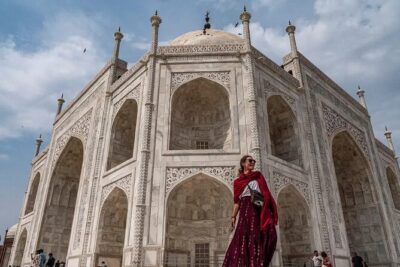
- Sunrise inside the Taj Mahal
- Agra Fort and the Mughal seat of power
- Itmad-ud-Daula, the small marble masterpiece
- Day 4: Delhi’s monuments and ceremonial center
- Qutub Minar and the Qutb complex
- India Gate and the government district
- Agrasen Ki Baoli
- What the $174 price really includes
- Guides, drivers, and the comfort factor
- Who should book this four-day itinerary
- Should you book it?
- FAQ
- Where does the tour begin and end?
- How long is the tour?
- Is this a private tour?
- What type of vehicle is used?
- Are hotel stays and breakfasts included?
- Are monument entrance fees included?
- Is the Taj Mahal visit at sunrise?
Key points at a glance

- Sunrise at the Taj Mahal: You visit early, with about two hours for the monument and an interior guided tour.
- Three major cities in four days: Jaipur, Agra, and Delhi are linked by private road transfers rather than separate transport bookings.
- Useful historic stops en route: Chand Baori stepwell and Fatehpur Sikri break up the journey from Jaipur to Agra.
- Private transport for small groups: One or two people travel in a sedan, three or four in a larger wagon, and five to ten in a van.
- Hotels and breakfast included with the hotel option: You receive three nights of accommodation and daily breakfast.
- A driver who becomes part of the rhythm: Sanjeev is specifically praised for being friendly, patient, courteous, and safe behind the wheel.
What this Jaipur to Delhi route does well
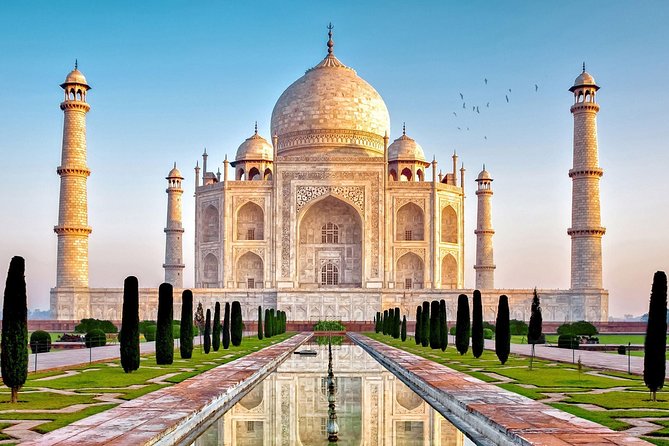
The Golden Triangle links three of India’s most important tourist cities: Jaipur, Agra, and Delhi. This version starts in Jaipur and moves in one direction, so you do not waste time circling back. That simple route design is a real advantage when you have only four days.
You can be picked up at a Jaipur hotel, airport, railway station, or another requested location. At the end, you can be dropped at a chosen address in Delhi, Noida, or Gurugram. That makes the tour useful as both a sightseeing trip and a point-to-point transfer between Rajasthan and the Delhi area.
The tour is private, not a shared group outing. That matters in India, where traffic can make a fixed schedule hard to follow. Your car is air-conditioned, bottled water and soft drinks are provided during the drives, and the tour can be adjusted to suit your needs. The exact length of each transfer depends on traffic, so keep your schedule flexible.
You also have a local guide for sightseeing in each destination. A guide can help explain the difference between Rajput and Mughal architecture, show you how the monuments fit together, and help with entrance tickets so you do not need to wait in the ticket queue.
More Golden Triangle itineraries:
- Golden Triangle & Ranthambore: 4-Day Private Tour from Delhi
★ 5.0 · 355 reviews - From Delhi: Private 3-Day Golden Triangle Tour with Hotels
★ 4.9 · 339 reviews - From Delhi: Private 5-Day Golden Triangle Tour
★ 4.9 · 208 reviews
Day 1: Jaipur’s forts, palaces, and precise astronomy
Your first day is devoted to Jaipur, the capital of Rajasthan and one of India’s most visually distinctive cities. The city tour includes several major sights, so expect a full introduction rather than a slow neighborhood walk.
Amber Fort and the hill country outside Jaipur
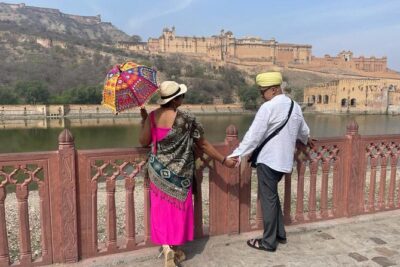
Amber Fort, also called Amer Fort, sits about 11 kilometers from Jaipur on a hill above the former royal town of Amer. Its setting is part of the appeal. You get broad views around the fort, along with courtyards, gateways, halls, and palace rooms that show the power of Rajasthan’s Rajput rulers.
The schedule allows about two hours at Amber Fort, though the supplied timing is presented briefly in the stop details. Your guide is particularly useful here because the complex can feel like a sequence of grand spaces unless someone explains how the royal residence, defensive walls, and decorative interiors relate to one another.
This is an early highlight, but it is also a busy start. Wear practical shoes and expect walking through large stone courtyards and uneven areas. The tour includes transport and guiding, but entrance fees are not included in the advertised price.
Jal Mahal, a quick photo stop
Jal Mahal is a palace set in Man Sagar Lake. Only the upper portion is visible above the water, making it a very different sight from the large forts and palaces elsewhere in Jaipur.
The stop is scheduled for about 15 minutes, so treat it as a viewing and photography pause rather than a palace visit. That short timing is sensible because the palace is seen from the lakeside rather than explored inside.
A few more Jaipur tours worth weighing up
- From Delhi: Private 4-Day Golden Triangle Tour with Pickup
★ 4.6 · 38 reviews - 4 Days Golden Triangle Tour – Private, Guided & All Inclusive
★ 5.0 · 27 reviews - Private 4-Day Wildlife & Taj Mahal Tour from Jaipur to Delhi
★ 5.0 · 23 reviews - From Jaipur- 4 Day Private Jaipur & Agra Tour With Delhi Drop
★ 5.0 · 17 reviews
Jantar Mantar, where science becomes architecture
Jantar Mantar is one of Jaipur’s most unusual sights. Built in 1734 by Sawai Jai Singh II, it contains 19 large astronomical instruments designed to measure time, track celestial positions, and make calculations using the sun and stars.
You have about an hour here. I like this stop because it adds an intellectual side to Jaipur’s royal story. The huge geometric instruments are easier to appreciate with a guide, since their purpose is not always obvious from their shape.
City Palace and Hawa Mahal
The City Palace was established when Jaipur was founded in 1727, after the court moved from Amber. It remains one of the city’s essential stops, with courtyards and royal buildings that help explain how Jaipur grew as a planned capital.
The visit is scheduled for about an hour. You then see Hawa Mahal, the famous pink and red sandstone facade built in 1799. Its many small windows allowed women of the royal household to observe street life without being seen. The tour description lists Hawa Mahal among the Jaipur sights, but it does not give a separate visit length, so expect it to function as part of the city circuit.
After sightseeing, you are driven to your Jaipur hotel. This first day packs in a lot, but the route is logical: hill fort first, then the lake, observatory, palace, and iconic facade.
Day 2: Chand Baori and Fatehpur Sikri on the way to Agra
After breakfast, you leave Jaipur for Agra. The road transfer is broken up by two worthwhile stops, which makes the day more than a simple drive between hotels.
Chand Baori at Abhaneri
Chand Baori is an enormous stepwell dating from the eighth or ninth century. Its water was reached by about 3,500 steps arranged in repeated patterns on the sides of the well.
You spend around 30 minutes here. That is enough to see the design and take in its scale, though it is not a long archaeological visit. The stop gives you a glimpse of practical water engineering in Rajasthan, a useful contrast to the palaces and royal residences in Jaipur.
Fatehpur Sikri, the abandoned Mughal capital
Fatehpur Sikri is a red sandstone city founded by a 16th-century Mughal emperor just west of Agra. The central buildings include the Jama Masjid and the enormous Buland Darwaza gateway.
The itinerary allows about two hours, making this the more substantial stop of the day. I would pay close attention to the guide here. Fatehpur Sikri is not just a collection of attractive red buildings. Its courtyards, religious spaces, and palace structures reflect the ambition of a short-lived imperial capital.
By the time you arrive in Agra and check in, the day will have included a long road journey and two historic sites. The hotel night is important. It gives you a base for the early Taj Mahal visit rather than forcing you to travel from Jaipur before sunrise.
Day 3: The Taj Mahal, Agra Fort, and the Baby Taj

Day three is the emotional center of the tour. The Taj Mahal visit takes place at sunrise, followed by Agra Fort and Itmad-ud-Daula.
Sunrise inside the Taj Mahal
You visit the Taj Mahal early, with about two hours for a guided visit inside the monument. The building is an ivory-white marble mausoleum on the southern bank of the Yamuna River, built by the Mughal emperor Shah Jahan in memory of his wife.
The sunrise timing is a smart choice. Early light changes the color of the marble, and the cooler start is easier than arriving later in the day. The Taj Mahal is also a place where a guide helps you notice details rather than simply walking up, taking a photograph, and leaving.
Transport includes the battery bus ride between the parking area and the monument. This is a useful practical detail because vehicles cannot take you directly to the Taj Mahal entrance. Your guide also helps you purchase monument tickets, so you do not need to handle the ticket queue yourself.
The Taj Mahal can feel rushed if you try to photograph every angle, inspect every detail, and listen to a full explanation in two hours. I would decide in advance what matters most to you: the first view through the gate, the marble inlay, the interior chamber, the river side, or time for photographs.
Agra Fort and the Mughal seat of power
After the Taj Mahal, you visit Agra Fort for about an hour. This was the main residence of the Mughal emperors until the capital moved from Agra to Delhi in 1638.
Agra Fort helps put the Taj Mahal in context. The Taj is a mausoleum, while the fort was a working center of imperial power. Within its walls, your guide can connect the rulers, buildings, and political changes that shaped Mughal India.
An hour gives you a focused introduction, not a complete exploration of every section. That is typical of a four-day route, where the goal is to see the key parts of each city without spending an entire day at one monument.
Itmad-ud-Daula, the small marble masterpiece
Itmad-ud-Daula is often called the Baby Taj, though the nickname can make it sound like a minor copy. It is a Mughal mausoleum in Agra, sometimes described as a jewel box because of its compact scale and detailed decoration.
The visit lasts about 45 minutes. I like the contrast with the Taj Mahal. After the huge symmetry and ceremony of the Taj, this smaller tomb gives you a closer look at delicate marble work and inlay.
The day ends with your transfer to Delhi and hotel check-in. This is the longest-feeling part of the itinerary, since you have an early start in Agra followed by sightseeing and a road journey. The private car helps, but you should still expect a tiring day.
Day 4: Delhi’s monuments and ceremonial center

After breakfast, you take a half-day guided tour of Delhi. The route combines an ancient Islamic monument, a war memorial, the national government district, and a historic stepwell.
Qutub Minar and the Qutb complex
Qutub Minar is a 72.5-meter victory tower within the Qutb complex, a UNESCO World Heritage Site in New Delhi’s Mehrauli area. You have about an hour here.
The tower is the main visual focus, but the complex matters as a whole. The guide can help you read the site as a layered record of Delhi’s early Islamic architecture rather than treating the minaret as an isolated photo stop.
India Gate and the government district
India Gate is a war memorial on the eastern end of New Delhi’s ceremonial axis. The stop is brief, about 15 minutes, so this is primarily a chance to see the monument and understand its place in the city plan.
You also pass the Sansad Bhavan, the Parliament building, and Rashtrapati Bhavan, the official residence of India’s president. These are viewed as part of the Delhi city tour, not described as interior visits. Expect a drive-by or exterior look rather than a long stop.
This part of Delhi shows a different face of the capital. Jaipur gives you royal Rajasthan, Agra gives you Mughal monuments, and central Delhi presents the formal institutions of modern India.
Agrasen Ki Baoli
Agrasen Ki Baoli is a protected historic stepwell measuring about 60 meters long and 15 meters wide. The 15-minute stop is short, but the site is a memorable final contrast to Chand Baori.
The two stepwells serve different purposes in the itinerary. Chand Baori impresses through scale and repeated geometry, while Agrasen Ki Baoli adds an atmospheric historic site within Delhi itself.
After the city tour, you are dropped at your requested location in Delhi, Noida, or Gurugram. That final flexibility is helpful if you are continuing your trip, catching a flight, or heading to a separate hotel.
What the $174 price really includes
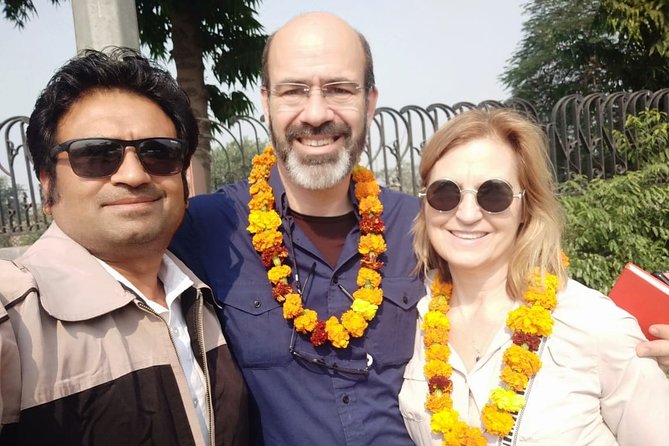
At about $174.01 per person, the tour can offer good value if you want a private car, guides, hotels, and a tightly arranged route. The price is especially attractive for a small group, since the vehicle and guide arrangements are shared among the people in your booking.
The hotel inclusion needs careful attention. Three nights of accommodation and daily breakfasts apply if you choose the option that includes hotels. Rooms are generally arranged on a twin-sharing basis. A booking of three people normally uses triple-sharing, while two rooms for three people cost extra.
Monument entrance fees are not included. The stated estimate is $60 per person for all monuments. Add that amount when comparing the total cost with other tours. Gratuities are optional and separate.
The vehicle size depends on your party:
- One or two people: four-seat sedan
- Three or four people: six-seat wagon
- Five to ten people: ten-seat van
The private format is one of the strongest value points. You are not paying for a luxury experience, but you are buying a simpler trip with fewer transport decisions, hotel transfers, local guides, breakfast, water, and a direct drop-off at the end.
Guides, drivers, and the comfort factor
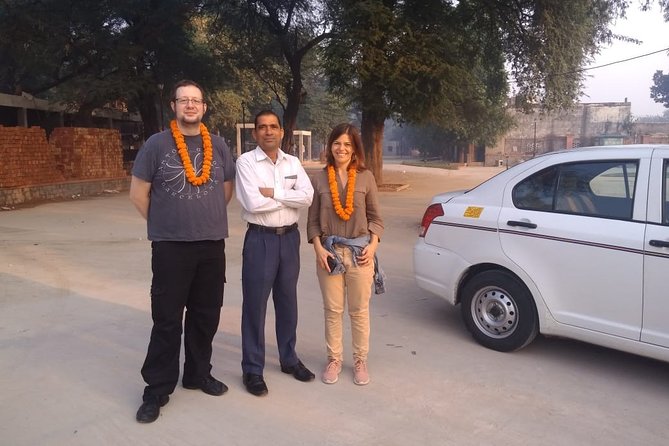
The tour includes private local guides for sightseeing, and the available feedback gives particular credit to the guides for being enthusiastic, friendly, and clear. No individual guide names are provided, so you should not expect a named guide guaranteed in advance.
The driver is a more consistent part of the four-day experience. Sanjeev is praised for his friendly manner, patience, humor, courtesy, and safe driving. Those qualities matter on a route where road transfers connect every city and traffic can affect the day’s timing.
The car is air-conditioned, and mineral water and soft drinks are supplied during journeys. These are small details, but they make a difference during long transfers. Still, this is not a slow travel plan. You will spend meaningful time on the road, especially between Jaipur, Agra, and Delhi.
Who should book this four-day itinerary
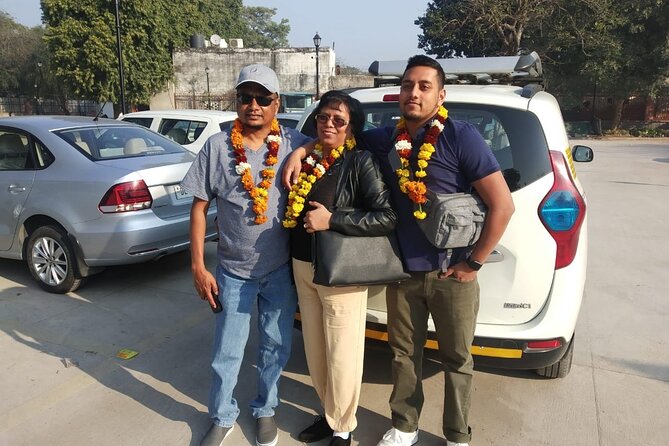
I would recommend this tour most strongly to a first-time visitor who wants the classic North India highlights with minimal planning. It is also a good fit for couples, families, and small groups who value a private vehicle and want the option to adjust the experience.
The plan suits you if you want:
- The Taj Mahal at sunrise
- Major sights in Jaipur, Agra, and Delhi
- A private car instead of shared transport
- Local guides at the monuments
- Hotels and breakfast included in the selected booking option
- Pickup in Jaipur and drop-off in Delhi, Noida, or Gurugram
I would think twice if you prefer long, unhurried visits or several free afternoons. Four days is enough to see the headline sights, but not enough for a relaxed study of each city. You should also budget for the separate monument fees and confirm the hotel option before paying.
Free cancellation is available if you cancel at least 24 hours before the start time. Changes or cancellations made inside that window are not accepted for a refund.
Should you book it?
Book this tour if you want an efficient first look at India’s Golden Triangle and prefer having the practical pieces handled for you. The strongest reasons are the private air-conditioned transport, the sunrise Taj Mahal visit, the stop at Fatehpur Sikri, and the included guides and hotel nights.
Skip it if your priority is a slow schedule with several nights in each city. For everyone else, this is a sensible route at a reasonable starting price, provided you add the $60 monument fee, check the hotel category, and accept that the four days will be full.
FAQ
Where does the tour begin and end?
Pickup is available from a hotel, airport, railway station, or another requested location in Jaipur. The tour ends with drop-off at a requested location in Delhi, Noida, or Gurugram.
How long is the tour?
The tour lasts approximately four days and includes three nights of accommodation when you select the option with hotels.
Is this a private tour?
Yes. Only your group participates, and transport is provided in a private, air-conditioned vehicle.
What type of vehicle is used?
One or two people travel in a four-seat sedan. Three or four people use a six-seat wagon, while groups of five to ten use a ten-seat van.
Are hotel stays and breakfasts included?
Three nights of accommodation and daily breakfasts are included when you book the option that includes hotels. Rooms are generally provided on a twin-sharing basis, with triple-sharing used by default for a booking of three people.
Are monument entrance fees included?
No. Entrance fees are separate, with the total listed at about $60 per person for all monuments. Guides can help you buy the tickets and avoid waiting in the ticket queue.
Is the Taj Mahal visit at sunrise?
Yes. The itinerary includes a sunrise visit with a guided tour inside the Taj Mahal lasting approximately two hours. A battery bus ride to and from the Taj Mahal parking area is included.
Recently added around Jaipur
- Taj Mahal Entrance Ticket★ 5.0 · 3 reviews
- Jaipur: Ajmer & Pushkar Day Trip with Lunch & Camel ride★ 4.3 · 3 reviews
- Spiritual Private Tour of Vrindavan and Mathura★ 3.0 · 3 reviews
- Agra’s Hidden Gems & Flavors on a Thrilling Tuk-Tuk Tour 3-4 Hrs★ 5.0 · 3 reviews
- Jaipur: City Tour Full-Day Sightseeing with Guide★ 5.0 · 3 reviews
- Shop Agra Like a Local: Unique Indian Handicrafts Tour★ 5.0 · 3 reviews
- Agra: Taj Mahal and Agra Fort Private Guided Half-Day Trip★ 5.0 · 3 reviews
- From Jaipur: Taj Mahal Guided and Agra Tour By Car★ 5.0 · 3 reviews
Golden Triangle Tours, compared.
Golden Triangle & Ranthambore: 4-Day Private Tour from Delhi
Read our review →
Private 6-Day Golden Triangle Tour: Delhi, Agra, Jaipur by Car
Read our review →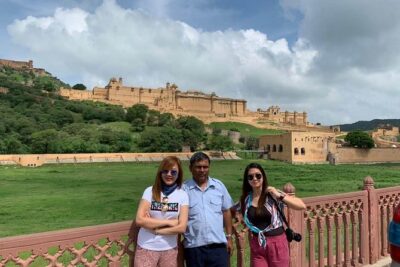

4 Days Golden Triangle Tour – Private, Guided & All Inclusive
Read our review →Browse the lists this tour appears in