
Reviewed · COOKING CLASSES
Jaipur: Cooking Class with a Local Family
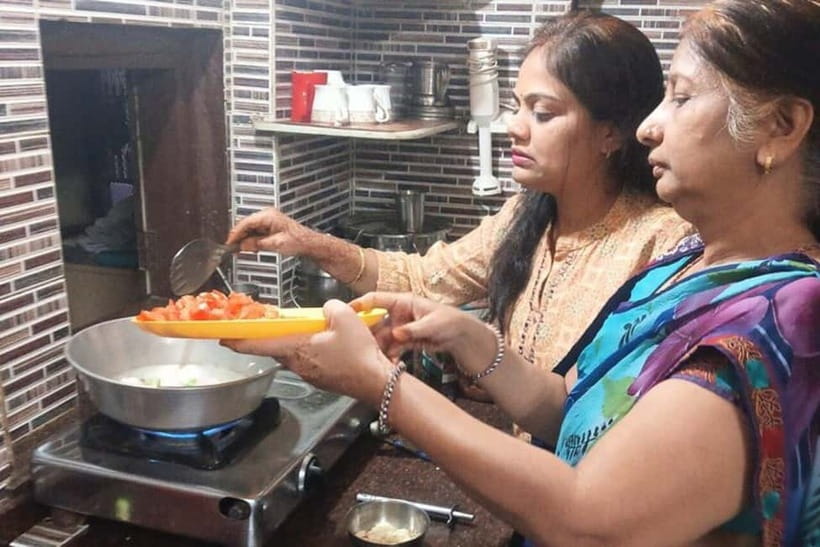
Rajasthan’s best food lesson may happen far from a restaurant, at a family kitchen near Jaipur’s Johari Bazar. Swati and her family welcome you into their home, then guide you through dishes such as dal baati churma, ker sangri, chapati, and vegetable curries.
I like the personal choice built into the class, since you may help select dishes that suit your tastes or dietary needs. I also like the small size, limited to six people, which leaves room for questions and real conversation. The only drawback is practical: transportation is not included, and the meeting point can require careful navigation through the old market area.
In This Review
- Key points at a glance
- A Jaipur cooking class with a family feel
- Starting with chai and conversation
- From chapati dough to a full meal
- Rajasthan on the plate: dal baati churma and ker sangri
- Spices with a purpose
- A flexible menu for allergies and preferences
- Eating what you have made
- The cultural exchange beyond the stove
- Meeting point, group size, and timing
- What $19 buys you
- Who will enjoy this most
- Should you book the Jaipur family cooking class?
- FAQ
- How long does the cooking class last?
- How much does the experience cost?
- Where does the class take place?
- Is transportation included?
- How many people can join the class?
- Which languages are spoken?
- What food can I learn to cook?
- Can the menu accommodate allergies or intolerances?
- Are drinks and dessert included?
- Can I cancel the booking?
Key points at a glance
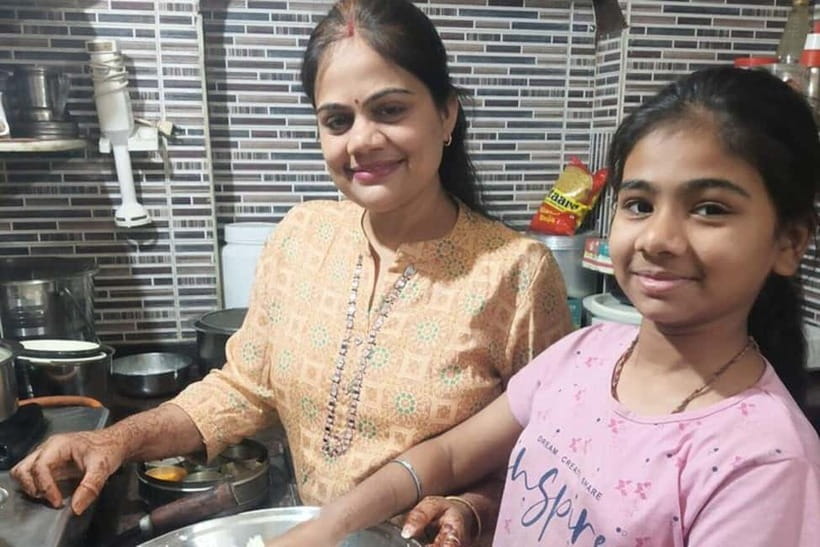
- Cook in Swati’s family home: This is a home-based food lesson, not a demonstration behind a restaurant counter.
- Choose dishes to suit you: The family has adapted menus for allergies, intolerances, and personal preferences, including a fully gluten-free menu.
- Learn the why behind spices: Swati explains how ingredients are used, not just what to add and when.
- Expect more than one curry: Past menus have included chai, chapati, paratha, dosa, dal, palak paneer, biryani, rice, pakora, and sweets.
- Recipes follow you home: You receive recipes for the dishes prepared, often through WhatsApp or by electronic message.
- Small and affordable: Three hours and a maximum of six participants cost $19 per person, before your own transport.
A Jaipur cooking class with a family feel
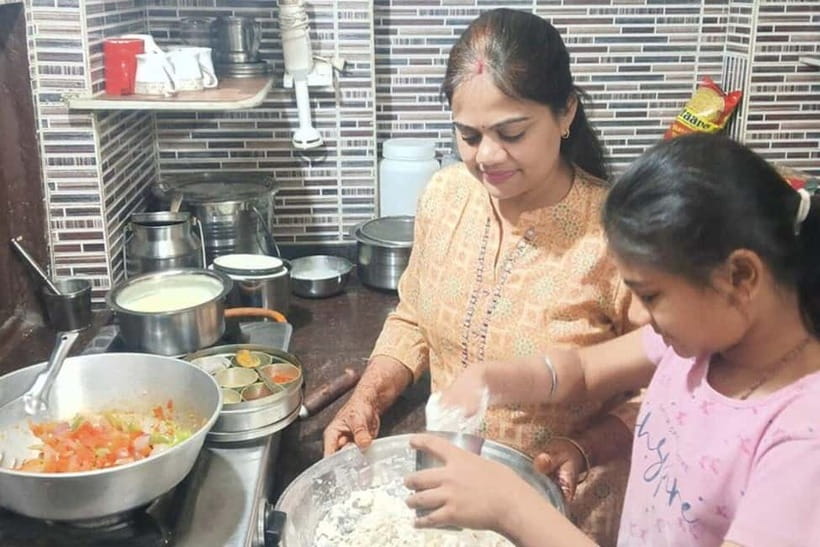
This experience works because the cooking is only part of the visit. You enter a real Jaipur home, meet Swati and members of her family, and spend several hours talking, preparing food, and eating together.
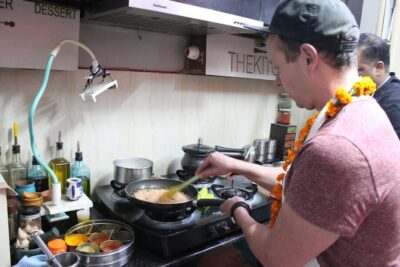
The family setting gives the class a different rhythm from a polished commercial kitchen. You are not simply watching a chef produce a finished meal. You can roll dough, shape chapatis, stir dal, grind or combine spices, and ask why a certain ingredient belongs in a dish.
That personal setting also makes the class useful for understanding daily food in northern India. Restaurant menus can show you what a dish looks like. A home kitchen gives you a better sense of how ingredients are chosen, how dishes are adjusted, and how food connects with family routines.
Swati is the main teacher, with help from her mother-in-law and other family members. Several people who attended found the family especially welcoming, and that warmth is a major part of the value. You should come ready to talk, not just cook.
More cooking classes in Jaipur:
- Pink City Cooking Class
★ 5.0 · 452 reviews - Jaipur Market Tour & Vegetarian Rajasthani Home Cooking Class
★ 5.0 · 113 reviews - Cooking Class in Jaipur – Family Experience with Meal & Transport
★ 5.0 · 101 reviews
Starting with chai and conversation
The class commonly begins with a welcome drink, often masala chai. In one detailed menu, you helped prepare chai to your own taste before sitting down to talk about similarities and differences between Indian and other cultures.
This opening is useful. Chai gives everyone a simple first task, and the conversation helps you settle into the home before the more involved cooking begins. It also introduces a basic lesson in Indian food: small changes in spice, sweetness, and strength can make a familiar drink taste quite different.
The class may be held in the morning, around lunchtime, or in the evening, depending on the available start time. That flexibility is helpful if you are fitting it between Jaipur sightseeing stops. Keep in mind that the total experience lasts about three hours, so you will want to protect enough time for cooking and eating rather than squeezing it into a rushed schedule.
From chapati dough to a full meal
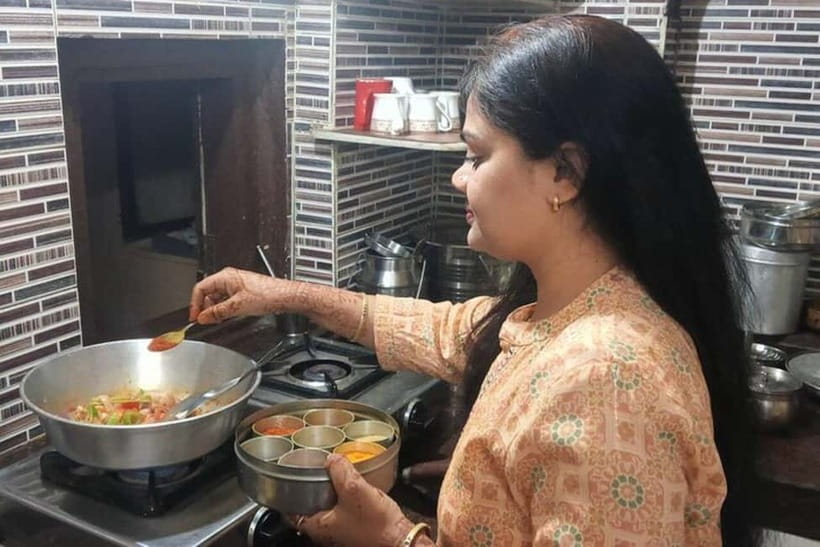
The hands-on work usually includes chapatis and vegetable curries. Depending on the menu chosen, you might also prepare parathas, dal tadka, cumin rice, vegetable biryani, dosa, aloo gobi, palak paneer, or vegetable pakora.
Chapati is a particularly good dish to learn because it looks simple but rewards practice. Swati can show you how to work the dough, roll it, and cook it properly. You may not produce perfect circles on the first attempt, but you will leave with a better feel for the texture and heat needed at home.
Paratha offers another useful lesson, since it introduces a richer, layered flatbread. Rice dishes show a different side of Indian cooking, with cumin rice and vegetable biryani relying on careful seasoning rather than a single thick sauce.
The curry choices help you compare methods. Dal teaches you how lentils become a deeply flavored staple with spices and tempering. Aloo gobi brings together potato, cauliflower, and spice. Palak paneer adds spinach and fresh cheese, and the family has been noted for making its own paneer and ghee.
You will not necessarily prepare every dish listed above in one three-hour session. The menu can change according to your preferences, the group, and the time available. That is a strength, but it also means you should ask what you will cook when confirming the class.
Rajasthan on the plate: dal baati churma and ker sangri
The experience places special attention on classic Rajasthani food, including dal baati churma and ker sangri. These dishes matter because they show how Rajasthan’s food developed around local ingredients and a dry climate.
Dal baati churma combines lentils, baked or roasted wheat dumplings, and a sweet crumbled wheat preparation. It gives you three textures and flavors in one meal: savory dal, firm baati, and sweet churma.
Ker sangri is made with desert beans and berries associated with Rajasthan. It is a good reminder that regional Indian cooking is not only about the restaurant favorites most visitors already know. Some ingredients reflect the places where people have long lived and cooked.
The class may instead focus on dishes selected by you. That choice is worth using carefully. If you want a stronger Rajasthan focus, ask about dal baati churma and ker sangri before the session. If you are new to Indian cooking, a menu of dal, chapati, rice, and one vegetable curry may give you the most practical skills to repeat at home.
More workshops in Jaipur:
- Interactive Cooking Class with a Local Family in Jaipur
★ 5.0 · 90 reviews - Jaipur: Block Printing Workshop and Hands-on Experience
★ 5.0 · 78 reviews - Hands-on Block Printing Workshop
★ 5.0 · 76 reviews - Jaipur Pink City Cooking Class
★ 5.0 · 73 reviews
Spices with a purpose
A useful cooking class should explain more than quantities. Swati introduces Indian spices and ingredients, then discusses the purpose of each one in the dish.
That means you can learn how a recipe is built rather than blindly copying a list. You may find that the same spice behaves differently depending on when it enters the pan, how it is heated, and what ingredients follow it.
This is where the class earns its modest price. A recipe sent electronically is handy, but a written method cannot always explain texture, smell, or timing. Watching the family cook and asking questions gives you clues that a cookbook often misses.
The emphasis is on traditional methods passed through generations. At the same time, Swati appears willing to explain the process in a clear, practical way. That combination suits beginners, since you get family knowledge without needing prior cooking experience.
A flexible menu for allergies and preferences
Food concerns are worth discussing before you arrive. The family has prepared menus for allergies and intolerances, and one group cooked an entirely gluten-free meal. Other participants were able to choose foods they liked or request changes during planning.
That flexibility is valuable in India, where people with dietary limits may find it difficult to communicate exact concerns in an ordinary restaurant. Still, you should state your needs clearly in advance. The available information supports accommodation, but it does not promise that every request can be met in every session.
You can also choose how active you want to be. You might take part in most of the preparation, or watch more closely and join when a task interests you. If you want maximum hands-on time, say so at the start. If you are traveling with children or someone less confident in the kitchen, the adjustable pace may help.
Eating what you have made
The final meal is not an afterthought. You sit down to eat the food prepared during the class, along with items such as dessert, homemade lemon pickle, poppadoms, jaggery, chikki, or gulab jamun depending on the session.
The dessert adds a useful contrast to the savory dishes. Gulab jamun offers a syrupy finish, while chikki is closer to a peanut brittle made with jaggery. These extras also give you a chance to taste Indian sweets and snacks that you may not order during a standard sightseeing day.
The family’s use of fresh ingredients is another plus. Specific sessions have included homemade paneer and ghee, as well as ingredients bought from a local market. That does not mean every class will feature the same items, but it signals an approach centered on cooking from scratch.
Food hygiene is naturally an important concern when eating in a private home. The family has been described as careful about cleanliness and food safety, and one participant specifically noted the use of mineral water for cooking. If you have a sensitive stomach, explain your concerns early and ask how water and ingredients will be handled.
The cultural exchange beyond the stove
The strongest part of the experience may be the time between cooking steps. Family members may join the conversation, share personal stories, show family photographs, or answer questions about life in Jaipur and Indian customs.
Some sessions have included henna on the hands and a small handmade bag to take away. These touches are not guaranteed, so I would treat them as possible extras rather than promised features.
What you can count on is a chance to speak with an Indian family in a relaxed setting. That can make Jaipur feel less like a sequence of monuments and more like a lived-in city. You will not get a formal lecture on Rajasthan, and that is fine. The useful lessons often come through ordinary questions about food, family, work, and travel.
The class is conducted in English and Hindi. English-language communication has also been used for directions and menu planning, with WhatsApp or phone contact available for practical questions before the meeting.
Meeting point, group size, and timing
The meeting point is 3664, Motisingh Bhomiyon Ka Rasta, fourth crossing, Johari Bazar, Jaipur 302003. Transportation to and from the activity is not included, so plan your own way there and allow time to find the address.
The Johari Bazar location puts you near one of Jaipur’s best-known old-city areas, but market streets and crossings can be confusing. Use the host’s directions and contact details rather than assuming a driver will know the exact home from the street name alone.
The group is limited to six participants. That is small enough for individual help and conversation, though the exact feel will depend on how many people book your time slot.
The class lasts three hours. Start times vary, so check availability when choosing a date. Pets are not allowed. The activity is listed as wheelchair accessible, but you may still want to confirm the precise entrance and movement arrangements before booking if you have specific access needs.
What $19 buys you
At $19 per person, this is strong value if you care about food and local contact. The price includes welcome drinks, instruction with the family, an introduction to spices and ingredients, hands-on preparation, dessert, and electronic recipes.
You also receive something harder to price: time in a private home with a family willing to explain its food traditions. A restaurant meal might cost less or more depending on where you eat, but it would not usually teach you how to make the dishes or provide a personal cultural exchange.
The main extra cost is your transport. Personal cooking equipment is not included, though the class is not presented as a workshop where you need to buy tools. You are paying for instruction, ingredients, food, and hospitality rather than taking equipment home.
The reserve-now, pay-later option can help if your Jaipur schedule is still changing. Free cancellation is available up to 24 hours before the activity for a full refund, which gives you some protection if plans shift.
Who will enjoy this most
I would choose this class if you like asking questions, trying unfamiliar foods, and learning by doing. It is especially good for home cooks who want recipes they can repeat after returning home.
It also suits solo visitors and couples who want a more personal Jaipur experience. Families may appreciate the welcoming setting and flexible participation, though the information provided does not specify a minimum age for children.
People with food allergies or dietary restrictions should contact the host before arrival. The family has shown strong flexibility, including gluten-free cooking, but clear communication remains essential.
You may want to skip it if you dislike entering private homes, prefer a formal professional kitchen, or want a fixed menu with every dish guaranteed in advance. The relaxed format is part of the appeal, but it also means the exact meal can vary.
Should you book the Jaipur family cooking class?
I would book this if you want more than a quick meal and you are happy with a warm, informal home setting. Swati’s patient teaching, flexible menus, family involvement, and follow-up recipes make the $19 fee unusually reasonable.
Ask in advance about the dishes you most want to learn, especially if dal baati churma or ker sangri is your priority. Also confirm your dietary needs, transport plan, and preferred level of hands-on work.
For a short Jaipur activity that combines food, conversation, and practical skills, this is an easy choice. It gives you a meal to enjoy now and recipes to try later, which is a fine souvenir from the Pink City.
FAQ
How long does the cooking class last?
The class lasts three hours.
How much does the experience cost?
The price is $19 per person.
Where does the class take place?
It takes place in a local family home at 3664, Motisingh Bhomiyon Ka Rasta, fourth crossing, Johari Bazar, Jaipur 302003.
Is transportation included?
No. Transportation to and from the activity is not included.
How many people can join the class?
It is a small-group activity limited to six participants.
Which languages are spoken?
The class is offered in English and Hindi.
What food can I learn to cook?
Possible dishes include dal baati churma, ker sangri, chapatis, vegetable curries, dal, parathas, dosa, aloo gobi, palak paneer, vegetable biryani, rice, and Indian desserts. The exact menu may vary.
Can the menu accommodate allergies or intolerances?
The family can accommodate dietary needs, and fully gluten-free menus have been prepared. Tell the host about allergies or intolerances in advance.
Are drinks and dessert included?
Yes. Welcome drinks, an Indian dessert, and the cooking class are included.
Can I cancel the booking?
Yes. You can cancel up to 24 hours in advance for a full refund. You can also reserve now and pay later.
Recently added around Jaipur
- Taj Mahal Entrance Ticket★ 5.0 · 3 reviews
- Jaipur: Ajmer & Pushkar Day Trip with Lunch & Camel ride★ 4.3 · 3 reviews
- Spiritual Private Tour of Vrindavan and Mathura★ 3.0 · 3 reviews
- Agra’s Hidden Gems & Flavors on a Thrilling Tuk-Tuk Tour 3-4 Hrs★ 5.0 · 3 reviews
- Jaipur: City Tour Full-Day Sightseeing with Guide★ 5.0 · 3 reviews
- Shop Agra Like a Local: Unique Indian Handicrafts Tour★ 5.0 · 3 reviews
- Agra: Taj Mahal and Agra Fort Private Guided Half-Day Trip★ 5.0 · 3 reviews
- From Jaipur: Taj Mahal Guided and Agra Tour By Car★ 5.0 · 3 reviews
Cooking Classes, compared.
Jaipur Market Tour & Vegetarian Rajasthani Home Cooking Class
Read our review →
Cooking Class in Jaipur – Family Experience with Meal & Transport
Read our review →
Interactive Cooking Class with a Local Family in Jaipur
Read our review →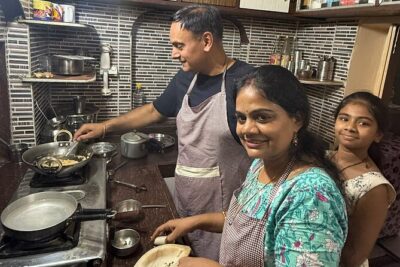
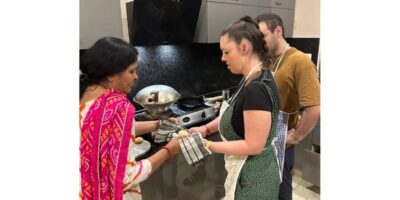
Traditional cooking class and storytelling session
Read our review →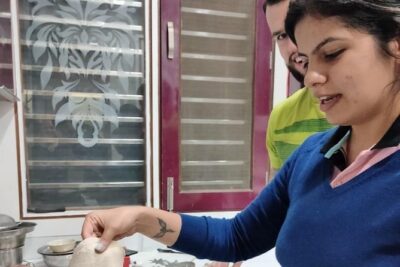
Agra Cooking Classes (Pick up and Drop available)
Read our review →Browse the lists this tour appears in