
Reviewed · CITY TOURS
Old Agra City Short Cultural Walk
Agra’s famous monuments tell only part of the story. This two-hour evening walk takes you into old Agra, where railway architecture, Hindu worship, Muslim traditions, spice shops, sweets, cosmetics, and ordinary street life all meet. Arif, the local guide, leads the way and explains the city in clear, conversational English.
I love two things here: first, the chance to visit both Jama Masjid and Shri Mankameshwar Mandir, giving you a look at two important faiths in daily Agra life; second, the focus on markets and working streets rather than another grand monument. The main consideration is that this is a walking tour through busy old-city lanes, so expect noise, crowds, uneven footing, and a moderate amount of walking.
In This Review
- Key points to know before you book
- Why this short walk adds something to Agra
- Meeting near Bijli Ghar
- Agra Fort Railway Station and the story of travel
- Jama Masjid and Muslim life in Agra
- Shri Mankameshwar Mandir, one of old Agra’s oldest temples
- Spice stalls, women’s shops, and old-city commerce
- What Arif brings to the walk
- The two-hour pace and walking conditions
- Is $50 per person good value?
- Who should book this old Agra walk?
- Booking advice and cancellation terms
- Should you book the Old Agra City Short Cultural Walk?
- FAQ
- How long does the Old Agra City Short Cultural Walk last?
- Where does the tour begin?
- Where does the activity end?
- Which places of worship are included?
- Is food included?
- What should I wear?
- Can I cancel for a full refund?
Key points to know before you book
- Old Agra beyond the main monuments: See streets and shops that most visitors pass by.
- Two major places of worship: Visit the grand Jama Masjid and one of Agra’s oldest Hindu temples.
- A local guide named Arif: Hear stories about architecture, history, religion, and present-day life.
- Markets with real local purpose: Look for spices, sweets, clothing, cosmetics, betel-leaf wholesalers, and Ayurvedic doctors.
- A short evening format: The walk lasts about two hours and returns to the starting point.
- Modest clothing matters: Cover your knees and shoulders for entry to the mosque and temple.
Why this short walk adds something to Agra
Agra is often treated as a one-stop city. You see the Taj Mahal, perhaps Agra Fort, and then move on. That plan covers the headline sights, but it leaves out the city where people actually shop, worship, work, and meet one another.
This walk shifts your attention from imperial buildings to ordinary Agra. You still encounter historic architecture, but the focus is on how the old city functions now. A spice seller, a sweet shop, a religious shrine, and a railway station can say as much about Agra as a palace courtyard.
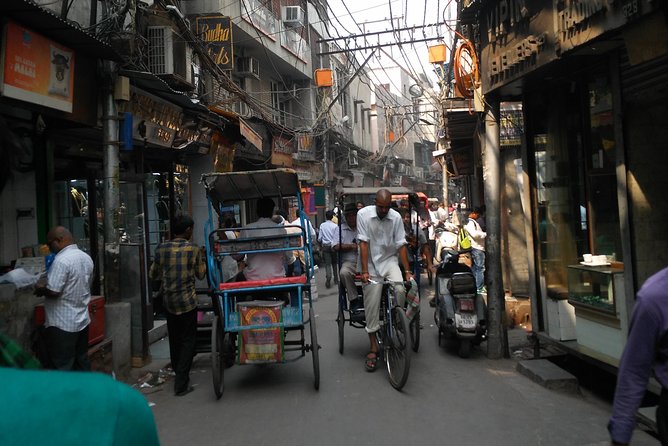
The evening timing helps. The old streets take on a different character as shops trade, people finish errands, and religious activity continues. You should not expect a quiet heritage stroll. The appeal is the opposite: noise, movement, color, strong smells, and narrow lanes where the city feels busy with its own life.
Arif’s role is important because these streets can be hard to interpret on your own. The walk is not just a route from one address to another. He explains the meaning of the places you see, answers questions, and connects the market stalls with Agra’s past and present.
More Walking Tours in Agra
- Agra Walking Tour
★ 5.0 · 109 reviews - Agra: Street Food Walking Tour, Spice Market, & Tuk-tuk Ride
★ 4.9 · 102 reviews - Agra 101 City Walk
★ 5.0 · 41 reviews
Meeting near Bijli Ghar
The walk begins at Bijli Ghar, near Agra Fort Crossing in Pipal Mandi, Mantola. The meeting point is close to public transportation, but old Agra addresses can still be confusing, so pay attention to the precise location details sent after booking.
The activity is private, meaning only your own group takes part. That gives you more freedom to ask questions and keep the conversation focused on your interests. It also makes the $50 per person price easier to assess for couples, families, or small groups who prefer a personal guide rather than a large walking party. Group discounts are available, so check the final rate if several people are booking together.
The tour includes bottled water and a professional storyteller or guide. Food and drinks are not included. That distinction matters in a market district, since you may see sweets, spices, and other tempting goods but should not assume tasting is part of the walk.
Agra Fort Railway Station and the story of travel
One of the opening stops is Agra Fort Railway Station, a useful reminder that Agra is not only a Mughal city. The station’s British colonial architecture offers a different layer of the city’s past, and the guide explains the role railways played in the lives of ordinary people in India.
The stop is brief, about ten minutes, and admission is free. Do not expect a long architectural tour or a railway museum. The value is in the setting and the explanation. A station is a place used by workers, families, traders, and pilgrims, so it gives you a practical connection to the wider life of the city.
This is also a good early contrast. Agra’s best-known identity is tied to emperors and monuments, but the railway station points toward the colonial period and modern movement. The walk uses that contrast well, showing that the city’s story did not end with the Mughal court.
Jama Masjid and Muslim life in Agra
Jama Masjid is the grand mosque of Agra and one of the key architectural stops. You spend about ten minutes here, with no admission ticket listed. The guide explains the building and offers context about Islamic life in the city.
The mosque is especially useful for visitors who have seen Agra’s Mughal monuments but have not considered how Islamic tradition continues in daily life. The stop connects architecture with worship, community, and local custom rather than treating the mosque as a photo stop alone.
Keep your clothing respectful. Knees and shoulders should be covered, and you should follow the guide’s instructions about conduct and access. Religious sites can have rules that change with circumstances, so a flexible attitude is wise.
The short time here is both a strength and a limit. It keeps the whole activity moving and suits people who want a broad introduction to old Agra. If you want a detailed architectural study of the mosque, this walk will feel too brief. If you want a clear introduction as part of a larger city experience, ten minutes can work well.
A completely different kind of day out from Agra:
- Agra: Skip-the-Line Taj Mahal & Agra Fort Private Tour
★ 4.9 · 1,546 reviews - Agra: Taj Mahal Express Entry Tickets
★ 4.8 · 684 reviews - Agra: Taj Mahal and Mausoleum Guided Tour with Skip-the-Line
★ 4.8 · 631 reviews - Private Guided Taj Mahal Tour with Skip The Line Entry Ticket
★ 5.0 · 562 reviews
Shri Mankameshwar Mandir, one of old Agra’s oldest temples
The route also visits Shri Mankameshwar Mandir, an important Hindu temple dedicated to Lord Shiva. It is described as one of the oldest temples in Agra, and the guide explains the life of Hindu devotees there.
This stop gives the walk a needed balance. You are not being shown a single version of Agra. The mosque and temple together help you understand the city as a place where different religious traditions shape the rhythm of daily life.
Again, expect a short visit of roughly ten minutes rather than a formal religious lecture. The best use of the stop is to listen, observe respectfully, and ask Arif about what you are seeing. Visitors should dress with the same care required at the mosque, covering shoulders and knees.
Photography and access can vary at active places of worship. Ask before taking pictures, and do not assume every interior area is open. The guide can help you avoid the usual mistakes, which is one of the practical reasons this walk is more useful than wandering alone.
Spice stalls, women’s shops, and old-city commerce
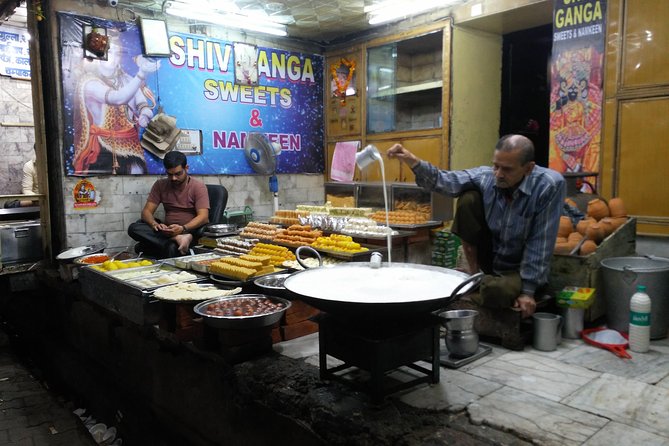
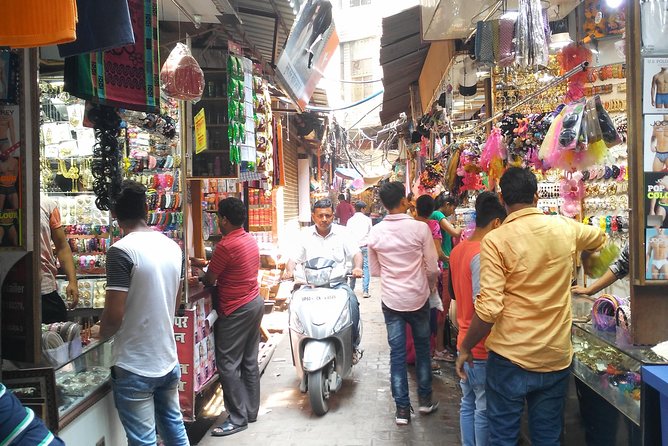
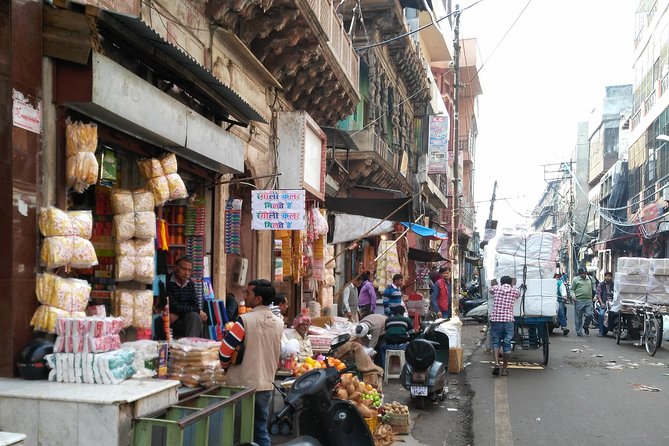
The market section is where the walk becomes most sensory. You pass shops selling spices, sweets, clothes, and women’s cosmetics. The information provided for the walk also points to Ayurvedic doctors and betel-leaf wholesalers, giving you a wider view of the area than a standard souvenir market.
The spice market is a natural highlight. The smells are strong, and the displays make good photographs, but the real value is learning what people buy and why. A market is not simply scenery. It is where households stock up, shopkeepers earn a living, and long-standing trade habits continue.
You may also hear stories tied to the places and businesses around you. Arif relates the streets to Agra’s past while keeping the focus on how people live now. That blend of old stories and present-day commerce was one of the most praised parts of the experience.
The market can be noisy and crowded. This is not the place for a slow, perfectly composed photo at every corner. Keep your belongings secure, stay close to the guide, and leave room for people who are working. The walk is at its best when you treat the market as a functioning neighborhood, not a stage set for visitors.
What Arif brings to the walk
The guide can make or break a city walk, and Arif receives particularly strong praise for his English, personal manner, humor, and ability to answer questions. He is familiar with old Agra and focuses on architecture, religion, local trade, and the way people live today.
Several useful details emerge from the guide’s approach. He can help with meeting arrangements through WhatsApp, explain the story behind the streets, and adjust the conversation when you show interest in a particular subject. One account describes a Sunday evening route through colorful lanes with stops connected to Ayurvedic medicine and betel-leaf trade.
That does not mean every outing will follow exactly the same pace or include every detail. The walk depends on weather, market activity, religious conditions, and your group’s interests. Still, the private format gives Arif room to explain rather than rush through a fixed script.
I would book this with questions ready. Ask about the history of the station, the role of the temple, the mosque’s place in Agra, or the goods sold in the market. A short walk becomes much more rewarding when you take part in the conversation.
The two-hour pace and walking conditions
Two hours is enough to sample old Agra without turning the outing into an exhausting half-day commitment. It works particularly well on an evening when you have already visited a major monument and want a different side of the city.
The pace includes several short stops, but the total experience involves moderate walking. You will move through streets and alleyways, not only along broad roads. Expect uneven surfaces and a city environment that can feel intense, especially if you are used to quiet guided walks in Europe or North America.
Comfortable shoes are essential. Bring water, although a bottle is included, and consider the heat when choosing clothing. The tour requires favorable weather. If poor weather causes cancellation, you can choose another date or receive a full refund.
The walk ends back at the meeting point, which makes planning simpler. You do not need to arrange a separate return transfer from an unfamiliar part of Agra. Still, allow a little flexibility around the stated two-hour duration, since market conditions and questions can affect the pace.
Is $50 per person good value?
At $50 per person, this is not the cheapest way to see old Agra. You are paying for a private guide, local interpretation, bottled water, and a route that would be difficult to understand fully without help. The main question is not the number of stops. It is how much value you place on explanation and access to everyday parts of the city.
For a small group, the price is easier to justify. You receive a private experience rather than sharing the guide with strangers, and group discounts may reduce the cost. For a solo visitor, $50 is a larger commitment for a two-hour walk, though the personal attention may appeal if you want to ask many questions.
The tour does not include food or drinks, and there are no paid entrance tickets listed. That keeps extra costs predictable, but you should not book it expecting a food tour. It is a cultural and historical walk with market views, not a tasting itinerary.
The strongest value comes from the local access. If your Agra visit already includes the Taj Mahal and Agra Fort, this adds a different layer. If your budget is tight and you mainly want major monuments, you may prefer to spend the money elsewhere.
Who should book this old Agra walk?
I would recommend it to you if you want to see how Agra works beyond its grand sights. It suits curious first-time visitors who enjoy markets, religion, architecture, and conversations with a local guide.
It is also a good fit for photographers who want street scenes, shop displays, old buildings, and evening activity. You will need to be considerate and patient, since the market is a real working area rather than a controlled attraction.
Families and small groups may like the private format, especially if they want the guide to adjust the pace. People who dislike crowded streets, strong smells, or moderate walking should think twice.
The walk also pairs well with a food experience. One group arranged to combine this tour with a food tour, creating a longer evening focused on old Agra. That combination is not part of the standard price or inclusions, so arrange it in advance with the provider rather than assuming it is automatic.
Booking advice and cancellation terms
Confirmation is provided at booking, and the experience has free cancellation up to 24 hours before the start time. Cancellations or changes made less than 24 hours ahead are not refunded or accepted under the stated terms.
Because weather matters, check the forecast and keep your plans flexible. A cancellation caused by poor weather gives you the choice of another date or a full refund.
Dress for both the climate and the religious sites. Cover your shoulders and knees, wear shoes suitable for walking, and avoid treating the temple or mosque like ordinary sightseeing stops. Respectful clothing will make the visit easier for everyone.
Should you book the Old Agra City Short Cultural Walk?
Book it if you have already seen, or plan to see, Agra’s major monuments and want the city’s everyday side. The combination of a colonial railway station, Jama Masjid, Shri Mankameshwar Mandir, and local markets gives you a compact but varied introduction to old Agra.
The best reason to go is Arif’s local storytelling and the chance to ask questions while moving through streets that most sightseeing routes skip. The main caution is the setting: this is a lively urban walk, not a polished heritage circuit.
For $50 per person, I see the best value for couples, families, and small private groups who want context and personal attention. If that sounds like your kind of evening, this is a smart way to add depth to an Agra visit.
FAQ
How long does the Old Agra City Short Cultural Walk last?
The walk lasts approximately two hours.
Where does the tour begin?
It begins at Bijli Ghar, near Agra Fort Crossing, Pipal Mandi, Mantola, Agra, Uttar Pradesh 282002, India.
Where does the activity end?
The walk ends back at the meeting point.
Which places of worship are included?
The route includes Jama Masjid, the grand mosque of Agra, and Shri Mankameshwar Mandir, one of the city’s oldest Hindu temples dedicated to Lord Shiva.
Is food included?
No. Food and drinks are not included, although bottled water is provided.
What should I wear?
Wear clothing that covers your knees and shoulders because the walk visits a mosque and a temple.
Can I cancel for a full refund?
Yes, you can cancel up to 24 hours before the experience begins for a full refund. If poor weather causes the activity to be canceled, you will be offered another date or a full refund.
Recently added around Agra
- Taj Mahal Entrance Ticket★ 5.0 · 3 reviews
- Agra’s Hidden Gems & Flavors on a Thrilling Tuk-Tuk Tour 3-4 Hrs★ 5.0 · 3 reviews
- Spiritual Private Tour of Vrindavan and Mathura★ 3.0 · 3 reviews
- Agra: Taj Mahal and Agra Fort Private Guided Half-Day Trip★ 5.0 · 3 reviews
- Shop Agra Like a Local: Unique Indian Handicrafts Tour★ 5.0 · 3 reviews
- From Jaipur: Taj Mahal Guided and Agra Tour By Car★ 5.0 · 3 reviews
- Private Transfers Jaipur To Agra Drop with sikri & stepwell★ 5.0 · 3 reviews
- Full day Taj Mahal, Agra Fort, Fatehpur Sikri By Car From Agra★ 5.0 · 3 reviews
City Tours, compared.
Full-Day City Tour with Car, Guide & Skip-the-Line
Read our review →
Taj Mahal, Agra Fort, Baby Taj & Mehtab Bagh Private City Tour
Read our review →
Private Jaipur Full One Day Tour In Pink City With Guide
Read our review →
Jaipur Guided City Tour: City Palace, Jantar, Hawa & Jal Mahal
Read our review →Browse the lists this tour appears in