
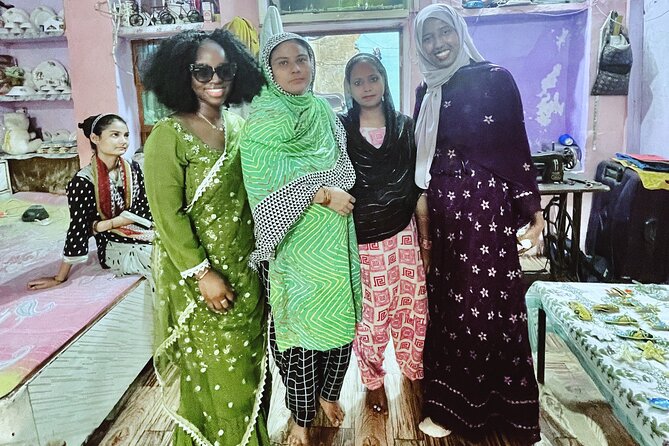
Reviewed · TAJ MAHAL TOURS
Taj Mahal Handicraft Walk: Explore True India with Artisans
Agra’s craft traditions come into sharper focus when you leave the Taj Mahal crowds and enter the lanes where artisans still work by hand. This two-hour walk visits zardozi embroidery, marble inlay, flower garland, marble Prachinkari, and carpetmaking workshops, including artisan homes near the monument.
I like the direct contact with local makers and the chance to understand how Taj Mahal craftsmanship shaped Agra’s working culture. I also like the flexibility: you can book the walk alone, add pickup by private car or tuk tuk, and choose from several times. The main drawback is that transportation is not included, so you should confirm the pickup price before booking.
In This Review
- Key points at a glance
- Why this walk adds another layer to Agra
- Starting at The Orchid Retreat
- Zardozi embroidery near the Taj Mahal
- Pietra Dura and the marble connection
- Flower garlands and body jewelry in old lanes
- Three generations of marble Prachinkari
- Carpetmaking inside Agra households
- What the $15.88 price really covers
- Timing, group size, and comfort
- Who should book this Agra walk?
- Should you book the Taj Mahal Handicraft Walk?
- FAQ
- Where does the Taj Mahal Handicraft Walk start?
- Where does the activity end?
- How long does the walk last?
- Is transportation included?
- Is this a private or shared tour?
- Which crafts do you see?
- Are artisan home visits included?
- Is the tour available at different times?
- Can I cancel for a full refund?
Key points at a glance

- Five distinct craft traditions: See gold embroidery, Pietra Dura marble inlay, Prachinkari marble work, flower jewelry, and household carpetmaking.
- Artisan homes near the Taj Mahal: The route includes access to homes and small workshops rather than only formal souvenir shops.
- A private experience: Only your group takes part, making it easier to ask questions and set the pace.
- A useful post-Taj activity: The crafts help you notice the handwork and materials connected with the monument.
- Guide Arhaan may lead your walk: Booking communication and punctual pickup were singled out positively in the available feedback.
- Low entry price, separate transport: At $15.88 per person, the walking tour offers good value, but car or tuk tuk costs need checking.
Why this walk adds another layer to Agra
The Taj Mahal is the reason most people come to Agra, but it can also narrow your view of the city. You see the monument, take the required photographs, and move on. This walk gives you a closer look at the work that has long supported Agra’s identity.
The focus is not on grand buildings or a long list of monuments. Instead, you spend time with craftspeople and see how small-scale production happens in workshops and homes. That matters because handmade work can look simple from a shop counter. Once you see the materials, tools, and patient repetition involved, the price and quality of a piece make more sense.
I would schedule this after visiting the Taj Mahal. The marble inlay stop will mean more when you have just looked at the monument’s floral patterns and polished stone surfaces. You will also have a better sense of why certain souvenirs are associated so closely with Agra.
The route takes about two hours and remains close to the Taj Mahal area. That makes it easy to fit between other Agra plans, though you should allow extra time if you add transportation or stop to shop.
More Walking Tours in Agra
- Agra Walking Tour
★ 5.0 · 109 reviews - Agra: Street Food Walking Tour, Spice Market, & Tuk-tuk Ride
★ 4.9 · 102 reviews - Agra 101 City Walk
★ 5.0 · 41 reviews
Starting at The Orchid Retreat
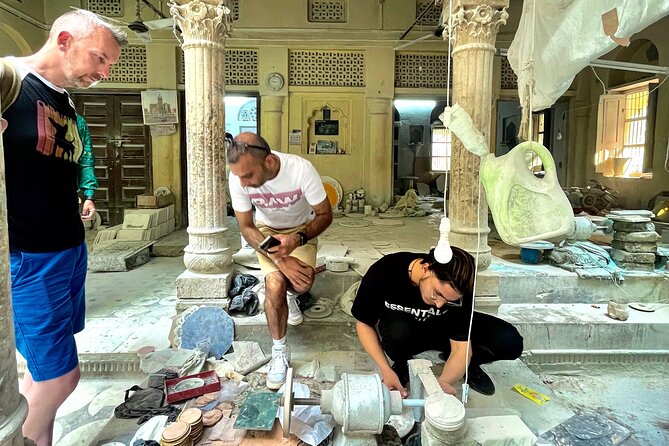
The listed meeting point is The Orchid Retreat at Plot No. 28, Taj Nagri Phase 1, on Taj East Gate Road near Shilpgram Road. The walk ends back at the same meeting point.
That arrangement is practical. You do not need to finish in a different part of Agra, and returning to the starting point makes the experience easier to combine with a hotel transfer or another scheduled activity. The area is near public transportation, and pickup options are available if you prefer not to make your own way there.
You can choose tour-only participation or select pickup by private car or tuk tuk. Private transportation is not included in the tour price, so treat the $15.88 rate as the cost of the guided walk and workshop visits. If you want pickup, ask for the full added charge before confirming.
The activity is private, meaning only your own group participates. That is useful in small workshops, where space may be limited and questions can easily get lost in a large crowd. It also gives you more control over how long you look at a craft or discuss a purchase.
Zardozi embroidery near the Taj Mahal
The first craft stop is one of the oldest zardozi workshops around the Taj Mahal. Zardozi is gold embroidery, and the visit introduces both the background of the craft and the fine work required to make it.
Expect a short explanation rather than a full class. The point is to see the detail and understand how decorative threadwork is built up by hand. The word gold can create the wrong impression if you picture solid metal. Here, the value is in the careful embroidery and the skill needed to place each element.
This is a good early stop because it shows that Agra’s handmade traditions are not limited to marble. The craft also connects to clothing, decoration, and ceremonial design. If you are comparing items to buy, the workshop setting gives you a better chance to ask what is handmade and what may be finished by other methods.
Buying is optional, but the walk presents the workshops as a place to find souvenirs at prices that can be better than those in regular stores. You should still inspect the work carefully and ask direct questions about materials, production, and price. The tour creates access, not a requirement to purchase.
Pietra Dura and the marble connection
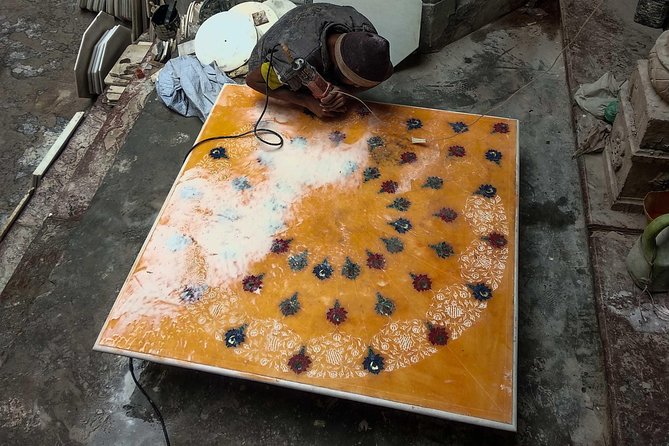
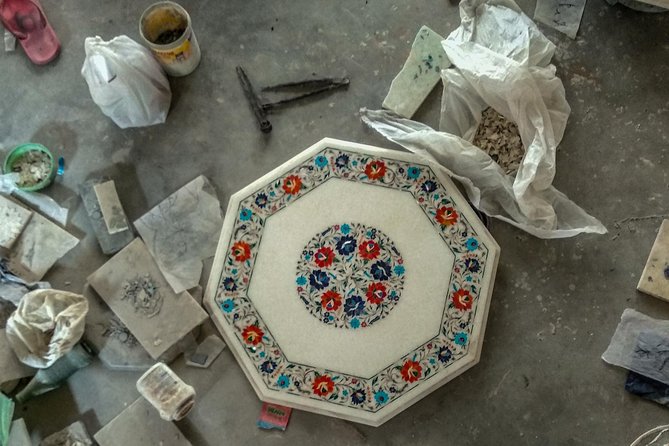
The marble inlay workshop is likely the most significant stop for anyone who has already visited the Taj Mahal. Pietra Dura is the technique of setting shaped pieces of colored stone into marble to create floral and decorative patterns.
Here, you learn how the craft began in connection with the Taj Mahal and continued in Agra afterward. The artisans are described as descendants of workers who made the monument. That family connection gives the stop added interest, though the value is still in seeing the process and hearing how the tradition has continued.
Look closely at the precision involved. Inlay work requires more than carving a pattern into a surface. Different pieces must fit together neatly, and the final polish needs to make the design feel smooth rather than assembled. A workshop visit helps you understand why a small tabletop, box, or decorative panel can require serious labor.
This is also where you should think about what kind of souvenir suits you. Marble pieces may be attractive, but they can be heavy and awkward to carry. The tour does not include shipping or transport arrangements, so ask about those matters separately if you buy a larger item.
More Taj Mahal tours:
- Agra: Skip-the-Line Taj Mahal & Agra Fort Private Tour
★ 4.9 · 1,546 reviews - Agra: Taj Mahal Express Entry Tickets
★ 4.8 · 684 reviews - Agra: Taj Mahal and Mausoleum Guided Tour with Skip-the-Line
★ 4.8 · 631 reviews - Private Guided Taj Mahal Tour with Skip The Line Entry Ticket
★ 5.0 · 562 reviews
Flower garlands and body jewelry in old lanes
The walk then turns toward 17th-century lanes around the Taj Mahal. Along the way, you visit households where people make garlands and body jewelry from fresh flowers.
This is a welcome change from the more familiar marble and embroidery stops. Flower work is tied to daily use and changing customs, not only to objects kept as souvenirs. You learn how the role of fresh flowers has changed over time and how those changes have affected the people who make them.
Because the work takes place in households, the stop offers a glimpse of how craft production can fit into family life. The setting may be more modest and less polished than a commercial showroom. That is part of its value, but it also means you should follow the guide’s lead about where to stand, when to take photographs, and how to behave respectfully.
The fresh materials also make this craft different from the others. A marble panel or embroidered textile can be stored for years. A flower garland is temporary, tied to a particular day, ceremony, or custom. That contrast helps explain why some local crafts change quickly as buying habits and social use change.
Three generations of marble Prachinkari
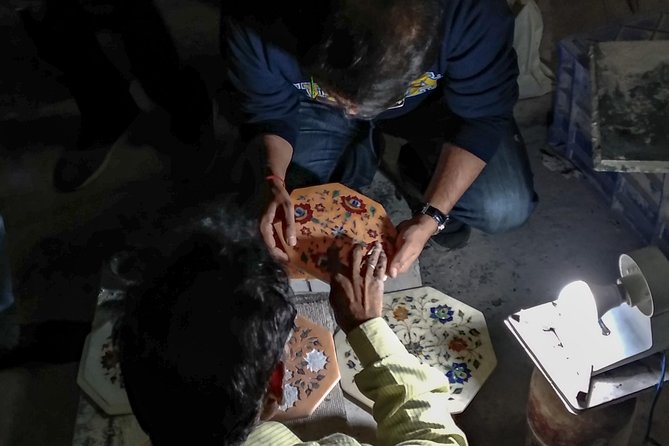
Another stop visits a workshop with three generations of marble Prachinkari work. You learn how this art relates to Pietra Dura and where the two traditions overlap.
The distinction may sound technical at first, but it is useful if you are interested in Agra’s marble crafts. Two pieces may both show colored stone set into marble, yet the techniques, designs, and family traditions behind them can differ. Seeing both workshops in one walk lets you compare them while the details are still fresh.
The three-generation connection gives the workshop a strong family dimension. You are not simply looking at an old product line. You are seeing a skill passed between generations and adjusted to current demand.
As with the Pietra Dura visit, this is a good place to ask about the making process before discussing a purchase. The tour is designed to introduce you to the work, and the workshop setting can make shopping more informed. You should not assume every item is made entirely by the person demonstrating the craft, so ask if that distinction matters to you.
Carpetmaking inside Agra households
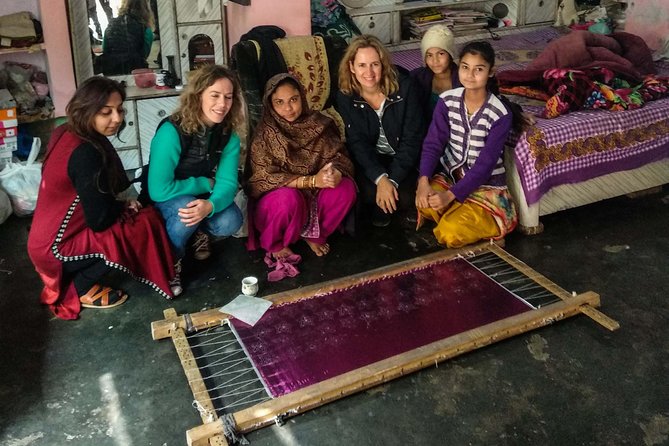
The final craft focus is carpetmaking. You learn how present-day designs have changed through contact between different communities.
That detail makes the carpet stop more than a basic sales visit. It shows how designs evolve when people share techniques, tastes, and markets. Agra’s craft culture has not remained frozen in one period, and the explanation helps you see carpets as living products shaped by many influences.
The household setting again keeps the visit close to everyday production. You may find the stop especially useful if you are considering a carpet, since size, design, and workmanship can be difficult to judge in a shop without context. The tour cannot guarantee a particular item or price, but it gives you a chance to look at the work where it is made.
Carpets are also the purchase that requires the most caution. They can be expensive, difficult to carry, and easy to buy under pressure. I would listen first, compare what you see, and only buy if you are comfortable with the cost and practical arrangements.
What the $15.88 price really covers
At $15.88 per person, this is a modestly priced private experience. The fee includes a tour guide and entry to artisan homes, which is important because the value comes from access and explanation rather than from admission to a major monument.
You are paying for a focused two-hour introduction to several crafts. That is strong value if you already plan to visit the Taj Mahal and want a better understanding of Agra’s handmade goods. It is less compelling if you dislike workshop visits or have no interest in shopping and local production.
The tour may also save you time and uncertainty. Finding small family workshops independently can be difficult, and approaching homes without a local guide may feel intrusive. A guide provides the bridge between you and the craft workers.
Still, keep the limits in mind. The price does not include private transportation, and purchases are not included. Group discounts are available, so the rate may work particularly well for families or friends booking together. Ask for the current discount terms and transport costs before making the final decision.
Timing, group size, and comfort
Several tour times are offered during the day. That flexibility helps you work around the Taj Mahal, though the activity requires good weather. If poor weather cancels the walk, you can receive a different date or a full refund.
The walk takes place around local lanes and workshops. Comfortable shoes are sensible, and you should be ready for a mix of walking, standing, listening, and looking closely at small pieces of work. The supplied information does not specify the exact walking distance, so ask if mobility is a concern.
Most people can participate, and the activity is near public transportation. The private format is the bigger practical advantage. If you have questions about craft methods, prices, or photography, you will have more room to ask than you would in a large group.
Guide Arhaan is specifically named in the available tour information. Communication after booking was clear and friendly, and punctual timing was praised. Guide quality can affect this kind of visit greatly, since the workshops are only as useful as the explanations and introductions provided.
Who should book this Agra walk?
I would recommend it to anyone who has already seen the Taj Mahal and wants to understand the city beyond the main monument. It suits people who like meeting craftspeople, comparing handmade goods, and seeing how family skills continue in working neighborhoods.
It is also a good choice for shoppers who want more context before buying marble, embroidery, carpets, or decorative pieces. You still need to make your own decisions about price and quality, but the workshop setting is more informative than browsing without guidance.
Families may appreciate the short duration and private format. The flower work and visible handcraft can also give younger visitors something concrete to watch. Group discounts may make the cost more attractive for several people booking together.
I would be more cautious if you want a quiet sightseeing walk with no commercial element. The route includes opportunities to buy souvenirs, and shopping is part of the experience. You can decline to purchase, but you should expect craft demonstrations and sales conversations.
Should you book the Taj Mahal Handicraft Walk?
Book this walk if you want a compact, low-cost look at Agra’s working craft culture after visiting the Taj Mahal. The combination of zardozi, Pietra Dura, Prachinkari, flower jewelry, and carpetmaking gives you a wider picture than a single workshop visit.
The strongest reasons to go are the private group format, access to artisan homes, and the clear link between marble crafts and the Taj Mahal. Before booking, confirm the cost of any car or tuk tuk pickup and decide how you will handle purchases.
For an authentic, practical addition to a Taj Mahal day, this is a sensible choice. It will not replace the monument itself, and it is not designed as a full city tour. It works best as a close-up look at the people and skills behind Agra’s famous handmade traditions.
FAQ
Where does the Taj Mahal Handicraft Walk start?
The walk starts at The Orchid Retreat, Plot No. 28, Taj Nagri Phase 1, Taj East Gate Road, near Shilpgram Road in Agra.
Where does the activity end?
The activity ends back at the meeting point at The Orchid Retreat.
How long does the walk last?
The experience lasts approximately two hours.
Is transportation included?
Private transportation is not included in the tour price. You can choose tour-only participation or select pickup by private car or tuk tuk.
Is this a private or shared tour?
This is a private activity. Only your group participates.
Which crafts do you see?
The walk includes zardozi gold embroidery, Pietra Dura marble inlay, flower garlands and body jewelry, marble Prachinkari work, and carpetmaking.
Are artisan home visits included?
Yes. Entry to artisan homes is included in the experience.
Is the tour available at different times?
Yes. Several tour times are available during the day.
Can I cancel for a full refund?
Yes, if you cancel at least 24 hours before the experience start time. Cancellations made less than 24 hours before the start time are not refunded. The activity may also be rescheduled or refunded if poor weather or an insufficient number of participants causes cancellation.
Recently added around Agra
- Taj Mahal Entrance Ticket★ 5.0 · 3 reviews
- Agra’s Hidden Gems & Flavors on a Thrilling Tuk-Tuk Tour 3-4 Hrs★ 5.0 · 3 reviews
- Spiritual Private Tour of Vrindavan and Mathura★ 3.0 · 3 reviews
- Shop Agra Like a Local: Unique Indian Handicrafts Tour★ 5.0 · 3 reviews
- Agra: Taj Mahal and Agra Fort Private Guided Half-Day Trip★ 5.0 · 3 reviews
- From Jaipur: Taj Mahal Guided and Agra Tour By Car★ 5.0 · 3 reviews
- Private Transfers Jaipur To Agra Drop with sikri & stepwell★ 5.0 · 3 reviews
- Full day Taj Mahal, Agra Fort, Fatehpur Sikri By Car From Agra★ 5.0 · 3 reviews
Taj Mahal Tours, compared.
Skip-the-Line Taj Mahal & Agra Fort Private Tour
Read our review →

Taj Mahal and Mausoleum Guided Tour with Skip-the-Line
Read our review →
Private Guided Taj Mahal Tour with Skip The Line Entry Ticket
Read our review →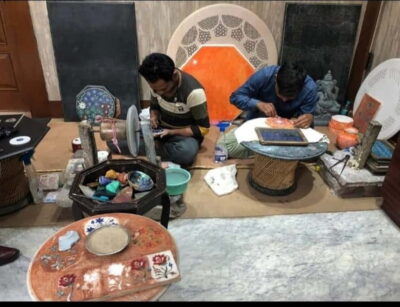
Taj Mahal & Mausoleum Skip-the-Line Tour with Options
Read our review →
Taj Mahal, Agra Fort, Baby Taj & Mehtab Bagh Private City Tour
Read our review →
Taj Mahal Skip-the-Line Guided Tour with Optional Add-ons
Read our review →
Browse the lists this tour appears in