
Reviewed · PUSHKAR TOURS
Full Day Spiritual Tour of Ajmer & Pushkar-The Pushkar Route
Ajmer and Pushkar give you two very different sides of Rajasthan in one compact day. Ajmer’s narrow lanes lead to Jain, Muslim, Sikh, and Mughal landmarks, while Pushkar slows the pace with temples, ghats, and the evening arti beside its holy lake. The cultural contrast is the main attraction.
I like the private format, since your guide can adjust explanations to your interests and background. I also like that lunch is built into the day, giving you a proper pause instead of forcing you to rush from one religious site to the next. The main drawback is the tight schedule: six hours is enough for an introduction, but not enough for long visits at every stop.
In This Review
- Key points to know before booking
- Why Ajmer and Pushkar work so well together
- Soni Ji Ki Nasiyan and the Jain beginning
- Dargah Sharif and Ajmer’s Muslim heart
- Akbar’s Palace and the Ajmer museum collection
- Ana Sagar Lake and a quieter pause
- Lunch with time to reset
- Gurudwara Sahib and a Sikh connection in Pushkar
- Varaha Temple and one of Pushkar’s old shrines
- Old Rangji Temple near Varaha Ghat
- Atmateshwar Mahadev Mandir underground
- Brahma Temple, one of Pushkar’s defining sights
- Pushkar Lake and the evening arti
- What the private format adds at $50
- Who should book this Ajmer and Pushkar route
- Should you book it?
- FAQ
- What time does the tour start?
- How long does the experience last?
- Is this a private tour?
- Is pickup available?
- Is lunch included?
- Which places are visited in Ajmer?
- Which places are visited in Pushkar?
- Is admission included?
- What is the cancellation policy?
Key points to know before booking
- Four faith traditions in one day: See Jain, Muslim, Sikh, and Hindu sites across Ajmer and Pushkar.
- A private guide and private group: The tour is limited to your party, with explanations shaped around your interests and knowledge.
- Pushkar Lake at sunset: The final stop includes evening arti, one of the most atmospheric moments of the day.
- Lunch included: An hour is set aside for lunch, with a view noted as part of the experience.
- Ten listed stops across two towns: Expect a sightseeing-heavy route with short visits rather than a slow, detailed exploration.
- Free cancellation up to 24 hours ahead: Weather-related cancellations offer either another date or a full refund.
Why Ajmer and Pushkar work so well together
Ajmer and Pushkar sit close together, but they offer sharply different experiences. Ajmer is a historic city with important Muslim, Jain, Sikh, and Mughal sites. Pushkar is best known for its Hindu temples, sacred lake, ghats, and religious ceremonies.
That contrast gives this tour a clear purpose. You are not simply ticking off monuments. You are seeing how several faiths and traditions shape two neighboring towns.
The day begins at 10:00 a.m. and lasts about six hours. The first three hours focus on Ajmer, followed by an hour for lunch. The final portion takes you through Pushkar, ending at the lake with evening arti.
The pace is brisk. Most visits last 30 to 45 minutes, so you should think of this as an orientation tour with real site visits, not a slow architectural study. If you want a broad first look at both towns, the format works well. If you prefer to sit quietly at one shrine or museum for a long time, you may find the schedule restrictive.
A few more Pushkar tours worth weighing up
- Full-Day Ajmer and Pushkar Guided Sightseeing Private Trip
★ 4.5 · 6 reviews - Jaipur: Private Full Day Sightseeing Tour By Car with Guide
★ 4.9 · 1,839 reviews - Jaipur: Private Full-Day Sightseeing Tour by Tuk-Tuk
★ 4.8 · 573 reviews
Soni Ji Ki Nasiyan and the Jain beginning
The first stop is Soni Ji Ki Nasiyan, also known as a Jain temple, along with Soni Ji Ki Haveli and Soni Temple. The complex dates from the 19th century and is associated with Lord Rishabhdev, the first of the Jain Tirthankaras.
The temple is especially known for its gold work. More than 1,000 kilograms of gold was used in its construction and decoration, making this a visually striking opening stop. Admission is included, and you have about 45 minutes here.
I like beginning with a Jain site because it immediately broadens your understanding of Ajmer. Many visitors arrive expecting only Islamic or Hindu landmarks, yet this temple points to the city’s wider religious life.
Allow your guide to explain the Jain beliefs and symbols rather than treating the interior as a quick photo stop. The 45-minute visit is enough for an introduction, but the ornate work deserves attention. Dress and behave respectfully, as you would at any active place of worship.
Dargah Sharif and Ajmer’s Muslim heart
Next comes Dargah Khwaja Kanoon Sahib, part of the Ajmer Sharif complex. The main shrine is the tomb of Khwaja Moinuddin Chishti, a Sufi saint who came to Ajmer from Persia in the late 11th century.
The mosque and shrine hold an important place in Muslim religious life. This part of the tour brings you into Ajmer’s small lanes, where the setting feels more urban and close-packed than the open spaces around Pushkar Lake.
You have approximately 45 minutes at the dargah, with admission included. The time is useful for learning about the saint and the role of Sufism in Ajmer, though it will not allow for a long, unhurried visit if the area is crowded.
Your guide’s conversational approach matters here. A good explanation can help you understand the religious meaning of the site without reducing it to a tourist attraction. Wear modest clothing and follow local instructions at the shrine.
Akbar’s Palace and the Ajmer museum collection
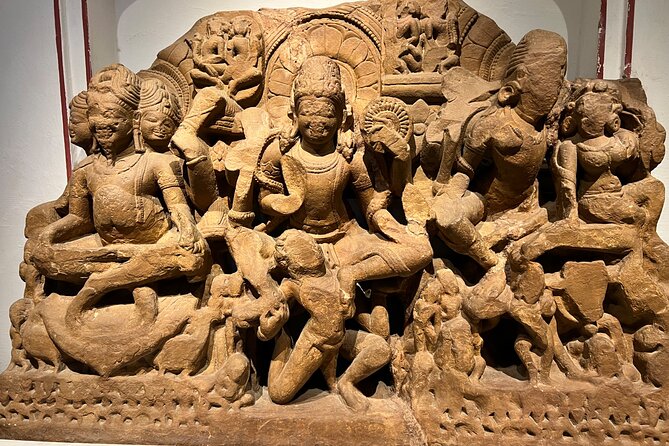
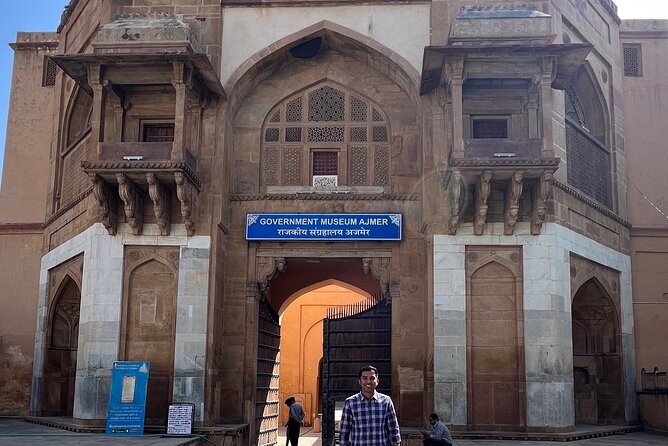
The third Ajmer stop is Akbar’s Palace and Museum, located within the old 16th-century Akbari Fort. The Government Museum holds historical artifacts, sculptures, miniature paintings, and other exhibits connected with the region.
This is the most conventional museum stop of the morning. It gives you objects and visual details to place alongside the religious sites, including the art and political history of Ajmer.
The planned visit lasts 45 minutes, with admission included. That is a useful amount of time for the main galleries, though you may need to move steadily if you want to see every display.
I would pay special attention to the miniature paintings and sculptures. They can make the larger story of Rajasthan easier to grasp, especially after the more active visits to the Jain temple and dargah.
More Pushkar trips:
- Spiritual City Walking Tour-THE Pushkar Route
★ 5.0 · 907 reviews - Afternoon Walk Tour with Sunset & Fire Ritual -The Pushkar Route
★ 5.0 · 119 reviews - Evening Walking Tour with Fire Rituals-The Pushkar Route
★ 4.9 · 108 reviews - Spiritual Walking tour with Puja Ceremony -The Pushkar Route
★ 5.0 · 101 reviews
Ana Sagar Lake and a quieter pause
Ana Sagar Lake offers a change of pace after Ajmer’s religious and museum stops. King Arnoraja, also known as Anaji Chauhan, built the lake. Mughal rulers later added gardens and other features beside it, including Daulat Bagh under Jahangir and additions associated with Shah Jahan.
The tour allows about 30 minutes here. That is enough for a look at the water and surrounding setting, but not a full lake outing or long garden visit.
This stop works as a visual pause before lunch and the transfer toward Pushkar. It also adds a royal and civic layer to the morning, showing how rulers shaped Ajmer beyond its shrines.
Lunch with time to reset
After the Ajmer visits, you receive about an hour for lunch. The included meal is described as having a view, making it more than a basic break between attractions.
This hour is important because the rest of the tour continues at a steady pace. You can eat, rest, and gather your thoughts before walking around Pushkar’s temples and ghats.
The meal is included in the experience, but the supplied details do not specify the restaurant, menu, or dietary choices. If you have food restrictions, raise them when booking rather than assuming the meal will suit every diet.
Gurudwara Sahib and a Sikh connection in Pushkar
The Pushkar portion begins at Gurudwara Sahib. Here, your guide introduces the Sikh religion and community, including the connection of two important Sikh teachers with the area.
This is an interesting choice for Pushkar because it prevents the town from being presented as only a Hindu pilgrimage center. As in Ajmer, the route shows several religious traditions sharing the same regional setting.
The visit lasts about 30 minutes, with admission included. That makes it a short introduction rather than a detailed study of Sikh history or worship.
Keep an open mind and listen closely to the guide’s explanation. Since the visit is brief, the quality and clarity of the conversation will shape how much you take away from it.
Varaha Temple and one of Pushkar’s old shrines
Varaha Temple is dedicated to Lord Vishnu in his boar incarnation, Varaha. It is described as one of Pushkar’s ancient temples and one of the eight Swayambhu Kshetra sites connected with Vishnu.
The temple was built in the 12th century by King Anaji Chauhan. Its age gives it a different character from some of the later religious buildings in town.
You have about 30 minutes here. That is enough to hear the main story and see the essential features, but you should not expect an extended ritual visit or a long architectural study.
This stop is valuable if you want context for Pushkar’s religious importance. It also helps explain why the town draws pilgrims, not only sightseers.
Old Rangji Temple near Varaha Ghat
Old Rangji Temple is close to Varaha Ghat in the middle of Pushkar. The temple is about 200 years old and dedicated to Lord Vishnu.
The location helps you connect the temple with the broader town rather than viewing it as an isolated monument. You are already moving toward the ghats and lake, so the route begins to feel more connected as the afternoon continues.
The visit is scheduled for 30 minutes and admission is included. Again, the time is short, so listen to the explanation and note the design details that interest you most.
Pushkar’s lanes and temple approaches can be part of the experience here. The tour description specifically highlights walking around ghats and temples, so comfortable footwear is a sensible choice.
Atmateshwar Mahadev Mandir underground
At Prachin Shri Atmateshwar Mahadev Mandir is an underground cave temple dedicated to Lord Shiva. It dates to the 12th century and is known for Hemadpanti architectural carvings.
This stop adds a more intimate setting to the Pushkar route. Instead of a large open temple complex, you enter a cave-like space connected with Shiva worship.
The planned visit lasts 30 minutes, with admission included. Because the temple is underground, follow your guide’s instructions and take your time in the confined setting.
The carvings are the reason to pay attention here. Even with a short visit, the temple gives you a strong sense of the variety within Pushkar’s sacred sites.
Brahma Temple, one of Pushkar’s defining sights
The Brahma Temple is one of the major reasons Pushkar appears on pilgrimage routes. It is described as the only temple in the world dedicated to Lord Brahma.
The present structure dates to the 14th century, with later renovation. It uses black and white marble, and the pillars are among the details your guide can help you understand.
You have around 30 minutes at the temple, with admission included. That is enough for a focused visit, but it may feel quick if you want to linger over every architectural feature.
The temple is important even for visitors who are not religious. It explains Pushkar’s special place in Hindu tradition and gives the town a clear identity beyond its lake and market lanes.
Pushkar Lake and the evening arti
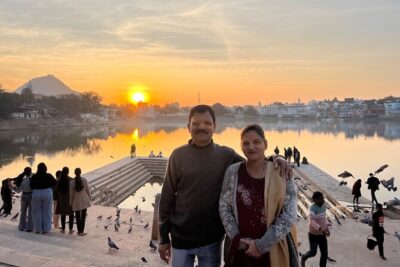
The tour finishes at Pushkar Lake, surrounded by 52 ghats. Each ghat has its own religious and cultural importance, and the steps are used for bathing, ceremonies, and meditation.
The ghats were built or supported by kings and emperors from across India. That gives the lake a layered appearance, with different structures reflecting the long importance of Pushkar as a sacred place.
You have about 45 minutes here, and admission is free. The final part of the visit is the evening arti, a Hindu prayer ceremony held beside the lake.
This is the strongest closing moment of the day. After the sharper contrasts of Ajmer, the lake offers a calmer setting and time to watch a living religious practice. Observe quietly, follow local guidance, and remember that the ghats are places of worship rather than ordinary sightseeing platforms.
What the private format adds at $50
At $50 per person, this tour offers a lot of coverage for a half-day private experience. The price includes a guide, admission to the listed paid stops, pickup, lunch, and a route through two towns with ten clearly named visits.
The value depends on what you want. If you would otherwise need to arrange separate transport, entrance tickets, and explanations for Ajmer and Pushkar, combining them simplifies the day. You also avoid spending time deciding which sites to prioritize.
The private format is the biggest advantage. Your guide can tailor explanations to your interests and knowledge, as one recorded experience specifically praised. That matters when the route crosses Jain, Muslim, Sikh, and Hindu traditions in quick succession.
The limitation is depth. Ten stops, lunch, and travel between Ajmer and Pushkar leave little room for wandering or spontaneous changes. You are paying for range and organization, not a slow day at two or three monuments.
Pickup is offered, the ticket is mobile, and confirmation arrives at booking. The tour is near public transportation, and most people can participate. It is a private activity, so only your group joins.
Who should book this Ajmer and Pushkar route
I would choose this tour if you have one available day and want a guided introduction to both towns. It suits first-time visitors who want religious context, major sights, and a clear schedule without arranging each part independently.
It is also a good match for anyone curious about how different faiths meet in the same region. The Jain temple, Ajmer Sharif, Gurudwara Sahib, Hindu temples, and Pushkar Lake create a more complete picture than a single-city tour.
You may want something else if your priority is photography, shopping, or long periods of quiet observation. The schedule is structured, and each stop has a set window. You should also be comfortable with walking around temple areas and ghats.
The experience is recommended by all 12 recorded ratings, with an overall score of 5 out of 5. That is a small sample, so I would treat it as encouraging rather than conclusive. The strongest practical praise concerns the guide’s conversational explanations, the ability to adapt information, and the lunch break with a view.
Cancellation is free up to 24 hours before the 10:00 a.m. start time. Changes made within 24 hours are not accepted, and the amount paid is not refunded. The tour requires good weather, with another date or a full refund offered if poor weather causes cancellation.
Should you book it?
Book this Ajmer and Pushkar tour if you want maximum cultural range in six hours, value a private guide, and like having lunch and entrance fees handled for you. The final arti at Pushkar Lake gives the day a fitting finish.
Skip it if you prefer a relaxed pace or want to spend most of your time at one shrine, museum, or temple. For everyone else, $50 is a reasonable price for a carefully packed introduction to two of Rajasthan’s most important religious towns.
FAQ
What time does the tour start?
The tour starts at 10:00 a.m.
How long does the experience last?
The tour lasts approximately six hours.
Is this a private tour?
Yes. Only your group participates in the activity.
Is pickup available?
Yes. Pickup is offered.
Is lunch included?
Yes. The schedule includes about one hour for lunch, and the meal is described as being served with a view.
Which places are visited in Ajmer?
The Ajmer section includes Soni Ji Ki Nasiyan, Soni Ji Ki Haveli and Soni Temple, Dargah Khwaja Kanoon Sahib, Akbar’s Palace and Museum, and Ana Sagar Lake.
Which places are visited in Pushkar?
The Pushkar section includes Gurudwara Sahib, Varaha Temple, Old Rangji Temple, At Prachin Shri Atamteshwar Mahadev Mandir, Brahma Temple, and Pushkar Lake.
Is admission included?
Admission is included for the listed temple, shrine, museum, and other paid stops. Pushkar Lake has free admission.
What is the cancellation policy?
You can cancel at least 24 hours before the start time for a full refund. Cancellations or changes made less than 24 hours before the start time are not accepted and are not refunded. If poor weather causes the tour to be canceled, you will be offered another date or a full refund.
Recently added around Pushkar
- Jaipur: Ajmer & Pushkar Day Trip with Lunch & Camel ride★ 4.3 · 3 reviews
- Private Day Trip to Pushkar From Jaipur★ 4.5 · 3 reviews
- Explore Chittorgarh Fort With Udaipur Drop from Pushkar★ 5.0 · 4 reviews
- Food & Culture Walking Tour – The Pushkar Route★ 5.0 · 4 reviews
- Rajasthan tours: Luxury and private tour by car with guide.★ 4.8 · 4 reviews
- Private Day Trip to Holy City of Pushkar from Jaipur★ 5.0 · 4 reviews
- From Jaipur: One-Day Trip From Jaipur to Pushkar★ 3.8 · 4 reviews
- From Jaipur : Ajmer Pushkar Private Tour by Cab with Guide★ 4.0 · 5 reviews
Pushkar Tours, compared.
Afternoon Walk Tour with Sunset & Fire Ritual -The Pushkar Route
Read our review →
Evening Walking Tour with Fire Rituals-The Pushkar Route
Read our review →
Spiritual Walking tour with Puja Ceremony -The Pushkar Route
Read our review →
Pushkar Day Trip from Jaipur – Private Car, Safari, Guide & Lunch
Read our review →
Evening Walking tour with Fire Ceremony – The Pushkar Route
Read our review →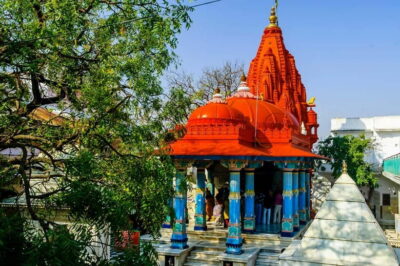
Browse the lists this tour appears in