
Reviewed · SAFARI
Agra: Monkey Safari Guided Walking Tour
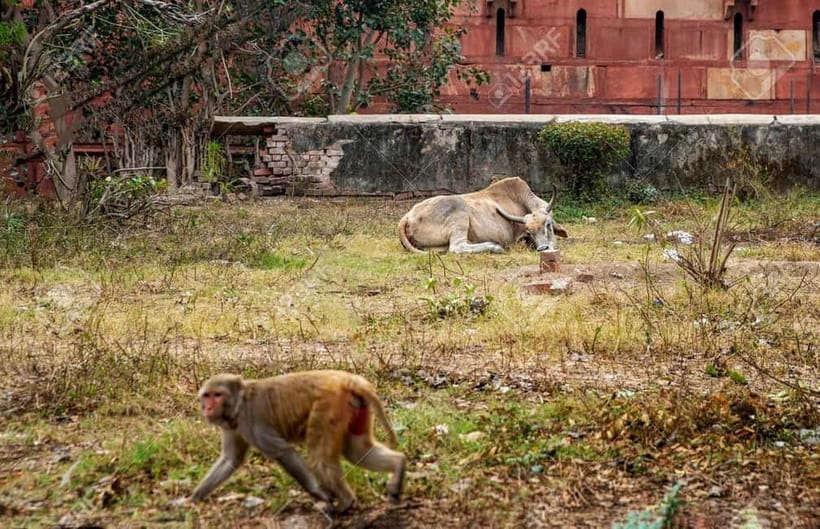
Agra’s Taj Mahal gets the attention, but the city’s monkeys provide a livelier look at daily life. On this three-hour walking tour, you’ll search for rhesus macaques and langurs around temple areas, rooftops, and old neighborhood lanes while a local guide explains how people and monkeys share the same streets.
I like the close look at ordinary Agra life, and I like that the guide pairs animal watching with stories of Lord Hanuman, the Hindu monkey god. The main drawback is heat: midday can be slow and uncomfortable, so an early morning or late-day start is the better choice.
In This Review
- Key points to know before you book
- Why this monkey walk feels different from a normal Agra tour
- Starting with a safety briefing and Agra pickup
- Walking through temples, lanes, rooftops, and homes
- Watching langurs and rhesus macaques safely
- Learning how people live with monkeys
- Photography without turning the animals into props
- Masala tea, lemon water, and a short break
- The return walk and what you take away
- Is the $54 price good value?
- Who should book this Agra walking safari?
- Should you book the Monkey Safari Walking Tour?
- FAQ
- How long does the Agra Monkey Safari Walking Tour last?
- Where does the tour begin and end?
- What types of monkeys might I see?
- Can I feed the monkeys?
- Is transportation included?
- Is masala tea included?
- Is the tour offered in English?
- Is the tour suitable for children?
- Can people with mobility impairments join?
Key points to know before you book
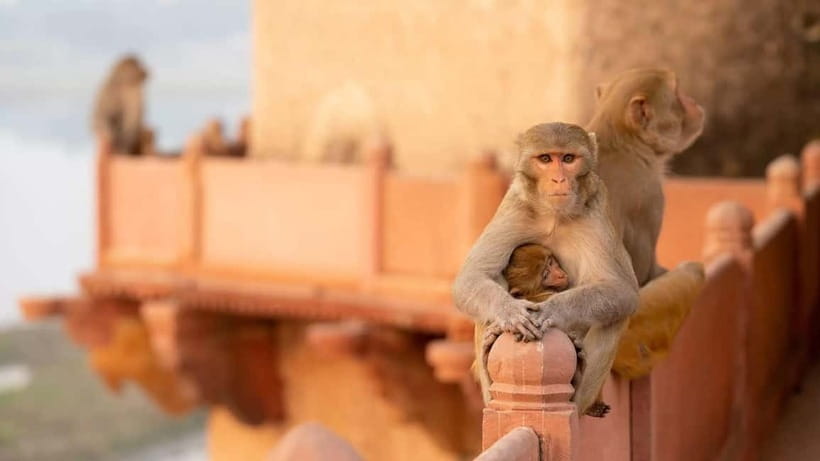
- Monkey watching in real neighborhoods: Look for langurs and rhesus macaques around temple areas, rooftops, traditional homes, and local lanes rather than in a formal wildlife park.
- A guide-led wildlife lesson: You’ll learn about social behavior, food habits, family groups, and the way people protect homes and food from monkeys.
- A cultural side to the walk: Stories of Lord Hanuman help explain why monkeys have such a visible place in Indian religious life.
- Private transport included: Pickup and drop-off in Agra, a private air-conditioned car, water, tolls, and parking are covered.
- Best in cooler hours: One person found the monkeys less active and the walk too hot at midday. Plan for morning or later afternoon if possible.
- A family-friendly pace with a mobility warning: An eight-year-old joined one outing and felt safe, but the walking portion is not suitable for people with mobility impairments.
Why this monkey walk feels different from a normal Agra tour
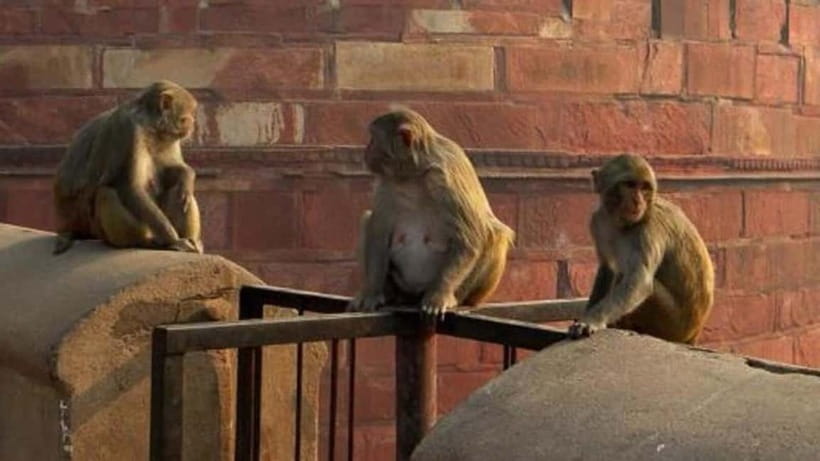
This is not a zoo visit and not a standard monument circuit. You are looking at animals in the same places where local people live, worship, work, and protect their food. That gives the walk a useful human side.
You might see langurs with their long tails and pale faces, along with reddish-brown rhesus macaques. The exact number and activity level will change from day to day. Monkeys are not performers waiting on a schedule, so the guide’s skill lies in knowing where to look and how to keep observation safe.
The setting matters as much as the animals. The route may pass through lesser-known lanes, temple areas, rooftops, and traditional homes where monkeys are often seen. You’ll get a feel for how an urban Indian neighborhood works, with people and animals adapting to one another every day.
I also like the way the tour connects animal behavior with local belief. Stories about Hanuman are not simply an extra fact added for tourists. They help explain the respect, caution, and religious feeling that can surround monkeys in India.
More Safaris in Agra
- Chambal River Safari
★ 5.0 · 75 reviews - 3-Day Ranthambhore Tiger Safari Tour from Jaipur to Agra ending in Delhi
★ 5.0 · 11 reviews - From Agra: Taj Mahal, Fatehpur Sikri & Bird Safari Tour
★ 4.6 · 6 reviews
Starting with a safety briefing and Agra pickup
The experience begins with pickup in Agra and a short introduction to the guide, route, and basic safety rules. A private air-conditioned car is provided for the activity, with drop-off included at the end.
That arrangement is useful in Agra’s heat. You do not have to find the starting point on foot or arrange a separate taxi between the city and the walking area. Toll taxes, parking, and a bottle of mineral water are included as well.
Before the walk, the guide explains monkey behavior and sets clear boundaries. The most important one is simple: do not feed the monkeys. Feeding can change animal behavior and can create risky crowding around people. The activity information specifically says that feeding is not allowed, even though one past participant suggested bringing fruit next time. Follow the guide’s instruction and leave the fruit in your bag.
The tour is offered with a live English-speaking guide. No guide name is provided in the booking details, so you should not expect to request a particular person. The service is described as private car transport, which is a plus if you want a more personal outing, but the exact walking group arrangement is not specified.
Walking through temples, lanes, rooftops, and homes
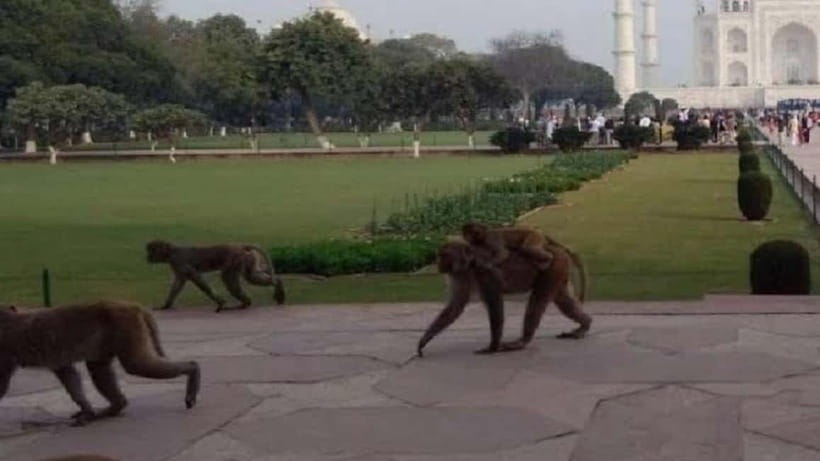
Once you leave the car, the walking section becomes the heart of the experience. You may pass through a historic neighborhood or temple complex, with views toward rooftops and homes where monkeys commonly gather.
This part is less polished than a major monument, and that is exactly why it can be interesting. You’ll see the parts of Agra that do not appear on a usual sightseeing route. The walk gives your guide room to point out daily habits, local protection methods, and the small ways people keep food and household items away from curious animals.
The route includes scenic views along the way, but do not picture a marked safari trail. This is a town walk with wildlife sightings. Surfaces, distances, and the amount of shade can vary. The provider says the activity is not suitable for people with mobility impairments, so anyone who has trouble with uneven walking or extended time on foot should choose a different outing.
Wear comfortable shoes and light clothing. The tour includes water, but you should still dress for sun and heat. A hat can help, especially if your starting time falls near midday.
Watching langurs and rhesus macaques safely
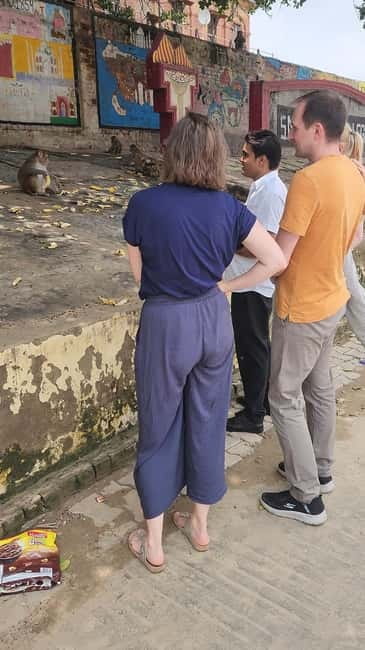
The guide’s explanations are a major part of the value here. You’ll learn how monkeys form social groups, how they behave around food, and how they live close to people without being fully domesticated.
Rhesus macaques are often bold and quick, while langurs can appear more watchful and composed. You may see adults, young monkeys, and family groups, but sightings are never guaranteed in a fixed order. The tour description emphasizes both species, along with other native animals that might appear.
The guide helps you keep a safe distance and choose good viewing angles. That matters because close does not always mean better. A monkey near a rooftop may look calm, but it remains a wild animal. Do not reach toward it, corner it, make sudden movements, or offer food.
One family with an eight-year-old child felt safe while observing monkeys up close. That suggests the outing can work well for families who can follow instructions and keep children close. Still, parents should explain the rules before the walk. The guide can help, but children need to understand that these are not pet animals.
The most active time is likely to be early morning or later in the day. A participant who chose midday found the heat tiring and the monkeys quieter. If your schedule allows, ask for a cooler start time when you check availability.
More Walking Tours in Agra
- Agra Walking Tour
★ 5.0 · 109 reviews - Agra: Street Food Walking Tour, Spice Market, & Tuk-tuk Ride
★ 4.9 · 102 reviews - Agra 101 City Walk
★ 5.0 · 41 reviews - Agra: Sadar Bazar Food Market Night Walking Tour by Tuk-Tuk
★ 4.9 · 25 reviews
Learning how people live with monkeys
The cultural lesson is more than a short religious aside. In Agra and other Indian cities, monkeys can share rooftops, courtyards, temple grounds, and lanes with people. That closeness brings both affection and practical problems.
You’ll hear about local stories connected with Hanuman and see how religious ideas shape the way some communities regard monkeys. At the same time, you’ll learn how people protect food and homes. Those details give the walk a balanced tone. Monkeys can be admired, feared, tolerated, or treated as a nuisance depending on the situation.
I find this combination more useful than a simple list of animal facts. You are not only asking what species you saw. You are also asking why they are here, how people respond to them, and what happens when wild animals adapt to city life.
The activity does not promise a formal lecture or a museum-style presentation. The information comes through conversation as you walk. If you enjoy asking questions, use the return portion and final discussion to ask about feeding, family groups, local beliefs, or other wildlife spots in Agra.
Photography without turning the animals into props
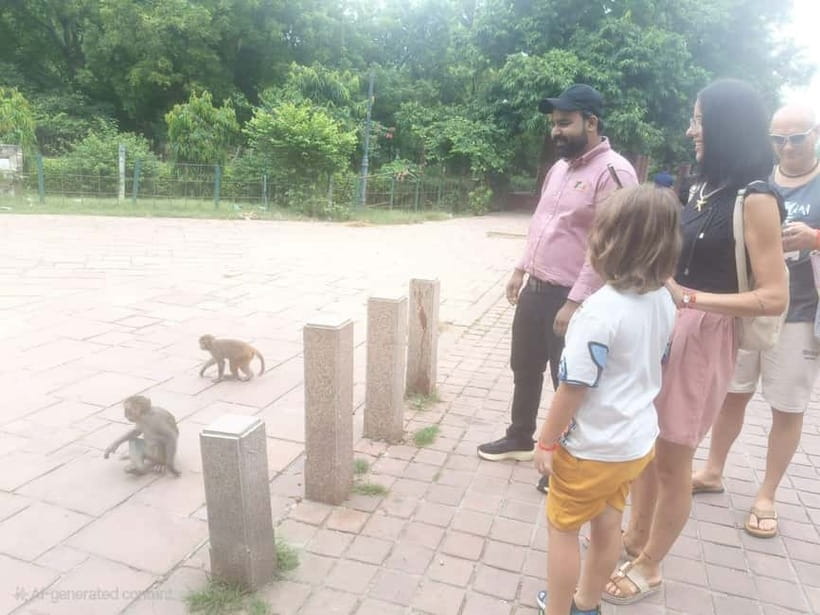
The walk gives you time for wildlife and street photography. Your guide can help you find safe angles and notice moments that you might miss while looking at the street around you.
Rooftops and temple areas can make strong settings for photographs, especially when a langur pauses or a macaque moves through a family group. You may also find good street scenes showing people and monkeys sharing the same space.
Keep your camera or phone secure. Do not move closer just to fill the frame, and do not use food to attract an animal. A longer lens is useful if you have one, but the tour does not require special equipment.
Remember that the best image may be a wider scene rather than a close portrait. A monkey on a roof, with old buildings and daily life below, tells you more about this unusual part of Agra than a tight animal photograph alone.
Masala tea, lemon water, and a short break
A refreshment stop is built into the outing. You may receive Indian masala tea or lemon water with a light snack, possibly at a rooftop café or local eatery with views toward monkeys.
Masala tea was specifically praised by one participant, and it makes a pleasant pause after walking in the heat. The exact refreshment setting can vary, so do not book this expecting a guaranteed rooftop meal or a full café visit. It is a light break, not a lunch.
The pause also gives you a chance to ask questions while everyone is settled. If you have been watching a particular troop, ask the guide what you saw. The final conversation can help connect the practical details of monkey behavior with the cultural stories discussed earlier.
The return walk and what you take away
After the observation period and refreshment break, you walk back toward the starting point. The return is described as leisurely, with time for questions and suggestions for other wildlife or cultural places in Agra.
The full advertised duration is three hours, but the walking and sightseeing portion is listed separately as about two hours. That likely leaves time for pickup, refreshment, and the return transfer. Start times depend on availability, so confirm the exact schedule before booking.
The experience is best understood as a focused side tour, not a replacement for Agra’s major sights. You will not spend the morning inside the Taj Mahal or Agra Fort. Instead, you’ll see a less formal side of the city and gain context that a monument guide may not cover.
Three verified ratings give the activity a 5 out of 5 score. The strongest praise centers on the guide and driver, the amount of information provided, the feeling of safety, and the chance to see many monkeys at close range. Those are the parts I would weigh most heavily when deciding if the tour fits your plans.
Is the $54 price good value?
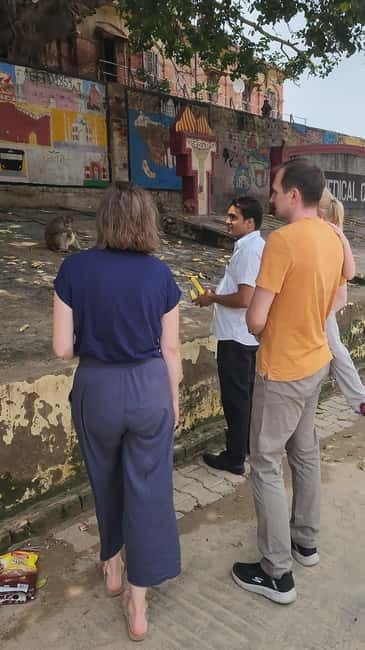
At $54 per person, this is not the cheapest way to spend three hours in Agra. The value improves if you make full use of what is included: pickup and drop-off, a private air-conditioned car, a professional guide, parking, tolls, bottled water, and masala tea.
You are paying for more than a walk to a place where monkeys happen to gather. You are also paying for transport, local interpretation, help with safe viewing, and a planned cultural experience. A private car is especially useful if you are staying somewhere spread out in Agra or do not want to negotiate local transport in the heat.
The price makes less sense if you only want a quick monkey sighting or if you already have easy access to the same neighborhood. It also may not suit someone focused only on major architecture. The tour earns its cost for people who value local context, guided animal watching, and a small-group or private feel.
Personal expenses are not included, so bring money for anything beyond the provided tea, snack, and water. The exact snack is not specified, and the tour does not include a full meal.
Who should book this Agra walking safari?
I would recommend it to families with older children who can follow wildlife rules, photographers who enjoy street scenes, and repeat visitors who have already seen Agra’s main monuments.
It also suits anyone curious about the relationship between religion, city life, and wild animals. The Hanuman stories and the practical details about protecting food and homes make the experience more than a sightseeing walk.
I would be cautious if you have mobility limitations, dislike heat, or want guaranteed animal behavior. The walking section is not suitable for people with mobility impairments, and midday conditions can make the outing tiring. You should also accept that sightings are part of a live animal experience, not a scheduled show.
Free cancellation is available up to 24 hours before the start for a full refund, and you can reserve now and pay later. Those terms make it easier to fit the tour around changing monument plans. Check the available starting times and choose a cooler hour if possible.
Should you book the Monkey Safari Walking Tour?
Book this tour if you want a local, animal-focused view of Agra and like the idea of combining wildlife with neighborhood life and Hindu tradition. The private car, guide, water, tea, and transport make the $54 price easier to justify, especially for a first visit or a family group.
Skip it if you want a formal wildlife park, a fully accessible route, or a guaranteed close encounter. For the right visitor, though, this is a memorable change of pace from marble monuments. Go early or late, keep your distance, follow the no-feeding rule, and let the guide find the action.
FAQ
How long does the Agra Monkey Safari Walking Tour last?
The advertised duration is three hours. The sightseeing and walking portion is listed as about two hours, with the remaining time covering transport, refreshments, and the conclusion of the activity.
Where does the tour begin and end?
Pickup and drop-off are provided in Agra. The activity begins with pickup in Agra and returns you there after the walk.
What types of monkeys might I see?
The tour focuses mainly on rhesus macaques and langurs. Other native species may also be spotted, but sightings depend on animal activity.
Can I feed the monkeys?
No. The activity information says that participants are not allowed to feed the monkeys. The guide will explain safe behavior and observation rules.
Is transportation included?
Yes. The tour includes pickup and drop-off, plus a private air-conditioned car for the activity. Toll taxes and parking are also included.
Is masala tea included?
Yes. Indian masala tea is included. The activity also mentions mineral water, and the refreshment break may include lemon water and a light snack.
Is the tour offered in English?
Yes. A live English-speaking guide is provided, and English is the listed tour language.
Is the tour suitable for children?
The supplied tour information does not set a minimum age. An eight-year-old joined one outing and felt safe, but children must follow the guide’s instructions and keep away from the monkeys.
Can people with mobility impairments join?
The tour is marked as not suitable for people with mobility impairments. Although the activity information also mentions wheelchair access, the walking requirement should be considered carefully before booking.
Recently added around Agra
- Taj Mahal Entrance Ticket★ 5.0 · 3 reviews
- Agra’s Hidden Gems & Flavors on a Thrilling Tuk-Tuk Tour 3-4 Hrs★ 5.0 · 3 reviews
- Spiritual Private Tour of Vrindavan and Mathura★ 3.0 · 3 reviews
- Agra: Taj Mahal and Agra Fort Private Guided Half-Day Trip★ 5.0 · 3 reviews
- Shop Agra Like a Local: Unique Indian Handicrafts Tour★ 5.0 · 3 reviews
- From Jaipur: Taj Mahal Guided and Agra Tour By Car★ 5.0 · 3 reviews
- Private Transfers Jaipur To Agra Drop with sikri & stepwell★ 5.0 · 3 reviews
- Full day Taj Mahal, Agra Fort, Fatehpur Sikri By Car From Agra★ 5.0 · 3 reviews
Safari, compared.
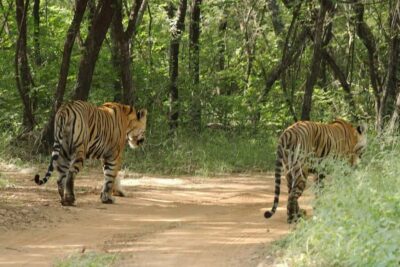

Ranthambore Safari Admission tickets : Choose your Option
Read our review →
Ranthambore Tiger Safari from Jaipur – 1 or 2 Days
Read our review →
Ranthambore Tiger Safari Day trip from Jaipur – All Inclusive
Read our review →Browse the lists this tour appears in