
Reviewed · WALKING TOURS
Temples Walk around 52 Ghats ( Spiritual Tour )-The Pushkar Route
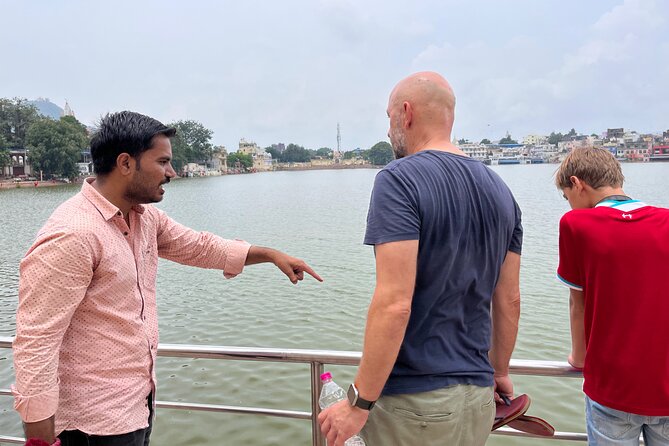
Pushkar Lake is the heart of this experience, and the walk around its 52 ghats gives you a much better sense of the town than a quick stop at the famous Brahma Temple. Each ghat has links to a community, king, or royal family, while the temples along the route reveal how daily worship shapes Pushkar.
I like two things right away: the tour reaches less-visited temples that are easy to miss on your own, and guide Manish explains Hindu customs in plain, organized language. He is also known for keeping the walk focused on temples rather than steering you into shops.
The main consideration is pace. Three hours and ten minutes on foot, with repeated temple stops, can feel long in the heat or around uneven lakefront paths. Modest clothing, comfortable shoes, and a morning or late-afternoon booking will make the outing easier.
In This Review
- Key points of the Pushkar 52-ghat walk
- Why the 52 ghats are the real attraction
- Pushkar Lake and the first hour
- Gau Ghat and the memory of Gandhi
- Brahma Ghat and the evening prayer tradition
- Varah Ghat and the Varaha Temple
- Old Rangji Temple in the middle of town
- Kumawat Temple and the less-visited stops
- Koteshwar Mahadev and the so-called VIP Ghat
- The rare temple with 108 Shiva lingams
- Brahma Temple, Pushkar’s signature shrine
- A Shiva temple by the lake
- Jaipur Ghat and the final sunset view
- What Manish adds to the experience
- Is $7 good value?
- Who should book this Pushkar walk?
- Should you book it?
- FAQ
- Where does the Temples Walk around 52 Ghats take place?
- How long does the tour last?
- How much does the tour cost?
- Is the tour private?
- Is pickup available?
- What refreshments are included?
- Which major temples are visited?
- Can I see Hindu rituals during the walk?
- Can I cancel for a full refund?
Key points of the Pushkar 52-ghat walk
- 52 ghats around one sacred lake: Follow the full circuit and see how royal families and local communities shaped Pushkar.
- Manish as your private guide: Expect clear explanations of Hinduism, Buddhism, Jainism, local customs, and temple traditions.
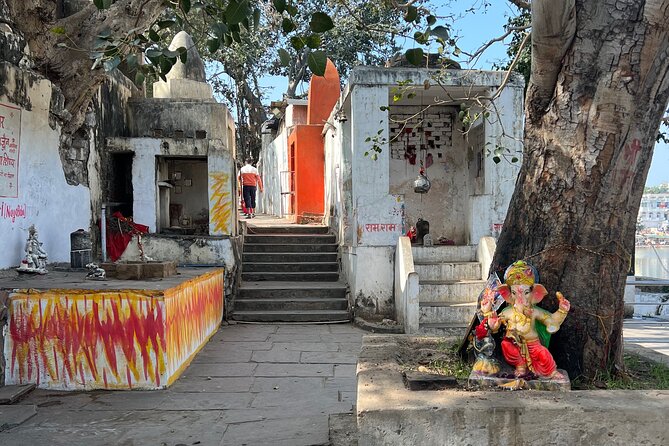
- Rare temple visits: The 108 Mahadev temple contains 108 Shiva lingams together, an unusual sight in India.
- Major religious landmarks: See Brahma Temple, Varaha Temple, Old Rangji Temple, and important lake ghats.
- Live rituals and customs: The route can show you how worship takes place at Pushkar Lake, with the option to take part.
- Low price, useful extras: At $7 per person, the tour includes tea or coffee, bottled water, and snacks.
Why the 52 ghats are the real attraction
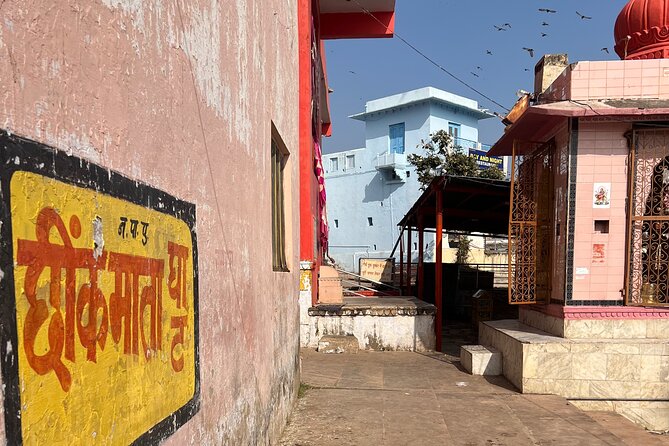
Many people come to Pushkar with one target: Brahma Temple. That temple matters, but it is only one piece of the town. Pushkar Lake is surrounded by 52 ghats, or stepped waterfront areas, and this walk uses them as a guide to the town’s religious and royal past.
As you move around the lake, your guide connects individual ghats with communities, kings, and Rajasthan’s former royal families. That context gives the lake a human shape. You are not simply looking at a series of white buildings and steps. You are seeing a sacred place divided into many small sections, each with its own associations and uses.
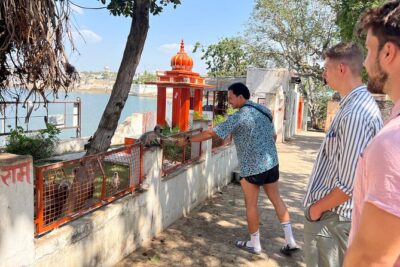
I like this format because the lake remains the main subject. The temples add detail, but the walk keeps returning you to the water, the ghats, and the customs performed there. Photography is also built into the route, with several attractive points along the lake.
The tour is private, so only your group participates. That matters at religious sites. You can ask questions without holding up a large party, and Manish can explain a custom at the moment you see it. The published information says most people can take part, but you should still expect several hours of walking.
More Walking Tours in Pushkar
- Spiritual City Walking Tour-THE Pushkar Route
★ 5.0 · 907 reviews - Afternoon Walk Tour with Sunset & Fire Ritual -The Pushkar Route
★ 5.0 · 119 reviews - Evening Walking Tour with Fire Rituals-The Pushkar Route
★ 4.9 · 108 reviews
Pushkar Lake and the first hour
The first stop is Pushkar Lake, with about an hour set aside for the main walk around the ghats. This is the broadest part of the experience and the place where the tour’s ideas begin to fit together.
You will hear why the ghats matter and how different royal houses and communities are connected to them. The route also includes lesser-known temples on or near the lakefront, so the first hour is not just a scenic circuit.
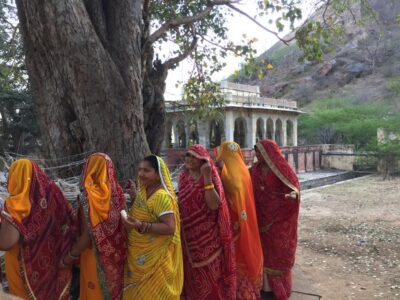
The lake is a religious site, not simply a viewpoint. You may see Hindu customs and rituals taking place, and the tour allows you to become part of them. Treat that opportunity with care. Follow Manish’s instructions, dress respectfully, and ask before photographing people engaged in worship.
The walk is likely to be most comfortable early or late in the day. Pushkar can be hot, and the tour includes open-air walking rather than a vehicle-based sightseeing loop. Water is included, which is useful, but you should still wear shoes suited to a long town walk.
Gau Ghat and the memory of Gandhi
Gau Ghat, also called Gandhi Ghat, is a brief but meaningful stop. The ashes of Mahatma Gandhi were spread here in the sacred lake.
The visit lasts about 10 minutes, so do not expect a long museum-style presentation. Its value comes from the setting and from understanding how a national figure became part of Pushkar’s religious geography.
This is a good example of the tour’s mix. The walk is not limited to temple architecture or mythology. It also touches modern Indian history and the way important public figures are remembered at sacred places.
Brahma Ghat and the evening prayer tradition
Brahma Ghat receives about 20 minutes. It is known for Maha Arti, the Hindu ritual of offering light, and it has an important temple associated with Shankaracharya at the entrance.
The stop helps explain why Pushkar feels different from an ordinary historic town. Worship here is not only something you observe inside a building. The lakefront itself is part of religious life, and the ghats provide the stage for prayer, offerings, and ceremonies.
If you are especially interested in ritual, ask Manish to explain what you are seeing rather than trying to interpret it alone. The guide’s strength, based on the information available, is making complex religious subjects easy to follow. He also covers Hinduism, Buddhism, and Jainism, which gives the conversation a wider Indian context.
A completely different kind of day out from Pushkar:
- Spiritual Walking tour with Puja Ceremony -The Pushkar Route
★ 5.0 · 101 reviews - Walking Sightseeing Tour – The Shine Pushkar
★ 5.0 · 64 reviews - Pushkar Day Trip from Jaipur – Private Car, Safari, Guide & Lunch
★ 4.5 · 45 reviews - Evening Walking tour with Fire Ceremony – The Pushkar Route
★ 5.0 · 35 reviews
Varah Ghat and the Varaha Temple
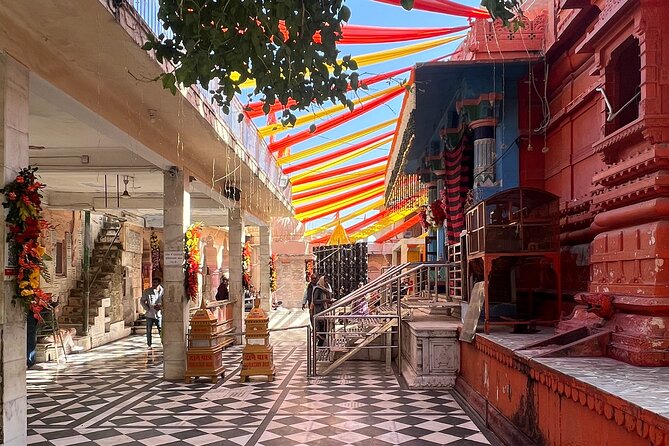
Varah Ghat is connected with Lord Vishnu in his boar incarnation. It was reconstructed in 1150 by King Anaji Chauhan, and a palace associated with Queen Ahilya Bai Holkar is located here.
The stop itself is short, around 10 minutes, but it sets up the next visit to Varaha Temple. Together, the ghat and temple show how Pushkar’s religious buildings were often tied to royal support and restoration.
Varaha Temple is one of Pushkar’s ancient temples and is dedicated to Lord Vishnu. It is traditionally counted among eight Swayambhu Kshetra sites of Vishnu, meaning places regarded as self-manifested or especially sacred. The temple was built in the 12th century by King Anaji Chauhan.
You receive about 20 minutes here. That is enough for an explanation and a focused visit, though anyone hoping to study every architectural detail may want more time. The benefit of having a guide is that you can spend your limited time on the features and beliefs that matter most.
Old Rangji Temple in the middle of town
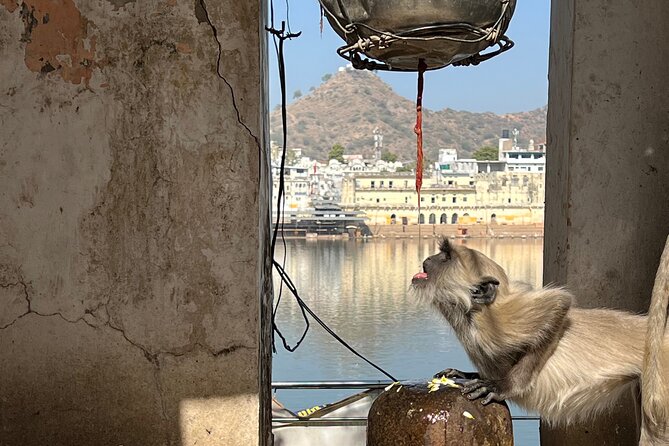
Old Rangji Temple is near Varaha Ghat, in the center of Pushkar. It is around 200 years old and dedicated to Lord Vishnu.
This stop lasts about 10 minutes, so think of it as a compact introduction rather than an extended temple tour. Its location also shows how closely Pushkar’s religious sites are woven into ordinary town streets. You are not being driven from one isolated monument to another. The walk links sacred buildings with the town around them.
The itinerary describes Old Rangji as one of Pushkar’s famous religious temples. That makes it a useful contrast with the smaller shrines on the route. You see both the recognized landmarks and the quieter places that a standard first visit might skip.
Kumawat Temple and the less-visited stops
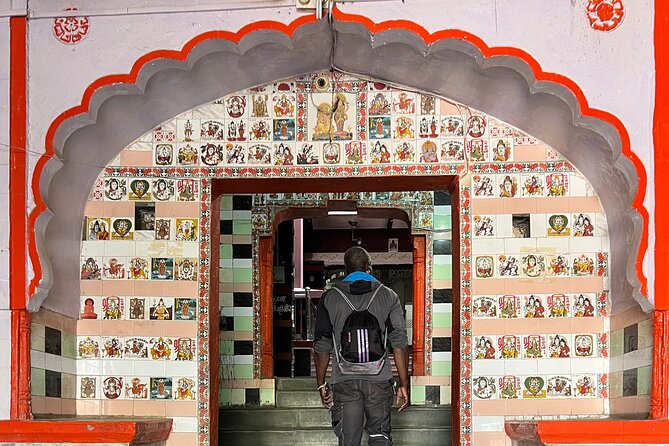
The Kumawat Temple is presented as one of the less-visited sites included by recommendation. The emphasis here is architecture and the chance to see a temple away from the best-known Pushkar stops.
This is one of the tour’s better reasons to book with a guide. A map can show you Brahma Temple, but it is less likely to explain which smaller shrines are worth your time or how they fit into the town’s religious life.
You receive about 10 minutes at this stop. That keeps the overall walk moving, but it also means the experience is more about variety and interpretation than long periods inside each temple.
Koteshwar Mahadev and the so-called VIP Ghat
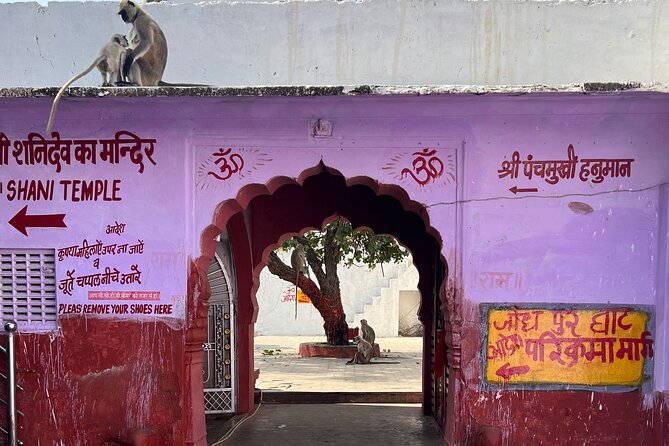
Koteshwar Mahadev Temple is dedicated to Lord Shiva and is noted for its architecture and history. The nearby area is also considered a VIP Ghat because important visitors come here throughout the year.
That label may sound grand, but the useful point is that the ghat has a special local reputation. Manish can explain how status and religious importance overlap at Pushkar’s waterfront.
The stop takes about 10 minutes and admission is free. It is another short look at a different branch of Hindu worship, following visits connected with Vishnu and Brahma.
The rare temple with 108 Shiva lingams
Prachin Shree 108 Mahadev Ji Ka Mandir is one of the tour’s most unusual stops. Inside, you can see 108 Shiva lingams together.
The itinerary describes this as a rare and distinctive temple. That makes it more than a quick religious stop. It is a chance to see how repetition, number, and symbolism can shape a sacred space.
You have about 10 minutes here. The short visit is enough to understand the central feature, though you may want to slow down and look carefully if the temple is quiet. As with all religious sites, follow local instructions about footwear, photography, and participation.
Brahma Temple, Pushkar’s signature shrine
Brahma Temple is the best-known stop on the route and the one many people would visit even without a tour. It is described as the only temple in the world dedicated to Lord Brahma, the Hindu creator deity.
The current structure dates to the 14th century, with later renovation. It is built with black and white marble, and the pillars and interior details add to its visual appeal. You receive about 10 minutes here, which is enough for a guided introduction but not a long, unhurried architectural study.
The short timing is worth noting. If Brahma Temple is your main reason for coming to Pushkar, you may want to return on your own later, if permitted and practical. The value of seeing it during this tour is the explanation. Manish can place the temple within Pushkar’s wider religious story instead of leaving you to decode the symbols and customs alone.
A Shiva temple by the lake
One additional stop is a well-designed temple dedicated to Lord Shiva at the edge of Pushkar Lake. The supplied details do not give its name or a separate duration, so you should treat it as an extra part of the walking route rather than plan around it as a major standalone attraction.
Its position by the water adds another architectural view of the lakefront. It also keeps the tour’s focus on the relationship between temples and ghats, rather than treating each building as an unrelated sight.
Jaipur Ghat and the final sunset view
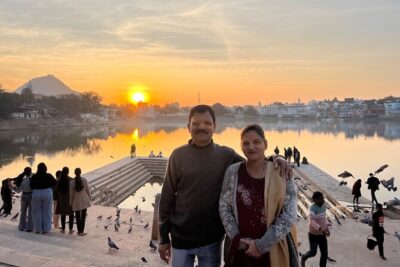
The route finishes at Jaipur Ghat, also called Raj Ghat or Sunset Point. Raja Man Singh I of Amer built it in the early 16th century, and Jai Singh renovated it in the 18th century.
This is a fitting final stop. After moving through sacred sites and royal foundations, you end at a ghat associated with two major figures from Rajasthan’s history. The lake also provides the tour’s clearest photography setting, especially when the light is soft.
The stated visit lasts about 10 minutes. That is brief, so do not assume it includes a long sunset wait. If the view matters to you, check the tour time when booking and ask whether the schedule lines up with sunset on your date.
What Manish adds to the experience
The guide is Manish, from The Pushkar Route. His strongest role is as an interpreter of customs, religious ideas, and local history. The available feedback repeatedly highlights his friendly manner, clear explanations, storytelling, and ability to explain subjects in a simple structure.
That matters because Pushkar can be confusing on a first visit. Hindu traditions are not always easy to understand from signs or quick internet searches, and the same lakefront may carry several layers of meaning. A guide who explains without turning the walk into a lecture can make the difference.
Another practical advantage is the stated no-shopping approach. The focus remains on temples, ghats, streets, and religious customs, rather than commercial stops. For a low-cost private tour, that is a useful promise.
You should still ask questions. The experience is strongest when you tell Manish what interests you, such as ritual, temple design, mythology, royal history, or the differences between Hindu, Buddhist, and Jain traditions.
Is $7 good value?
At $7 per person, this is inexpensive for a private three-hour walking experience. The price includes the guide, admission where listed, tea or coffee, bottled water, and snacks.
The value is not in transportation or luxury. Pickup is offered, the area is near public transportation, and you receive a mobile ticket, but the central product is time with a guide who knows Pushkar’s religious sites.
A self-guided walk would cost less, especially since several stops have free admission. But you would likely miss the meaning behind individual ghats and the smaller temples. The private format also gives you room to ask questions and move at a more personal pace.
The drawback is that $7 does not change the physical demands of the walk. You still cover the lake on foot and visit many sites in roughly three hours. If you dislike religious explanations or prefer a relaxed café stroll, this may feel too focused.
Who should book this Pushkar walk?
I would choose this tour if you want Pushkar to make sense beyond its postcard views. It suits first-time visitors, people curious about Hindu customs, and anyone who prefers a local guide to a large group.
It is also a good fit if you have already seen Delhi, Agra, and Jaipur and want a quieter, more spiritual side of Rajasthan. The route combines major sights with small temples, royal connections, and live religious practice.
You may want another plan if you have limited mobility, dislike walking for several hours, or want to spend a long time inside one temple. Most people can participate, but the schedule includes many stops and the details of accessibility at each site are not provided.
Book at least a day ahead if you want the cancellation safety net. Free cancellation is available up to 24 hours before the start time. Within 24 hours, changes are not accepted and the payment is not refunded.
Should you book it?
Book this tour if you want context, conversation, and a full walk around Pushkar Lake rather than a quick visit to Brahma Temple. Manish’s clear storytelling, the 52-ghat circuit, and the rare 108-Shiva-lingam temple give the experience more substance than its low price suggests.
Skip it if you want a short sightseeing stop or quiet private time at each shrine. For most curious visitors, though, the combination of low cost, private guiding, included refreshments, and access to lesser-seen temples makes this one of the better ways to get oriented in Pushkar.
FAQ
Where does the Temples Walk around 52 Ghats take place?
The tour takes place in Pushkar, India, mainly around Pushkar Lake and the temples and ghats in town.
How long does the tour last?
The experience lasts approximately 3 hours and 10 minutes.
How much does the tour cost?
The listed price is $7 per person.
Is the tour private?
Yes. Only your group participates in this private tour or activity.
Is pickup available?
Pickup is offered. The supplied information does not specify the pickup area or exact arrangements.
What refreshments are included?
Tea or coffee, bottled water, and snacks are included.
Which major temples are visited?
The route includes Varaha Temple, Old Rangji Temple, Brahma Temple, and several smaller temples, including the 108 Mahadev temple.
Can I see Hindu rituals during the walk?
The tour is designed to show Hindu customs and rituals at Pushkar Lake, and you may also have the opportunity to take part.
Can I cancel for a full refund?
Yes. You can cancel at least 24 hours before the local start time for a full refund. Cancellations or changes made within 24 hours are not refunded.
Recently added around Pushkar
- Jaipur: Ajmer & Pushkar Day Trip with Lunch & Camel ride★ 4.3 · 3 reviews
- Private Day Trip to Pushkar From Jaipur★ 4.5 · 3 reviews
- Explore Chittorgarh Fort With Udaipur Drop from Pushkar★ 5.0 · 4 reviews
- Rajasthan tours: Luxury and private tour by car with guide.★ 4.8 · 4 reviews
- Food & Culture Walking Tour – The Pushkar Route★ 5.0 · 4 reviews
- Private Day Trip to Holy City of Pushkar from Jaipur★ 5.0 · 4 reviews
- From Jaipur: One-Day Trip From Jaipur to Pushkar★ 3.8 · 4 reviews
- From Jaipur : Ajmer Pushkar Private Tour by Cab with Guide★ 4.0 · 5 reviews
Walking Tours, compared.

Afternoon Walk Tour with Sunset & Fire Ritual -The Pushkar Route
Read our review →
Evening Walking Tour with Fire Rituals-The Pushkar Route
Read our review →Browse the lists this tour appears in