

Reviewed · FOOD & DRINK
Agra Heritage Walk with Food Tour
Agra’s best stories are not all told in front of the Taj Mahal. This private food and heritage walk takes you into the Old Town, where mosques, temples, old railway history, market lanes, artisans, snacks, and sweets all share the same crowded patch of city.
I love the personal format, especially if you want to ask questions or need help finding your way through busy markets. I also like the mix of food and local history, plus the fact that guides such as Asif and Sahib can explain Indian customs as you go.
The main drawback is the short length. At about one to two hours, this is a brisk introduction rather than a full afternoon of eating and sightseeing. You should also share dietary needs when booking, since the exact food stops are not specified.
In This Review
- Key points to know before you book
- Why Agra’s Old Town makes a good food walk
- Starting beside Jama Masjid
- A short visit to Mankameshwar Mandir
- Agra Fort Railway Station and a vanished chowk
- Getting lost, in the useful way, at Kinari Bazar
- What you actually eat on the route
- Why the private format matters
- Timing, pickup, and practical planning
- Who will get the most from this Agra walk
- Is the $20 price good value?
- Should you book the Agra Heritage Walk with Food Tour?
- FAQ
- How much does the Agra Heritage Walk with Food Tour cost?
- How long does the tour last?
- Is the tour private?
- Is pickup available?
- What places are included on the walk?
- What food is included?
- Is bottled water included?
- Can I cancel for a full refund?
Key points to know before you book
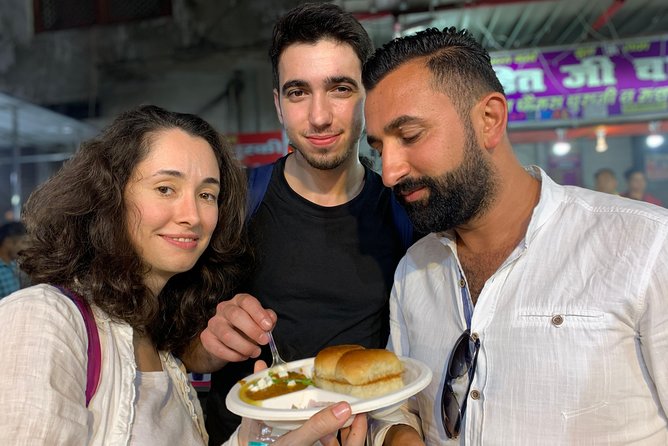
- Jama Masjid starts the walk: Begin beside Agra’s largest mosque and enter a traditional market of spices, jewelry, textiles, cosmetics, sweets, and daily goods.
- Food is part of the route: You sample street snacks and North Indian desserts, with the possibility of continuing to a local restaurant.
- The tour is private: Only your group takes part, so you can ask for explanations, slow down, or focus more on food and customs.
- Four compact historic stops: Jama Masjid, Shri Mankameshwar Mandir, Agra Fort Railway Station, and Kinari Bazar fit into a short Old Town route.
- A useful choice for solo visitors: A local guide can make the market feel easier to approach, especially if you are uneasy about going alone.
- The price is modest: At $20 per person, the tour offers a low-cost way to add local food and Old Town context to a Taj Mahal visit.
Why Agra’s Old Town makes a good food walk
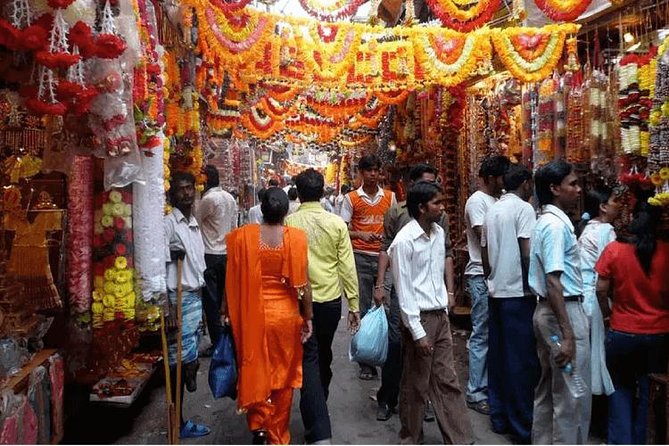
The Taj Mahal draws nearly every first-time visitor, but it tells only one part of Agra’s story. The Old Town gives you a closer look at daily life: people buying household goods, shops selling sweets, religious buildings serving different communities, and narrow lanes organized around trade.
That mix is the reason I would choose this walk early in an Agra visit. You get a quick sense of how the city works before spending more time at its grand monuments. The food gives the walk a practical purpose too. Instead of only looking at shops, you have chances to taste what local people eat.
The route is compact, but it is not quiet. You move through narrow market lanes around Jama Masjid and Kinari Bazar, where pedestrians, stalls, and shop displays share limited space. A private guide matters here. You can ask what a food is, how it is eaten, or why a certain market specializes in one kind of product.
The tour is also a good fit if you want cultural explanation without booking a long city tour. Guides named Asif and Sahib have led this experience, and the supplied feedback points to careful explanations of Indian culture and customs, patience, and help for people who feel nervous in the markets.
More Food Tours in Agra
- Agra: Street Food Walking Tour, Spice Market, & Tuk-tuk Ride
★ 4.9 · 102 reviews - Flavours of Agra Food walk
★ 5.0 · 25 reviews - Agra: Sadar Bazar Food Market Night Walking Tour by Tuk-Tuk
★ 4.9 · 25 reviews
Starting beside Jama Masjid
The walk begins at Jama Masjid, also called the Friday Mosque. It is described as Agra’s largest mosque and sits beside one of the city’s traditional market areas.
The mosque is not just a backdrop for a quick photograph. Its position helps explain the shape of the Old Town. The lanes around it are lined with shops selling spices, jewelry, textiles, cosmetics, sweets, and ordinary goods for local households. You can expect the first hour of the route to center on this area, with food stops and market observation built into the walk.
This is where the food side of the experience starts to make sense. You are not simply taken to a restaurant and handed a menu. You move through a working commercial area and sample different street snacks and sweets along the way. The exact dishes are not listed, so you should treat the tasting as a local introduction rather than a fixed menu.
I like this approach because it leaves room for the guide to match the stops to the day, the market, and your interests. If sweets matter more to you than savory food, ask early. If you need to avoid certain ingredients, give the operator your dietary requirements when you book.
The mosque itself is listed as a free stop. The focus here is the surrounding neighborhood, not a long formal visit inside the building. Dress and behave respectfully around a religious site, and follow your guide’s instructions about where you may walk or pause.
A short visit to Mankameshwar Mandir
The next stop is Shri Mankameshwar Mandir, a temple dedicated to Lord Shiva. The visit is scheduled for about ten minutes, so you should expect a brief cultural stop rather than an extended temple tour.
That short pause adds useful balance to the route. You have just begun beside a major mosque, then move to a Hindu temple within the same historic part of Agra. The value is in seeing how different religious places fit into the same urban setting.
Your guide can help explain customs and context, which is especially useful if you are not familiar with Hindu temple etiquette. This is one point where the private format helps. You can ask a simple question without worrying about slowing down a large group.
The temple is also free to visit. Since the walk covers active markets and religious places, sensible clothing and respectful conduct are important. The tour details do not specify rules about shoes, photography, or entry, so ask your guide on arrival instead of assuming.
Agra Fort Railway Station and a vanished chowk
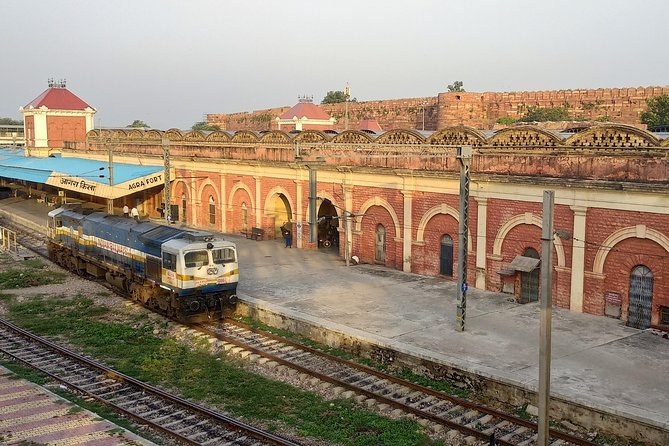
The third stop takes you to Agra Fort Railway Station, an old railway station built by the British to connect Agra with the eastern part of India. The stop lasts about ten minutes.
The interesting detail here is the lost Tripolia Chowk, an octagonal circle that once sat between Agra Fort and Jama Masjid. It was destroyed to make room for the railway station. That small piece of urban change gives you a different way to read Agra’s past.
Most heritage walks focus only on buildings that still exist. This one also points to what disappeared. A street, square, or market can vanish when transport needs change, and the railway station helps show how British-era infrastructure altered the older city.
You should not expect a long railway museum visit or a detailed station tour. This is a compact stop meant to connect the Old Town to a wider story about transport, colonial construction, and changing city plans. If you enjoy architecture and urban history, listen closely here. If your priority is food, the stop is short enough not to interrupt the tasting side of the walk.
More History Tours in Agra
- Agra Fort: Guided UNESCO Heritage Walking Tour
★ 4.9 · 21 reviews - Agra Old City Walking Tour, Private Heritage walking Guided Tour
★ 5.0 · 20 reviews - From Agra: Agra Heritage Walking Tour
★ 5.0 · 9 reviews - Delhi/Agra: Taj Mahal Mughal & Heritage in Mulitple Ways
★ 5.0 · 8 reviews
Getting lost, in the useful way, at Kinari Bazar
Kinari Bazar is one of the strongest parts of the route for market atmosphere. The bazaar dates to the 16th century and occupies narrow streets behind Jama Masjid. Its lanes form a maze, with separate sections specializing in different kinds of goods.
Expect color, noise, tight passages, and many things to look at. Shops sell a range of wares, and the market serves both local needs and visitors searching for traditional products. The route gives you time to see how a major commercial quarter is arranged, rather than treating the bazaar as a single generic shopping street.
The scheduled visit is about twenty minutes, but the walk’s market time also begins around Jama Masjid. Your total time in the Old Town may feel longer than the formal stop durations suggest, depending on food samples, questions, and the pace of your group.
This is the place where a private guide can be most useful. You may want to know which goods are locally made, what a shop specializes in, or how to move through the lanes without blocking people. The guide can also help explain the craft work and introduce you to artisans, although no specific craft workshops or purchases are promised.
Keep your belongings close in crowded lanes and wear shoes suited to walking. The activity calls for moderate physical fitness, which is a fair warning for anyone who finds narrow streets, standing, or steady walking tiring.
What you actually eat on the route
The food is described broadly as street snacks and typical North Indian desserts. That means you should expect variety, but not a guaranteed list of named dishes. The stops may include market food and, according to the supplied details, a local restaurant can also be part of the food experience.
That flexibility can be useful. A private guide can explain what you are tasting and help you decide what suits your appetite. It also means you should not book this if you need a carefully fixed tasting menu with exact portions and ingredients.
Tell the operator about dietary requirements at booking time. The food information does not specify vegetarian, vegan, gluten-free, halal, or allergy arrangements, so you should get clear answers before paying if any restriction is important.
Bottled water is included. That is a small but welcome extra during a walk through market lanes. The tour is short, though, so I would view the water as basic support rather than a reason to book.
The strongest food benefit is context. A sweet or snack means more when you know where it is sold, how it fits into the market, and what local customs surround it. You are not only filling time between monuments. You are using food to understand the city at street level.
Why the private format matters
This is a private activity, so only your group participates. That changes the feel of a short tour more than it might seem. With a large group, a food stop can become a line, and questions about customs may be difficult to hear. Here, you can ask the guide to explain a dish, repeat a point, or spend more time in a market area.
The private setup is particularly useful for solo visitors who feel unsure about entering Old Town markets alone. One person specifically valued the guide’s attentive manner and help with Indian culture and customs. That is a practical benefit, not just a comfort claim. You can concentrate on what you are seeing instead of constantly working out where to go next.
Families and small groups may also find the format good value. Group discounts are offered, though no discount amount is given. At $20 per person, the base price is modest for a guide, private access, tastings, and bottled water, especially if your group wants a short introduction rather than a half-day commitment.
The tradeoff is that a private tour is only as good as the guide assigned and the communication before the start. Guides mentioned for this experience include Asif and Sahib, but you should not assume which person will lead your walk unless the operator confirms it.
Timing, pickup, and practical planning
The activity lasts approximately one to two hours. That makes it easy to place before or after a major Agra sight, but you should allow extra time if you are arranging transport around it. Pickup is offered, and the tour is near public transportation, giving you more than one way to reach the start.
The listed route begins at Jama Masjid. If pickup is important, confirm the meeting details and pickup area when booking. The supplied information does not give a precise pickup radius or start time, so do not rely on the $20 price alone to tell you how the logistics will work.
A mobile ticket is available, and confirmation is sent at booking. You should keep the ticket accessible on your phone and share any food restrictions at that point.
Wear comfortable shoes and be ready for a moderate amount of walking. The route includes narrow market streets, a religious site, and active shopping areas. I would avoid scheduling this immediately before a tightly timed train or flight, since market movement and pickup arrangements can take longer than the formal one-hour stop at Jama Masjid suggests.
Cancellation is flexible if you act early. You can cancel for a full refund up to 24 hours before the local start time. Within 24 hours, cancellations and changes are not accepted for a refund.
Who will get the most from this Agra walk
I would recommend this for several kinds of visitors:
- First-time visitors to Agra who want more than the Taj Mahal and Agra Fort.
- Solo visitors who want a guide while entering unfamiliar market lanes.
- Food-focused visitors who prefer local snacks and sweets to a formal cooking class.
- Culture-minded visitors who want a mosque, temple, railway history, and market life in one short outing.
- Small private groups that value questions and flexible attention.
- Visitors with a tight schedule who can spare one to two hours.
It is less suitable if you want a long, slow food crawl with a published dish-by-dish menu. It may also disappoint if your main aim is extended sightseeing inside major monuments, since the stops are brief and the emphasis is on the Old Town streets.
Is the $20 price good value?
For $20 per person, the package covers a private guide, bottled water, food samples, and a compact heritage route. That is a reasonable price for a short orientation, particularly when you are paying for personal attention rather than joining a large group.
The value depends on what you expect from the food. The exact number of tastings, dishes, and portions is not stated, so do not measure it like a full meal. Think of it as a guided introduction to Agra’s market food, with history and customs added at no large extra cost.
The private format improves the calculation for two or more people, especially if a group discount applies. For a solo visitor, $20 remains fair if the guide helps you feel comfortable in the Old Town and gives clear cultural context. If you are mainly seeking cheap food, you could spend less on your own, but you would give up the explanations, route planning, and help with local customs.
Should you book the Agra Heritage Walk with Food Tour?
I would book this if you want a short, personal look at Agra beyond its famous monuments. The best reasons are the Old Town setting, the combination of street food and heritage, and the private guide who can make the market easier to understand and approach.
Book it early in your stay if possible. That lets you use what you learn about Kinari Bazar, local foods, and city customs during the rest of your time in Agra. Confirm the pickup point, expected food choices, guide assignment, and dietary arrangements before the day.
Skip it if you need a fixed food menu, a long sightseeing tour, or guaranteed access to named attractions beyond the four listed stops. For everyone else, this is an inexpensive way to add local flavor to an Agra visit without giving up half a day.
FAQ
How much does the Agra Heritage Walk with Food Tour cost?
The price is $20 per person. Group discounts are offered, but the discount amount is not specified.
How long does the tour last?
The experience lasts approximately one to two hours.
Is the tour private?
Yes. Only your group participates in the activity.
Is pickup available?
Yes. Pickup is offered, and the experience is near public transportation.
What places are included on the walk?
The route includes Jama Masjid, Shri Mankameshwar Mandir, Agra Fort Railway Station, and Kinari Bazar.
What food is included?
You sample street-food snacks and typical North Indian desserts. A local restaurant may also be part of the food experience, but exact dishes and quantities are not specified.
Is bottled water included?
Yes. Bottled water is included in the tour.
Can I cancel for a full refund?
Yes, if you cancel at least 24 hours before the experience start time. Cancellations or changes made within 24 hours are not refunded.
More Heritage Walks in Agra
- Heritage Walk & Street Food Tasting in Jaipur
★ 5.0 · 158 reviews - Jaipur Heritage Walk with Rickshaw Ride
★ 5.0 · 105 reviews - Culture and Heritage Walk | Pink City Jaipur
★ 5.0 · 14 reviews - Jaipur Heritage Walk – Artisans | Bazaars | Culinary | Temples (Awarded)
★ 5.0 · 12 reviews
More Walking Tours in Agra
- Agra Walking Tour
★ 5.0 · 109 reviews - Agra 101 City Walk
★ 5.0 · 41 reviews - Agra: Street Food and Walk Tour with Spice Market by Tuk-Tuk
★ 5.0 · 18 reviews - Agra Full-day Tour Taj Mahal, Agra Fort & Secret Walking Tour with Private Car
★ 5.0 · 17 reviews
Recently added around Agra
- Taj Mahal Entrance Ticket★ 5.0 · 3 reviews
- Agra’s Hidden Gems & Flavors on a Thrilling Tuk-Tuk Tour 3-4 Hrs★ 5.0 · 3 reviews
- Spiritual Private Tour of Vrindavan and Mathura★ 3.0 · 3 reviews
- Agra: Taj Mahal and Agra Fort Private Guided Half-Day Trip★ 5.0 · 3 reviews
- Shop Agra Like a Local: Unique Indian Handicrafts Tour★ 5.0 · 3 reviews
- From Jaipur: Taj Mahal Guided and Agra Tour By Car★ 5.0 · 3 reviews
- Private Transfers Jaipur To Agra Drop with sikri & stepwell★ 5.0 · 3 reviews
- Full day Taj Mahal, Agra Fort, Fatehpur Sikri By Car From Agra★ 5.0 · 3 reviews
Food & Drink, compared.

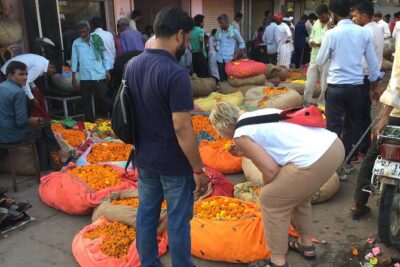
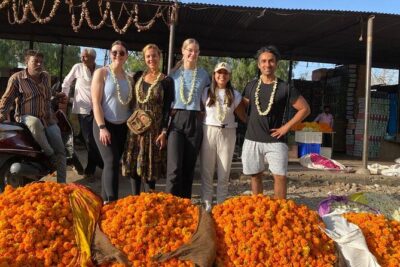
Guided Morning Bicycle Tour with Food Tasting in Jaipur
Read our review →

Street Food Walking Tour, Spice Market, & Tuk-tuk Ride
Read our review →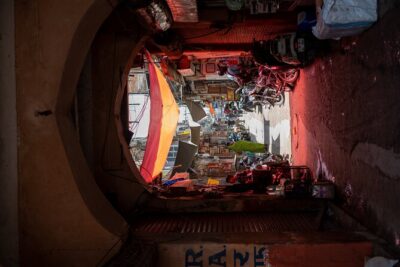
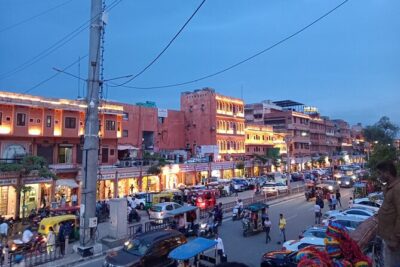
Jaipur@Twilight Guided Heritage City walk tour with Food Tasting
Read our review →Browse the lists this tour appears in